

_1752718207094.png)

Difference between natural and synthetic capsaicin powder?
Capsaicin powder stands at the intersection of pharmaceutical innovation, industrial manufacturing, and biotechnology advancement. As procurement professionals navigate increasingly complex supply chains, understanding the fundamental distinction between natural and synthetic variants becomes critical for strategic sourcing decisions. Natural Capsaicin Powder delivers authentic capsaicinoid complexity extracted from Capsicum frutescens L., while synthetic alternatives offer laboratory-produced purity. This guide addresses the core question procurement managers face: which variant optimizes quality, regulatory compliance, and cost-effectiveness for your specific application? We explore extraction methodologies, quality benchmarks, industrial applications, and procurement strategies that align with pharmaceutical-grade standards, marine antifouling coatings, and professional pest control formulations. Whether you're sourcing transdermal analgesic patches or eco-friendly industrial deterrents, this comprehensive analysis equips you with decision-making frameworks tailored to the US market's stringent compliance requirements.
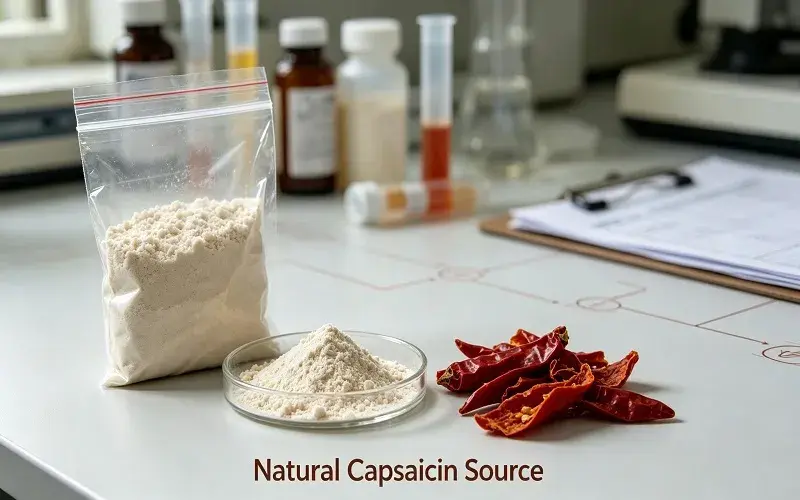
Key Differences Between Natural and Synthetic Capsaicin Powder
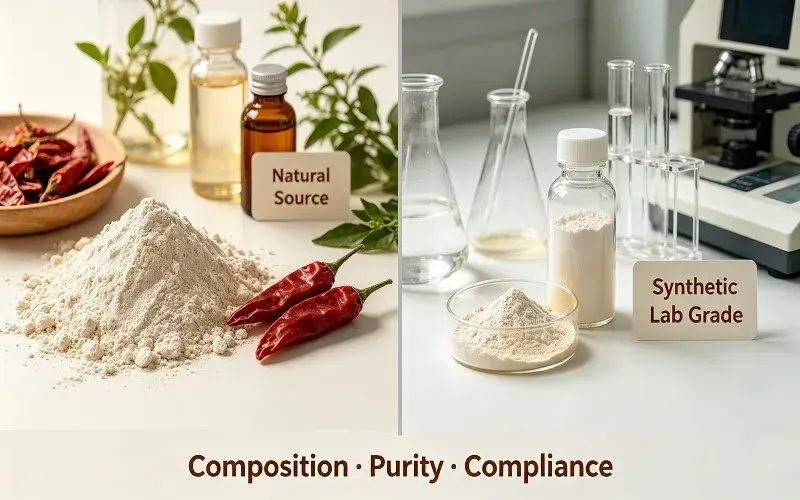
Chemical Composition and Purity Standards
Natural Capsaicin Powder shows a capsaicinoid consortium where capsaicin and dihydrocapsaicin rule, but nordihydrocapsaicin, homocapsaicin, and homodihydrocapsaicin add functional activity. This polyphenolic complexity improves the variety of receptors that can bind to them and the therapeutic effects that last longer in transdermal applications. The ≥97% total capsaicinoid requirement makes sure that the product is consistent with pharmaceutical standards while still being biologically true. Synthetic versions get 98–99% clarity of single molecules, but they don't have the mesh of beneficial molecules that makes plant extracts unique. For natural goods, residual solvent testing is very important—the ICH Q3C standards say that hexane levels must be less than 290 ppm, ethanol levels must be less than 5000 ppm, and methanol levels must be less than 3000 ppm. To meet FDA registration requirements, heavy metal screening with ICP-MS must confirm that lead is less than 10 parts per million, arsenic is less than 3 parts per million, mercury is less than 1 part per million, and cadmium is less than 1 part per million.
Bioavailability and Therapeutic Performance
Studies in clinical medicine show that natural capsaicinoid complexes are better at penetrating the skin than manufactured monocultures. The presence of dihydrocapsaicin changes the original burning sensation while prolonging Substance P loss in nerve endings. This improves the painkiller's ability to treat chronic pain. At concentrations between 0.025% and 0.1%, natural extracts show better stability in lipophilic formulation bases that are common in transdermal patches. Natural extracts melt at 62–65°C, while synthetics melt at 54–56°C. This difference in melting points affects the processing parameters used to make patches and ointments. The ratio of capsaicin to dihydrocapsaicin must be consistent from batch to batch; a difference of up to ±5% is considered okay as long as therapeutic equivalence is maintained across production lots.
Regulatory and Compliance Landscape
To buy drugs in the US, you have to follow the USP monograph, which says that you have to prove your identity by comparing the retention time to reference standards and doing a quantitative test that shows that the drug meets 95–105% of its listed claim. Natural Capsaicin Powder used in FDA-approved uses must come from sources that are GMP certified and can show they are in compliance with the TSCA for reporting chemicals. The difference between "natural flavoring" and "pharmaceutical active ingredient" rests on how it is used and the strength levels that are needed. Marine antifouling uses natural capsaicin extract, a natural capsaicinoid that is approved by IMO conventions that limit toxic tributyltin compounds. This makes plant extracts eco-friendly alternatives for protective coatings. For European REACH registration, a lot of toxicological information is needed. Natural plant products can use known safety profiles for plants, while manmade molecules need to be evaluated as new substances.
Procurement Considerations for B2B Buyers
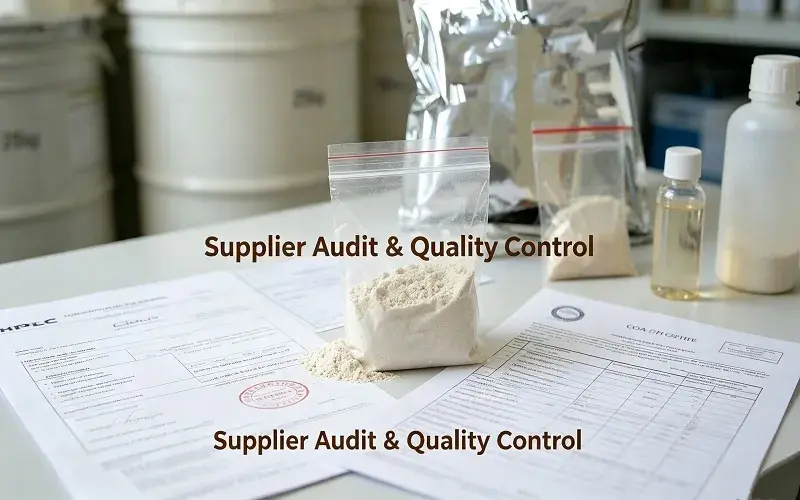
Supplier Qualification and Quality Assurance
To set up reliable supply chains for capsaicinoids, suppliers must go through thorough audits that look at their manufacturing facilities, quality control systems, and analytical lab capabilities. Top suppliers use HPLC with UV detection at 280 nm and mass spectrometry to confirm the identification of capsaicinoids. Ask for third-party confirmation from accredited labs that can do an independent batch study to make sure the specifications are met. The paperwork that comes with the Certificate of Analysis should include information about the amount of capsaicin, dihydrocapsaicin, total capsaicinoid test, moisture, particle size distribution, microbe limits (total plate count <1000 CFU/g, yeast/mold <100 CFU/g), and heavy metals screening. Nitrogen-flushed aluminum foil packing stops oxidative breakdown during shipping across continents, so medicines stay effective through long supply chains that extend beyond the timelines for pharmaceutical manufacturing.
Pricing Architecture and Order Specifications
The price of natural capsaicin powder represents the difficulty of extraction, the quality of the raw materials, and the required uniformity. Pharmaceutical-grade extracts with ≥97% capsaicinoid content are more expensive than industrial-grade extracts with 60–80% capsaicinoid content. Buying in bulk in 25-kg drums saves money because of economies of scale. Prices usually go down by 8–12% for orders over 100 kg and by 15–20% for annual contracts of 500 kg. Minimum order quantities balance the costs of keeping inventory with the needs of formulating new products. Well-known manufacturers can handle 1 kg trial orders to make sure the formula works before committing to larger production volumes. Custom packaging configurations ranging from 1 kg foil bags to 10 kg intermediate bulk containers can be used for a wide range of production sizes. Lead times are 4–8 days for stock items, but 15–21 days are needed to schedule production for items with custom particle size requirements (200 mesh or more for finishing uses).
Customization Capabilities for OEM Applications
Capsaicinoid ratio customization lets aGMP-certifiedders change the amounts of capsaicin and dihydrocapsaicin to meet specific medicinal strength or sensory needs. Customized capsaicinoid concentrations help transdermal patch makers make product lines that range from 0.025% for maintenance therapy to 0.1% for acute interventions. Nano-scale dispersion can be achieved through jet milling or cryogenic grinding, which is used for marine coatings that need a uniform solution in resin frameworks. Using cyclodextrin complexation or liposomal encapsulation technologies can help with formula development when there are problems with dissolution in water-based systems. Non-disclosure agreements keep secret formulas and new ways of using technology in industry, which is important for staying ahead of the competition in niche markets. Consistent capsaicinoid levels across multi-year production campaigns are ensured by supply deals that include batch reservation. This is important for keeping regulatory approval in medicinal product registrations.
Benefits and Limitations for Industrial Use
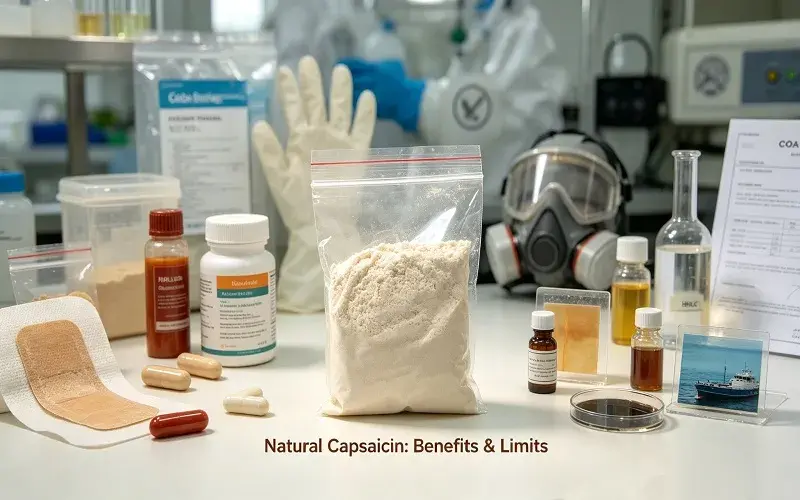
Advantages of Natural Capsaicin in Applications
Natural Capsaicin Powder has a clean label, which is something that the pharmaceutical and nutraceutical industries are asking for more and more because people want natural ingredients. The capsaicinoid complex has many uses besides being hot. It can fight free radicals through phenolic structures, it can kill gram-positive bacteria, and it can speed up metabolism to support thermogenic supplement formulas. Pharmaceutical companies package topical analgesics because they have a safety rating that has been built up over decades of use. This makes regulatory applications easier than with new synthetic chemicals. Marine coatings are better because they break down naturally and don't contain heavy metals, which is in line with the International Maritime Organization's rules for protecting the environment. Modern extraction methods make it possible to standardize the strength, which gets rid of the big differences that come with using raw pepper extracts. This allows for exact formulation control that is on par with synthetic uniformity.
Challenges in Natural Extract Sourcing
Agricultural yield changes and seasonal harvest cycles add supply variability that isn't present in continuous chemical synthesis operations. Capsicum frutescens is mostly grown in a few areas, which can cause global supply chain problems when trade is interrupted or crops fail. Because natural capsaicin extract is very strong and attracts fat, it needs to be handled in a certain way. For example, manufacturing facilities need negative pressure containment, personal safety equipment like respirators and chemical-resistant gloves, and decontamination processes. For storage to be stable, it needs to be kept in a fridge (2–8°C) and packaged in an artificial atmosphere to stop unsaturated alkyl chains from breaking down due to oxidation. Natural goods make quality control more difficult because they need more than one analytical method to describe capsaicinoid profiles, while a single-point assay is enough for synthetic proof.
Synthetic Alternatives: When They Make Sense
Synthetic capsaicinoids may be better for high-volume industrial uses that put minimizing costs above natural positioning. The production of chemical synthesis is not limited by the amount of land that can be used for farming. This means that megatonnage production for mass-market deterrent sprays or industrial coating additives is possible. The single chemical entity makes the processes of validating analysis methods and checking quality easier, which lowers the costs of running a lab in a high-throughput production setting. Regulatory trends, on the other hand, are looking more closely at manmade food additives and medicine excipients. Consumer markets have shown that they are willing to pay more for natural ingredient claims (23% to 31%). Buyers are responsible for making sure the product is real. Carbon isotope ratio mass spectrometry testing costs $300 to $500 per sample, but it is the only way to be sure that manmade material isn't labeled as natural extract in supply lines that are prone to fraud.
Making the Right Choice: Natural vs. Synthetic Capsaicin Powder
Application-Specific Selection Criteria
Pharmaceutical pain management products aimed at the US and European markets mostly use natural capsaicin powder because they are easier to regulate and consumers like it. The established monograph status in USP 46-NF41 makes it easier to make a drug master file compared to manufactured options that need large toxicological data packages. Natural capsaicinoid mixtures have long-lasting effects that help transdermal patch formulations with a concentration of 0.075%. Manufacturers of marine antifouling coatings use natural extracts that are in line with the IMO Biocidal Products Regulation instead of organotin compounds that are illegal under the Anti-Fouling Systems Convention. Professional pest control products use the complex sensory profile of natural capsaicinoids, which animals sense more strongly than synthetic monocultures. This makes them more effective at keeping wildlife away from crops and protecting infrastructure.
Cost-Benefit Analysis Framework
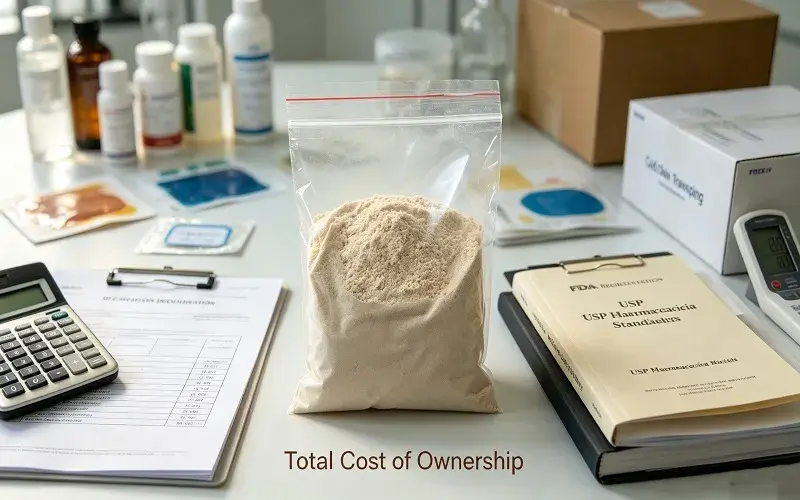
In addition to the price per kilogram, the total cost of ownership includes the costs of following regulations, the costs of quality control, and the value of a product's place in the market. Natural Capsaicin Powder, which costs 40–60% more than synthetic alternatives, gets approved faster (6–12 months faster in FDA submissions), has lower consumer resistance in market research tests, and works with premium product positioning strategies. Formulation chemists use 30–40% less material than with 60% capsaicinoid oleoresins because the specification says it must be ≥97% pure. This helps to partially make up for differences in unit cost. Pharmaceutical companies should figure out the landed cost, which should include import taxes (for capsaicinoids, these are 6.5% in the US under HTS code 2939.80), cold-chain transportation costs, and the cost of keeping goods in cold storage.
Future-Proofing Supply Chain Strategy
As the FDA and EPA look over synthetic pesticide licenses and new "Generally Recognized as Safe" decisions for food additives, regulations are moving in favor of natural ingredients. Having supplier relationships with botanical extract makers that are fully integrated gives you access to controlled farm buying and lowers your risk of losing money on the spot market. Long-term supply deals with yearly volume promises (of at least 200 kg) guarantee better prices and batch reservation. Diversifying your supplier base across different regions lowers the risk of a single point of failure. For example, combining Asian extraction facilities with European refinement operations and US distribution networks makes for a more resilient supply architecture. Purchasing teams should keep an eye on new technologies, such as biotechnology-derived capsaicinoids from microbial fermentation, which may offer natural classification with synthetic consistency once these platforms reach commercial scale in three to five years.
Conclusion
Choosing between natural and manufactured natural capsaicin powder has a big impact on how well a product works, how it is regulated, and how competitive it is in the market for medicinal, industrial, and specialty chemicals. Natural Capsaicin Powder has all the different kinds of capsaicinoids that are needed for better therapeutic results, a clean-label market appeal, and easier regulatory paths in places where people are becoming less trusting of manufactured additives. To find the best suppliers, purchasing managers have to do thorough quality system checks, ask for a lot of analytical paperwork, such as HPLC chromatograms and isotopic verification, and make sure that supply deals cover both customization needs and volume promises. The pharmaceutical-grade standard of ≥97% total capsaicinoids with defined capsaicin-to-dihydrocapsaicin ratios is the quality level that separates companies that sell basic goods from those that make precise plant extracts for controlled markets.
FAQ
1. What concentration of natural capsaicin powder is suitable for pharmaceutical patch manufacturing?
Transdermal pain patches usually have natural capsaicin powder in them. The final concentrations range from 0.025% for long-term treatment of chronic neuropathic pain to 0.1% for short-term treatment of osteoarthritis and musculoskeletal conditions. Formulation scientists make changes based on the specific capsaicin-to-dihydrocapsaicin ratio shown in batch Certificates of Analysis so that exact dosing estimates can be made. During the development of a patch, companies should study how it dissolves and how deep it goes into the skin to get the best release rates based on the natural capsaicinoid profile.
2. How can procurement teams verify authentic natural sourcing versus synthetic substitution?
Using radiocarbon dating, carbon-14 isotopic analysis clearly separates capsaicinoids from plants from manufactured molecules made from petroleum. Ask for HPLC chromatograms that show multiple capsaicinoid peaks, which are found in natural products, compared to single peaks, which are found in manufactured material. Reliable suppliers provide botanical source documentation that links materials to areas where Capsicum frutescens is grown and maintain GMP certification with batch traceability during extraction processing. Third-party test verification from approved centers adds an extra layer of security to the purchase of expensive medicines.
Partner with Hisy for Premium Natural Capsaicin Powder Supply.
Shaanxi Hisy Biotechnology Co., Ltd. is your strategic Natural Capsaicin Powder supplier, and they've been making high-quality botanical extracts since 2008, so you can trust them. Our capsaicinoid complex is pharmaceutical-grade and contains at least 55% capsaicin, at least 20% dihydrocapsaicin, and at least 97% total capsaicinoids. It meets the USP 46-NF41 compliance standards that are necessary for FDA-regulated uses. We keep our 200+ MT yearly production capacity up with specialized supercritical CO₂ extraction lines. This makes sure that you can always get your pharmaceutical patches, industrial coatings, and custom chemical formulas. Our 80-mesh particle size standard ensures even distribution in a wide range of formulation matrices, and nitrogen-flushed packaging keeps the product's effectiveness throughout transcontinental supply lines. Our dedication to making the best products is shown by our FDA registration, HACCP certification, and ISO quality management systems. You can email our technical team at sales@hisybio.com to get free samples with full analytical paperwork, talk about custom capsaicinoid ratio specs, or get bulk prices for your buying needs.
References
1. United States Pharmacopeia, "Capsaicin Monograph," USP 46-NF 41, Official from May 1, 2023, United States Pharmacopeial Convention, Rockville, Maryland.
2. Sanati, S., Razavi, B.M., Hosseinzadeh, H., "A Review of the Effects of Capsicum annuum L. and its Constituent, Capsaicin, in Metabolic Syndrome," Iranian Journal of Basic Medical Sciences, Vol. 21(5), 2018, pp. 439-448.
3. Meghvansi, M.K., et al., "Naga Chilli: A Potential Source of Capsaicinoids with Broad-Spectrum Ethnopharmacological Applications," Journal of Ethnopharmacology, Vol. 132(1), 2010, pp. 1-14.
4. International Maritime Organization, "International Convention on the Control of Harmful Anti-fouling Systems on Ships," Adopted October 2001, IMO Publishing, London.
5. Inoue, N., et al., "Enhanced Energy Expenditure and Fat Oxidation in Humans with High BMI Scores by the Ingestion of Novel and Non-pungent Capsaicin Analogues," Bioscience, Biotechnology, and Biochemistry, Vol. 71(2), 2007, pp. 380-389.
6. Reyes-Escogido, M.L., Gonzalez-Mondragon, E.G., Vazquez-Tzompantzi, E., "Chemical and Pharmacological Aspects of Capsaicin," Molecules, Vol. 16(2), 2011, pp. 1253-1270.