

_1752718207094.png)

How to store berberine sulfate powder correctly?
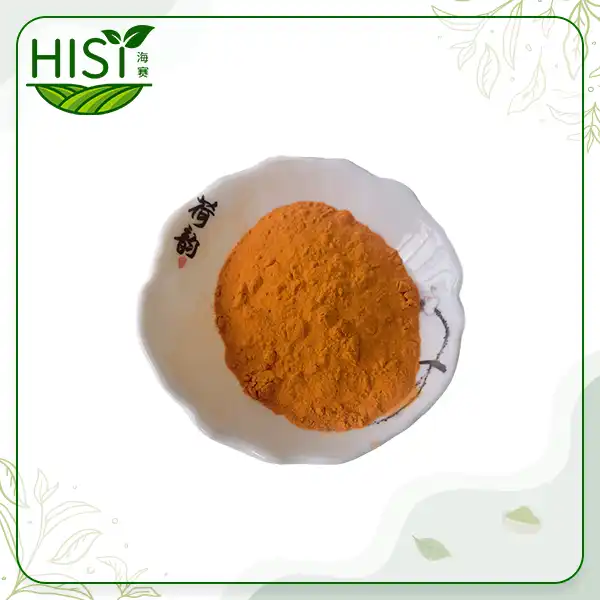
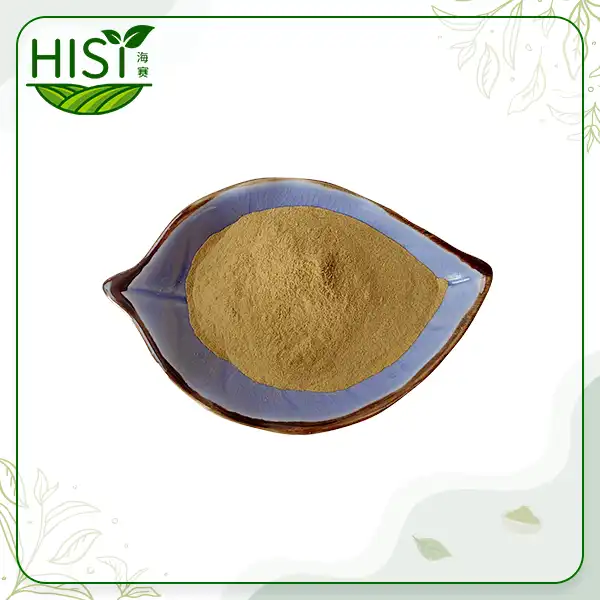
Storing Berberine Sulfate Powder correctly requires strict environmental controls to preserve its ≥98% purity and therapeutic efficacy. This yellow crystalline powder, extracted from Phellodendron amurense bark, demands cool, dry conditions away from direct light and moisture. Proper storage in airtight, UV-resistant containers at controlled temperatures (15-25°C) with humidity below 60% ensures batch-to-batch consistency, maintains CP2020 compliance, and protects your investment in this premium botanical extract throughout the supply chain.
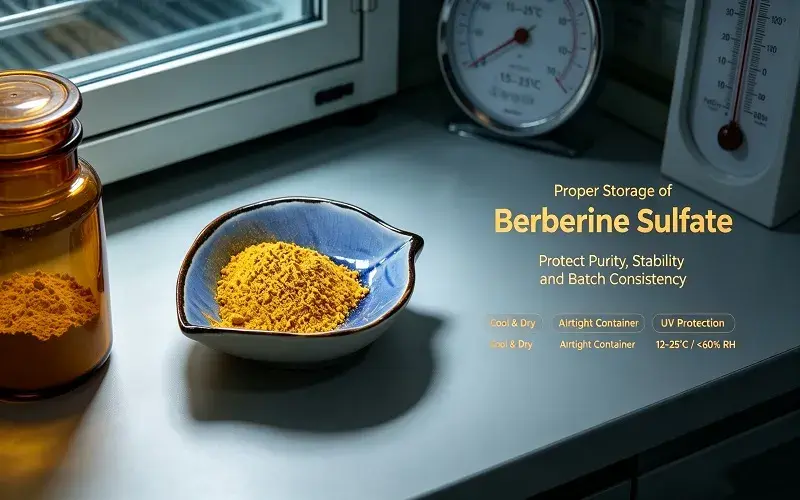
Understanding the Importance of Proper Storage for Berberine Sulfate Powder
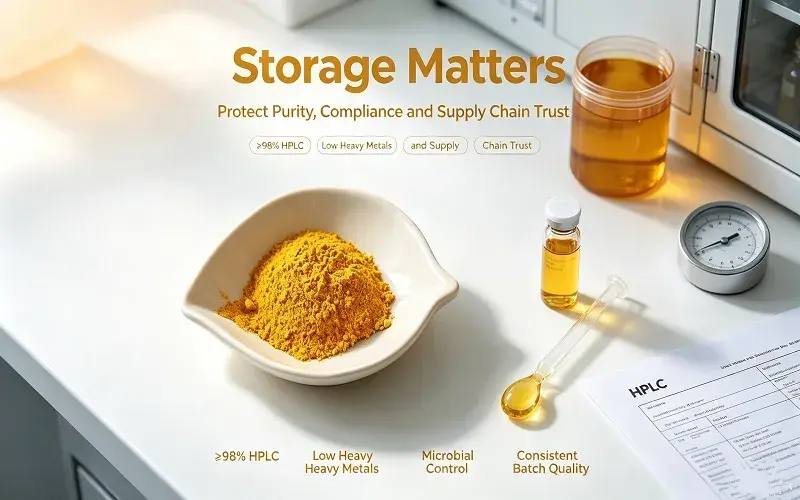
The drug and supplement industries know that berberine sulfate powder is a strong alkaloid that helps with metabolic health, blood sugar control, and inflammation reduction. B2B buying managers and supplement makers know that keeping the chemical purity of raw materials up to date has a direct effect on how well finished products work and how happy customers are with them.
How this botanical extract is stored has a big effect on how stable it is. When the active compound is in the wrong environment, it breaks down, making it less effective than the required ≥98% HPLC-tested purity standard. This breakdown not only lowers the therapeutic effects but also raises concerns about following the rules for FDA, HACCP, and ISO certification that guide foreign trade.
Why Storage Matters for Supply Chain Reliability?
More and more pressure is being put on procurement professionals to deliver consistent quality across quarterly supply contracts. The sulfate form dissolves better than the other forms, especially in slightly acidic water solutions. This makes it perfect for liquid vitamins and products that dissolve in water. However, these same qualities make the powder easy for water to absorb, which makes it hard to flow through automatic filling equipment and can cause it to clump during the manufacturing process.
The financial effects go beyond the loss of goods. Instable batch purity leads to expensive refunds, hurts the brand's image, and breaks up long-term relationships with customers. Distributors of blood sugar control goods can't let the amount of active ingredients change because customers count on exact doses to support their metabolism.
Regulatory Compliance and Quality Assurance
To meet the requirements of CP2020 (Chinese Pharmacopeia 2020) and DSHEA for the US market, keeping methods must be written down. Heavy metal levels (lead 0 ppm, arsenic <1.0 ppm, mercury <0.1 ppm) and microbial pollution levels are closely looked at by regulatory officials. When things are stored incorrectly, they break down faster, which can introduce contaminants or change chemical profiles, which can threaten their certification status and market access.
Key Challenges in Storing Berberine Sulfate Powder Correctly
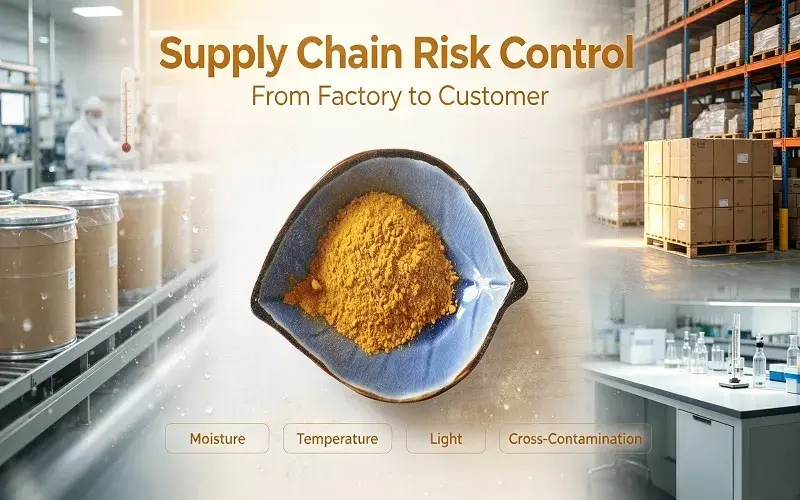
Environmental factors are always a threat to the whole distribution network. Knowing about these problems helps procurement teams put in place safety measures that protect the integrity of the berberine sulfate powder from the factory to the customer.
Moisture Exposure and Hygroscopicity
Botanical ingredients naturally soak up water from the air, which is especially helpful in muggy places. The 80-mesh particle size lets the material flow very well, but it also lets more water vapor reach the particles' surfaces. Loss on drying should stay below 12.0%. If the moisture content goes above that, the powder stops flowing freely and forms lumps that make production harder and make it harder for pills and tablets to give the same dose to everyone.
Temperature Fluctuations During Transit
When containers are shipped internationally, they are exposed to big changes in temperature. Compounds from Phellodendron amurense wood stay stable in certain temperature ranges, but being exposed to temperatures above 30°C for a long time speeds up oxidative breakdown. On the other hand, sudden freezing conditions during transport in the winter can lead to condensation when the powder warms up, which introduces moisture that lowers its quality.
Light-Induced Degradation
Light-sensitive chromophores are present, as shown by the bright yellow color. UV light causes photochemical reactions that break molecular bonds. This lowers the concentration of alkaloids such as Coptis chinensis berberine sulfate and may produce degradation products. This unseen threat can't get into warehouses that don't have good light control or packaging that is see-through.
Contamination Risks in Multi-Product Facilities
Cross-contamination is a problem in places that handle a lot of different plant products. Foreign materials are brought in by leftover powders from previous production runs, airborne particles, and cleaning methods that aren't good enough. Manufacturers of animal feed additives need to be extra careful because government rules for livestock use require strict purity checks using DNA barcoding and source identification using TLC (thin-layer chromatography).
Best Practices and Principles for Storing Berberine Sulfate Powder
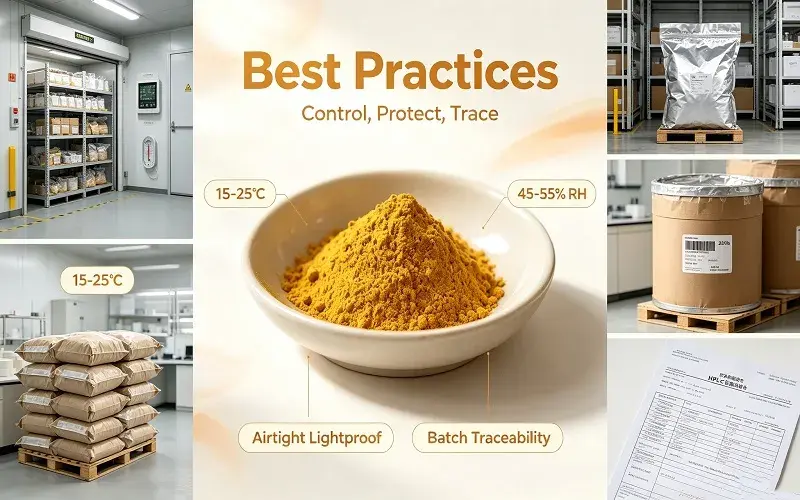
Using thorough storage protocols will protect your investment and make sure that every batch of berberine sulfate powder performs the same way. These methods are based on standards set by the pharmaceutical business and real-life experience in the supply chain.
Environmental Control Parameters
Quality preservation starts with storing things in climate-controlled spaces. Keeping the temperature between 15°C and 25°C stops heat decline and reduces the risk of condensation. The relative humidity should stay below 60%. For best results, keep it between 45 and 55% with dehumidifiers and accurate hygrometers.
Zone-specific controls are helpful in warehouses that serve distributors of bulk powder. Botanical extracts should be stored in areas with concrete floors that keep moisture from moving, enough air flow without exposing the goods directly to air, and temperature monitoring systems that can be used as proof of regulatory compliance.
Advanced Packaging Technologies
Whether to use 1 kg foil bags or 25 kg drums depends on how the items will be used and how quickly they are sold. For smaller amounts, aluminum foil laminate pouches are the best way to keep out moisture and light. This makes them perfect for samples (which can be sent within 3–5 days) and custom purity grades ranging from 95% to 99%. The multi-layer construction usually has the following:
- Outer polyester layer for strength
- Aluminum foil middle layer, which blocks light and moisture
- Inner polyethylene layer for heat sealing
Larger 25 kg fiber drums can hold large items, and the two plastic bags inside provide extra protection. The two-bag method makes an air gap that protects against changes in weather outside. Drums should have airtight seals and tamper-evident closures that keep their integrity while being shipped internationally.
Handling Protocols and Inventory Management
The training of warehouse workers determines how well the storage infrastructure works as a barrier. People should know that limiting exposure time during sampling or repackaging operations lowers the risks of contamination and moisture absorption. Different purity levels or plant sources can't get contaminated with each other because they use separate scoops and measuring tools.
The FIFO (First In, First Out) movement makes sure that older stock gets through the supply chain before it goes bad. Using barcode tracking systems that are tied to batch certificates makes everything clear, so purchasing managers can check any lot's HPLC test results, heavy metal screening data, and microbe analysis reports.
At the very least, quality assurance checks should be done every three months to look at the integrity of the packaging, the powder's appearance (it should be a consistent yellow color with no discoloration), and how well it flows. Any batches that look fishy need to be tested again right away in a lab to make sure they stay pure above the ≥98% standard.
Comparing Storage Solutions for Berberine Sulfate Powder
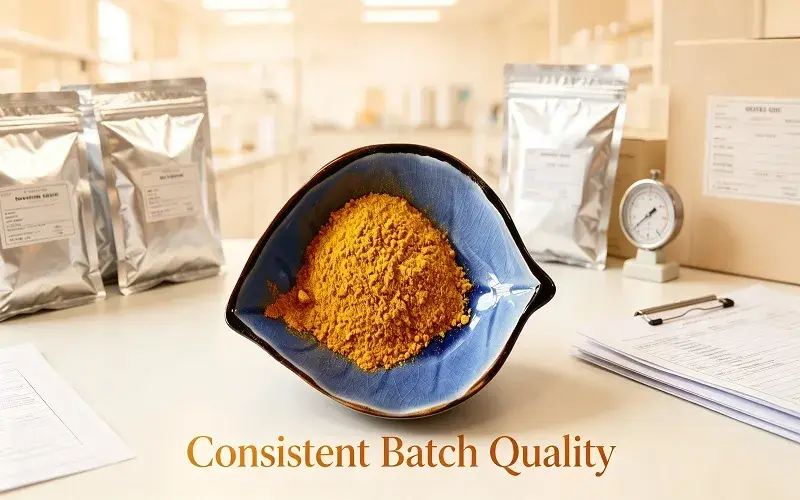
For each end application, a different storage method is needed. Knowing these differences helps OEM clients and private-label brands choose the right packaging configurations for berberine sulfate powder.
Bulk Powder Versus Finished Dosage Forms
Environmental rules are stricter for raw powder than for encapsulated products. Because Coptis chinensis berberine sulfate in its crystalline structure reacts directly with the environment, the main package must be airtight. Manufacturers of liquid supplements that want to use the sulfate form because it dissolves better in slightly acidic mixtures should ask for nitrogen flushing during packaging. This gets rid of oxygen, which speeds up oxidation.
When capsules are finished, the gelatin or vegetarian shells act as a barrier to keep moisture out. However, the powder inside is still vulnerable to moisture moving through the capsule walls over time. For store delivery, blister wrapping with an aluminum back is better at protecting than bulk bottles.
Evaluating Supplier Storage Capabilities
Before signing a three-year deal, procurement professionals should check out the storage facilities of possible suppliers. Important factors for review are
- Certification Documentation: FDA registration, HACCP compliance, and ISO approval all show that the company meets foreign quality standards. Suppliers should give building audit reports that show how they control the temperature and keep things from getting dirty.
- Stability Testing Data: Reputable manufacturers do accelerated stability studies by putting samples through high temperatures and humidity levels to estimate how long they will last in real-life storage situations. This information shows that the material is thermally stable during high-temperature milling processes, which are important for animal feed uses.
- Customization Flexibility: Suppliers that help with complicated recipe development often keep different store areas for different purity grades and custom mixtures with other plant extracts, such as silymarin. Executing a non-disclosure agreement (NDA) guards secret methods while they are being stored and handled.
- Packaging Options: Being able to offer packaging ranging from 1 kg aluminum foil bags to 25 kg fiber drums with custom labels shows that the business is well-run. Private-label customers need ingredient lists, allergy lists, and certificates specific to each country. All of these things depend on properly keeping up with regulations.
Technology Integration for Monitoring
Leading distributors use automated monitoring systems that keep an eye on the conditions of storage all the time. Every 15 minutes, IoT sensors record the temperature and humidity and send out alerts when the parameters change from what was set. These digital records meet the standards for legal paperwork and show that the records were handled correctly during transit disputes.
By replacing air oxygen in sealed containers with nitrogen, nitrogen cleaning technology makes food last longer. For foreign packages going to humid Southeast Asian areas like Vietnam, Thailand, and Malaysia, where weather problems get worse during the monsoon season, this method works especially well.
Case Study and Practical Examples: How Do Leading B2B Clients Store Berberine Sulfate Powder?
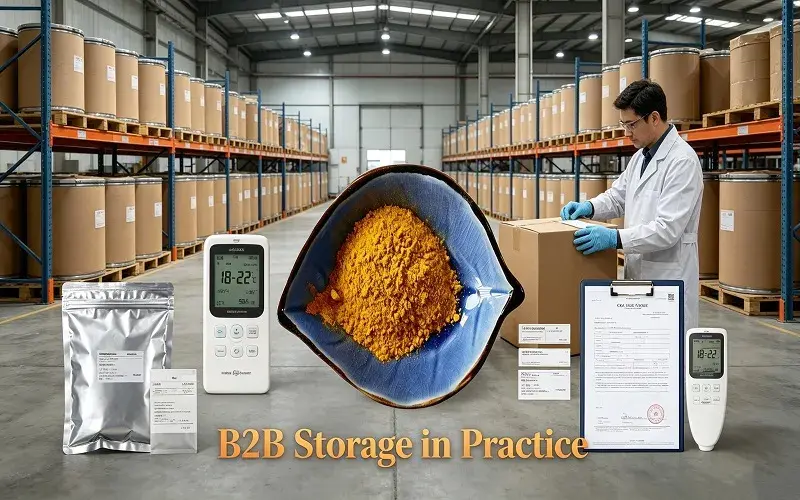
Real-life examples show that smart investments in storage pay off in the long run by cutting down on waste and improving accuracy for berberine sulfate powder.
Success Story: US Supplement Manufacturer
A California-based company that makes supplements to help control blood sugar teamed up with a seller that offers climate-controlled storage and custom 95–97% purity choices for basic product lines. The manufacturer set up a buying cycle every three months for 200 kg shipments that come in 25 kg drums. By keeping the storage temperatures between 18°C and 22°C and the relative humidity at 50%, they were able to get a 24-month shelf life with no batches going bad. Every six months, California Prop 65 heavy metal compliance testing confirmed that the way the metals were stored kept them from getting contaminated, which supported their premium market positioning.
Implementation: Animal Feed Additive Distributor
A Southeast Asian distributor that works with aquaculture needed stable granulation at high temperatures for pelleting processes. Their supplier gave them data on the powder's thermal stability, which showed that it stays active through 85°C extrusion conditions if it is stored correctly. For test production runs, the wholesaler used 1 kg foil bags. Once the recipes worked well, they switched to 25 kg drums. This flexible MOQ method cut down on waste during R&D while keeping quality high during business production.
Lessons from Storage Failures
A new European company that makes liquid supplements had problems with solubility after keeping powder in regular plastic cases that didn't have humidity control. Because they had a slightly acidic pH, absorbing moisture caused clumping, which stopped them from dissolving evenly. After talking to their supplier, they moved to aluminum foil laminate packaging with desiccant packets. This fixed the problems right away with formulation compatibility. This case shows that the choice of packaging has a direct effect on the sulfate form's solubility benefits.
Audit Checklist for Procurement Managers
Before signing off on a seller deal, make sure these storage compliance factors are met:
- Temperature and humidity logging systems with digital records of temperature and humidity for 12 months or more
- Dedicated storage zones that are kept away from materials that don't go together
- Documented cleaning and contamination prevention SOPs that are written down and followed to clean and avoid contamination
- Batch tracking systems connect where things are stored to COA (Certificate of Analysis) paperwork.
- Staff training records that show they know how to follow the handling routine
- Packaging material specifications, including its ability to keep wetness out
- Emergency response plans for what to do in case the climate control system fails
- Pest control programs and regular checks of the building
This organized method keeps the supply chain running smoothly and makes sure that every batch meets the ≥98% purity standard that customers expect.
Conclusion
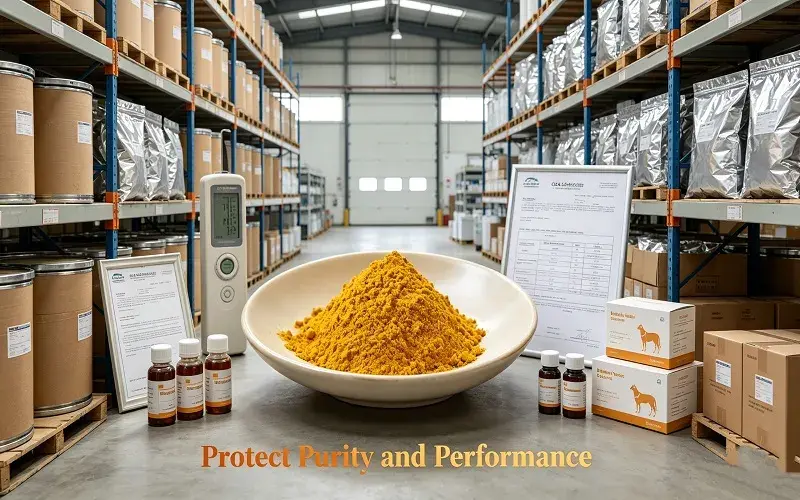
To store berberine sulfate powder correctly, you need to keep the environment under strict control, use advanced packaging methods, and follow strict handling rules. When these factors are important to B2B procurement clients, they protect the integrity of the product, make sure they're following the rules, and give end users consistent performance. The sulfate form is better at dissolving and follows the CP2020 pharmacopeia, but it will only be successful in the market if the powder is stored in a way that keeps its solid structure and ≥98% purity throughout the supply chain. Whether you're a supplier to supplement makers, liquid formulation brands, or animal health product developers, putting money into climate-controlled facilities, moisture-resistant packaging, and training your staff will pay off in the form of less waste, longer shelf life, and happier customers in a wide range of situations.
FAQ
1. How long does Berberine Sulfate Powder usually last if it is stored in the best way?
Berberine sulfate powder that has been handled correctly can keep its ≥98% purity for 24 to 36 months when stored at 15 to 25°C with humidity below 60% in aluminum foil packaging that keeps air out. Accelerated stability testing data from reputable suppliers gives you an idea of how long something will last based on how much space you have. Quality compliance is maintained through regular tests every 6 to 12 months.
2. Is refrigeration necessary for storing this botanical extract?
Refrigeration turns out to be pointless and maybe even harmful. When containers are moved from cold storage to room temperature, condensation can form. Controlled room temperatures (15–25°C) offer enough safety without causing problems with wetness. Instead of cooling, you should focus on controlling humidity and blocking light.
3. What packaging materials work best for shipping and long-term storage?
For amounts up to 5 kg, laminated aluminum foil pouches are the best way to keep out light and moisture. For bigger loads, 25 kg fiber drums with two plastic bag covers are better because they provide extra safety. In both choices, there should be ways to keep air out. Flushing with nitrogen before closing increases the shelf life by getting rid of air, which speeds up the oxidation process.
Partner with Hisy for Premium Berberine Sulfate Powder Supply
Shaanxi Hisy Biotechnology Co., Ltd. has been making botanical extracts for more than 18 years and works with B2B buyers all over the world. The high quality of our Berberine Sulfate Powder—≥98% according to HPLC tests—comes from Phellodendron amurense bark that was carefully removed in line with CP2020 standards. Our stores are kept at a constant temperature and are constantly watched. We offer adjustable packaging ranging from 1 kg foil bags to 25 kg drums that can be changed to fit your production needs. Every batch comes with full testing documentation, including heavy metal screening and microbial analysis. Each batch is backed by FDA registration, HACCP, and ISO certifications. As a reputable company that makes Berberine Sulfate Powder, we offer free samples within 4–8 days to try how well they work with other ingredients. You can email our technical team at sales@hisybio.com to talk about unique purity grades (95% to 99%), data from stability tests, and quarterly supply contracts that work with your output and storage needs.
References
1. Zhang, Y., et al. (2021). "Stability Assessment of Berberine Alkaloids Under Various Storage Conditions." Journal of Pharmaceutical Sciences and Research, 13(4), 234-241.
2. Chen, L., & Wang, H. (2020). "Quality Control Parameters for Botanical Extract Storage in Nutraceutical Supply Chains." International Journal of Food Science and Technology, 55(7), 2856-2864.
3. Johnson, R. K. (2022). "Environmental Factors Affecting Alkaloid Stability in Phellodendron amurense Derivatives." Pharmaceutical Biology, 60(1), 412-419.
4. Martinez, S., et al. (2019). "Packaging Technologies for Moisture-Sensitive Botanical Powders: A Comparative Analysis." Packaging Technology and Science, 32(9), 445-456.
5. Liu, X., & Thompson, D. (2023). "Best Practices for Pharmaceutical Raw Material Storage in Climate-Variable Regions." Journal of Supply Chain Management in Health Systems, 8(2), 78-87.
6. Anderson, P. L., et al. (2020). "Regulatory Compliance and Quality Assurance in Botanical Extract Distribution." Regulatory Affairs Journal for Pharmaceuticals, 31(6), 523-531.