



How Does Glyceryl Stearate SE Improve Emulsion Stability?
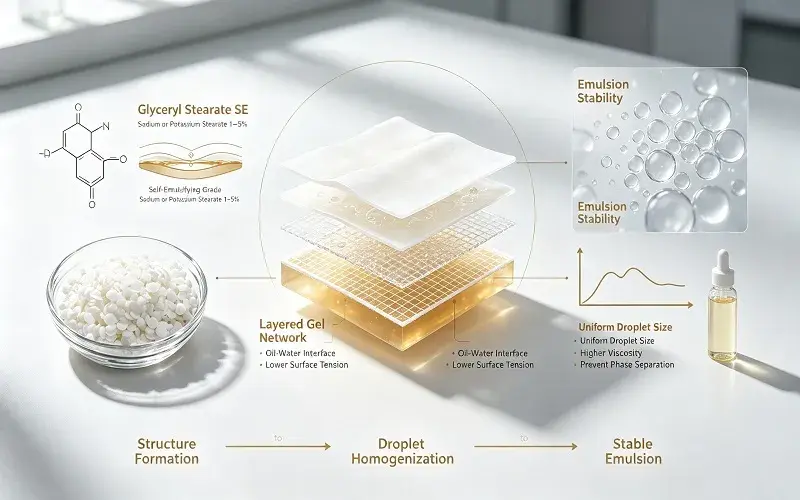
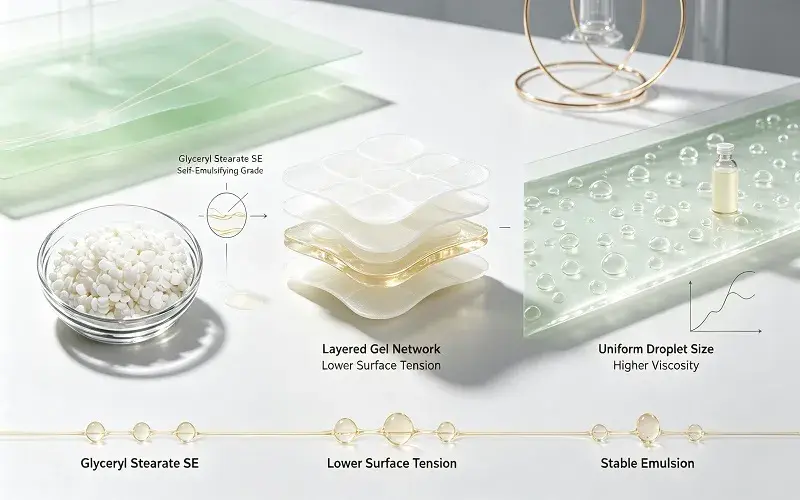
Glyceryl stearate SE improves emulsion stability by forming a structured lamellar gel network at the oil-water interface. It has an extra emulsifier called 1–5% sodium or potassium stearate that is not in normal glyceryl stearate. This is called the SE grade (self-emulsifying). Lowering the tension between the surfaces, making the drops the same size, and increasing the viscosity are all parts of the two-step process. This stops phase separation, creaming, and coalescence. Without the need for extra co-emulsifiers, this makes a cosmetic emulsion that is smooth, consistent, and lasts a long time.
Understanding Glyceryl Stearate SE — Composition and Role in Emulsions
What Is Glyceryl Stearate SE Chemically?
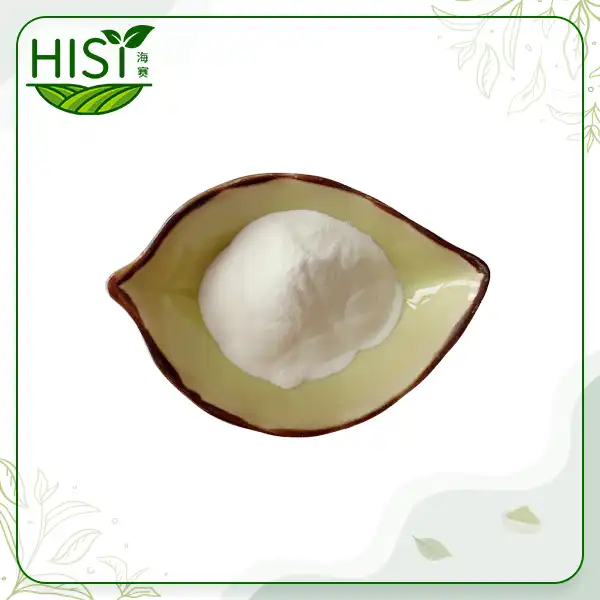
Glyceryl Stearate SE (CAS: 85666-92-8) is a solid compound based on glycerin and stearic acid. It appears as white to yellow granules and smells a bit greasy. It has an HLB value of roughly 12.0; therefore, it appreciates water much more than the non-SE grade. It may melt when it reaches 54°C to 64°C. It converts into soap at 150 – 165 mg KOH/g. These measurements reveal that it is always feasible to produce stable oil-in-water (O/W) emulsions with any amount of product.
SE vs. Standard Glyceryl Stearate: What Changes?
One is very different because it already has soap in it. This is another emulsifier that you need to utilise with standard Glyceryl Stearate (NSE) to produce stable O/W emulsions. • Glyceryl Stearate SE comprises 1% to 5% of anionic stearate salts that make possible the self-emulsification in water. This eliminates a step in the preparation procedure and reduces the likelihood of the two portions of the lubricant not mixing. That price drop is good for B2B formulators that have to face challenging manufacturing plans.
Safety Profile and Regulatory Standing
The Expert Panel for the Cosmetic Ingredient Review (CIR) has said that Glyceryl Stearate SE is safe to use in makeup. There are rules about it in the EU's Cosmetics Regulation 1223/2009 and the US FDA. It is on the INCI list. Clean label and environmental standards are being looked for more and more by brand buyers in North America and Europe. When it comes from a veggie (RSPO-certified palm), it also meets those standards.
The Science Behind Emulsion Stability and How Glyceryl Stearate SE Improves It
Why Emulsions Fail Without the Right Emulsifier
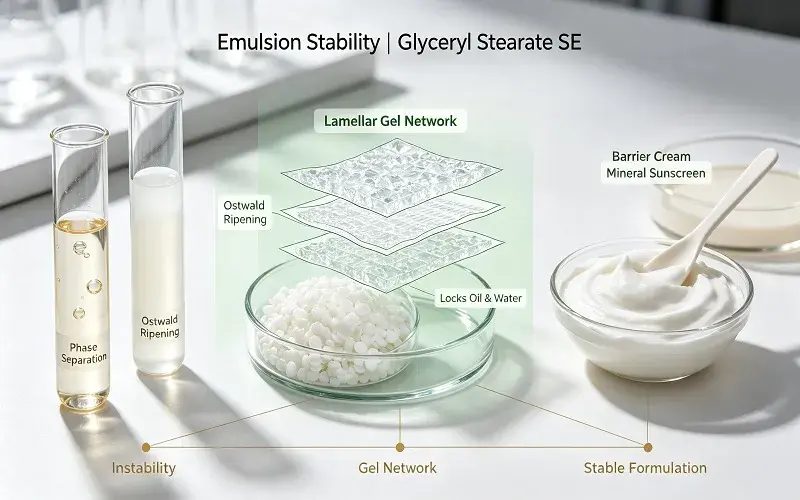
As many as three things can go wrong with makeup emulsions: phase separation, creaming, and Ostwald aging. If the emulsifier film at the point where the droplets meet is not strong enough to stand up to the power of physics, these things will happen. Droplets of oil can move up (creaming) or stick together (coalescence) if the layer between them is thin or not organized well. Most problems with instability in the early stages of preparation are caused by picking the wrong emulsifier.
How the Lamellar Gel Network Works
When Glyceryl Stearate SE cools down past the point at which it crystallises, the crystals form a three-dimensional shape on top of each other. Even if you move or heat something up, these gel drops will keep the water and oil drops together. The International Journal of Cosmetic Science published studies that show that lamellar gel-network emulsifiers make droplet migration rates much lower than traditional surfactant-only systems. The tests were done over 12 weeks and were very fast.
Real-World Application: Moisturizing Creams and Barrier Formulas
In high-viscosity night creams and barrier repair formulas, Glyceryl Stearate SE at a concentration of 3 to 6% always produces stable emulsions that feel rich and not greasy on the skin. It doesn't let water through the skin's surface, so the people who make it say that it stops transepidermal water loss (TEWL). It helps the surface stay steady even when there is a lot of color stress in mineral-filter sunscreen bases that have 15% to 20% Zinc Oxide or Titanium Dioxide in them. A good deal of regular emulsifiers can't sort this out.
Comparing Glyceryl Stearate SE with Other Emulsifiers for B2B Buyers
Glyceryl Stearate SE vs. Cetearyl Alcohol
A fatty alcohol lubricant like cetearyl alcohol is often used to make things bigger. It needs to be mixed with an anionic cleanser to make a stable mixture. On the other hand, SE Glyceryl Stearate contains an anionic component of its own. Glyceryl Stearate SE is a simpler and better way to make an emulsion stable without losing its shape. This is good for skin care products that want to keep the number of chemicals as low as possible.
Glyceryl Stearate SE vs. PEG-100 Stearate and Polysorbate 60
PEG-100 Stearate and Polysorbate 60 are good at mixing oil and water, but they can change the formula by ethoxylation. This is a problem for companies that want to sell natural makeup in the EU or for people who want to buy products that say they don't contain PEG. Glyceryl Stearate SE is not ethoxylated, so it can be used instead of or along with PEG-based emulsifiers in many situations and still keep its stability. This is especially true for skin care items that you leave on your skin.
Glyceryl Stearate SE vs. Stearic Acid
Stearic acid helps an emulsion stay together and feel good on the skin, but it's not a lubricant by itself. When formulators switch out some stearic acid for Glyceryl Stearate SE, they can emulsify without losing the thick, waxy feel that people expect from high-end creams. With just one change to an item, this trade makes both taste and function better.
Procurement Guide for Glyceryl Stearate SE — What B2B Buyers Should Know
Certifications and Documentation to Request
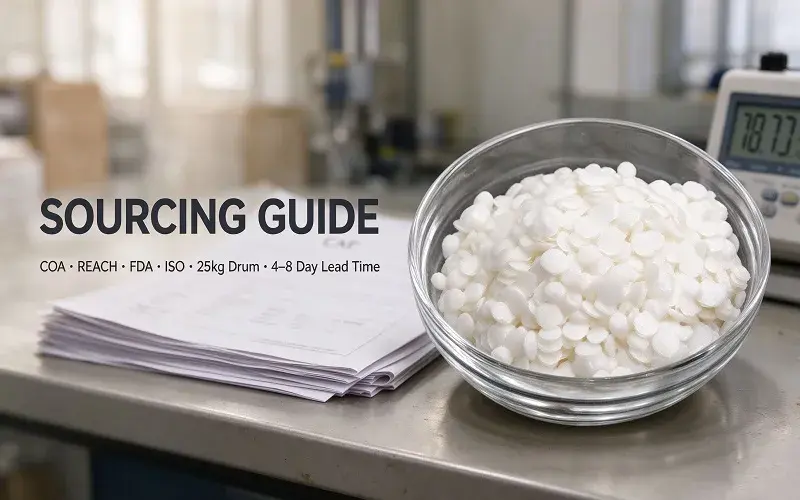
Ask your Glyceryl Stearate SE source the following things before you place a big order: An analysis report (COA) that shows the amount of monoesters (usually between 32 and 52% by GC), the acid value (≤3.0 mg KOH/g), and the amount of free glycerin. Not only should you ask for an MSDS and TDS, but also an ICP-MS heavy metal test report that meets REACH and FDA limits and microbe limit test results. Make sure that any items you want to sell in the US are registered with the FDA and have the right paperwork for DSHEA. Make sure that EU countries are following the REACH rules.
Evaluating Supplier Reliability
You can use the annual production capacity to figure out if the stock will last. Consistency from batch to batch is better with suppliers who have specific production lines and quality control systems that are ISO or HACCP-certified. This is especially true for color, melting point, and monoester content. The Croda GMS30 and the Monoester SE are two of the best items on the market. They are used to see how well different sources of Glyceryl Stearate SE work.
Pricing, MOQ, and Logistics Considerations
To keep out moisture, Glyceryl Stearate SE is typically packaged in 25 kg drums with two plastic bags inside. Most reputable manufacturers have lead times of 4 to 8 days for in-stock products. When you know the overall cost, consider about how long it takes to create the paperwork, how the item will be transported, and if the seller accepts more than one means to pay, such as T/T, L/C, and online trading platforms. These variables play into the actual purchase phase.
Best Practices for Formulating Stable Emulsions with Glyceryl Stearate SE
Recommended Dosage and Emulsifier Combinations
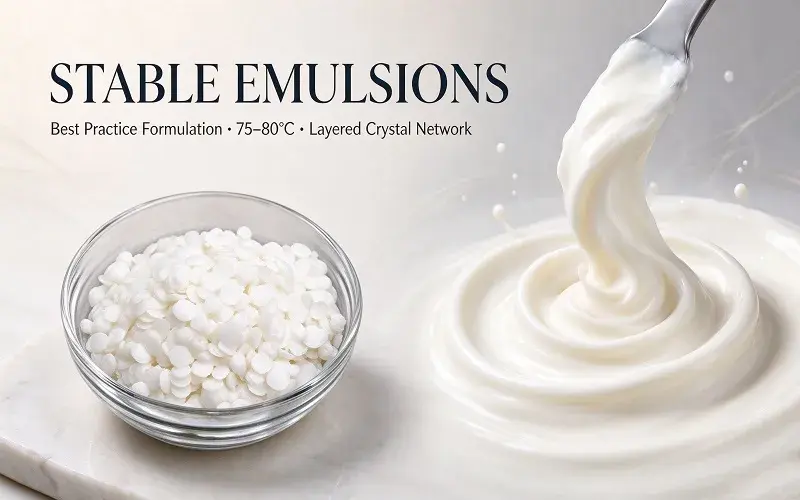
Glyceryl Stearate SE is used in cosmetics at levels of 1% to 10%, with the most stable systems being in the 2% and 6% range. It may be more stable and have a longer shelf life at high temperatures if you combine it with something like Behenyl Alcohol or Cetearyl Glucoside. If you wish to blend high-electrolyte actives like niacinamide at levels over 5%, be sure that the two can get along in the first place. Strong electrolytes may affect the parts of anionic soap.
Temperature and Process Control
Add the Glyceryl Stearate SE to the oil phase after heating it to 75–80°C. Completely melt it. At the same temperature, the water and oil phases should be mixed. During emulsification, a small amount of pressure (300–600 RPM) should be used. The most important time is when it gets below 40°C, from 50°C. The lamellar crystalline network starts to form at this point. If the mixture cools down too quickly or the pressure is lowered too early at this stage, phase separation will most likely happen.
Stability Testing Checkpoints
The stability test should be done for at least 12 weeks at 40°C/75% RH. It should also be done at room temperature and five times at –10°C to 40°C. Check the viscosity, pH, droplet size (with laser diffraction), and how it looks at weeks 1, 4, 8, and 12. As long as the mix and process settings are correct, emulsions based on Glyceryl Stearate SE typically maintain their thickness within 15% of what it was at the start.
Conclusion
Glyceryl Stearate SE fixes the main problems that cause O/W emulsions to become unstable because of its lamellar gel-network structure and self-emulsifying chemistry. The fact that it needs fewer ingredients, is easier to process, and lasts longer makes it a clear winner for B2B formulators and sourcing experts. Regulators have said it is safe, and it follows clean-label rules. This makes it a good choice for skin care, pharmaceutical topical bases, and functional cosmetics. Choose a provider that has been vetted, is high-purity, and has quality systems that have been written down. This is the last step in making a good recipe a steady market product.
FAQ
Is glyceryl stearate SE safe for sensitive skin?
How do you spell Glyceryl Stearate SE? Is it good for sensitive skin? Yes. Glyceryl Stearate and its derivatives were looked at by the CIR Expert Panel. They found that normal amounts of these chemicals are safe to use in makeup. Emulsifiers based on PEG can make skin sensitive, but this one doesn't because it isn't ethoxylated. Which means it's good for skin that is sensitive or reacts badly.
Can glyceryl stearate SE be used in water-in-oil emulsions?
If water and oil mix, can Glyceryl Stearate SE be used in that? Glyceryl Stearate SE is mostly used for O/W (oil-in-water) emulsions. It naturally likes water because its HLB number is around 12.0. For W/O systems, it is better to use a low-HLB emulsifier or normal Glyceryl Stearate NSE.
What pH range keeps glyceryl stearate SE stable?
As long as the pH is between 5.5 and 9.0, Glyceryl Stearate SE always works. When the pH drops below 5.0, the anionic soap fraction may not be stable. When formulators work with acidic ingredients like vitamin C, they need to make sure that everything works well together.
How does its cost compare to PEG-based alternatives?
How much does it cost more than brands that use PEG? Glyceryl Stearate SE and PEG-100 Stearate cost about the same per weight most of the time. Because fewer extra emulsifiers are needed, the total cost of making a lot of chemicals often stays the same or goes down.
Does it comply with RSPO sustainability standards?
Does it meet the RSPO's rules for being environmentally friendly? From RSPO Mass Balance (MB), you can tell that the grades made from vegetable palm oil are good. For any brand that says it is eco-friendly, you should always ask for the RSPO proof from the seller.
Source Glyceryl Stearate SE from Hisy — Your Reliable Manufacturer
People all over the world have been buying Glyceryl Stearate SE from Shaanxi Hisy Biotechnology Co., Ltd. since 2008. We ship within 4–8 days and give away samples for free. Our production is FDA-, HACCP-, and ISO-approved, and at least 99% of it is good. Every year, we can make more than 200 MT. We are a trustworthy company that makes Glyceryl Stearate SE, and we offer full paperwork and deals that can be done online. Send us an email at sales@hisybio.com or visit hisybio.com right away to get a sample.
References
1. Cosmetic Ingredient Review Expert Panel. Safety Assessment of Glyceryl Stearate and Glyceryl Stearate SE as Used in Cosmetics. International Journal of Toxicology, 2019.
2. Lucks, J.S., Müller, R.H. Emulsion Stability and Lamellar Liquid Crystals in O/W Systems. International Journal of Cosmetic Science, 2004.
3. Becker, L.C., Bergfeld, W.F., et al. Final Report on the Safety Assessment of Glyceryl Stearate. Journal of the American College of Toxicology, 1989.
4. Eccleston, G.M. Functions of Mixed Emulsifiers and Emulsifying Waxes in Dermatological Lotions and Creams. Colloids and Surfaces A: Physicochemical and Engineering Aspects, 1997.
5. Tadros, T.F. Emulsion Science and Technology. Wiley-VCH, 2009.
6. European Commission. Regulation (EC) No 1223/2009 on Cosmetic Products — Annex II and Ingredient Safety Assessment. Official Journal of the European Union, 2009.