

_1752718207094.png)

How to Find Reliable Natural Carotene Powder Exporters?
To find reliable Natural Carotene Powder exporters, you need to carefully look at their certifications, production capacity, and how open their supply chains are. Reliable suppliers show that they follow FDA, HACCP, and ISO rules and provide clear product specifications, usually at least 1.5% total carotene content with clear beta and alpha carotene ratios. To support your goals for making nutraceuticals, cosmetics, or food, you need to make sure that batch consistency, sampling protocols, and delivery reliability are all met.
Understanding Natural Carotene Powder and Its Market
What Makes Natural Carotene Powder Valuable
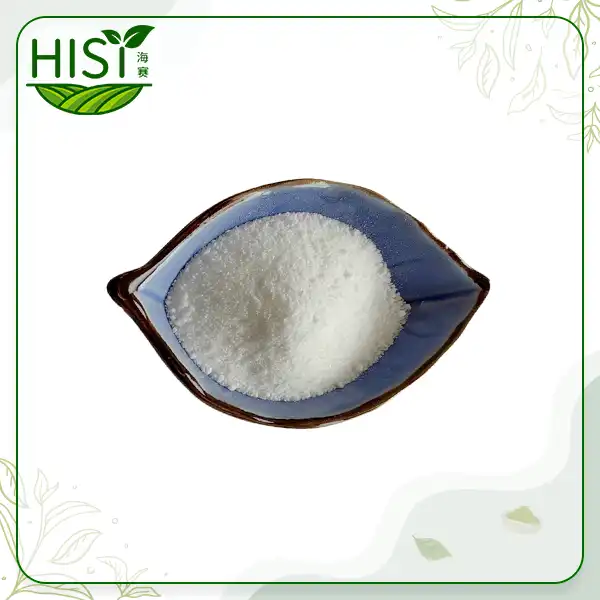
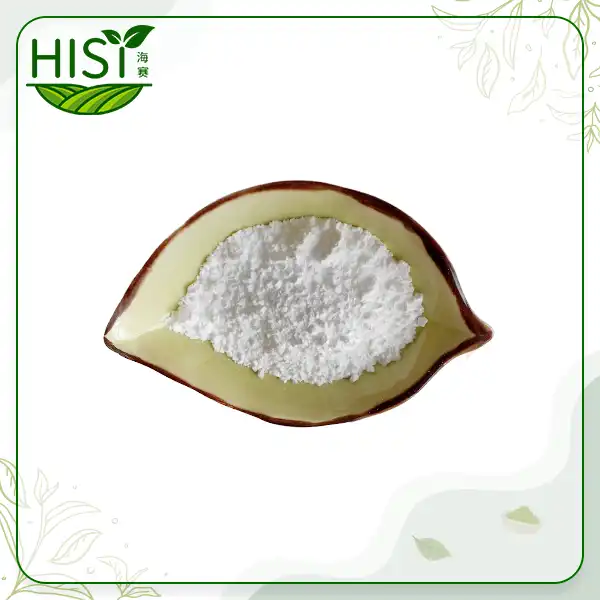
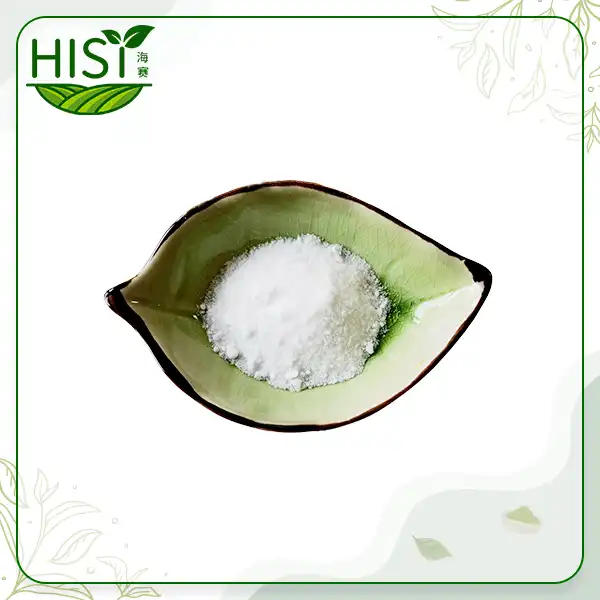
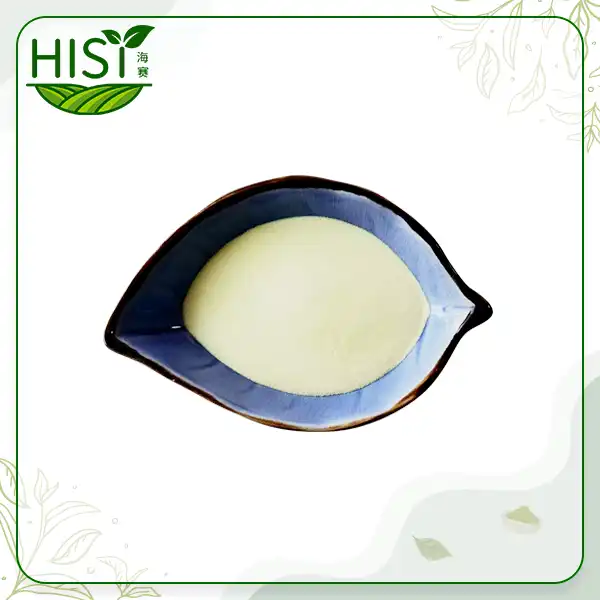
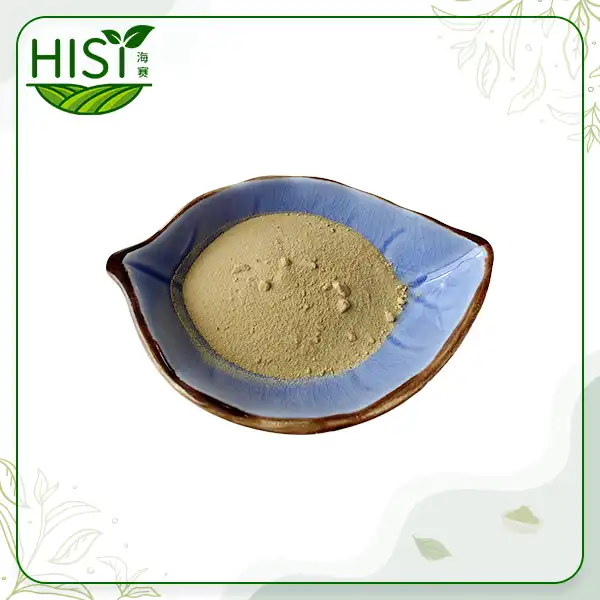
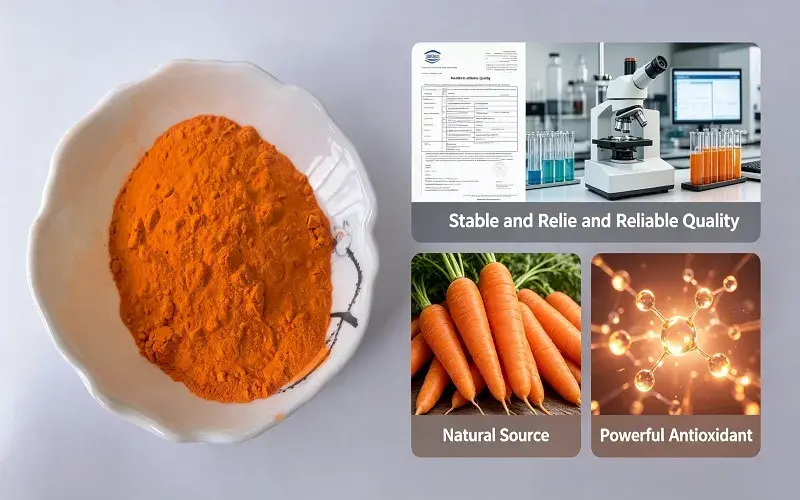
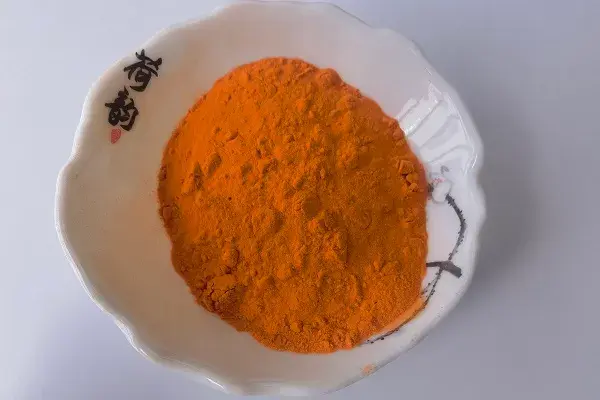
Natural Carotene Powder is a concentrated source of pro-vitamin A that comes from plants, which makes it very different from synthetic alternatives. This orange-yellow to orange-red powder has a mix of carotenoid isomers, such as beta-carotene and alpha-carotene. These isomers only turn into vitamin A when the body needs them to, so there are no risks of hypervitaminosis. Natural carotene from plants or algae is more bioavailable than synthetic versions because it has different isomers that work together to make it more bioavailable, such as 9-cis and all-trans configurations.Clean-label chemicals are much more popular now, which is why nutraceutical brands are switching from manmade E160a(i) to natural E160a(ii) labels. This powder is used in many different industries. It is a strong antioxidant in skin care products, a stable colourant in functional drinks, and a nutritional supplement enhancer. In 2023, the world market for carotenoids was worth about $1.5 billion. Natural varieties were more expensive because they were safer and people trusted them more.
Current Market Dynamics and Demand Drivers
Consumers who care about their health and government pushes for openness are both driving steady growth in the natural ingredients business. Natural Carotene Powder is being used more and more by food and drink companies to meet clean label requirements. This is especially true for organic juice lines and plant-based nutrition bars, where manmade dyes are being closely watched. Cosmetic companies use carotene powder because it has two uses: it gives skin a natural colour and protects against photoaging with antioxidants.Organic certification and non-GMO verification are no longer differentiators, but requirements for buying things. Supply problems can happen when the weather affects plant raw materials like carrots or when it's hard to grow algae. During busy times, procurement teams need to plan for wait times to last up to eight weeks and think about stockpiling methods to keep production going.
Key Challenges in Finding Reliable Natural Carotene Powder Exporters
Navigating Quality Inconsistencies and Counterfeit Risks
The biggest problem with getting carotene ingredients from other countries is making sure the products are real. Suppliers who aren't honest may dilute Natural Carotene Powder with synthetic fillers, lie about where the fermentation took place, or give wrong concentration information. Because natural and manufactured powders look so much alike, they are hard to tell apart without lab testing. Buyers say they get shipments with 30–40% less carotene than what was agreed upon, which leads to formulation problems and regulatory issues.For verification, you need to get Certificates of Analysis (CoA) from outside labs instead of just relying on the supplier's paperwork. The amount of beta-carotene to alpha-carotene is confirmed by HPLC testing, and real plant extracts are distinguished from synthetically made products by chromatography. At first, procurement managers should require third-party testing for every shipment. They should only switch to random sampling after they have proven the stability of the provider through several successful orders.
Assessing Production Capacity and Supply Stability
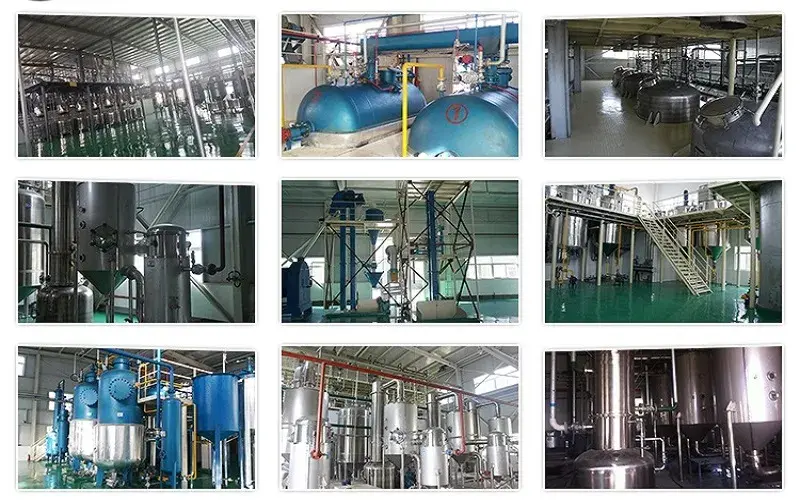
The size of your factory has a direct effect on your ability to keep up steady volumes when demand goes up. Exporters with single-line facilities are more likely to be interrupted by repairs to equipment or a lack of raw materials. Check out a possible partner's annual output capacity. Reliable natural carotene makers usually keep 100+ metric tonnes of annual output spread across multiple production lines to make sure there is a steady supply.Questionnaires can't get to the important practical details that supplier audits can. Virtual tours of factories should show that there are designated storage areas with temperature controls that stay below 15°C to stop oxidative breakdown. Check out their deals for getting raw materials; having a variety of plant supply contracts makes them less vulnerable to problems in the region's farming. Track records for delivery are just as important. Ask current clients for references and ask them about the percentage of on-time shipments and their experiences during supply chain disruptions like logistics delays caused by pandemics.
Certification Verification and Regulatory Compliance
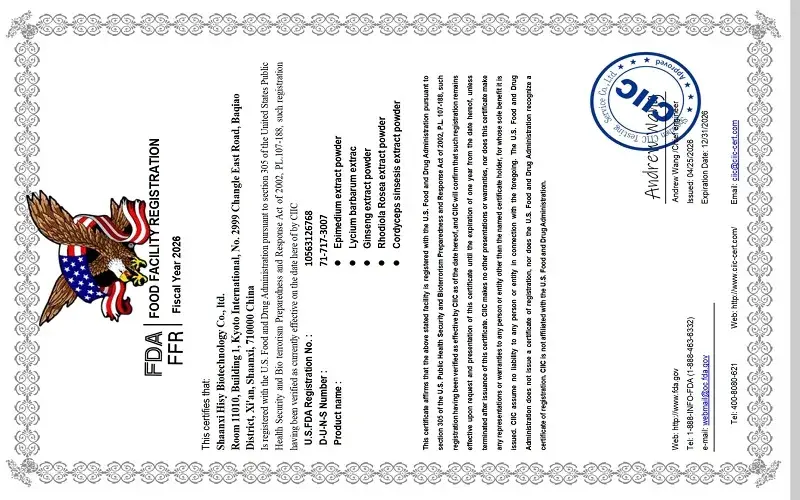
When you sell Natural Carotene Powder across borders, you have to deal with a lot of different rules and regulations. To get into the U.S. market, you need to be registered with the FDA, and HACCP certification shows that you have food safety management systems in place. While ISO certifications show that quality management is advanced, it's important to note that the specific ISO standard matters. For example, ISO 22000 covers food safety in more detail than ISO 9001.In global food markets, fake licenses are easy to find. For authentication, you have to call the certification bodies directly to confirm certificate numbers and expiration dates. Ask for full paperwork packages that include allergen labels, organic certificates, and proof that the food does not contain GMOs. Exporters who are unwilling to provide certification documents or who give vague answers about meeting standards should be taken off your shortlist of vendors right away.
Criteria to Evaluate and Select Natural Carotene Powder Exporters
Product Specification Standards and Testing Protocols
Premium Natural Carotene Powder that can be used in regulated situations is defined by strict quality standards. Specifications for concentrates should guarantee a total carotene content of at least 1.5%, with clear percentages for beta-carotene (usually 0.9%) and alpha-carotene (about 0.6%). For microbes not to grow during storage, the moisture content must stay below 5%. Dispersibility is affected by the spread of particle sizes; powders that go through 80-mesh screens have the best suspension properties for use in beverages.Ask for detailed technical data sheets that explain the method of extraction, the make-up of the carrier matrix, and the stability data for different pH and temperature levels. Formulations that can be dispersed in cold water work well in acidic drinks with a pH of up to 3.0, while forms that are dissolved in oil work well in high-temperature food processing up to 200°C. Check that the microbial limits meet USP guidelines, which say that the total plate count should be less than 1,000 CFU/g, yeast and mould should be less than 100 CFU/g, and diseases like Salmonella and E. coli.
Pricing Structure and Order Flexibility
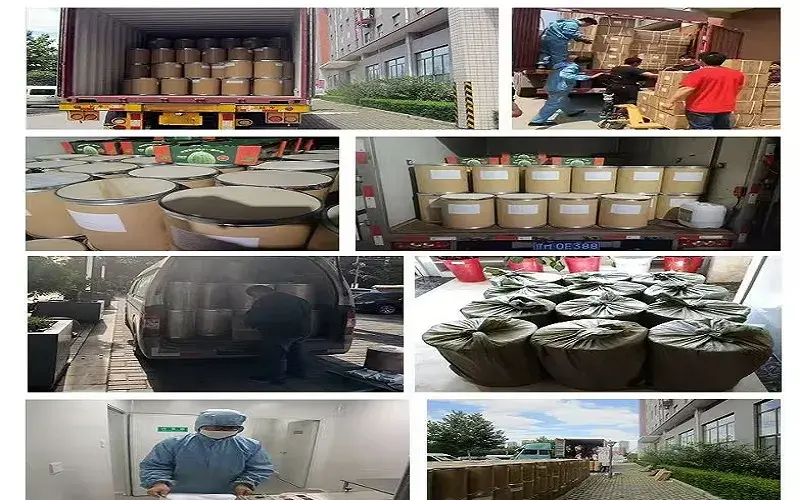
Cost research looks at more than just unit prices. It also looks at total landed costs, which include shipping, taxes, and payment terms. Minimum order quantities (MOQ) have a big effect on how much working capital is needed. For example, established exporters usually need MOQs of 100–500 kg, while smaller businesses may be able to handle 25 kg trial orders. Volume-tiered pricing structures usually offer 10-15% discounts for commitments of 1,000 kg or more, which makes it more reasonable to buy more when storage space allows.Payment terms show how confident and stable a supplier is in your business. Exporters with a history of doing business will accept lines of credit or payment upon delivery. Less safe businesses, on the other hand, require full payment up front, which puts their finances at risk. Check how clear the shipping costs are. Reliable partners give detailed logistics quotes that include packaging fees (1 kg foil bags or 20 kg drums), freight forwarding, and documentation fees. When hidden fees show up after an order has been confirmed, it means that the business is not being honest.
Communication Responsiveness and Supply Chain Transparency
Patterns of open conversation can help you figure out if a relationship will last. Check the response times for your first questions—professional exporters usually get back to you within 24 hours with detailed technical answers instead of general marketing ones. Check to see if they are ready to talk about how they make things, where they get their materials, and how they do quality control. Not wanting to share practical information could mean that the company doesn't know much about manufacturing or is trying to hide quality shortcuts.Traceability tools make it possible to act quickly in quality accidents or regulatory enquiries. Ask for proof that you can track each batch from the time you receive the raw materials to the time you ship the finished goods. Modern suppliers put QR codes on their packages that connect to full production records. These records include the dates of harvest for plant sources, processing parameters, and test results. This openness is very helpful during customer checks or certification updates that need proof of where the ingredients came from.
How to Verify Exporters: Step-by-Step Verification Process
Conducting Preliminary Research and Shortlisting
Using specialised B2B platforms like Alibaba, Global Sources, and Made-in-China that collect source listings and let you filter them is the first step in strategic sourcing. The search terms should be "Natural Carotene Powder manufacturer" instead of "carotene supplier" in order to find primary producers instead of trading companies. Compare information from different platforms to find mistakes in how a business presents itself that could point to scams.Certification systems offer separate ways to check credentials. The FDA keeps registration records that can be searched to make sure that facilities are following the rules. Online tools are available from ISO certification bodies like SGS and Bureau Veritas to check the validity of certificates. Look at supplier websites to see if they have professional-looking presentations, expert resource libraries, and written research. Complex material means that the company has put a lot of effort into activities other than just trading. Key employees' LinkedIn profiles show how long the company has been around and how knowledgeable the staff is by showing past jobs and industry connections.
Sample Testing and Technical Evaluation
Specifications can't show differences in quality that can be seen in physical samples. Ask for 50–100g samples along with certificates of authenticity that show the most recent batch test results. Check the consistency of the appearance. An even orange-red colour without any dark spots means the processing was done right and there is no contamination. Simple tests for water dispersibility can be done by adding powder to water that is at room temperature and watching how stable the solution is over 24 hours.The lab test should include measuring the amount of beta-carotene using HPLC, checking for heavy metals like lead, arsenic, cadmium, and mercury, looking for pesticide residues, and testing for microbes. Check the accuracy of the documentation by comparing the results to the COAs given by the seller. Differences of more than 10% in carotene content or the discovery of contaminants that were not reported require the provider to be disqualified right away. For 30 days at 40°C and 75% relative humidity, stability testing predicts shelf-life performance, which is very important for meeting deadlines for formulation development.
Verification Through References and Trial Orders
Referrals from clients give you direct information about how reliable an operation is. Ask for the contact information of three present customers who buy similar amounts, with a focus on long-term ties that last more than two years. Structured reference calls should look into how consistent the quality was across multiple shipments, how responsive the company was during supply disruptions, and how they solved problems when they came up. If someone won't give you names that can be checked or only takes on new clients, that's a sign that they have a bad track record.By confirming operational execution, trial orders lower the risk of big commitments. Set up your first purchases to be two to three times the amount of your sample to see if you can make more while keeping your financial risk low. Record the whole buying process, including how quickly you acknowledge an order, how often you get updates on shipments, how well the packaging is when it arrives, and how full the paperwork is (including business invoices, packing lists, and certificates). If the sample order is completed successfully and on time and according to all the requirements, it is time to move on to regular supply deals with agreed-upon yearly amounts.
Leverage Trusted Exporters for Your Procurement Success
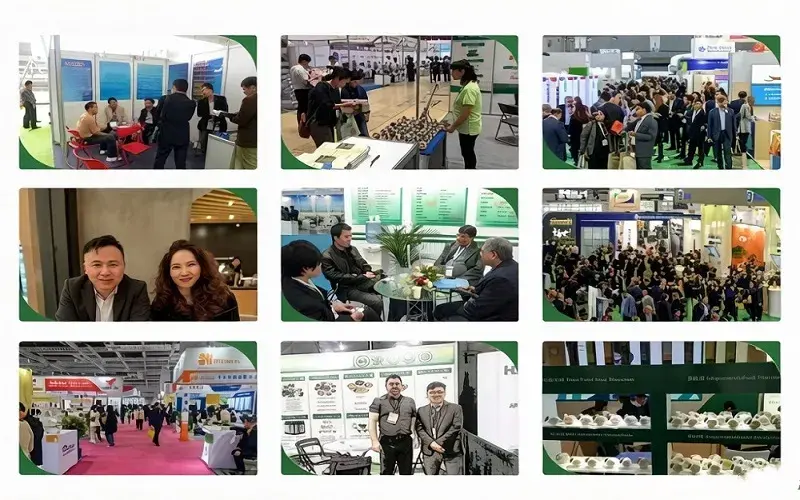
Partnership Benefits Beyond Transactional Supply
Strategic relationships with suppliers give you a competitive edge that goes beyond just buying goods. Natural Carotene Powder suppliers with 18 years of experience, like Shaanxi Hisy Biotechnology Co., Ltd., help with product creation projects by knowing how to get the carotene. Their technical teams help with formulating the best products by recommending the right amounts of carotene for different uses, like in nutraceutical capsules that need to be highly bioavailable or in beverage systems that need to keep their colour longer.Manufacturing that is flexible is very important when a new product comes out or when demand changes with the seasons. Suppliers with more than one production line that can make more than 200 MT per year can handle changes in volume without affecting the quality of their products. Private labelling lets brands stand out by customising the packaging while keeping the quality of the ingredients high. When sellers work together, they talk about the market conditions for raw materials ahead of time. This lets buying teams plan when to buy things and get the most out of their inventory investments.
Quality Assurance and Regulatory Support
Comprehensive certification portfolios remove market entry barriers across global regions. FDA registration ensures U.S. import compliance, while HACCP certification satisfies food safety requirements for beverage and nutrition applications. ISO certifications show that quality management is done in a planned way, which lowers the risk of batch variation. Suppliers who keep their certifications up to date know how regulations change and can help with planning the changes that need to be made to formulas to meet new rules.Advanced processing technologies improve the performance qualities of a product that are useful for positioning it as a special item. Micro-encapsulation keeps carotenoids from oxidising when exposed to light, which extends their shelf life in clear packing. This stability advantage reduces reformulation costs and warranty claims from color fading. The conversion of vitamin A is better in Natural Carotene Powder that contains mixed isomers than in synthetic alternatives. This supports better label claims and clinical evidence for health benefit communications.
Conclusion
To find trustworthy Natural Carotene Powder exporters, you need to do a thorough evaluation that includes checking their certifications, figuring out how much they can produce, and making sure the quality is consistent by following strict testing procedures. Successful procurement strategies balance cost considerations with risk mitigation, prioritizing suppliers demonstrating regulatory compliance, transparent communication, and proven delivery performance. The global market for natural ingredients rewards partnerships that are based on trust and working together on technical issues. By adopting structured supplier verification processes including reference checks, trial orders, and ongoing quality tests, procurement teams ensure supply chains supporting product excellence and market competitiveness.
FAQ
What Carotene Concentration is Optimal for Supplement Formulations?
For dietary supplements to work, the Natural Carotene Powder needs to have at least 1.5% total carotene content in order to get the right dose in standard capsule sizes. Beta-carotene should make up 0.9 to 1.0% of the total to provide 15,000 to 25,000 IU of vitamin A activity per gram. Higher amounts lower the need for excipients, but they may make the product more likely to oxidise if it is not properly encapsulated.
How Should Natural Carotene Powder Be Stored?
If you store something properly, it will stay active for the usual 24-month shelf life. Store containers with lids in cool places (below 15°C) that are shielded from direct light, which speeds up photo-oxidation. Reseal the packaging right away after use to keep air out. Refrigeration makes things more stable, but they need to be brought back to room temperature before they can be opened to avoid contamination from condensation.
Are There Safety Concerns with Natural Carotene Supplementation?
Natural Carotene Powder is very safe because it only changes into vitamin A when the body needs it to. This means that it doesn't pose the same risks of hypervitaminosis as preformed retinol. At doses up to 180 mg per day, clinical studies show no bad effects. Carotenodermia, a temporary change in skin colour, may happen at very high doses, but it goes away when the dose is lowered and doesn't hurt the body.
What Distinguishes Natural from Synthetic Carotene in Applications?
Natural beta-carotene has a variety of isomers, including 9-cis types that aren't found in manufactured versions. This makes it more bioavailable and effective as an antioxidant. Natural versions can be used in organic product formulas and clean-label marketing, which gives them a premium place. Synthetic options are cheaper for uses where claims of natural origin don't add much value for the customer.
How Quickly Can Exporters Fulfill Large Volume Orders?
Orders of 500 kg to 1,000 kg can be shipped within 4 to 8 days by well-known makers who keep a lot of stock. If you need more than 5,000 kg, it might take 3–4 weeks to schedule production, based on how full the factory is right now. Talking about yearly volume projections helps providers decide how to divide up production capacity and raw materials so that customers' needs are met first during times of high demand.
Partner with Hisy for Premium Natural Carotene Powder Supply
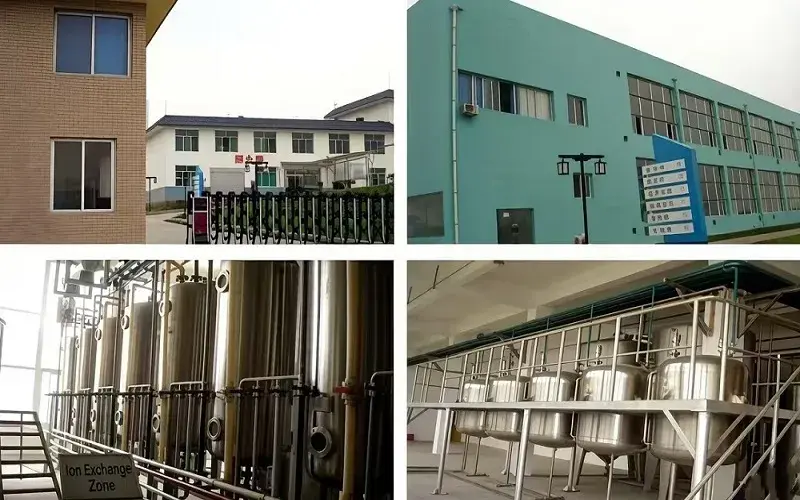
Shaanxi Hisy Biotechnology Co., Ltd. is ready to help you meet your Natural Carotene Powder needs. They have been a reliable source since 2008. Our 150 m² production facility has four dedicated lines that produce more than 200 metric tonnes of goods every year. This means that we can always meet your manufacturing schedules. To meet the tightest clean-label requirements, we provide pure plant extracts with ≥1.5% total carotene content (β-Carotene 0.9%, α-Carotene 0.6%) and no synthetic or fermented sources.Our FDA registration, HACCP certification, and ISO certification make sure that every batch of our products meets international safety standards. We offer flexible packaging ranging from 1 kg foil bags to 20 kg drums to accommodate a wide range of order amounts. We also offer fast shipping times (4–8 days), which keeps inventory costs to a minimum. Free samples allow quality evaluation before commitment, while our expert team provides application support for formulation success. Whether you need a Natural Carotene Powder provider for developing nutraceuticals, making cosmetics, or adding colour to food, our customer-first approach means that we provide quick service and high-quality products.Get in touch with our purchasing agents at sales@hisybio.com to talk about your unique needs, ask for scientific information, or set up shipments of samples. We'd love the chance to show you how our Natural Carotene Powder for sale can help you make your products better while also protecting your supply chain for long-term growth.
References
1. Rodriguez-Amaya, D.B. (2019). "Update on natural food pigments - A mini-review on carotenoids, anthocyanins, and betalains." Food Research International, 124, 200-205.
2. Milani, A., Basirnejad, M., Shahbazi, S., & Bolhassani, A. (2017). "Carotenoids: biochemistry, pharmacology and treatment." British Journal of Pharmacology, 174(11), 1290-1324.
3. Boon, C.S., McClements, D.J., Weiss, J., & Decker, E.A. (2010). "Factors influencing the chemical stability of carotenoids in foods." Critical Reviews in Food Science and Nutrition, 50(6), 515-532.
4. Market Research Future (2023). "Global Carotenoids Market Research Report - Forecast to 2030." MRFR Industry Analysis, 286 pages.
5. Stahl, W. & Sies, H. (2012). "β-Carotene and other carotenoids in protection from sunlight." American Journal of Clinical Nutrition, 96(5), 1179S-1184S.
6. Cooperstone, J.L. & Schwartz, S.J. (2016). "Recent insights into health benefits of carotenoids." Handbook on Natural Pigments in Food and Beverages, Woodhead Publishing, 473-497.