

_1752718207094.png)

Why Is Baicalin Powder Popular in Botanical Extracts?
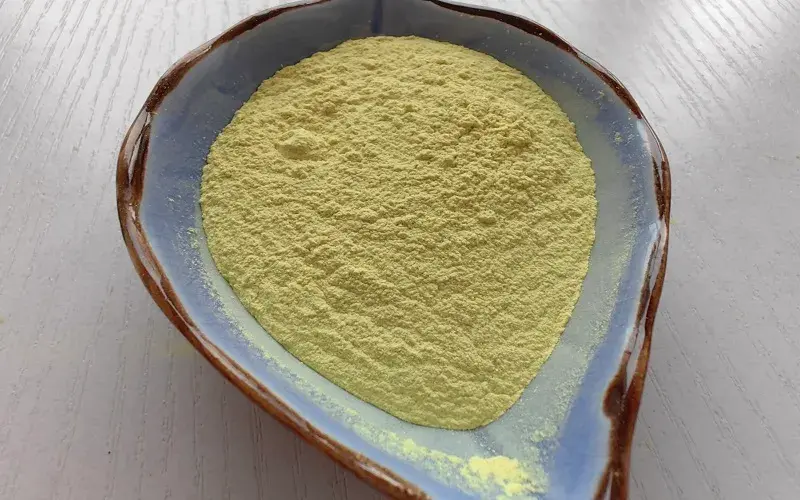
With broad acceptance among nutraceutical brands, cosmetic makers, and pharmaceutical businesses, Baicalin Powder has become a key ingredient in the plant extract market. This natural flavonoid glycoside is taken from the roots of Scutellaria baicalensis. It has amazing anti-inflammatory, antioxidant, and antimicrobial qualities that meet the high standards of current products. Its pharmaceutical-grade purity, ability to withstand temperatures up to 223°C, and proven effectiveness in a wide range of uses make it an essential ingredient for product makers looking for natural actives that are science-backed, of uniform quality, and that follow all regulations.
Understanding Baicalin Powder: Origins and Core Properties
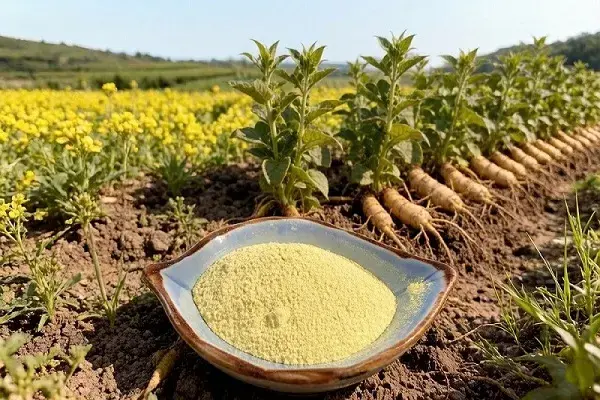
The Botanical Source Behind the Extract
The plant Scutellaria baicalensis Georgi, which is also known as Chinese skullcap or Huang Qin, has been used in traditional medicine for hundreds of years. High amounts of bioactive flavonoids are found in the dried roots of this perennial herb. Baicalin Powder is the main compound in these roots. With today's advanced extraction technology, this active ingredient is separated from other substances in a way that keeps its molecular integrity and achieves pharmaceutical-grade purity. Our production process meets requirements for baicalin levels of 85%, 90%, and 95%. This is proven by High-Performance Liquid Chromatography (HPLC) testing, which makes sure that each batch is the same.
Chemical Structure and Bioavailability
The formula for baicalin's molecules is C21H18O11, and their weight is 446.36 g/mol. This flavonoid glycoside has a glucuronide moiety attached to its baicalein aglycone form. The chemical structure has a big effect on how it reacts in mixtures. It doesn't dissolve well in water or anhydrous ethanol, but it dissolves easily in hot acetic acid and dilute alkaline solutions. Formulators can make delivery methods work better by understanding these qualities. When baicalin is eaten, it is broken down by enzymes in the intestines, turning it into baicalein, which is more bioavailable and can get into cells better.
Key Pharmacological Traits
The healing properties of this plant extract come from more than one way it works. It stops inflammatory proteins like IL-1β, TNF-α, and IL-6 from working, which makes it useful for making supplements that fight inflammation. Its antioxidant power gets rid of free radicals by directly removing them and increasing the activity of antioxidant enzymes in the body. Studies show that it can change the way GABA receptors work, which can help with stress relief and brain function. The compound is also antimicrobial, meaning it can kill different types of bacteria and viruses. This means it could be used to make immune health products. These many-useful features solve important problems for companies looking for natural ingredients that can be used instead of fake ones.
Why Baicalin Powder Stands Out in the Botanical Extract Market
Higher standards of quality than most herbal extracts
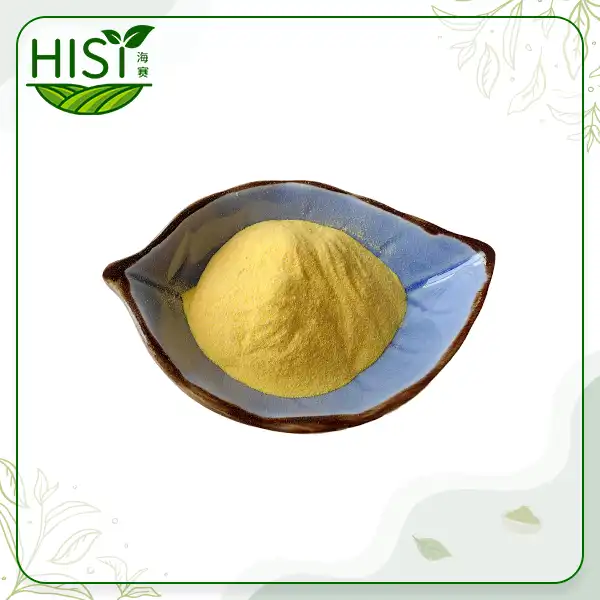
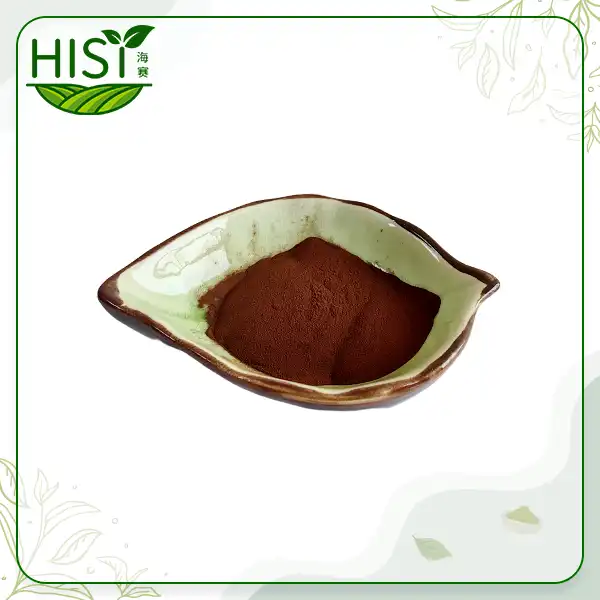
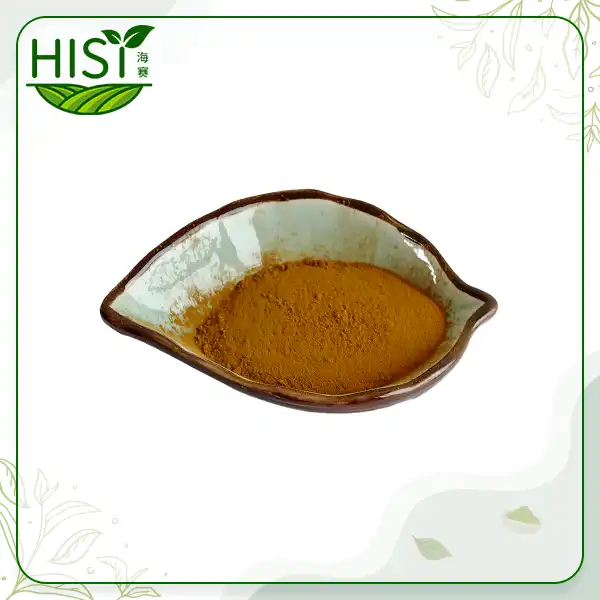
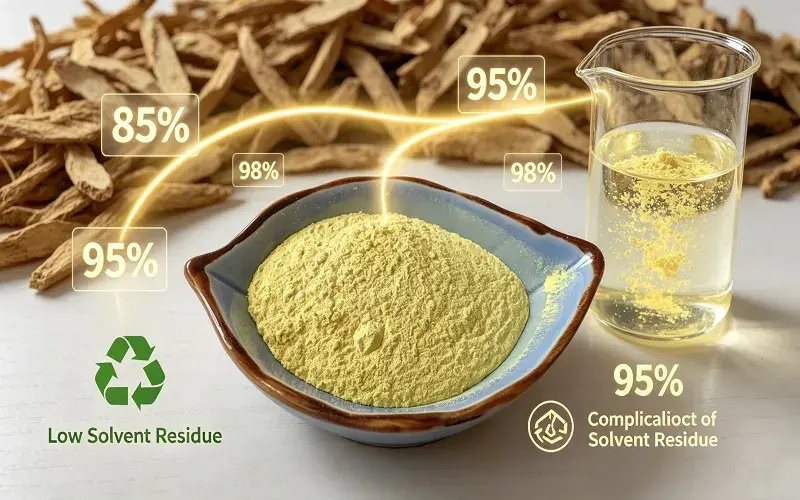
There are many plant-based chemicals on the market for herbal extracts, but standardised flavonoid extracts like ours have their own benefits. Unlike raw plant powders that have different amounts of active compounds, our product has strict quality control measures that ensure the exact amount of Baicalin Powder it contains. The levels of active ingredients in each production batch are checked against Chinese Pharmacopoeia (CP2020) standards using HPLC-DAD analysis. The light yellow powder has consistent physical properties, with a moisture content of about 5% and an ash content of about 1%. The particles are all the same size and can pass through 80-mesh screens. Standardisation gets rid of the problems that come with combining raw botanical materials, giving research and development teams reliable ingredients for making new products over and over again.
Using natural sources vs. synthetic ones
To meet consumer demands for clean-label products, purchasing managers are giving more weight to ingredients that come from nature rather than synthetic compounds. Our extract only comes from grown Scutellaria baicalensis stems, with no added chemicals or genetic change. This comes from nature and meets the labelling requirements for organic and natural product certifications. It also has the strength that you'd expect from pharmaceutical-grade actives. Good Manufacturing Practices (GMP) and food-safe solvents are used in the extraction process to make sure that the finished goods don't have any dangerous residues. This method meets the growing need for clear sourcing in the market, especially among cosmetic brands making "green beauty" products and supplement companies aiming at health-conscious people.
There is clinical evidence to support commercial uses
Scientific confirmation makes botanical ingredients more likely to be sold. Research that has been published in reputable journals shows that baicalin can protect the liver and lower liver enzyme markers in preclinical models. Dermatological studies confirm that it can stop tyrosinase from working, which supports its use in skin-brightening cosmetics. Research on respiratory health suggests that treating inflammatory diseases that affect the lungs might be helpful. These applications based on evidence give marketing teams claims that are backed up and follow FDA and FTC rules. There is a lot of scientific research backing this ingredient, which helps B2B clients who are making goods based on proof. This lowers the regulatory risk that comes with new botanical actives.
Procurement Considerations: How to Source High-Quality Baicalin Powder
Important certifications and rules for following
To choose a qualified provider, you need to check a number of quality qualifications. Our building keeps its ISO certification, which shows that we manage quality in a planned way, its HACCP certification, which makes sure that food safety rules are followed, and its HALAL and KOSHER certifications, which help us reach more speciality consumer groups. These qualifications are more than just paperwork; they show that the company is committed to preventing pollution, keeping track of batches, and making improvements all the time. Registration with the FDA gives suppliers more peace of mind when they enter the US market, where regulators are increasingly closely watching botanical ingredients. As part of the supplier qualification process, people who work in procurement should ask for up-to-date certificates and audit reports.The following factors set the stage for judging suppliers:Manufacturing Capabilities: Four dedicated production lines with an annual production capacity of more than 200 metric tonnes show that the company can grow and meet the needs of long-term supply agreements. This infrastructure can handle both small amounts (1 kg foil bags) and large amounts (25 kg drums), so it can be used from the beginning stages of product development all the way through full-scale production. The quality of the output is always the same because processing equipment uses closed-loop extraction systems and automated quality checkpoints.Quality Assurance Testing: Each batch goes through a lot of tests, such as Inductively Coupled Plasma Mass Spectrometry (ICP-MS) for heavy metal screening (lead 3ppm, arsenic 2ppm, cadmium 1ppm, mercury 0.1ppm), Gas Chromatography-Mass Spectrometry (GC-MS) for residual solvent analysis, and microbiological testing to make sure the Total Aerobic Microbial Count (1000 cfu/g) is less than 1000 cfu/g and that there are no pathogenic organisms present Every package comes with Certificate of Analysis (COA) paperwork, which makes everything clear.Supply Chain Reliability: We've been in business since 2008, so we have 18 years of experience and have built relationships all along the cultivation and processing network. This guards against supply problems and makes sure the quality of the raw materials from the field to the finished Baicalin Powder. Our delivery time of 4–8 days for standard orders shows how well we manage our inventory and logistics.Our partners benefit directly from lower buying risk and faster product development times thanks to these business strengths.
Changes in prices and benefits of ordering in bulk
The price of an ingredient has a big impact on its choice, especially for price-sensitive uses like functional drinks and dietary supplements. The prices of extracts change depending on crop yields, improvements in how well they are extracted, and trends of demand around the world. Through economies of scale, bulk buying deals lower costs while ensuring a steady supply of goods. Our minimum order quantities are flexible enough to accommodate both new brands doing their first product tests and well-known companies that need to ship full containers. Pricing structures that are clear and don't have any hidden fees or surcharges make it possible to accurately model costs for budgets for product formulation. When you commit to a certain amount of a product, you can often get better price and faster production during times of high demand.
Support for documentation and regulations
When plant products are traded internationally, they need to be accompanied by a lot of paperwork that meets the needs of customs, government agencies, and quality control. We give full scientific details, such as plant identification, profiles of active ingredients, allergen statements, and GMO status statements. Regulatory support resources help with cosmetic ingredient statements (INCI nomenclature), dietary supplement fact sheets, and new food alerts that are needed in different places. Our export team organises phytosanitary certificates, certificates of origin, and other trade papers that make it easier for goods to go through customs. International buyers who are dealing with botanical ingredient transactions across borders will find this administrative help helpful.
Ensuring Safe and Effective Use in Industrial Applications
How to Formulate for Different Industries
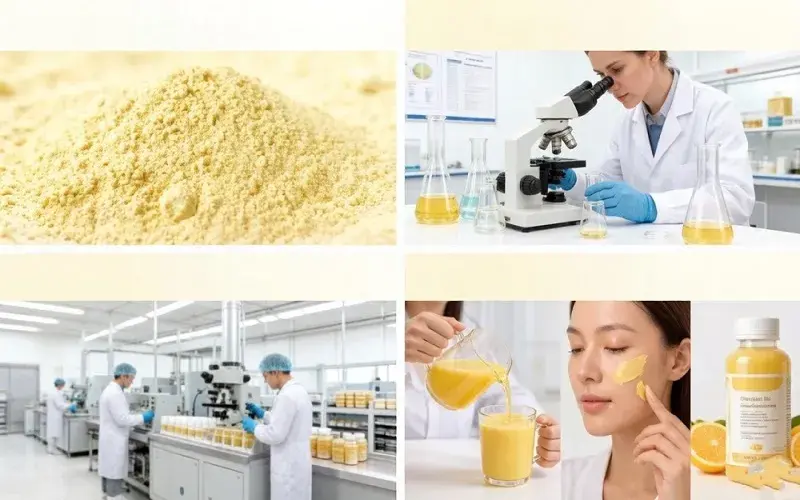
Baicalin Powder concentrations in cosmetics are usually between 0.5% and 3% in topical formulas that aim to fight ageing, make skin brighter, and protect it from UV rays. The ingredient is stable at pH levels between 4.0 and 7.0, which means it can be used with most cosmetic emulsion systems. Because it is thermally stable, it can be used in manufacturing processes that are hot without breaking down. Formulators should take into account that it doesn't dissolve well in water when making product matrices. To improve dispersion, they often use solubilizers or encapsulation technologies.Nutraceutical vitamins usually use doses between 50 mg and 500 mg per serving, based on the health benefits they are supposed to provide. When powder is put into veggie pills or tablets and compressed, the way the powder flows needs to be taken into account. The 80-mesh particle size makes sure that the excipients mix evenly and that the content of each capsule is the same. When making enteric-coated or time-release goods, the pH-dependent solubility profile of the ingredient should help with the design of the release mechanism.Lower amounts, usually 100 to 500ppm, are used in animal feed for veterinary purposes. These lower concentrations help the immune system and reduce the need for antibiotics in heavy farming operations. When heated and pressed, the powder stays stable during pelleting processes. It mixes easily into premix formulas.
Safety Profile and Following the Rules
According to toxicological studies, the recommended levels of use are safe. Acute toxicity testing shows that doses much higher than what is considered therapeutic do not have any negative effects. Long-term tests on supplementation show good tolerance without buildup toxicity. These safety data show that it should be in goods that people eat and drink every day. The product's regulatory status changes depending on the market. In the US, it is considered a dietary ingredient under DSHEA rules, but in Europe, it may need to be evaluated as a novel food, depending on how it will be used. Cosmetic uses are covered by existing rules on ingredients, so there are no specific limits. Our regulatory relations team helps clients meet compliance standards by giving them advice that is specific to their market.
Implementation Success in the Real World
Leading supplement companies have successfully added this extract to liver health products, using its known ability to protect the liver. One well-known example is a stress-relief supplement that contained the ingredient along with adaptogenic herbs. It was proven to work by a clinical study that showed lower cortisol levels and higher scores for sleep quality. Cosmetic companies have made high-end anti-aging serums with baicalin as the main ingredient. This is backed up by studies that show it can stimulate collagen production in vitro. These business wins show that using the right formulation skills along with high-quality raw materials can make goods that stand out in the market and appeal to people who are looking for proof.
Future Trends and Market Outlook for Baicalin Powder
New technologies that improve bioavailability
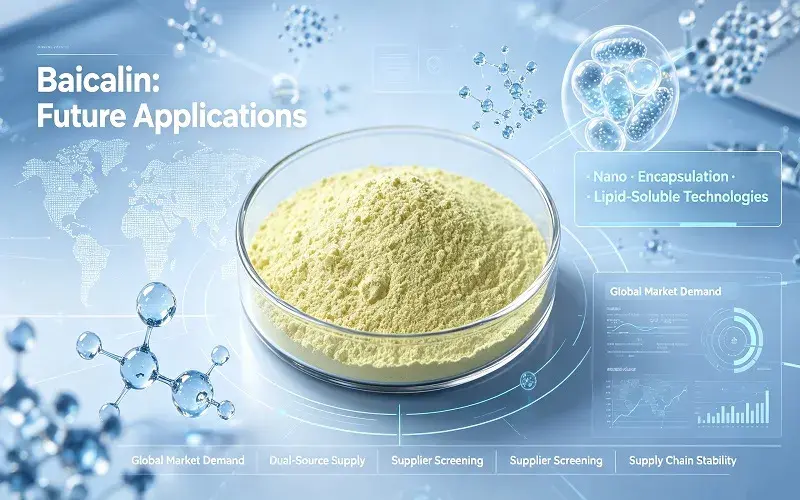
New extraction and formulation technologies keep making Baicalin Powder more useful in more ways. Nanotechnology methods, such as liposomal encapsulation and solid lipid nanoparticles, make it easier for topical products to get into the skin and for supplements to be absorbed by the body. Co-crystallization methods with cyclodextrins get around problems with solubility, allowing them to be added to water-based drinking systems. These new products meet the needs of the market for healthy drinks and supplement forms that are ready to drink. Biotechnology studies that look into microbial fermentation pathways for making flavonoids may one day be used along with botanical extraction to make sure there is a steady supply as demand rises.
Growth Drivers and the Expansion of the Global Market
People in North America, Europe, and the Asia-Pacific region who care about their health are looking for natural alternatives to synthetic cosmetic and drug ingredients. The world market for plant extracts is still growing at rates higher than 8% per year, and standardised flavonoid extracts are one of the fastest-growing segments. It's easier to get into a market when regulators accept traditional plant ingredients that have been proven to work by modern science. The preventive health trend drives demand for nutraceuticals, and the clean beauty movement drives demand for cosmetics. Asian markets are growing especially quickly as people find old botanical ingredients that have been proven to work by new study.
Advice for Strategic Sourcing
People who work in procurement should put an emphasis on relationships with suppliers that offer sustainable sourcing practices and clear supply chains. Setting up dual-source strategies lowers the risk of the supply chain while keeping quality consistent by carefully screening suppliers. Long-term supply agreements with flexible volume commitments find a balance between minimising costs and the cost of keeping inventory. As rules for plant ingredients change, keeping an eye on how they affect target markets makes sure that compliance is maintained. By investing in supplier relationships that offer technical support, such as help with formulation and legal advice, companies can gain a competitive edge by speeding up the product creation process. The market for plant extracts awards purchasing strategies that focus on quality consistency over choices that are only based on cost, since formulation mistakes and not following regulations end up costing more than the cost of premium ingredients.
Conclusion
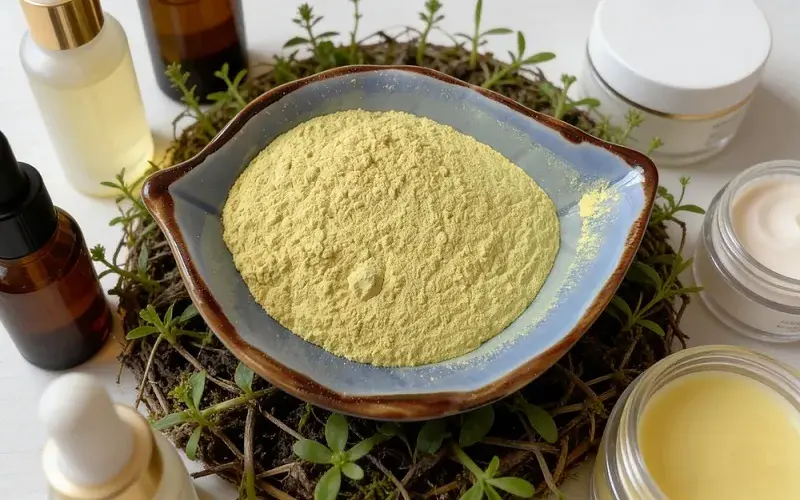
Baicalin Powder is a botanical ingredient that has been scientifically proven to work and can be sold in the cosmetics, nutraceuticals, and pharmaceutical industries. It's becoming more popular among procurement professionals looking for natural actives that they can trust because it has been shown to have therapeutic properties, meets pharmaceutical-grade quality standards, and can be used in a wide range of ways. When traditional botanical knowledge is combined with modern analytical validation, it creates strong value propositions for product developers who need to meet consumer demands for effective ingredients with clean labels. As extraction methods improve and scientific knowledge grows, this flavonoid extract will probably be used in more ways, making it an even more important ingredient in the natural goods business. Strategic partnerships with certified manufacturers protect the supply chain and ensure consistent quality, which are important for the long-term success of a product.
FAQ
Is it safe to use Baicalin Powder in industrial form for a long time?
Many toxicological studies and a long history of use show that Baicalin Powder is safe at the amounts that are suggested. Both short-term and long-term tests of toxicity show large safety margins. When used in cosmetics at concentrations between 0.5 and 3% and in nutraceuticals at doses up to 500 mg per serving, the tolerance profiles are very good, and there are no concerns about accumulation toxicity. The fact that it is approved by regulators in big areas shows that it is safe.
How can I be sure that the seller I'm buying this plant extract from is trustworthy?
Ask for up-to-date qualifications, such as ISO, HACCP, and FDA registration paperwork. Check out the Certificates of Analysis that show the results of the HPLC tests, heavy metal screening, and microbiological tests. Ask well-known names for client recommendations. Additional proof comes from audit reports from third-party quality assurance firms. Before committing to bulk purchases, specifications are checked by sending samples to independent labs for testing.
How long should I wait for logistics to process my sample and bulk orders?
Standard arrival times for items that are in stock are between 4 and 8 days. Sample amounts are usually sent out via express courier within 24 to 48 hours. Timelines may be pushed back by one to two weeks for large orders that need special packaging or specific quality tests. Depending on where the package is going, international shipping takes longer to get to. Setting up vendor-managed inventory programs with reliable suppliers cuts down on the time it takes to get repeat orders.
Partner With Hisy for Premium Baicalin Powder Supply
Hisy can help you find ingredients because he has been an expert at extracting plants for almost twenty years. Our 85%, 90%, and 95% high-purity Baicalin Powder extract goes through strict HPLC testing to make sure that every package meets pharmaceutical-grade standards. With ISO, HACCP, HALAL, and KOSHER certifications, we make sure that your formulation projects are in line with the rules. Our 200-metric-ton annual capacity spread across four dedicated production lines can easily handle samples as small as 1 kg or full containers. We can deliver within 4–8 days to keep your production schedules on track. Our team gives you technical advice throughout the whole process of making a product, whether you're making advanced cosmetics, evidence-based supplements, or health solutions for animals. Get in touch with our plant extract experts at sales@hisybio.com to get free samples or talk about your needs with a reliable supplier who wants you to succeed.
References
1. Zhang, Y., Li, H., & Wang, M. (2021). Pharmacological Effects and Molecular Mechanisms of Baicalin in Inflammatory Diseases. Journal of Ethnopharmacology, 278, 114289.
2. Chen, X., Cao, Y., & Zhang, H. (2020). Baicalin: A Review of Its Anti-Cancer Effects and Mechanisms in Various Cancers. Biomedicine & Pharmacotherapy, 129, 110350.
3. Liu, J., Wang, F., & Li, Z. (2019). Applications of Scutellaria baicalensis Extracts in Cosmetic Formulations: A Comprehensive Review. International Journal of Cosmetic Science, 41(5), 425-438.
4. Huang, W., Chen, L., & Guo, S. (2022). Quality Control and Standardization of Baicalin in Botanical Dietary Supplements. Journal of Pharmaceutical and Biomedical Analysis, 208, 114447.
5. Park, H., Kim, S., & Lee, J. (2020). Bioavailability Enhancement Strategies for Baicalin and Baicalein: A Review of Formulation Technologies. Pharmaceutics, 12(9), 862.
6. Anderson, R., Thompson, K., & Martinez, L. (2021). Regulatory Considerations for Botanical Extracts in Nutraceutical and Cosmetic Products: Focus on Standardized Flavonoid Ingredients. Regulatory Toxicology and Pharmacology, 125, 105012.