

_1752718207094.png)

Difference between berberine sulfate and berberine hydrochloride
When sourcing berberine for supplement manufacturing or pharmaceutical applications, procurement professionals frequently encounter two primary salt forms: berberine sulfate and berberine hydrochloride. Berberine Sulfate Powder stands out due to its enhanced solubility profile in slightly acidic aqueous solutions, making it particularly valuable for liquid supplement formulations and water-soluble powder applications. The hydrochloride form, while more commonly available, presents limitations in certain formulation contexts due to reduced dissolution rates. Understanding these distinctions enables B2B buyers to select the optimal berberine ingredient that aligns with their specific manufacturing requirements, regulatory standards, and cost objectives.
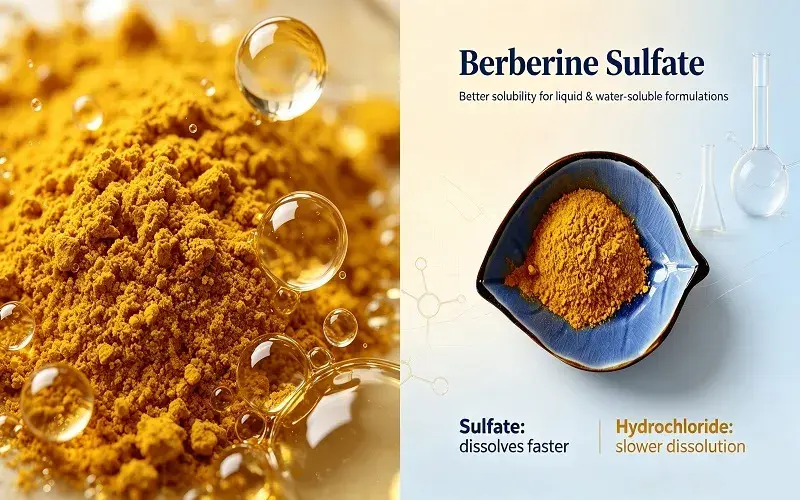
Chemical and Structural Differences Between Berberine Sulfate and Berberine Hydrochloride
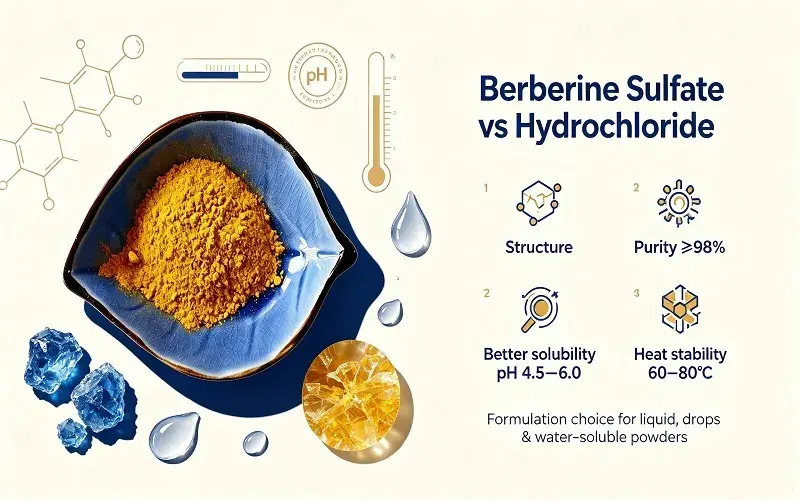
Berberine sulphate and berberine hydrochloride vary in that their molecules are “built” differently and their ions link up differently. Berberine hydrochloride is a salt of berberine cation and chloride anions and has the molecular formula C 20 H 18 ClNO 4. Berberine sulphate is a salt of berberine cation and sulphate anions and has the molecular formula (C 20 H 18 NO 4 ) 2 ·H 2 SO 4, often found as a hydrated solid.
Molecular Weight and Purity Considerations
Berberine hydrochloride has a molecular weight of around 371.8 g/mol, whereas berberine sulphate (which contains two sulphate atoms) has a molecular weight of around 768.8 g/mol (in its anhydrous form). These differences in molecular weight impact the quantity of berberine in a gram of powder. The high-grade Berberine Sulphate Powder at ≥98% purity (HPLC) has consistent alkaloid content, which is necessary for dependable batch-to-batch manufacture; thus, make sure the procurement team checks the purity requirements closely.
Solubility Profiles and Formulation Impact
The most significant practical difference between the two salts is their solubility. It’s not very soluble in water at normal pH, which makes it a challenge for firms that create liquid supplements. The sulphate form is substantially more soluble in slightly acidic water (pH 4.5-6.0), which is ideal for many liquid supplement mixtures. Because berberine sulphate is more soluble, it is more bioavailable and may be produced more quickly. This makes it the greatest option for oral liquids, drops, and water-soluble powders.
Thermal and Chemical Stability
Both kinds of salt are stable in form during normal storage, but during their manufacture, they have to be thermally stable, for example, when they are granulated at high temperature to create tablets or pelleted for animal feed. Berberine sulphate is particularly heat-resistant; it may continue to operate even when heated to 60 to 80 ° C during the granulation process. This stability advantage reduces waste in the manufacturing process and ensures consistent potency in finished items. This directly affects the price of manufacturing and the methods of quality control.
Comparative Efficacy and Health Benefits
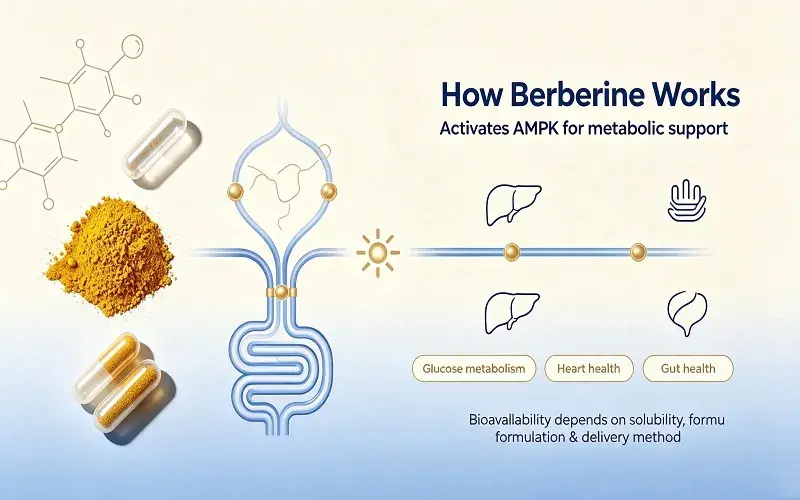
The primary health advantages of the alkaloid berberine are delivered by both berberine sulphate and Berberine Sulfate active compound hydrochloride. These range from promoting good blood sugar metabolism to cardiac function and intestinal wellness. The Berberine molecule itself, not the salt form, turns on AMP-activated protein kinase (AMPK), a crucial metabolic regulator that has an impact on glucose absorption and fat metabolism.
Bioavailability and Absorption Dynamics
Clinical studies have shown that, regardless of the form it is taken in, oral berberine has poor bioavailability (approximately 1% to 5%). This is mostly because it is first broken down in the liver and then slowly absorbed in the intestines. However, the enhanced solubility of berberine sulphate may allow it to be a bit more soluble in the digestive system, which may translate to greater absorption rates. This little edge might be enough for B2B product developers who wish to build high-end supplement formulations to choose berberine sulphate, particularly when it is paired with technologies or delivery methods that enhance absorption.
Mechanism of Action Consistency
The therapeutic benefits are the same for all salt types. The active berberine cation is what makes the medications function. Both forms of dairy also activate AMPK, which helps keep your metabolism healthy, and they also cut down inflammation in addition to destroying gram-negative bacteria. The pure standards must include 98% or more berberine; however, product formulators may select between the two forms according to their manufacturing requirements without changing the core efficacy profile.
Clinical Data and Health Claims
It has been so popular in the past that most investigations in the present scientific publications employ berberine hydrochloride. The pharmaceutical equivalent of berberine sulphate, however, implies that health claims may be made for both. The big berberine study database is useful for B2B purchasers producing goods for markets with backed-up health claims, such as the US under DSHEA standards, regardless of the salt form they choose. This translates into robust marketing assistance and regulatory compliance.
Usage, Dosage, and Safety Profiles for Industrial and OEM Clients
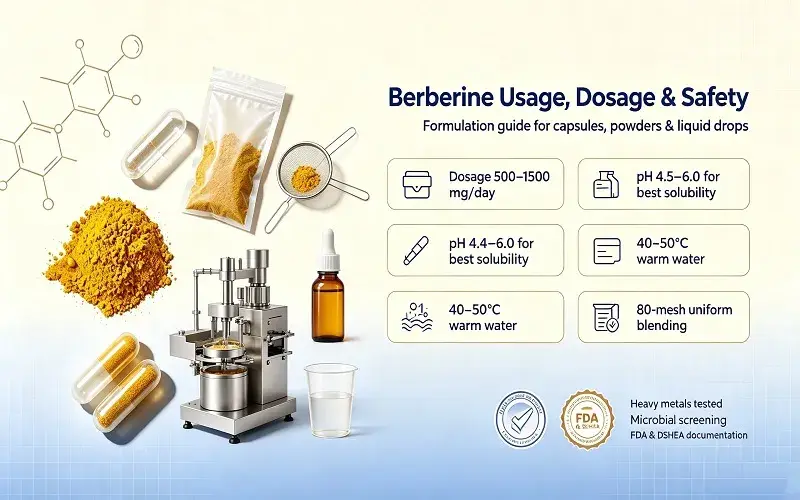
To use berberine ingredients effectively, you need to know standard dosage ranges and safety issues that are unique to industrial manufacturing settings.
Recommended Dosage Protocols
Dietary supplements usually have between 500 mg and 1500 mg of berberine per serving, which is spread out over the course of the day to avoid stomach pain. Berberine hydrochloride has been used for a long time, so makers of capsule goods can use known dosing guidelines. When making liquid vitamins or powders that dissolve in water, berberine sulfate's better dissolution profile lets you use more dose options, like single-serve sachets and concentrated drops that give you the same amount of berberine in a smaller amount of liquid.
Application-Specific Formulation Guidelines
Using slightly acidic pH solutions (pH 4.5–6.0) to dissolve Berberine Sulfate Powder in liquids is the best way to get the best results. Warm water (40–50°C) speeds up the dissolving process, but shaking continuously keeps the mixture from clumping. The small size of the particles in 80-mesh powder ensures that solid dosage forms like pills and capsules are evenly distributed throughout powder mixes. This guarantees that the dosage is the same in all finished products. This particle standard also makes it easier for automatic filling equipment to work, which cuts down on production downtime and makes manufacturing more efficient.
Safety Profile and Regulatory Considerations
Both types of berberine salt have been shown to be safe when used in the recommended dose ranges. Mild digestive problems like cramping, diarrhea, and constipation are common side effects that usually happen at higher doses. To meet California Prop 65 requirements and international safety standards, manufacturers must make sure that their products are thoroughly tested for heavy metal contamination, especially lead (<3.0 ppm), arsenic (<1.0 ppm), cadmium (<1.0 ppm), and mercury (<0.1 ppm). OEM clients making goods for FDA-regulated markets should make sure that suppliers provide full paperwork, such as allergen statements, solvent residue tests, and microbiology screening, to support DSHEA compliance and make market entry easier.
Procurement Insights: Pricing, Sourcing, and Supplier Selection
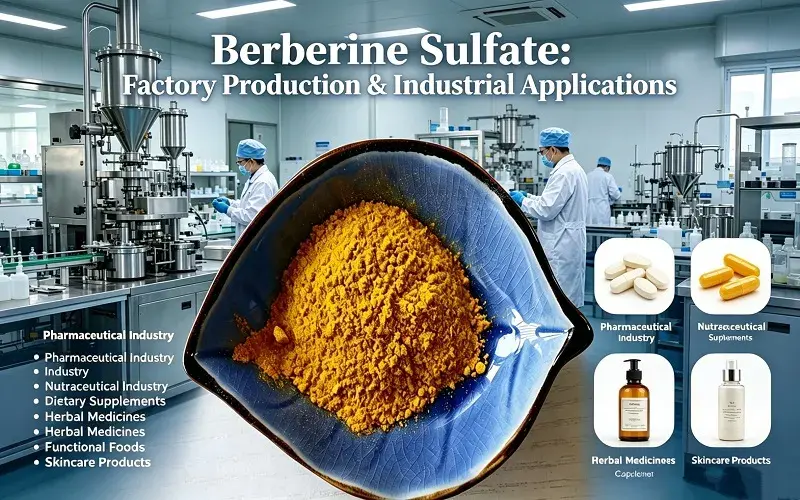
To get around in the B2B berberine market, you need to know how prices change, how the supply chain works, and how to tell the difference between trustworthy sellers and shady ones.
Pricing Structure and Cost Comparison
Berberine Sulfate active compound, has traditionally been cheaper because it is made using tried-and-true methods and in larger quantities by a number of different suppliers. Berberine sulfate usually has a small price premium (about 10–20% more expensive) because it has special production needs and better functional properties. The initial cost difference is usually worth it when you consider the benefits of formulation efficiency gains, such as shorter processing times, better dissolution rates, and better thermal stability, which all add up to lower total production costs for liquid nutrients and complex formulas.
Bulk purchasing in 25-kilogram drums and quarterly contracts offers even more price security. Instead of just looking at the price of an ingredient, procurement managers should think about the total cost of ownership. This includes things like how well the product works in different formulations, how efficiently it is manufactured, and the costs of following the rules, which vary a lot between salt forms.
Supplier Selection Criteria and Quality Verification
To find a reliable berberine manufacturer, you need to carefully look at their certifications, testing capabilities, and supply chain dependability. ISO approval (ISO 9001 for quality management and ISO 22000 for food safety), GMP compliance, and FDA facility registration are some of the most important things that need to be checked. Reliable sellers provide full third-party testing records that include HPLC testing for purity, chromatographic impurity profiles, ICP-MS testing for heavy metals, and microbiology testing to make sure there are no pathogenic bugs and good total plate counts.
Finding the source is another important part of quality. DNA barcoding confirmation that Phellodendron amurense is the biological source stops berberine from being mixed with synthetic berberine or other plant sources that have different alkaloid profiles. Suppliers that offer C14 radiocarbon dating can definitively tell the difference between berberine that comes from natural sources and synthetic ones. This adds another layer of authenticity to high-end product lines aimed at quality-conscious consumers.
Supply Chain Reliability and Logistics
For manufacturing to keep going, suppliers must keep up a steady production capacity and reliable shipping plans. Established manufacturers whose annual production capacity is more than 200 MT show that they have the operational scale to support growing B2B accounts without having to worry about allocation issues. Lead times of 4–8 days for normal orders show that inventory is well managed and transportation networks are responsive, which is important for keeping manufacturing lean without storing too many raw materials. When suppliers offer free samples (usually 1 kg), customers can thoroughly test how well the ingredient works with their formulations before committing to bulk purchases. This lowers the risk of procurement and makes sure the ingredient meets the needs of the specific application.
Berberine Sulfate Powder vs Alternatives: Market Position and Advantages
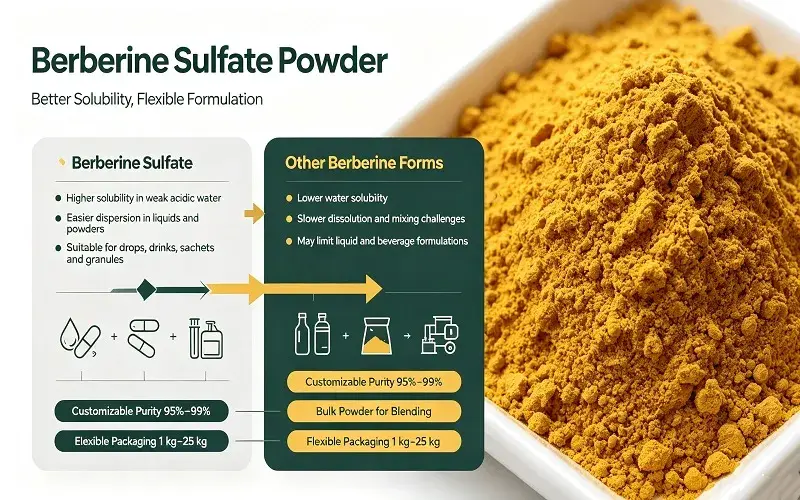
When you compare berberine sulfate to other berberine salts and plant extracts, you can see that it has clear competitive benefits that help you set your supplement apart from others on the market.
Performance Advantages Over Hydrochloride Form
The sulfate form is better than berberine hydrochloride in three main ways that directly address common problems in manufacturing. Better solubility in slightly acidic water solutions gets rid of the formulation problems that liquid supplement makers have when they use hydrochloride forms. These forms don't dissolve completely, which causes stability problems and doses that aren't always given correctly. Better thermal stability means that the product's activity is kept even when it's being made at high temperatures. This is especially important for pelleted animal feed, where temperatures hit 70–80°C during production. Additionally, the solid structure of berberine sulfate makes it better at resisting moisture, which increases its shelf life and keeps its flowability even in storage areas with a lot of moisture.
Application Versatility and Market Opportunities
Berberine Sulfate Powder from dependable suppliers can be used in a wide range of ways in the pharmaceutical, animal nutrition, and nutraceutical industries. The compound dissolves easily, which makes it perfect for new delivery methods like fizzing tablets, liquid shots, and functional drinks, which are all growing areas in the metabolic health market. Animal health product brands benefit from the sulfate form's compatibility with feed manufacturing processes. This is because it stays stable at high temperatures and is evenly distributed in feed matrices, which ensures consistent dosing for livestock and aquaculture uses. Custom adjustments to the purity level (95% to 99%) allow for product positioning strategies that range from low-cost, entry-level supplements to high-end formulas that command higher prices.
Client Success Examples and OEM Applications
Successful OEM goods illustrate that berberine sulphate is a beneficial chemical that may be employed in a range of scenarios. Berberine sulphate is also well-suited to slightly acidic formulations with citrus flavouring, which makes it a popular choice for single-serve metabolic health shots from liquid supplement makers. This has led to shelf-stable products that are effective for 24 months. Some complex supplement companies that use berberine with other plant extracts that function in tandem, such as silymarin (milk thistle), claim the sulphate version works better with their formulations. This allows for more metabolic health impacts while keeping an efficient manufacturing method. The formulation versatility of berberine sulphate is appreciated by private-label clients, enabling a broad spectrum of product lines from simple capsules to premium liquid delivery systems via unified production collaborations.
Conclusion
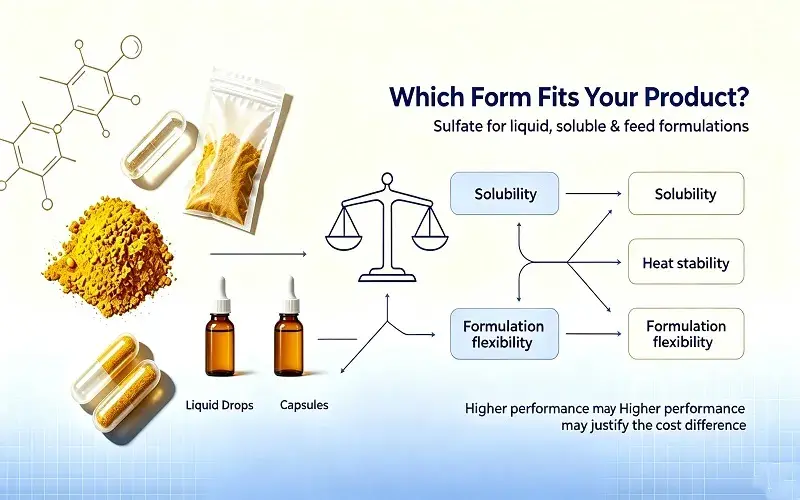
Choosing between Berberine Sulfate Powder and berberine hydrochloride depends on how you want to make the product, what formats you want it to come in, and how you want to position it in the market. Berberine sulfate has unique benefits when it comes to how well it dissolves, how stable it is at high temperatures, and how easily it can be mixed with other ingredients. These benefits make it very useful for liquid supplements, water-soluble powders, and animal feed. Berberine hydrochloride can still be used in traditional capsule forms, but the sulfate form is becoming more popular among forward-thinking companies that are making new delivery systems because it works better.
Your buying plan should include thorough testing to ensure quality, building trusting relationships with suppliers backed by the right certifications, and a careful look at the total cost of ownership. The small price increase for berberine sulfate often ends up being worth it when you consider the increased manufacturing efficiency and formulation options that help your product stand out in a crowded market.
FAQ
1. Which berberine form delivers better bioavailability?
The active berberine cation stays the same no matter what salt form it is in, so both berberine sulfate and berberine hydrochloride are bioavailable in the same way. The better solubility of berberine sulfate may support slightly better dissolution in the digestive tract, tho this isn't clinically significant because berberine isn't very well absorbed anyway.
2. Can berberine sulfate replace hydrochloride in existing formulations?
Replacement depends on the details of the recipe. For capsules and tablets, straight replacement is possible with a few small changes to account for differences in molecular weight that affect the amount of berberine in a gram. If you move to berberine sulfate for liquid forms, they work much better because it dissolves better.
3. What certifications should I require from berberine suppliers?
ISO 9001 (quality management), GMP compliance, and FDA site registration are all important certificates. Ask for evidence from a third party that includes bacteria reports, heavy metal screening via ICP-MS, HPLC purity checks, and solvent residue tests. DNA barcoding confirmation of botanical source adds to the quality assurance of high-end products.
4. How does particle size affect manufacturing processes?
The 80-mesh particle specification makes it easier for automated filling equipment to work and makes sure that powder blends are evenly distributed. Finer particles make it easier for liquids to dissolve, and they also keep their great flow properties, which cuts down on production downtime and makes dosing more consistent.
Partner with Hisy for Premium Berberine Sulfate Powder Supply
Shaanxi Hisy Biotechnology Co., Ltd. has been making plant extracts for more than 18 years and can help you find berberine ingredients. Our pharmaceutical-grade Berberine Sulfate Powder is very pure—≥98% pure (HPLC-tested), and it comes from real Phellodendron amurense bark that was collected according to strict CP2020 rules. Our facilities are FDA-registered, HACCP-certified, and ISO-compliant, and they provide batch-to-batch uniformity that is important for pharmaceutical and supplement makers who care about quality.
In addition to standard supply, we can make specific changes to the purity (95% to 99%), help with developing complicated formulas, provide stability testing data, and offer variable minimum order amounts ranging from 1 kg samples to 450 kg bulk shipments. Rapid sampling services (3-5 days) let you fully test how well your formulation works with other ingredients before committing to large production runs. As a reliable provider of Berberine Sulfate Powder, we keep secret formulas safe with non-disclosure agreements (NDAs) and provide full regulatory paperwork, such as allergen statements, country-specific certificates, and detailed ingredient declarations. Contact our procurement specialists at sales@hisybio.com to talk about your berberine ingredient needs.
References
1. Singh, A., & Duggal, S. (2021). Berberine: an alkaloid with versatile biological activities. Journal of Natural Products, 84(5), 1459-1490.
2. Neag, M. A., Mocan, A., Echeverría, J., Pop, R. M., Bocsan, C. I., Crisan, G., & Buzoianu, A. D. (2018). Berberine: Botanical occurrence, traditional uses, extraction methods, and relevance in cardiovascular, metabolic, hepatic, and renal disorders. Frontiers in Pharmacology, 9, 557.
3. Feng, X., Sureda, A., Jafari, S., Memariani, Z., Tewari, D., Annunziata, G., Barrea, L., Hassan, S. T. S., Smejkal, K., Malanik, M., Sychrova, A., Barreca, D., Ziberna, L., Mahomoodally, M. F., Zengin, G., Xu, S., Nabavi, S. M., & Sureda, A. (2019). Berberine in cardiovascular and metabolic diseases: From mechanisms to therapeutics. Theranostics, 9(7), 1923-1951.
4. Wang, Y., Zidichouski, J. A., Zhang, J., Muir, A. D., Oakes, J., & Dong, M. (2016). Pharmacokinetics and bioavailability of berberine salt forms. Journal of Pharmaceutical Sciences, 105(12), 3539-3546.
5. Kumar, A., Ekavali, Chopra, K., Mukherjee, M., Pottabathini, R., & Dhull, D. K. (2015). Current knowledge and pharmacological profile of berberine: An update. European Journal of Pharmacology, 761, 288-297.
6. Yin, J., Xing, H., & Ye, J. (2014). Efficacy of berberine in patients with type 2 diabetes mellitus: An updated systematic review and meta-analysis. Metabolism, 63(8), 984-991.