

_1752718207094.png)

Difference between kale powder and fresh kale leaves
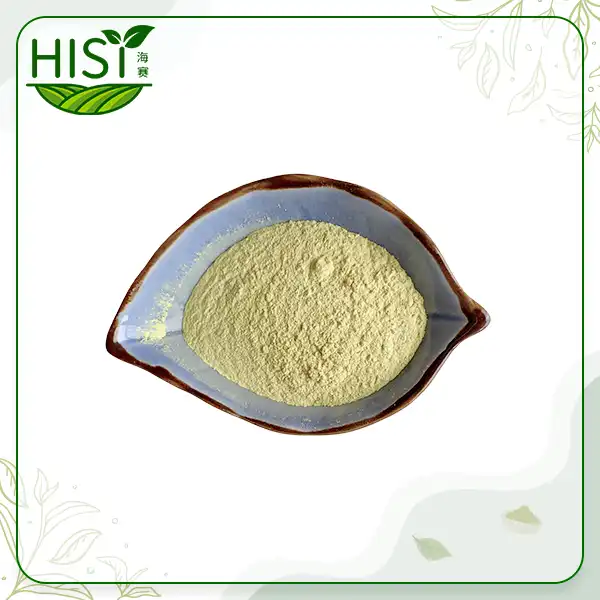
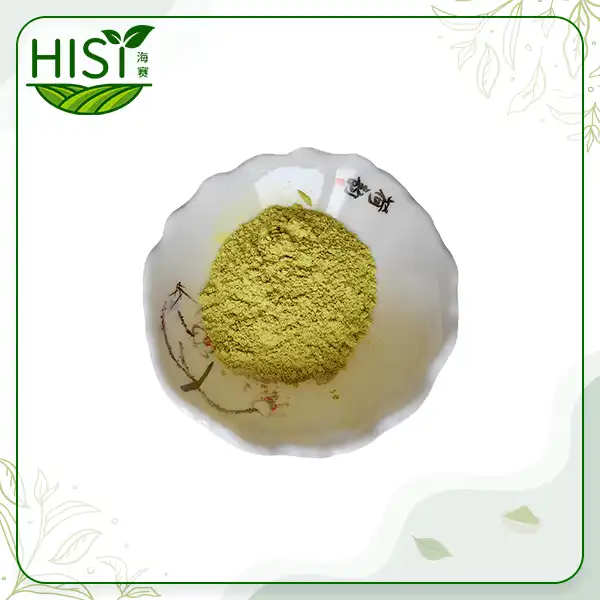
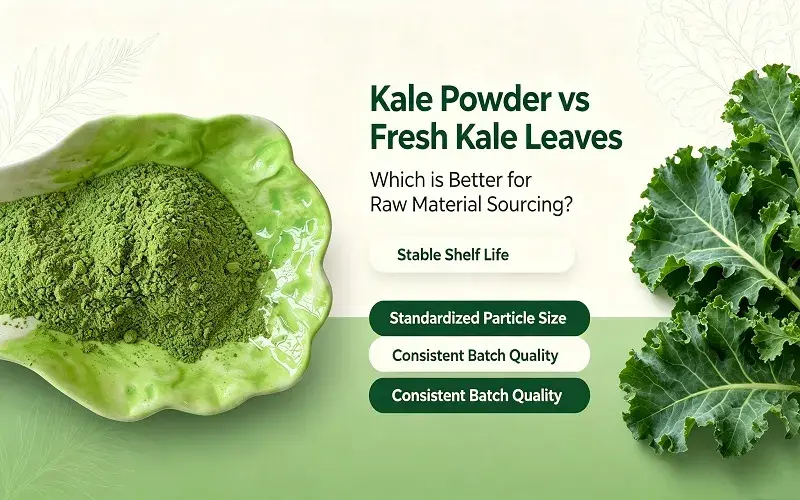
When sourcing ingredients for supplements, functional beverages, or cosmetic formulations, the choice between kale powder and fresh kale leaves significantly impacts your production efficiency, cost structure, and product consistency. Kale Powder, derived from Brassica oleracea var. acephala DC., offers concentrated nutrition in a shelf-stable format with 99% purity and standardized particle size. Fresh kale leaves provide raw, unprocessed greens ideal for immediate consumption but present logistical challenges for bulk procurement. Understanding these distinctions helps B2B buyers make informed decisions that align with manufacturing requirements, regulatory compliance, and market positioning strategies in the competitive health food sector.
Nutritional and Functional Comparison
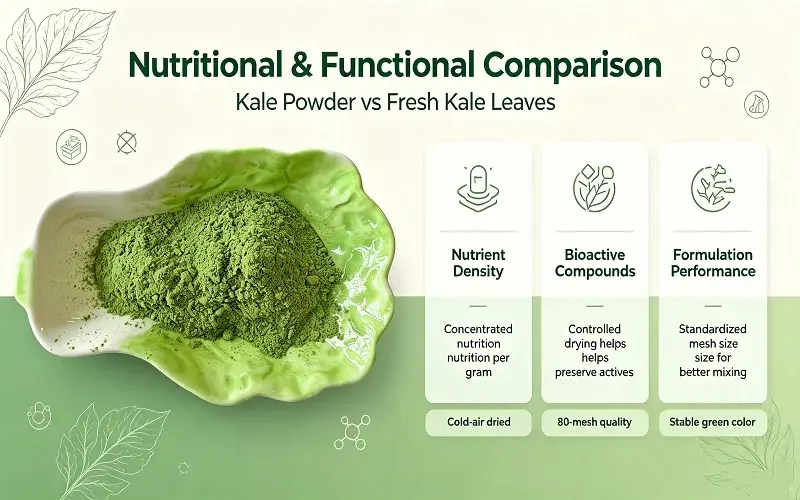
The nutritional density of both forms is very high, but processing changes bioavailability, concentration levels, and the way finished products work.
Vitamin and Mineral Content Analysis
The nutritional value per gram of fresh kale leaves is lower than that of concentrated powder because they are mostly water. Fresh leaves, which weigh 100 grams, have about 49 calories, 4.3 grams of protein, and a lot of vitamins A, C, and K. During the dehydration process, water is removed while nutrients are concentrated. This makes 10 grams of powder that has the same nutritional value as 100 grams of fresh leaves. Because of this concentration benefit, formulators can give more nutrients in smaller serving amounts, which is very important for capsule and tablet uses where room is limited. However, heat-sensitive chemicals like vitamin C may lose some of their strength during drying. Our low-temperature air-drying method, on the other hand, reduces these losses more than traditional high-heat methods.
Phytochemical Preservation and Bioactive Compounds
Glucosinolates, carotenoids like lutein and beta-carotene, and polyphenolic vitamins are what make kale healthy. Controlled drying methods keep these compounds well, and some studies have shown that dehydration can even increase the amount of antioxidant activity per gram of material. The 99% pure standard makes sure that these beneficial ingredients don't break down too much, which keeps the healing potential that makes kale useful in nutraceutical uses. These chemicals are naturally found in fresh leaves and may help enzymes work better. However, some of these chemicals are volatile and disappear during processing. When it comes to most business uses, especially those that need consistent doses and long-term stability, the concentrated powder version works better without losing any of the bioactive content.
Functional Performance in Formulations
The size of the particles has a big effect on how ingredients work in finished goods. Our 80-mesh requirement ensures that organic kale vegetable powder mixes easily into drinks without adding a gritty taste or settling problems that happen with finer materials. This fine grinding also makes it easier for the body to absorb nutrients during digestion, which could make the food more bioavailable than if the fresh leaves were chewed less well. If the product is made correctly, the grass-green color stays the same throughout its shelf life. This supports the clean label positioning and meets customer standards for natural green foods. Fresh leaves have fiber structure and texture complexity that are useful in cooking but can't be found in powder form. This is a key difference to keep in mind when choosing items based on how they will be used.
Procurement and Supply Chain Considerations
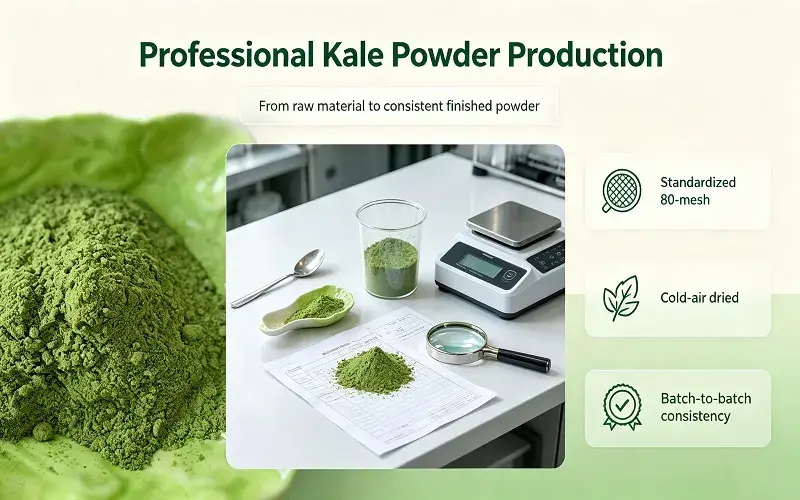
When making sourcing decisions, you have to think about more than just the product's features. You also have to think about logistics, quality control, and following the rules, all of which affect the total cost of ownership.
Logistics Efficiency and Transportation Economics
Fresh kale needs to be shipped in a cooler, which makes shipping costs 40–60% higher than for goods that can stay at room temperature. The perishability window provides a sense of urgency that makes it harder to negotiate and pushes people to accept the supply that is available, even if it isn't the best quality. Because dehydration drastically reduces weight and volume, shipping costs can be cut by up to 90%. For example, a 10 kg box of powder has the same nutritional value as 100 kg of fresh leaves. This saves even more when shipping internationally, where prices are based on weight. This makes buying powder especially appealing for distributors who serve many regions from central warehouses. Our fast delivery time (4–8 days) makes sure that orders are filled quickly, and our monthly production capacity of 800 kg can handle both large buyers and smaller trial orders with flexible minimum order quantities.
Quality Consistency and Batch Standardization
One of the hardest things about buying fresh produce is that the nutrients, flavors, and physical properties can change from season to season and batch to batch. Conditions for growing, when to gather, and how the food is handled all cause variations that make it harder to make products and check their quality. Standardized processing methods and thorough testing get rid of these differences in dried green veggie ingredients. Before it is released, every batch goes through a full analysis that includes checking for pesticide residue, bacterial testing, heavy metal analysis, and vitamin verification. Our FDA-registered, HACCP-certified, and ISO-compliant center makes sure that foreign standards are met. We offer full documentation packages that include Certificates of Analysis, Material Safety Data Sheets, and Technical Data Sheets that help target markets get regulatory approval faster.
Certification Requirements for Global Markets
The US market wants more and more organic certification, non-GMO verification, and full documentation of where the food came from. We do offer standard processing that is certified as food-grade, but many high-end buyers are looking for organic qualifications that cost more. Our network of suppliers keeps in touch with certified organic farms. This lets us quickly switch to organic production when the number of orders calls for it. The HALAL and KOSHER certifications let us sell to more customers in the Middle East and other specific areas. They are simple additions to our compliance portfolio. Fresh farm goods have to go through phytosanitary checks, quarantine holds, and seasonal import limits that can slow down shipments and raise demurrage charges. The dehydrated format makes customs processing easier.
Cost, Pricing, and Market Comparison
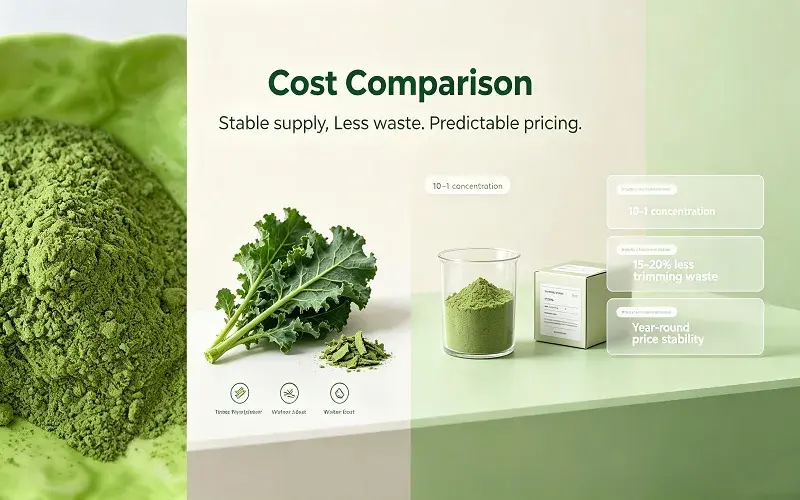
To fully understand the total cost equation, you need to look at more than just the initial purchase price. You also need to look at the costs of waste, storage, labor, and missed opportunities throughout the supply chain.
Price Structure and Cost Drivers
Wholesale prices for fresh kale change a lot depending on when it's available. Prices are usually low during the growing season and high in the winter or when bad weather stops production. These changes make planning hard and can cut into profit margins when suddenly high input costs happen. The powder format keeps prices stable because it can be processed during harvest times, when the cost of raw materials is lowest, and stock is kept to keep prices stable all year. On a surface level, the price per kilogram of powder seems higher than the cost of fresh leaves. However, the concentration factor changes this equation: 10 kg of powder is nutritionally equivalent to 100 kg of fresh material. This immediately equalizes costs, even before considering the savings in waste, longer shelf life, and shipping.
Hidden Costs in Fresh Produce Procurement
Getting fresh leaves has high secret costs that cancel out any price benefits that might be there. About 15-20% of trimming waste is thrown away because the outer leaves are damaged. Moisture loss during storage makes the yield even less useful. These losses are made worse by spoilage risk, which happens a lot when production plans change or when quality problems mean that a given product has to be thrown away. The cost of labor for cleaning, inspecting, and turning fresh leaves into a form that can be used in production is very high. Cooling down storage uses energy and takes up valuable cooler room. All of these things add up to make the total cost of ownership 30–50% higher than the invoice price. This means that producers who want to keep costs low and operations running smoothly should look at uniform organic kale vegetable powder ingredients.
Market Dynamics and Demand Trends
People are interested in preventive health, clean label products, and plant-based nutrition, which has led to strong growth in the global market for superfood ingredients. Powdered greens are a direct part of this trend, especially in the functional drink and dietary supplement markets, where ease of use and shelf stability are very important. A study of the market shows that there will be strong demand growth in North American markets where smoothies and green drinks are already popular. With a monthly production capacity of 800 kg, we can meet the needs of this growing market while still upholding quality standards that set us apart from commodity producers whose main goal is to compete on price. When buyers build relationships with dependable manufacturers, they ensure a steady supply of goods and get expert help, which gives them an edge in the markets that come after.
Usage Scenarios and Decision-Making Guide for B2B Clients
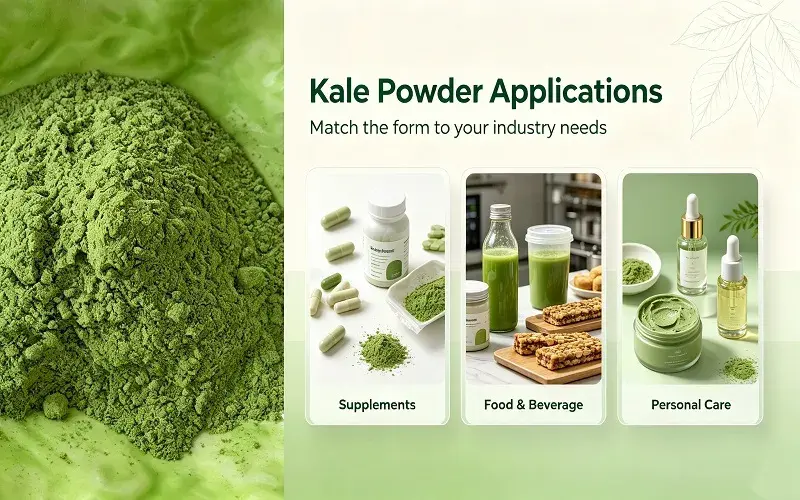
To choose the right form of an ingredient, you have to match the product's properties with the needs of the application and your company's goals.
Supplement and Nutraceutical Applications
Dietary supplement brands are the best type of customer for concentrated veggie powders. The format lets you precisely dose capsules, tablets, and powder sachets, where consistency is important for label claims and consumer trust. A functional beverage company that is making a green superfood blend recently chose our material because it has small particles that make sure the blend mixes completely without settling. This is in response to customer comments about the gritty appearance of competing products. The 99% pure standard helps with placement for clean labels and makes regulatory compliance easier because fewer excipients are needed to get the desired results. Brands that cater to health-conscious customers appreciate our clear supply chain and thorough documentation, which helps them show authenticity and quality, which helps them charge higher prices in crowded markets.
Functional Beverage and Food Manufacturing
Ready-to-drink drink companies and protein shake brands are adding green veggie powders to their products more and more to boost their nutritional value and back up their marketing claims about using whole food ingredients. To make sure that products stay good throughout their shelf life, our technical team helps with solubility optimization, flavor masking strategies, and stability testing. Recently, we worked with a company that makes plant-based proteins to make a special blend that included kale and other items that went well with it. This shows that we can come up with new formulas. Nutritional food companies that make fortified pasta, baked goods, and energy bars like the powder because it can increase the amount of nutrients in the food without changing the texture or flavor too much. The grass-green color can be hard to work with in some situations, but it can also make items look good in places where people think natural green colors are healthy.
Cosmetic and Personal Care Formulations
Because they contain minerals and antioxidants, green vegetable extracts are good for skin care products that want to protect the environment and slow down the aging process. Cosmetic formulators put the powder into face masks, cleansers, and serums. The amounts used vary from 0.5 to 3%, based on the effects they want and the limitations of the formula. Our small particles make sure that the texture is smooth and not gritty, and the steady grass-green color makes the product look good. These products work well for brands that focus on natural and plant-based beauty because they match their marketing strategies and what customers want. In the competitive personal care market, we give detailed advice on how to add ingredients, how to make sure they work with other ingredients, and how to keep products safe and stable for as long as they usually last.
Conclusion
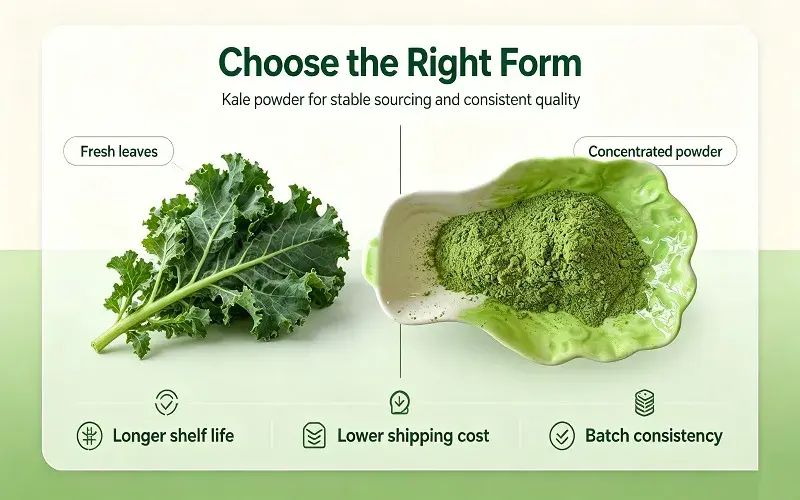
Choosing between kale powder and fresh leaves depends on what's most important for the business, what the application needs, and how the company wants to place itself in the market. For business-to-business customers in the supplement, functional drink, and ingredient distribution industries, the concentrated powder version is the best choice because it lasts longer on the shelf, is easier to ship, costs less, and can be used in a variety of ways. Our 99% purity, 80-mesh particle size, and air-dried processing method protect the nutritional value while addressing important issues related to consistency, documentation, and supply reliability. The 90% drop in transportation costs has instant economic gains that spread through distribution networks. While fresh kale still has some niche benefits in foodservice and applications that value texture and "fresh" positioning, these are very different situations when it comes to buying it. When buying professionals understand these differences, they can choose ingredients that help the business reach its goals and gain a competitive edge in the health and wellness markets, which are always changing.
FAQ
1. What is the nutritional equivalence between kale powder and fresh leaves?
In terms of core nutrients, 10 grams of properly treated powder is the same as 100 grams of fresh leaves. The dehydration process gets rid of water while concentrating vitamins, minerals, and phytochemicals. Depending on the processing method, heat-sensitive compounds like vitamin C may be lost in small amounts. Our low-temperature air-drying method cuts down on these losses, keeping most of the good chemicals.
2. How long does kale powder maintain quality during storage?
Powder that is kept in foil-lined containers away from light, heat, and moisture for 24 months stays solid. Once opened, humidity can cause clumps, so resealing packages tightly and keeping them in a controlled environment will make them last longer. Fresh leaves go bad in 7–10 days, even when they are refrigerated, which is a big difference in how stable they are on the shelf.
3. Are there concerns about heavy metals or contaminants in bulk powder?
Every production batch from reputable sources is put through strict third-party testing to look for chemical residues, heavy metals, and microbiological contaminants. As part of our quality control procedures, we test for more than 500 different types of pesticides and make sure that the amounts of heavy metals stay well below the limits set by the FDA and international guidelines.
Partner with Hisy for Premium Kale Powder Supply
Shaanxi Hisy Biotechnology has been making Kale Powder for more than 18 years and works with supplement brands, beverage companies, and ingredient sellers all over the world. Our grass-green powder is 99% pure and has particles that are 80 meshes in size. It is made by gently air-drying the ingredients, which keeps the nutrients intact. The facility is FDA-registered, HACCP-certified, and ISO-compliant, so it can make sure that every batch meets strict international standards and has all the paperwork to back it up. We can handle orders ranging from 1 kg samples to 800 kg bulk shipments, so we can meet the needs of both product development and full-scale production. Email our team at sales@hisybio.com to get free samples, talk about custom formulation support, or get full technical specifications.
References
1. Sikora, E., & Bodziarczyk, I. (2012). Composition and antioxidant activity of kale (Brassica oleracea L. var. acephala) raw and cooked. Acta Scientiarum Polonorum Technologia Alimentaria, 11(3), 239-248.
2. Murador, D. C., Mercadante, A. Z., & Rosso, V. V. (2016). Cooking techniques improve the levels of bioactive compounds and antioxidant activity in kale and red cabbage. Food Chemistry, 196, 1101-1107.
3. Šamec, D., Urlić, B., & Salopek-Sondi, B. (2019). Kale (Brassica oleracea var. acephala) as a superfood: Review of the scientific evidence behind the statement. Critical Reviews in Food Science and Nutrition, 59(15), 2411-2422.
4. Olsen, H., Aaby, K., & Borge, G. I. (2010). Characterization and quantification of flavonoids and hydroxycinnamic acids in curly kale (Brassica oleracea L. Convar. acephala Var. sabellica) by HPLC-DAD-ESI-MSn. Journal of Agricultural and Food Chemistry, 58(7), 4039-4049.
5. Ayaz, F. A., Glew, R. H., Millson, M., Huang, H. S., Chuang, L. T., Sanz, C., & Hayirlioglu-Ayaz, S. (2006). Nutrient contents of kale (Brassica oleraceae L. var. acephala DC.). Food Chemistry, 96(4), 572-579.
6. Manchali, S., Murthy, K. N., & Patil, B. S. (2012). Crucial facts about the health benefits of popular cruciferous vegetables. Journal of Functional Foods, 4(1), 94-106.