

_1752718207094.png)

What are the applications of Curcumin 95% in health supplements?
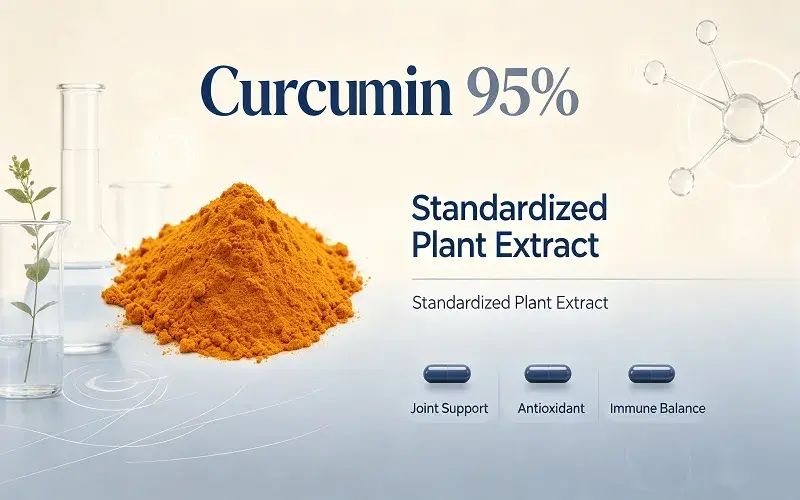
Curcumin 95% serves as a foundational ingredient in health supplements, particularly excelling in anti-inflammatory joint support formulas, antioxidant-driven wellness products, and immune-modulating blends. This highly concentrated botanical extract offers standardized potency that enables manufacturers to deliver consistent therapeutic benefits. Across the supplement industry, its applications span joint health capsules, cognitive enhancement formulations, and functional beverage powders, where bioavailability enhancement techniques unlock its full potential. The growing preference for natural, plant-derived active ingredients has positioned this extract as an essential component for brands seeking scientifically validated health solutions.
Key Applications of 95% Curcumin in Health Supplements
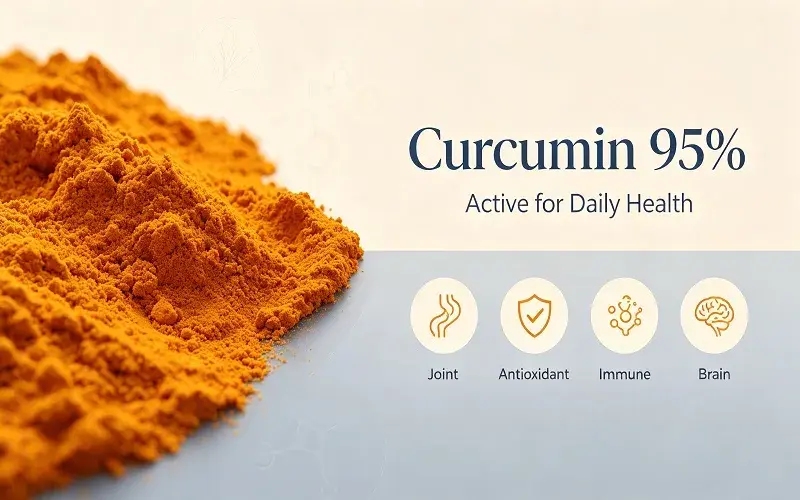
Joint Health and Mobility Support Formulations
The main B2B use is in joint support pills, where the extract's ability to stop COX-2 from working helps with inflammatory pain without the harmful effects that come with synthetic options. Formulators usually mix this ingredient with plants that work well together, such as Boswellia serrata extract, ginger root, and MSM, to make complexes with multiple ingredients that work well together. The standard potency makes it possible to give exact doses, which are generally between 500 mg and 1500 mg per day spread out over several meals. Using lipid carriers in softgel delivery methods improves absorption, and pharmacokinetic studies show that mixing 5–10 mg of piperine with the drug increases solubility by up to 2000%.
Antioxidant and Cellular Protection Products
Because it can fight oxidative stress, this concentrated curcuminoid substance is used by health product makers that focus on long life and cell health. The shape of the molecules allows them to directly scavenge free radicals while also turning on Nrf2 pathways that control the antioxidant response in cells. CoQ10, resveratrol, and other ingredients often work together in formulas for heart health to make full oxidative defense systems. The compliance with the USP/EP pharmacopeia ensures consistency from batch to batch, which is very important for long-term supplementation plans. Premium wellness brands are asking for C14 isotope verification more and more to prove that their products come from plants. This sets them apart from synthetic alternatives that customers are turning down more and more.
Immune System Modulation Supplements
The compound's ability to change how immune cells work without overstimulating them is being used in new immune support formulas. The extract changes both innate and adaptive immune reactions by controlling the production of cytokines and the growth of immune cells. During times of the year when people are more interested in health, brands mix it with elderberry, zinc, and vitamin D3. The 36-month shelf life is a lot longer than the standard 24-month shelf life on the market. This makes it easier for supplement distributors to keep track of their inventory when demand changes with the seasons. Manufacturers like that the ingredient works well in both powder and pill forms when making immune support goods.
Cognitive Function and Neuroprotection Formulas
Lipid-based delivery systems containing Curcumin 95% raw material powder can get through the blood-brain barrier, which has opened up new uses in cognitive health. Researchers have found that this substance might help memory and protect neurons in a number of ways, such as by lowering the damage that oxidative stress does to neural tissue and controlling the inflammation reactions in brain tissue. It is mixed with omega-3 fatty acids and phosphatidylserine by sports nutrition companies that sell to athletes to help them recover. The powder form works well with nootropic stacks and pills for brain health. When formulating cognitive support goods, formulators often ask for custom bioavailability enhancement solutions, such as nanoemulsion delivery systems or phytosome technology, to increase the concentrations in brain tissue.
Comparing Curcumin 95% with Other Curcumin Extracts and Supplement Forms
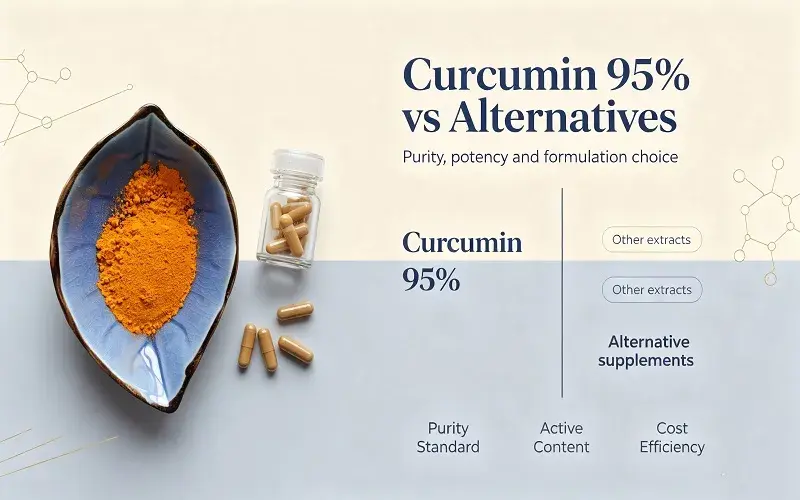
Purity Levels Compliance Balance
Knowing the difference between grades of 90%, 95%, and 98% purity helps procurement pros make the best use of formulation funds without losing effectiveness. The 95% curcumin specification strikes the perfect balance between providing pharmaceutical-grade strength and keeping prices low for bulk purchases in 25-kilogram drums. Lower purity grades might have more plant matrix materials that lower the concentrations of active compounds, so you need to take bigger capsules or more of them every day. On the other hand, 98% of extracts demand higher prices that might not lead to proportionally better therapeutic outcomes. Our testing shows that the curcuminoid ratios are the same across runs, confirming the 95.16% real potency. This solves a major problem where synthetic alternatives or materials that have been tampered with fail quality checks.
Natural versus Synthetic Curcuminoid Sources
The C14 isotope test clearly tells the difference between extracts from plants and alternatives made in a lab that some suppliers market as "nature-identical." Customers strongly prefer botanical sources, and regulations in high-end markets are looking more closely at synthetic alternatives. Using food-grade ethanol in a natural extraction process keeps the whole curcuminoid profile, including the demethoxy variants that help with biological activity. Synthetic copies aren't as complicated, and the market is becoming less and less open to them. California Prop 65 compliance for heavy metal content, in a way that synthetic production may be different, since it may bring contamination risks that aren't present in properly controlled plant extraction.
Delivery Format Considerations
The powder form gives makers the most formulation freedom, so they can make concentrations that work best for each purpose. The most common way to deliver drugs is still in vegetarian or gelatin capsules, which protect the photosensitive compound and make sure the right dose is given. Bioavailability problems can be fixed by using softgels that contain medium-chain triglycerides or phospholipid carriers to improve lipid absorption. For tablet compression to work, special ingredients are needed to keep the tablets from breaking down under the pressure and heat of production. Micro-encapsulation or cyclodextrin complexation is needed in beverage uses to keep colors from settling in water. For business-to-business purchases, the minimum order quantity (MOQ), lead times, and pricing are all affected by the different formats.
Procurement Guide for Curcumin 95% – Finding Reliable Suppliers and Making Informed Buying Decisions
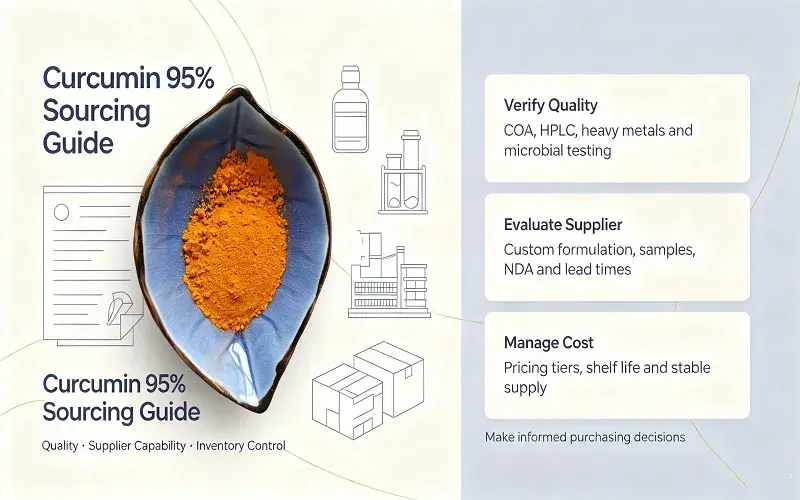
Quality Verification and Certification Requirements
A thorough study of the supplier's paperwork is the first step to a successful buying process. Full HPLC chromatograms showing individual curcuminoid peaks, not just the total curcuminoid percentage, should be part of the COA proof process. For the US market, heavy metal test results for lead, arsenic, cadmium, and mercury must show that they meet Prop 65 guidelines. Testing for microbes that show there are no pathogens, like Salmonella and E. coli, protects people who buy things. Having FDA registration, HACCP certification, and ISO quality management systems in place shows that the manufacturing process is being controlled. Clean-label standards are met by non-GMO claims and pesticide residue tests. Asking for C14 verification reports proves that the product comes from plants and gets rid of the risk of manufactured adulteration. These requirements for paperwork are the basis of quality assurance when getting ingredients for supplements.
Evaluating Supplier Capabilities for Custom Solutions
Manufacturers working on their own formulas need sources who can help with technical research and development in addition to basic quality standards. To improve bioavailability, you need to know a lot about phospholipid complexation, nano-emulsion technology, or piperine co-formulation. Custom concentration development for specific uses needs production methods that are flexible and MOQ structures that are easy to handle. Product development times can be sped up by being able to provide quick samples—ideally 1 kg within 3–5 days. When people work together, NDA execution protects secret formulas. Custom packaging options, from drums of goods to bottles that are ready to sell, allow for full supply chain solutions. It's very important to be clear about lead times. Stock materials ship within 4–8 days, while custom formulations take 15–20 days. These skills set true strategic partners in supplement development apart from commodity suppliers.
Pricing Structures and Inventory Management
Knowing how prices change in the market helps procurement pros deal well while keeping quality standards high. The best prices for curcumin 95% raw material powder are found when you buy in bulk in 25-kg drums, but flexible MOQ setups can work for smaller names and test production runs. The longer shelf life of 36 months makes inventory turnover numbers much better than with materials with shorter dates that need to be used up faster. Consistency in the curcuminoid ratio from batch to batch stops formulation changes that make regulatory paperwork and product marking more difficult. Import problems can be avoided by being open about supply chain logistics, such as customs clearance experience in 40+ countries. Total cost of ownership calculations should take into account flexible payment terms and pricing tiers based on volume. By building relationships with suppliers who offer reliable availability, you can keep your production running smoothly during times of high seasonal demand.
Best Practices and Considerations for Using Curcumin 95% in Supplement Manufacturing
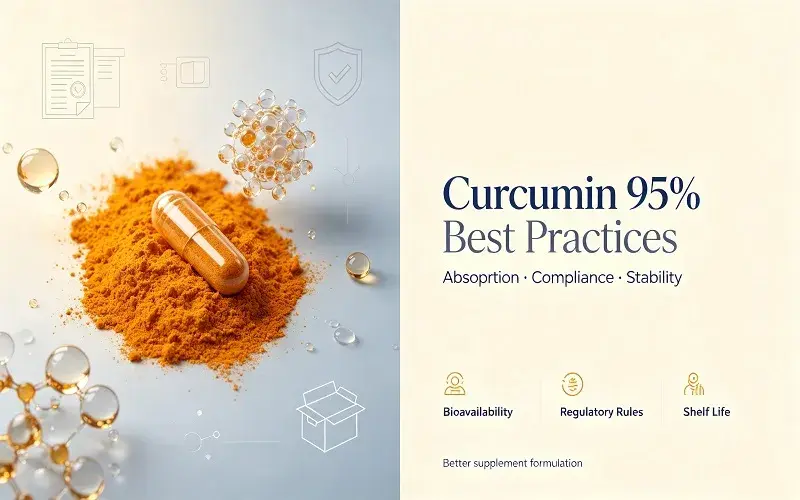
Optimizing Bioavailability in Final Formulations
The main technical problem is getting around the ingredient's generally bad absorption profile. Native curcumin quickly changes into glucuronidated and sulfated forms during first-pass metabolism, which means that plasma concentrations are very low. Piperine co-administration at a dose of 1% to 2% stops these metabolic processes, which makes the drug much more bioavailable. Phosphatidylcholine-based lipid-based delivery methods make phytosome complexes that are better absorbed in the gut. Nano-emulsion technology makes particles smaller than 100 nanometers, which speeds up the digestion process. Putting the chemical inside cyclodextrins guards it while it moves through the stomach and makes it easier for it to be released in the small intestine. Manufacturers should test for dissolution and think about ordering pharmacokinetic studies to make sure that methods for improving absorption work. These technical methods turn the raw material into a finished product that works.
Regulatory Compliance Across Global Markets
Formulation and documentation strategies are shaped by the regulatory needs of the market. To get into the US market, you have to follow DSHEA rules, which include registering your facility and following GMP guidelines. European markets require that new foods and health supplements follow EC rules. For example, EC 1333/2008 sets quality standards for E100 colorants that are used in certain ways. Japan's functional food system needs a lot of proof to back up health promises. The HALAL approval opens up markets in the Middle East and Southeast Asia, where religious rules about food and drink control supplement use. Staying up to date on how laws are changing in target markets keeps you from having to do expensive changes to your product or pull it from the market. Regulatory risk is lower throughout the lifespan of a product when it works with providers that know how to comply with multiple regions.
Stability and Shelf-Life Protection Strategies
Environmental factors need to be taken into account in order to keep ingredient potency throughout the supply chain. UV light breaks down things quickly, so you need clear glass bottles or opaque packing materials. Because absorbing water speeds up decomposition, desiccants must be used in large cases and blister packages for single-dose goods. Changing temperatures during shipping and storage can hurt the quality of high-end goods, so climate-controlled operations are necessary. Adding natural antioxidants like mixed tocopherols to formulations makes them even more resistant to oxidative damage. Accelerated stability testing at controlled temperatures and humidity levels can tell you how long something will last in the real world. These safety steps make sure that consumers get goods that are still as effective as the label says they are until the expiration date.
Conclusion
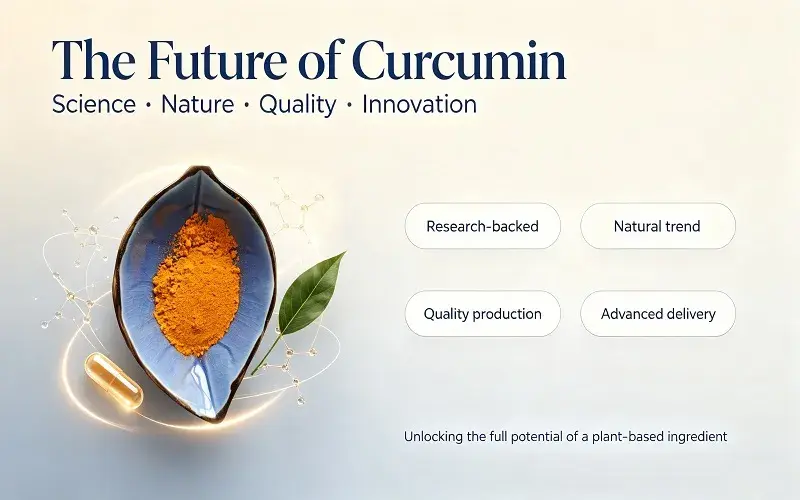
Concentrated curcuminoid products, including Curcumin 95%, are used in a lot of different ways in health supplements. This is because they have been scientifically proven to work, and more and more people want natural health options. The standardized potency makes it possible to precisely target therapies across a wide range of health conditions, from improving cognitive function to supporting joint mobility. To make a good product, you need to know the technical details of improving bioavailability, following regulations, and keeping the product stable. People who work in procurement benefit from working with providers that offer full quality assurance, the ability to make products to order, and dependable global logistics. The path for the future points to more progress in creating delivery methods and combo recipes that make the most of this amazing botanical ingredient's medicinal potential.
FAQ
1. What distinguishes 95% curcumin from lower-purity curcumin extracts?
The 95% curcumin definition means that the total amount of curcuminoids is regulated and has been checked through HPLC analysis. This makes sure that the therapeutic effectiveness stays the same. Because lower-purity extracts have more plant matrix material, you have to take more of them to get the same amount of curcuminoids. This concentration level meets pharmaceutical quality standards and is the most cost-effective. Standardization gets rid of the differences that come with whole turmeric powder, which only has 2 to 5 percent curcuminoids. Manufacturers can make doses that are precisely calculated and reliably meet the claims on the label. This higher concentration also lowers the required capsule size, which makes it easier for customers to follow the directions.
2. How can buyers verify supplier quality for Curcumin 95%?
A full review of the COA should include HPLC chromatograms that show individual curcuminoid peaks, heavy metal testing to make sure Prop 65 is followed, and microbiological analysis. Asking for C14 isotope proof reports proves that the product is 100% natural and not made in a lab. Process validation is done by looking at GMP licenses, FDA registration, and ISO quality systems during supplier checks. Independent confirmation is possible when samples are tested by third-party laboratories. Checking that the curcuminoid levels are the same across various production batches is a sign of good manufacturing controls. These steps of verification keep ingredients from being tampered with and make sure they are real.
3. Are there safety concerns or contraindications with 95% curcumin?
It is generally thought to be safe to take at normal supplement levels of 500 to 1500 mg per day, but people who take blood thinners should talk to their doctors because of possible interaction effects. People who are sensitive may have mild stomach problems after taking high doses. Women who are pregnant or nursing should talk to their doctor before taking supplements. According to clinical tests, the ingredient has a good safety profile, with few side effects. A major safety concern is taken care of by quality checks that make sure there are no heavy metals present. Customers trust that a product is safe when information about where it comes from and how it was tested is clear.
Partner with Hisy for Premium Curcumin 95% Solutions
Shaanxi Hisy Biotechnology Co., Ltd. can help you make supplements by providing pharmaceutical-grade curcuminoid products, including Curcumin 95%, and offering a wide range of licenses and technical know-how. Our factory is registered with the FDA and has HACCP, ISO, and other certifications. It serves brands in more than 40 countries and has experience clearing customs. Whether you need bulk ingredients for making capsules or special OEM formulations that improve bioavailability, we can offer high-quality products with C14 proof that prove they come from real plants. Get your sample kit today to check out our USP/EP-compliant material that meets the standards of California Prop 65. Our research and development team helps with the creation of complicated blends that use plants that work well together, and we offer flexible packaging options that can be tailored to your brand's needs. For your next product launch, email our procurement experts at sales@hisybio.com to talk about volume prices, technical specs, and quick samples.
References
1. Hewlings, S.J. & Kalman, D.S. (2017). Curcumin: A Review of Its Effects on Human Health. Foods, 6(10), 92.
2. Prasad, S., Gupta, S.C., Tyagi, A.K., & Aggarwal, B.B. (2014). Curcumin, a component of golden spice: From bedside to bench and back. Biotechnology Advances, 32(6), 1053-1064.
3. Chainani-Wu, N. (2003). Safety and anti-inflammatory activity of curcumin: a component of turmeric. Journal of Alternative and Complementary Medicine, 9(1), 161-168.
4. Jurenka, J.S. (2009). Anti-inflammatory properties of curcumin, a major constituent of Curcuma longa: a review of preclinical and clinical research. Alternative Medicine Review, 14(2), 141-153.
5. Aggarwal, B.B., Sundaram, C., Malani, N., & Ichikawa, H. (2007). Curcumin: the Indian solid gold. Advances in Experimental Medicine and Biology, 595, 1-75.
6. Shoba, G., Joy, D., Joseph, T., Majeed, M., Rajendran, R., & Srinivas, P.S. (1998). Influence of piperine on the pharmacokinetics of curcumin in animals and human volunteers. Planta Medica, 64(4), 353-356.