

_1752718207094.png)

Water-soluble curcumin powder application in beverages
Water-Soluble Curcumin Powder represents a breakthrough in functional beverage formulation, addressing the longstanding challenge of incorporating this powerful compound into liquid products. Traditional curcumin suffers from what industry professionals call the "brick dust effect"—passing through formulations with minimal dispersion and virtually no stability. The beverage industry's shift towards health-oriented products has created unprecedented demand for ingredients that deliver both functional benefits and formulation ease. This guide serves procurement managers, beverage formulation engineers, distributors, and OEM clients who recognise that selecting the right curcumin source directly impacts product success in an increasingly competitive marketplace.
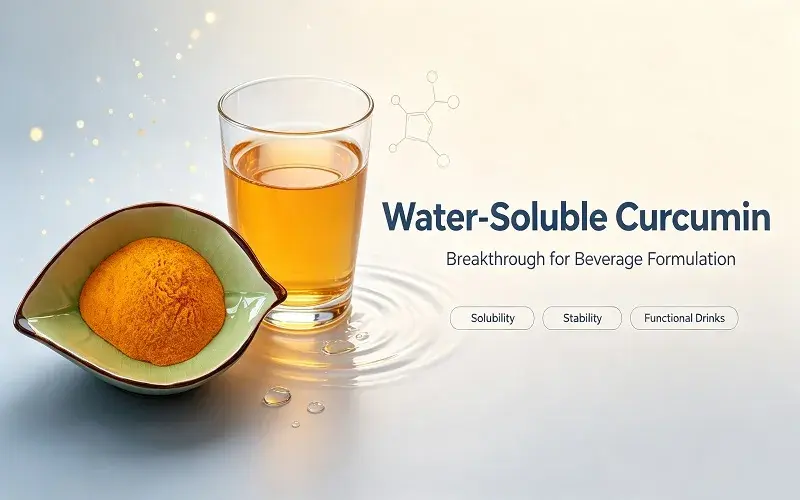
How Is Water-Soluble Curcumin Powder Made, and What Are Quality Considerations?
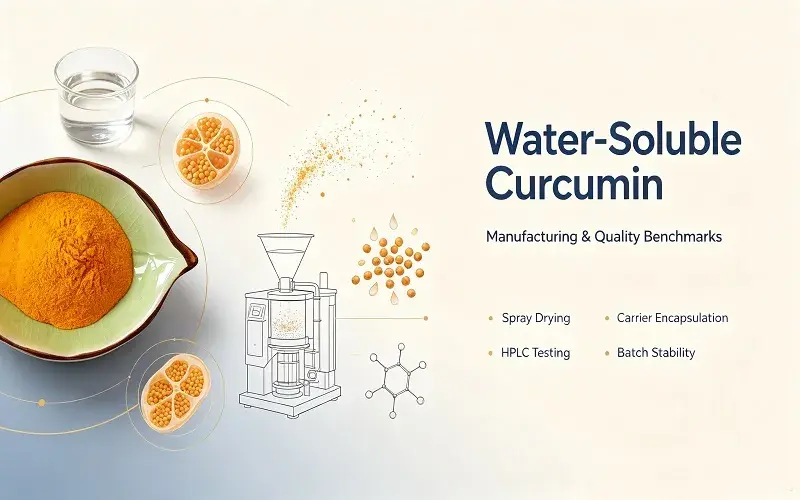
Manufacturing Technologies Behind Superior Solubility
To make curcumin that is truly water-dispersible, you need to do more than just mix it. Spray-drying technology and carefully chosen carrier methods are used in our production. First, high-purity curcuminoid is extracted from Curcuma longa roots. The active content is fixed at 5%, 10%, or 20%, based on the needs of the application. The curcuminoids are then mixed with pharmaceutical-grade carriers and put through controlled spray-drying conditions that make the particles evenly spread out at 80 mesh. This standard for particle size makes sure that the dissolving properties are the same from batch to batch. The encapsulation matrix keeps the curcuminoids from breaking down while they are being processed and helps them dissolve quickly in water.
Quality Benchmarks for Procurement Decisions
When purchasing managers look at suppliers, they should focus on more than just the curcumin content when judging their quality. The Certificate of Analysis (COA) should include proof that the curcuminoid profiles were checked using HPLC, especially the amounts of curcumin, demethoxycurcumin, and bisdemethoxycurcumin. Testing for solubility under your unique production conditions, like temperature, pH, and mixing time, gives you more useful information than claims that are general. In commercial production, consistency from batch to batch is very important; ask for solubility variance data across multiple lots. Regulatory compliance paperwork, such as ISO, HALAL, and KOSHER approvals, shows that your products are made according to standards that protect the image of your brand. To get into the U.S. market, you have to get FDA approval and follow California Prop 65 for heavy metal tests.
Comparing Different Curcumin Formats
Knowing the differences between the different forms of curcumin can help you avoid making mistakes that cost a lot of money. Standard 95% curcumin extracts are very strong, but they need to be delivered with oil or through complicated solubilisation protocols. Liposomal curcumin is bioavailable, but the prices are often too high for businesses to make it work in the competitive beverage market. It is possible for nano-emulsified versions to dissolve, but they might not be stable when heated. Water-dispersible curcumin powder strikes a good balance between making the product easily, keeping costs low, making sure it follows the rules, and making sure the final product is stable. This balance is what makes major functional drink brands request microencapsulated forms more and more in their buying needs.
Practical Application and Formulation Tips for Beverages
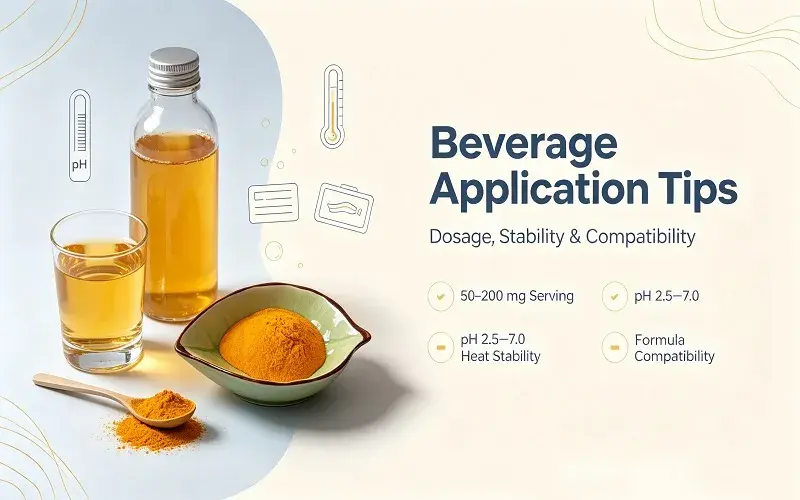
Dosage Recommendations and Colour Consistency
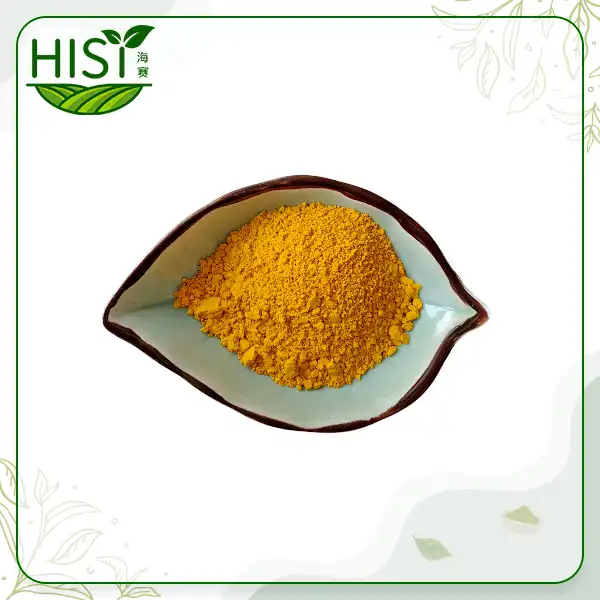
Dosage calculations are the first step in making a formulation that works. Curcuminoids between 50 and 200 mg per dose, or 0.5 to 2.0 grammes of 10% Water-soluble curcumin powder per litre of end product is commonly used in functional drinks. The concentration picked out is based on marketing claims, target groups, and the level of colour intensity that is wanted. A dose of 100 mg of curcuminoid gives turmeric products the golden-yellow colour that people associate with them while still being affordable. Higher concentrations, like 200 mg or more per dose, make the orange colour more vivid and perfect for premium placement, but they need to be carefully taste-balanced. We suggest making concentration gradients (50 mg, 100 mg, 150 mg, and 200 mg per serving) and holding sensory evaluation panels during formulation trials to find the best balance between how it looks and how it tastes.
Stability Across pH and Temperature Ranges
Different kinds of stable problems can happen in beverage settings. Water-soluble curcumin powder stays intact from pH 2.5 to 7.0, but the best way to use it depends on the type of product. Acidic juices with a pH of 3.0 to 3.5 benefit from the capsule technology that keeps the curcumin from breaking down. In these conditions, regular curcumin quickly loses its colour and effectiveness. Neutral-pH functional waters, which are between pH 6.5 and 7.0, stay very clear and don't have the problems with precipitation that come with lower-quality formulas. When food is pasteurised at 72°C for 15 seconds, the thermal stability stays the same, which protects both the colour and the bioactivity. In cold-fill uses, dissolution isn't a problem because full dispersion can be achieved with regular mixing, which doesn't require buying any special tools.
Compatibility with Common Beverage Ingredients
To make a good formula, you need to know how the ingredients work together. Water-soluble curcumin powder works well with natural sweeteners like stevia, monk fruit, and erythritol and doesn't make things taste bitter like some plant products do when they work together. Citric acid and malic acid are common acidulants in functional drinks, and they don't cause any stability problems when used in normal amounts. Vanilla, ginger, cinnamon, or citrus notes added naturally to flavourings go well with curcumin's mild earthy undertone, making for balanced taste profiles. Preservative systems like potassium sorbate and sodium benzoate keep the medicine working without affecting the security of the curcuminoid. Before putting together useful ingredients like B vitamins, adaptogens, or nootropics, make sure they are compatible with each other first. This will help make sure that there are no unexpected interactions during shelf-life studies.
Procurement Guide for Bulk Water-Soluble Curcumin Powder
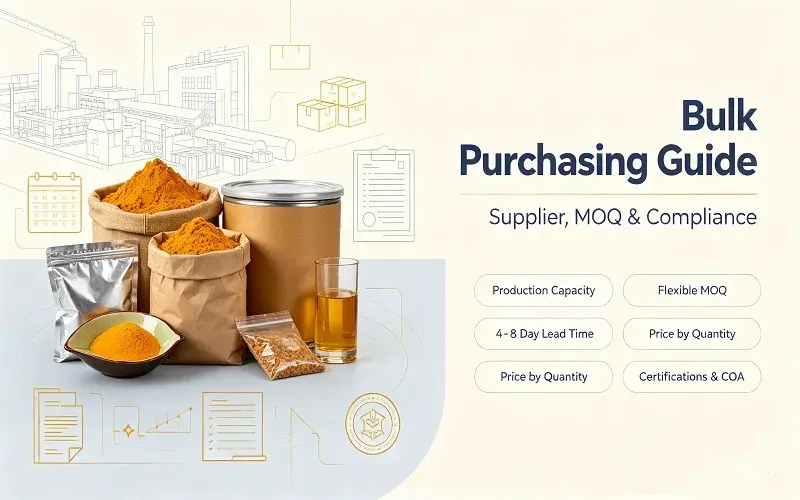
Evaluating Supplier Capabilities and Reliability
Supplier selection is more than just looking at unit prices. It also looks at things like production ability, quality systems, and technical help. Our factory at Shaanxi Hisy Biotechnology can make more than 200 metric tonnes of plant extracts every year, so we can keep up with demand even when it goes up. The 150 m² production facility has four separate processing lines that let different specifications be made at the same time without the risk of cross-contamination. When looking at possible suppliers, make sure to ask for facility audit reports that show GMP compliance, systems for tracking raw materials, and batch documentation protocols. In markets that are always changing, lead times are important. Our usual 4–8-day delivery window from order confirmation to shipment gives us the flexibility that competitive beverage launches need.
Understanding Pricing Structures and MOQ Flexibility
The price of water-soluble curcumin powder depends on a number of things, such as the amount of curcuminoid in it, the size of the order, the package requirements, and the shipping terms. The 10% specification is the most cost-effective choice for uses that value stability and cold-water spread over greatest potency, while water-dispersible curcumin powder may be preferred for applications requiring improved dispersion in water-based formulations. Even though it costs more per kilogram, buyers who want to place their products as special or for therapeutic purposes usually choose 20% specs. When you buy more than 100 kg, you can get volume discounts that matter. Prices also go down when you buy 500 kg or 1,000 kg. Different suppliers have different minimum order quantities. We can meet your needs, from 1 kg sample orders for R&D to multi-tonne bulk shipments for established production lines. For samples, you can get 1 kg foil bags, and for commercial production, you can get 25 kg drums with two sets of plastic bags inside. Custom packaging is also available for private-label use.
Certification Requirements for Market Entry
Regulatory paperwork controls entry to markets and limits the risk of being sued. In the U.S. market, FDA registration gives you basic authority, while HACCP and ISO certifications show that you handle quality in a structured way. Certifications like HALAL and KOSHER help goods reach more customers, especially those who are looking for certain types of items. Technical Data Sheets (TDS) and Material Safety Data Sheets (MSDS) help with safety training and recipe paperwork. Allergen statements and non-GMO statements meet requirements that are becoming more common among retailers. Proposition 65 in California requires heavy metal test results for lead, cadmium, arsenic, and mercury to be below certain levels. All of these types of paperwork are kept up to date, and batch-specific COA and HPLC reports are sent out within 24 hours of an order being confirmed.
Addressing Safety, Dosage, and Regulatory Compliance
Recommended Intake Levels and Safety Profile
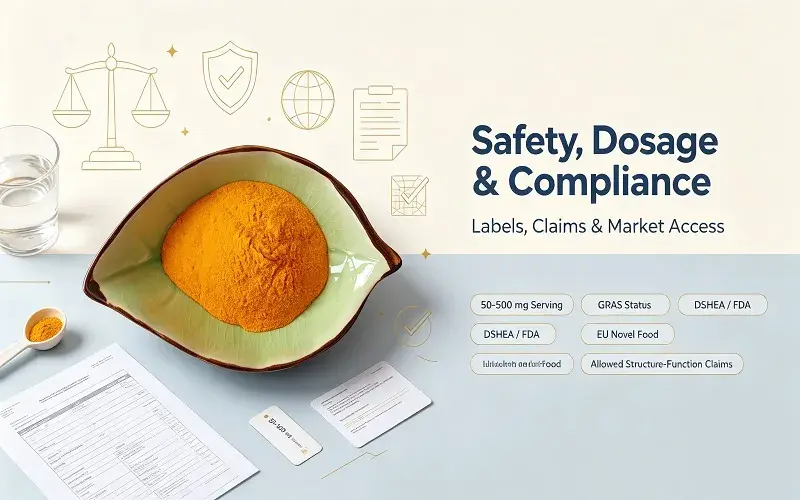
Curcumin has a very good safety rating, and people have been using it for thousands of years. According to clinical studies, you can take up to 8,000 mg of curcumin every day without getting sick, but most functional drinks only have 50 to 500 mg per dose. Because water-soluble curcumin powder is more bioavailable, lower doses are needed to reach plasma concentrations that used to need gramme-quantity supplements. This efficiency lowers the cost per serving while reducing the small stomach problems that can happen with very high amounts of regular curcumin. The people who make drinks should make sure that serving sizes are in line with the evidence behind marketing claims. For example, structure-function claims about antioxidant activity or joint health need different clinical dosing thresholds than general wellness positioning.
FDA and International Regulatory Frameworks
In the US, supplements sold for structure-function effects are regulated by the Dietary Supplement Health and Education Act (DSHEA), which means they must have standard labels and be made in accordance with good manufacturing practices. Curcumin is usually recognised as safe (GRAS) for colouring reasons and is used in foods that follow FDA rules for food additives. Novel food laws need to be followed in the European Union, especially when processing technologies change absorption traits in a big way. Depending on the methods used, microencapsulation processes may lead to a regulatory review. Japanese market entry is helped by a long history of traditional use, but claims about functional foods need to be backed up by the Foods with Function Claims system. South-east Asian markets, such as India, Thailand, and Vietnam, usually allow the sale of traditional plants that people have been using for a long time.
Labelling Requirements and Permissible Claims
Labels that are correct protect both customers and brand owners from legal action. Supplement Facts panels must show the amount of curcumin or curcuminoids in each dose. When water-soluble curcumin powder has fillers or other ingredients in it, these add to the weight of the whole thing but aren't listed as active ingredients. This means that claims like "supports healthy inflammatory response" or "maintains joint comfort" must be reported to the FDA but do not need to be approved ahead of time. Disease claims that include treatment, prevention, or cure lead to drug classification, which puts a lot of rules on dietary supplements that aren't needed. Different types of uses require different colour statements. For example, curcumin is a natural colourant that can be used in regular foods, but it needs different labels when it is added to vitamins as a dietary ingredient.
Conclusion
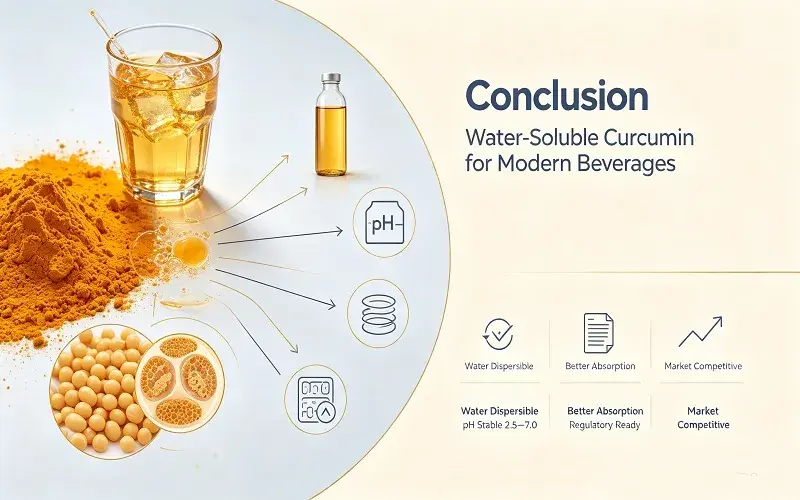
Water-soluble curcumin powder changes the way drinks are made by fixing the basic problem that lipophilic curcuminoids and watery systems don't work well together. The microencapsulation technology improves absorption by 10–100 times, disperses instantly in cold water, and keeps the pH stable from 2.5 to 7.0. This opens up new possibilities in all types of functional drinks. In wellness markets that are changing quickly, how competitive you are depends on how well you make decisions about purchases that balance quality standards, supplier reliability, regulatory compliance, and cost-effectiveness. Knowing about manufacturing technologies, best practices for formulation, and regulatory frameworks helps beverage developers make products that give real benefits to customers while still being able to make money. As functional drinks continue to become more popular, consumers are looking for easy, science-backed ways to improve their health. This makes water-soluble curcumin an important ingredient for brands that want to stay ahead of the curve.
FAQ
1. How does water-soluble curcumin achieve superior bioavailability compared to standard extracts?
Microencapsulation technology makes nanoparticles that get around the problems that regular curcumin has with dissolving. The hydrophilic carrier matrix makes it easy for the particles to spread quickly through digestive fluids, which greatly increases the surface area that can be absorbed. Comparative pharmacokinetic studies show that this better breakdown, along with protection from first-pass metabolism, leads to plasma concentration curves 10–100 times higher than those of standard 95% curcumin extracts.
2. What certifications should procurement managers prioritise when sourcing water-soluble curcumin powder?
ISO certification shows that quality management is organised, and HACCP certification proves that food safety rules are followed. FDA registration gives your products respect in the U.S. market, and HALAL/KOSHER standards help you reach more people. Ask for Certificates of Analysis that are specific to each batch. These should include HPLC profiles of curcuminoids, heavy metal testing that meets California Prop 65 requirements, and microbe testing results. These paperwork packages keep your brand safe, meet the needs of retailers, and back up marketing claims with the right evidence.
3. Can water-soluble curcumin powder withstand pasteurisation and hot-fill beverage processes?
Yes, water-soluble curcumin powder that is properly made stays stable through normal heating processes in beverages. The curcuminoid content and colour stability of our formulation don't change much when heated to 72°C for 15 seconds during pasteurisation. The microencapsulation matrix keeps heat-sensitive compounds safe during processing and controls the way they disperse in finished products. You should do stability studies under the settings you are using for processing, but normal thermal methods for beverages shouldn't cause any problems with the formulation.
Partner with Hisy for Premium Water-Soluble Curcumin Powder Supply
Shaanxi Hisy Biotechnology has been making botanical extracts for 18 years and can help you with your beverage formulation problems. Our Water-Soluble Curcumin Powder source can send anything from 1 kg R&D samples in 4–8 days to multi-tonne bulk orders to support high-volume production. The microencapsulation technology makes it possible for quick diffusion in cold water, pH stability from 2.5 to 7.0, and up to 100 times more bioavailability than regular curcumin. This technology fixes the formulation problems that stop competing goods from being made. Along with FDA registration, ISO, HALAL, and KOSHER certifications provide the regulatory base that the U.S. market needs for success. You can email our technical team at sales@hisybio.com to ask for COA paperwork, talk about custom concentration requirements, or set up shipping of samples.
References
1. Prasad S, Aggarwal BB. Turmeric, the Golden Spice: From Traditional Medicine to Modern Medicine. In: Benzie IFF, Wachtel-Galor S, editors. Herbal Medicine: Biomolecular and Clinical Aspects. 2nd edition. Boca Raton (FL): CRC Press/Taylor & Francis; 2011. Chapter 13.
2. Hewlings SJ, Kalman DS. Curcumin: A Review of Its Effects on Human Health. Foods. 2017;6(10):92. Published 2017 Oct 22.
3. Kocher A, Bohnert L, Schiborr C, Frank J. Highly bioavailable micellar curcuminoids accumulate in blood, are safe and do not reduce blood lipids and inflammation markers in moderately hyperlipidemic individuals. Molecular Nutrition & Food Research. 2016;60(7):1555-1563.
4. Jamwal R. Bioavailable curcumin formulations: A review of pharmacokinetic studies in healthy volunteers. Journal of Integrative Medicine. 2018;16(6):367-374.
5. Stohs SJ, Chen O, Ray SD, Ji J, Bucci LR, Preuss HG. Highly Bioavailable Forms of Curcumin and Promising Avenues for Curcumin-Based Research and Application: A Review. Molecules. 2020;25(6):1397.
6. McClements DJ. Enhanced delivery of lipophilic bioactives using emulsions: a review of major factors affecting vitamin, nutraceutical, and lipid bioaccessibility. Food & Function. 2018;9(1):22-41.