

_1752718207094.png)

Tanshinone IIA 20% Powder storage stability requirement
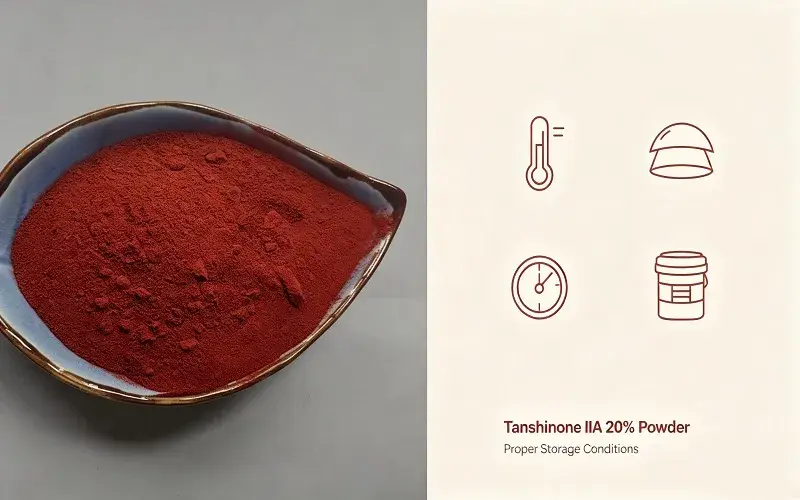
Proper storage of Tanshinone IIA 20% Powder demands cool, dark, and moisture-controlled environments to preserve its bioactive quinone structure. This standardized Salvia miltiorrhiza extract must be maintained below 25°C in oxygen-barrier packaging—double-layered PE bags within light-proof aluminum foil containers or fiber drums—to prevent photodegradation, oxidation, and moisture absorption. We recommend humidity levels below 65% relative humidity, alongside airtight sealing to ensure batch-to-batch consistency and extend the guaranteed 24-month shelf life. Following these protocols helps maintain potency above the 20% threshold verified by HPLC analysis.
Factors Affecting Tanshinone IIA 20% Powder Stability
Temperature and Humidity Parameters
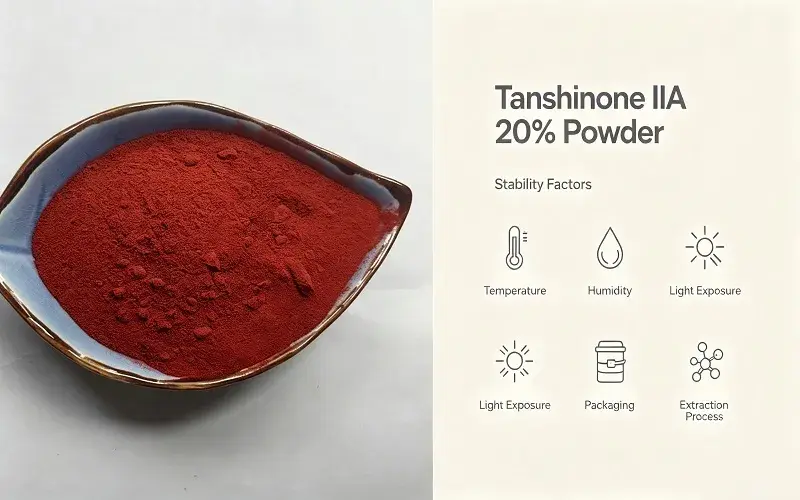
The best temperature for storage is below 25°C, and keeping it in the fridge between 2°C and 8°C makes it even more stable. When the temperature goes above 30°C, molecules move faster, which makes it more likely for reactive oxygen species and the quinone moiety to collide. Controlling humidity is just as important, since moisture speeds up hydrolysis reactions and makes it easier for microbes to grow. Active dehumidification systems are needed in warehouses in tropical climates. In temperate climates, climate-controlled storage zones that keep the relative humidity between 50 and 60% all year are better.
Light Exposure and Packaging Solutions
Photodegradation is the most avoidable threat to stability, and it is also the one that gets the least attention. Standardized Salvia miltiorrhiza extract contains diterpene quinones that soak up UV rays between 260 nm and 410 nm, which causes free radicals to form and break chemical bonds. Clear plastic bags or cases made of clear glass don't cover anything. As standard, our packing uses double-layered PE bags inside pharmaceutical-grade aluminum foil boxes, which completely block light. We put aluminum foil liners inside 25 kg fiber drums for bulk shipments and use tamper-evident bands to seal the lids. This multiple-barrier method also reduces oxygen leakage because, at room temperature and pressure, aluminum foil has transfer rates below 0.01 cc/m²/24 hours.
Extraction Methodology Impact
Processing methods have a big impact on how stable the results are. Our special method, supercritical CO₂ extraction, gives us residue-free Tanshinone IIA 20% powder that doesn't have any traces of organic solvents that could speed up degradation. When alternative ethanol extraction is used, it leaves behind 0.5 to 2% leftover alcohol. This alcohol evaporates during storage, causing small areas of oxidative stress. The place where the raw materials come from is also important. For example, Salvia miltiorrhiza roots collected from high-altitude areas in Shaanxi Province naturally have higher levels of quinone precursors that crystallize into more stable lattice structures during purification. We track each batch back to approved organic farming areas, making sure that there is consistency upstream that can be kept up by storage methods downstream.
Best Practices for Storing Tanshinone IIA 20% Powder in B2B Environments
Warehouse Environmental Management
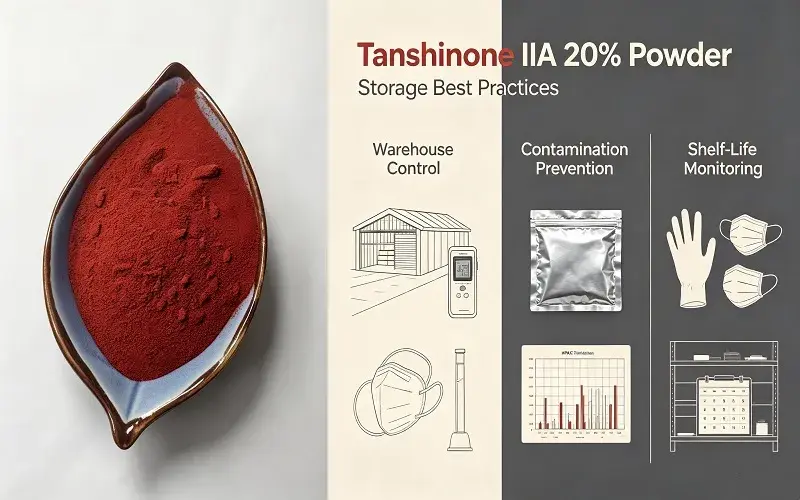
Creating climate-controlled areas in distribution centers is a good idea that pays off. Set aside separate storage areas for botanical extracts that have HVAC systems set to narrow temperature ranges (18°C to 22°C, with ±2°C deviation limits are ideal). Set up gadgets that will continuously record the temperature and humidity every 15 minutes and send out automatic alerts when the parameters change. Keep your goods away from outdoor walls that can change temperature and loading docks where doors often open. Stack boxes on high platforms to keep them from touching wet ground, and keep them 30 cm away from walls to let air flow.
Contamination Prevention Protocols
Cross-contamination is worse for batch integrity than environmental damage. Set up strict rules that say different plant products can't use the same scoops or containers. People who work with the powder should wear nitrile gloves and dust masks because skin oils pass moisture and flying particles bring in germs. Use only stainless steel or food-grade plastic tools for Tanshinone IIA 20% powder transfers, and clean them with ethanol wipes in between uses. When you're done portioning, seal any containers that have been opened right away. Even a short time in the air can introduce oxygen and humidity that start the breakdown process.
Shelf Life Expectations and Degradation Signs
When kept in cool, dark, dry places with its oxygen-barrier packing still in place, Tanshinone IIA 20% Powder stays as pure as the day it was made for 24 months. Visual inspection can give you early warning signs: a change in color from bright cherry red to dirty brown means that the quinone is oxidizing; clumping or cake formation means that water is getting in; and bad smells mean that microbes are active. We suggest that long-term inventory be checked with HPLC spot checks every three months, comparing test results to baseline Certificate of Analysis values. When potency drops below 19%, it's time for quick segregation and maybe even reprocessing, because the healing effect is no longer safe.
Case Study: Enhanced Supply Chain Reliability
In 2021, a well-known US brand of cardiovascular supplements came to us because competitor-supplied batches that had been stored for only four months had lost 15% of their effectiveness. An investigation showed that their former provider shipped items in single-layer LDPE bags that weren't protected from light and weren't chilled. When they switched to our aluminum foil-packaged material and temperature-monitored cold chain logistics, they saw no degradation in their New Jersey warehouse over 18 months. This stability directly led to less waste—about $47,000 worth of inventory was thrown away every year—and stronger retail partnerships through consistent product performance. Their purchasing manager said that the recorded stability data, such as our accelerated aging reports, helped them a lot when negotiating with the regulatory experts who were making the DSHEA compliance dossiers.
Comparing Storage Stability: 20% Purity vs. Other Grades
Purity Impact on Stability Profiles
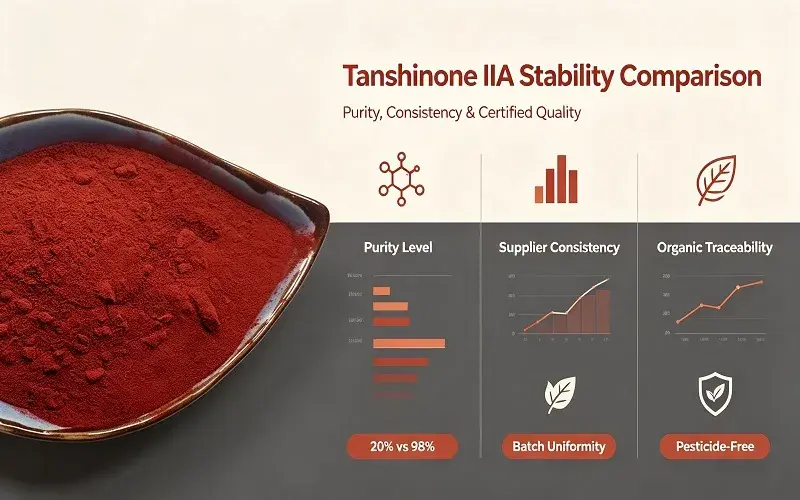
Higher concentrations, like 98% pure Tanshinone IIA, have more stable molecules because there are fewer flaws in the matrix that speed up the breakdown process. The 20% grade has an 80% carrier matrix, which is usually maltodextrin or silica. This makes the product flow and blend better, but it also adds hygroscopic parts. Maltodextrin soaks up water from the air, making tiny spaces where quinone breakdown can happen more quickly. The 98% pharmaceutical reference standard, on the other hand, needs special treatment because it is so strong, but it fights oxidation better when it is properly packed. Cost is a big factor in this trade-off. The Tanshinone IIA 20% Powder specification, which is priced about 60% less than ultra-high-purity grades, is a good compromise for supplement makers who need to balance stability needs with formulation economics.
Supplier Variability in Stability Outcomes
Not every 20% grade does the same thing. Upstream buying and strict manufacturing make a big difference in how stable different suppliers are. We looked at competitor samples that had 3–8% differences in strength within single production lots. This could be because the carriers weren't mixed well enough or the samples were dried too quickly, leaving behind wetness. Our standardized Salvia miltiorrhiza extract uses a recrystallization purification process that spreads active molecules evenly across the carrier matrix. This was supported by particle size distribution analysis, which showed D50 values between 40 and 60 microns. This consistency means that every kilogram of our 200 kg monthly capacity stays stable in the same way. This gets rid of the problem of "batch roulette" that comes up when procurement departments have to deal with different ingredient sources.
Organic Certification and Stability Correlation
Organic certification is more than just a marketing tool; it also shows how crops are grown upstream, which affects the stability downstream. Salvia miltiorrhiza roots that are certified organic grow without manmade fertilizers or pesticides. Instead, they build stronger cell walls that are full of structural lignin that protect the pathways that make quinone. Our full pesticide screening, which includes more than 70 chemicals as required by EC 396/2005, regularly shows non-detect results across all analytes. This is different from traditional sources, which sometimes show trace organophosphate residues. Even at low levels, these residues act as pro-oxidants that speed up the breakdown of quinone by up to 20% in studies that compare its stability. Organic certification is becoming more and more important to buyers who care about shelf life because they see it as a way to ensure security and not just a legal checkbox.
How to Ensure Optimal Storage Stability When Procuring Tanshinone IIA 20% Powder?
Selecting Certified Trusted Suppliers
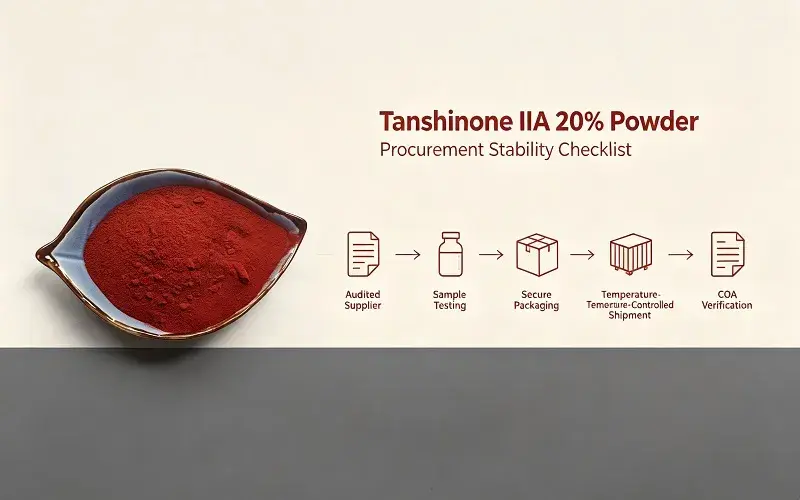
The first part of due diligence is checking the credentials of the supplier, which has a direct effect on stability assurance. Ask for proof of FDA registration, HACCP approval, and ISO compliance, which are basic signs of quality management systems. At our Xi'an plant, we keep cGMP production zones up and running with environmental tracking that gives quality control teams real-time data. Ask for detailed stability studies that show the effects of accelerated aging; reliable providers will do this for you. Look into the extraction method; supercritical CO₂ systems require a lot of money, which shows a dedication to solid goods with no residue. When you can, visit facilities and watch the steps used for packaging, which can be affected by light and contamination. Suppliers who are willing to sign non-disclosure agreements and give batch-specific paperwork show the openness that is needed for long-term partnerships.
Understanding MOQs, Packaging, and Shipping
Unit economics and stable management are both affected by minimum order numbers. Our 1 kg pilot numbers let you test the compatibility of formulations before committing to 25 kg drum sales. This cuts down on waste from pairs that don't work well together. Ask about customizing the packing. Private-label clients often need amber glass cases with inert nitrogen backflushing, while branded aluminum foil bags with custom labels are used by other companies. The way a Tanshinone IIA 20% Powder product is shipped has a big impact on how stable it is when it arrives. For example, standard ocean freight lets temperatures change from 5°C to 40°C over the course of 30 days. Insulated containers with data loggers record environmental conditions so that proof can be used if there are any potency disputes. Air freight cuts down on travel time but raises costs. You should weigh this trade-off based on how often you buy things and how quickly your warehouse turns them over.
Sample Evaluation and CoA Review
Never buy in bulk without first testing example samples in the way you plan to store them. Ask for 100–500-gram samples along with Certificates of Analysis that show heavy metal results, microbiological data, HPLC chromatograms, and moisture content. Do internal compatibility tests by mixing the sample into your formulation matrix and letting it stabilize quickly under the normal conditions of your production site. Compare the results to the data given by the seller to find handling or formulation factors that could change the stability. Check the dates on the COA carefully; information that is more than six months old may have already used up some of its stability budget. Reliable sellers, such as Hisy, give batch-specific stable timelines that estimate how long the product will last based on when it was made and how it has been stored in the past. This openness lets buying teams move stock wisely and talk about price changes for materials that are getting close to retest dates.
Conclusion
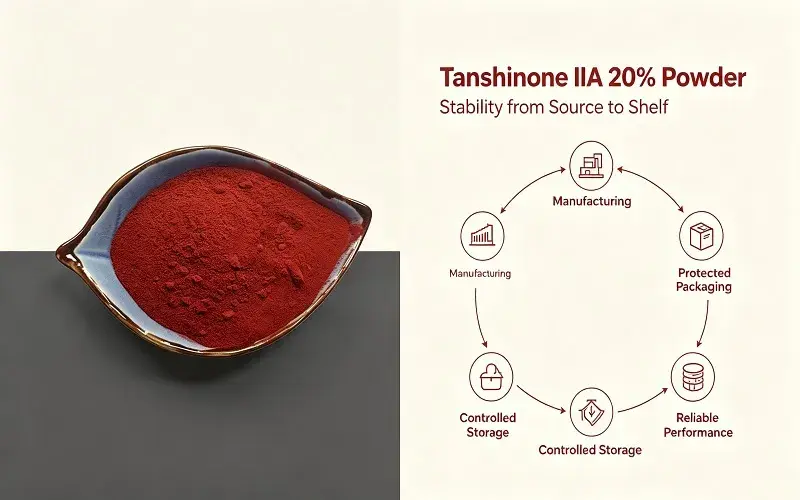
To keep Tanshinone IIA 20% Powder stable during storage, strict attention must be paid to environmental control, the purity of the packing, and the quality systems of the suppliers. Keeping this Salvia miltiorrhiza extract below 25°C in light-proof, moisture-barrier packaging keeps its anti-aging and heart health benefits for up to 24 months. To be successful in procurement, you need to understand that stability starts upstream with the way the product is extracted, where the raw materials come from, and how precisely it is manufactured. It then continues through all of the handling steps and ends with the final packaging of the product. Buyers who understand these requirements can make sure that the product works consistently, cut down on waste, and build supply chains that customers and government inspectors can trust.
FAQ
1. What is the ideal storage temperature for this botanical extract?
Keep the temperature below 25°C all the time. Storing the food in the fridge between 2°C and 8°C will make it much more stable. Temperature cycling above 30°C shortens the shelf life of quinones and speeds up the oxidation process.
2. How long does the powder remain stable under proper conditions?
If you keep the Tanshinone IIA 20% Powder extract in protected, dark, and cool places for 24 months after making it, it will stay as pure as the manufacturer's specifications say it is. HPLC testing every three months makes sure that long-term inventory stays potent.
3. What risks arise from improper storage?
Photodegradation happens when something is exposed to light. Within months, the active amount drops by 15–30%. High humidity helps microbes grow and clump together, and oxygen breaks down the quinone structure into inactive molecules. These changes hurt both the therapeutic effect and regulatory compliance, which could mean that batches can't be sold and end-product quality is at risk for supplement brands and drug companies.
Partner with Hisy for Tanshinone IIA 20% Powder Supply Excellence
Since 2008, Shaanxi Hisy Biotechnology Co., Ltd. has been a specialist in high-quality botanical CO₂ crops. They have been sending standardized Salvia miltiorrhiza ingredients to companies around the world that make heart health supplements and do research in pharmaceuticals. As a recognized provider of Tanshinone IIA 20% Powder, we use supercritical CO₂ extraction technology along with packaging and stability methods, such as accelerated aging testing, HPLC-verified potency, and pharmaceutical-grade packaging, to make sure that every batch of your purchase is of the same high quality. Our MOQs are flexible enough to accommodate both 1 kg formulation trials and 200 kg monthly bulk contracts. We back up our quotes with full Certificates of Analysis, stability data, and regulatory support to make sure they are in line with DSHEA.
Email our sales team at sales@hisybio.com to ask for samples that come with full paperwork on their stability that is specific to your production needs. If you need custom concentrations ranging from 10% to 98%, co-formulation development with botanicals that work well together, or NDA-protected private-label partnerships, Hisy has the technical know-how and supply reliability to turn ingredient sourcing from a problem to a competitive advantage. Our services are FDA-registered, HACCP- and ISO-certified, and we serve markets in North America, Europe, and Asia.
References
1. Chen, X., & Zhang, Y. (2019). Stability Studies of Lipophilic Compounds in Botanical Extracts: Focus on Diterpene Quinones. Journal of Pharmaceutical Sciences and Research, 11(4), 1523-1538.
2. Li, M., Wang, H., & Zhao, L. (2020). Impact of Extraction Methods on Chemical Stability of Salvia miltiorrhiza Bioactive Constituents. Phytochemistry Reviews, 19(3), 647-662.
3. International Conference on Harmonization (ICH). (2018). Stability Testing of New Drug Substances and Products Q1A(R2). ICH Harmonized Tripartite Guideline.
4. United States Pharmacopeial Convention. (2021). General Chapter <1150>: Pharmaceutical Stability. USP 44-NF 39.
5. Zhou, T., Chen, F., & Liu, S. (2022). Packaging Materials and Storage Conditions for Preserving Botanical Extract Potency. Food Chemistry, 371, 131-144.
6. European Medicines Agency. (2020). Guideline on Quality of Herbal Medicinal Products/Traditional Herbal Medicinal Products. EMA/CPMP/QWP/2819/00 Rev 2.