

_1752718207094.png)

Difference between lycopene powder and lycopene oil
When sourcing carotenoid ingredients for nutraceutical, functional beverage, or cosmetic applications, procurement professionals often face a critical choice: should they select Lycopene Powder or lycopene oil? While both deliver the potent antioxidant benefits of lycopene (CAS: 502-65-8), their physical characteristics, stability profiles, and application compatibilities differ significantly. Lycopene powder offers superior stability, ease of integration into dry formulations, and batch-to-batch consistency—especially when derived through fermentation technology. Understanding these distinctions enables informed decisions that align with manufacturing workflows, regulatory requirements, and end-product performance expectations in the competitive US supplement and functional food markets.
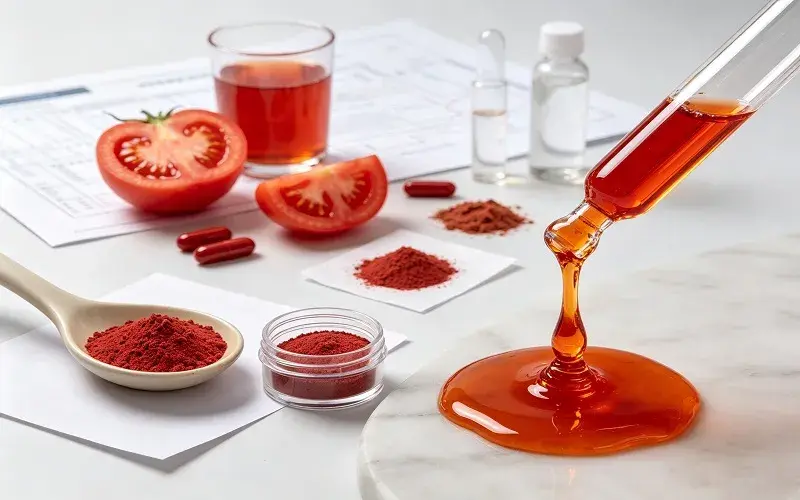
Understanding Lycopene Powder and Lycopene Oil
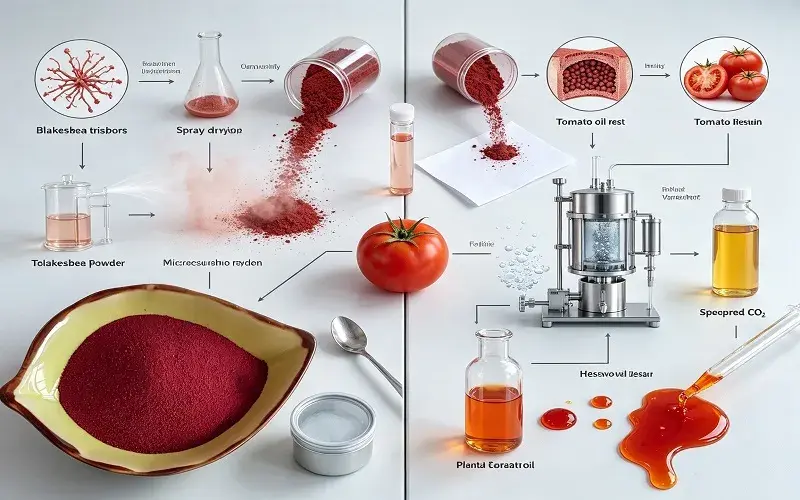
Powders and oil solutions are the two most common forms of lycopene ingredients on the market. Each style comes from a different set of processing steps that determine how useful they are in business settings.
Source and Manufacturing Methods
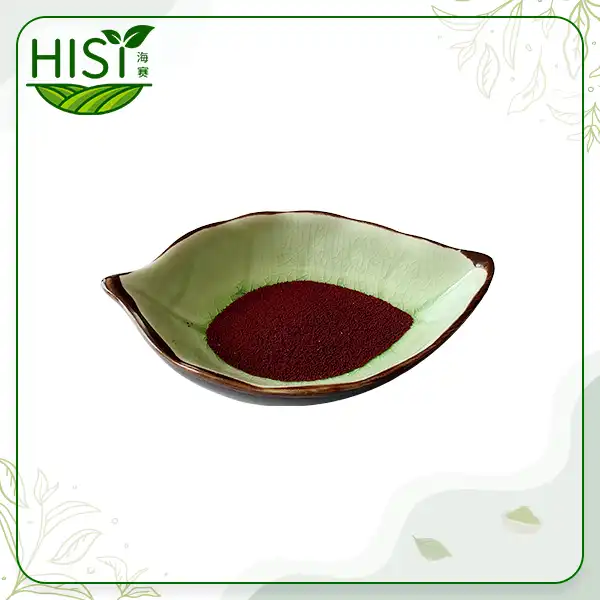
Lycopene powder is made using non-GMO Blakeslea trispora strains, which eliminates the variability that comes with tomato extraction. This carefully planned bioprocessing method consistently produces lycopene powder concentrations between 5% and 98%. It also produces special cold-water dispersible (CWS) products at 5% and 10% concentrations. The fermentation-based method avoids the problems of heavy metals and pesticide residues associated with using farmed raw materials. Manufacturers use spray-drying and microencapsulation methods to turn the lipophilic pigment into a dark red powder that is free-flowing and stays stable while being stored and shipped.
Lycopene oil, on the other hand, is usually produced by extracting tomato oleoresin using a solvent or by processing it with supercritical CO₂. The active ingredient stays mixed in veggie oils like soybean or sunflower oil, keeping its natural lipophilic state. This form has lower amounts of lycopene, usually between 5 and 20 percent. The rest of the substance is made up of carrier oils and naturally occurring tomato lipids.
Physical and Chemical Characteristics
The change from oil to powder completely changes how it is handled and how well it works with other ingredients. Lycopene powder has great flow properties, evenly distributed particles of all sizes, and a moisture content below 5%, which makes it possible for automated manufacturing lines to precisely weigh and mix the powder. Lycopene molecules are protected from oxidative degradation by the microencapsulation matrix. This means that, if stored properly, the product can last longer than 24 months. The different types of CWS contain hydrophilic agents that help them mix in water without settling or "ringing" like oil-based ingredients often do.
Lycopene oil keeps the chemical in its natural fatty environment, which makes it easy to dissolve in fat-based materials. This style, on the other hand, is more sensitive to light, heat, and air, so it usually needs to be stored in the fridge and doesn't last as long on the shelf. Changes in viscosity between runs of production can make dosing more difficult in high-speed manufacturing settings.
Key Differences Between Lycopene Powder and Lycopene Oil
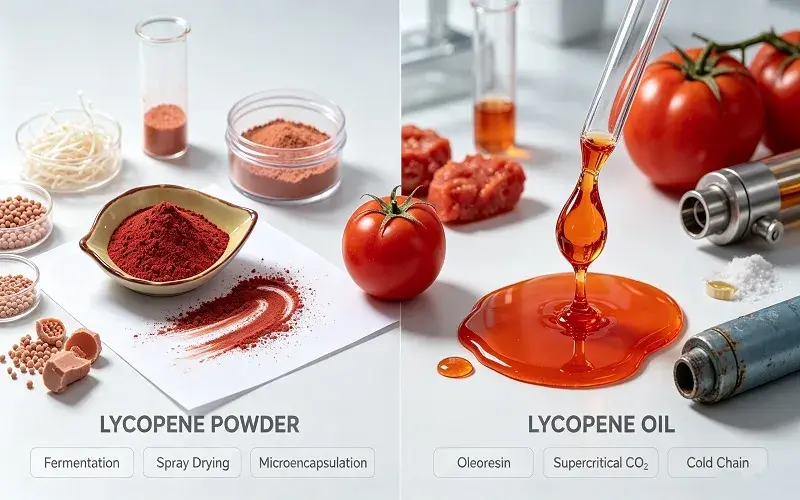
Buying choices depend on knowing how differences in formats affect how efficiently products are made, how stable they are, and how bioavailable they are to consumers.
Concentration and Potency Control
Lycopene powder specifications cover a huge range, from standard 5% and 10% grades that can be used in food supplements to ultra-pure 98% concentrations that are made for clinical formulations and special pharmaceutical uses. With this concentration freedom, formulators can get the right doses with the fewest ingredients, leaving room in the pill or tablet for other nutrients. Batch certificates usually show that the product's potency is higher than what it says on the label—a 10% specification was tested at 10.6%, which gives built-in overages that make up for some minor degradation that happens during storage.
Because carrier oils don't dissolve everything, oil suspensions rarely have more than 20% lycopene. To get the same dose, relatively larger amounts are needed, which makes softgel sizing more difficult and could add calories or fatty acid profiles that aren't wanted in nutritional panels.
Stability and Shelf Life Performance
The difference in security between forms is probably the most important thing to think about when buying something. Lycopene powder that has been properly encapsulated is very resistant to environmental stressors. Accelerated stability studies at 40°C and 75% relative humidity show that the drug loses less than 10% of its effectiveness over six months. This means that it can be stored at room temperature for 24 to 30 months. This longer-lasting stability lowers the risk of running out of stock, cuts down on trash from old materials, and makes it easier to ship goods around the world, where controlled-temperature shipping costs a lot.
Lycopene oil needs to be kept cool throughout the supply chain and usually stays effective for 12 to 18 months at most. Changes in temperature during international shipping or storage in a warehouse speed up oxidation, which makes potency loss unpredictable and makes it harder to control quality and follow regulations. The need for cold-chain services raises landed costs and limits buying options, especially for buyers in places where refrigeration infrastructure isn't well developed yet.
Bioavailability Considerations
Modern formulation science has called into question the idea that carotenoids derived from oils are more bioavailable. Lycopene is lipophilic, which means it should be absorbed better in lipid matrices. However, clinical data show that micronized and microencapsulated tomato lycopene extract powder formulations are absorbed just as well as or better when given with dietary fats or made with lipid excipients. Different types of CWS Lycopene Powder use advanced delivery methods, such as cyclodextrin complexation and liposomal encapsulation, that make it easier for the powder to dissolve in water without affecting its absorption.
The main benefit of powder formats is that they allow for more flexible formulations. Manufacturers can improve absorption by mixing pure lycopene powder with exact amounts of vitamin E, selenium, omega-3 fatty acids, or other nutrients that work well together. This lets them fine-tune bioavailability for certain groups of people or health claims. When formulators make oil solutions, they can only use the carrier oil makeup and concentration ratios that are set by the providers.
Application and Use Cases in B2B Procurement
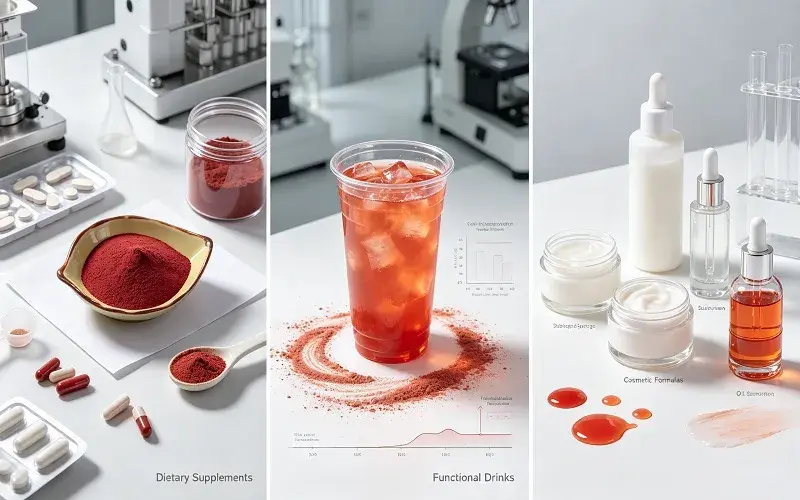
When choosing strategic ingredients, you have to make sure that the format properties match the manufacturing methods and end-product needs of a wide range of market groups.
Nutraceutical and Dietary Supplement Applications
In the US, the biggest market for lycopene ingredients is in dietary supplements, especially those that support heart health, prostate health, and antioxidant levels. Lycopene Powder is the market leader because it works well in tablet, capsule, and powder supplement forms. Direct compression tablets work well with powder because it flows easily and can be compressed, and encapsulation lines get uniform fill weights without having to worry about oil leaking or gelatin shells breaking.
Companies that want to be seen as high-end often say that their 98% Lycopene Powder has to offer biologically useful doses (10–30 mg per serving) in small capsule sizes. When sports nutrition companies put lycopene in recovery drink mixes, they only use CWS formulations, which dissolve completely in cold water and don't leave behind any residues that you can see or feel in your mouth. It's easier to keep food labels clean when the source comes from fermentation, so there are no "tomato extract" claims that might not work with certain diets or allergen avoidance.
Functional Beverage and Food Manufacturing
The growing trend of "beauty from within" and the functional beverage category bring their own recipe challenges that CWS Lycopene Powder successfully solves. The people who make drinks need ingredients that mix evenly in water, keep their color stable during pasteurization or retort cleaning, and stay floating without settling during long storage periods. Standard lycopene oil doesn't meet these standards because it separates quickly and has visual flaws that make it less appealing to consumers.
When beverage makers use CWS Lycopene Powder at a concentration of 5% or 10%, they have a complete solution. The cold-water dispersible matrix makes sure that doses ranging from 5 to 50 mg are evenly distributed. It gives the product a nice red-orange color while also providing antioxidant benefits. Stability testing shows that the color and strength will stay the same over a usual 12- to 18-month period of time at room temperature. This is important for marketing through normal retail channels.
Cosmetic and Topical Product Development
Even though cosmetics are a smaller part of the market, they show how versatile the powder structure can be. In the past, skincare companies that made anti-aging serums, sunscreens, and photoprotection makeup used lycopene that was soluble in oil at amounts of 0.01-0.1%. These days, it's more common to use water-based systems in formulations. This has created a need for lycopene forms that can be mixed into emulsions, gels, and creams that contain water without separating the phases.
When cosmetic chemists work with lycopene powder, they can make their own dispersion protocols using approved solubilizers and emulsifying systems. This lets them control the concentration very precisely, which isn't possible with oil suspensions that have already been diluted. Not using carrier oils makes formulation easier, lowering the chance of interactions with other lipophilic actives and keeping finished products from getting too greasy.
Quality, Pricing, and Supplier Considerations
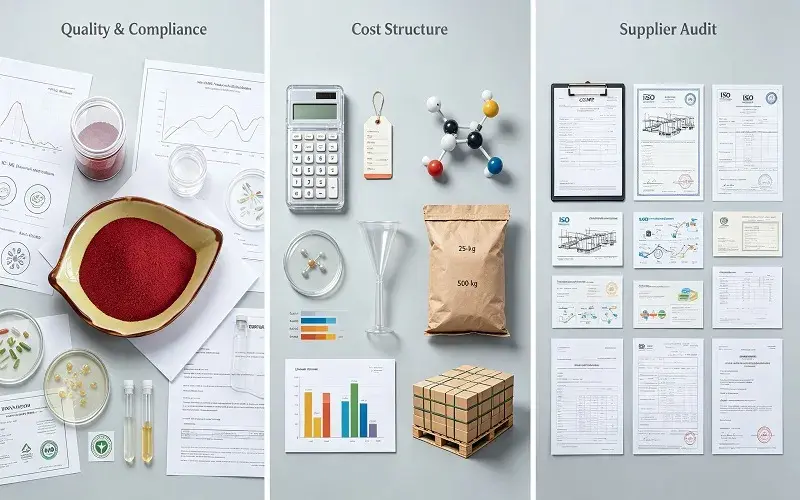
Setting up strict review methods for suppliers that check for consistency in quality, compliance with regulations, and supply chain reliability is key to successful procurement.
Quality Parameters and Certification Requirements
Besides just saying how much of a substance is in Lycopene Powder, specification sheets must include a number of important quality indicators. High-performance liquid chromatography (HPLC) testing should prove the total amount of lycopene present and describe the distribution of isomers. This is because all-trans-lycopene is more stable and bioactive than cis-isomers. Testing for residual solvents makes sure that the levels of hexane and acetone are in line with ICH guidelines. This is especially important when looking at suppliers who work with materials that come from tomatoes.
ICP-MS testing for heavy metals in tomato lycopene extract powder should show amounts of lead, arsenic, cadmium, and mercury that are well below the limits set by FDA and Proposition 65 rules. Protocols for checking microbes that include total plate count, yeast and mold, and certain pathogens (E. coli, Salmonella) are necessary to make sure that food-grade uses are safe. Lycopene powder made from fermentation should come with non-GMO certification that shows the genetic status of the Blakeslea trispora strain. This is becoming more and more important for EU export markets and organic certification routes.
Cost Structure and Pricing Dynamics
Different prices for lycopene powder and oil are due to the difficulty of making them, the cost of the raw materials, and how the products are positioned in the market. Starting out, 5% Lycopene Powder usually costs 20–30% more per kilogram than oil suspensions with the same concentration. To really compare costs, though, you have to look at the delivered cost per unit of active ingredient and take into account differences in concentration, yield losses during formulation, and waste related to stability.
High-purity 98% lycopene powder is an expensive product that costs a lot more than normal concentrations, but can be used for very precise doses in clinical settings and in custom pharmaceutical formulas. Pricing is heavily affected by volume agreements. For example, private-label projects that need 500 kg commitments have different economics than normal 25 kg MOQs. When buyers are discussing long-term supply deals, they should ask for tiered price systems that reward growing volume while still allowing for changes in specifications as product lines change.
Supplier Vetting and Partnership Development
To find trustworthy lycopene manufacturers, you need to do more than just look at their certificates. Site audits, which can be done directly or through third-party inspection services, make sure that production facilities follow the latest Good Manufacturing Practice (cGMP) rules that are right for the job. While FDA registration, HACCP certification, ISO 9001 quality management systems, and category-specific credentials (HALAL, KOSHER for relevant markets) are good starting points for confidence, you should also check with customers and ask for batch-to-batch consistency data from multiple production runs.
Suppliers who offer full legal support, such as certificates of analysis (COA), health certificates, certificates of origin, and non-GMO statements, make it easier for goods going into foreign distribution to get through customs and speed up the time it takes to get to market. Outstanding suppliers are different from average ones when it comes to their technical service capabilities. This is especially true for buyers who are creating new formulations that need stability studies, co-formulation development with complementary nutrients, or custom microencapsulation systems that are made to fit specific manufacturing processes.
Safe Usage, Dosage, and Regulatory Compliance
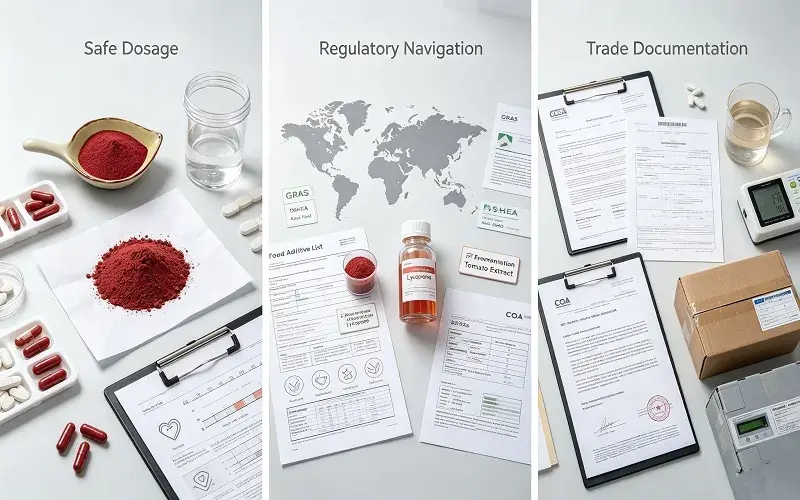
Adding lycopene to market goods requires a deep understanding of safety factors, the right dose ranges, and the legal processes in each country.
Dosage Recommendations and Safety Profiles
The clinical literature shows that lycopene is safe at a wide range of doses. Supplemental intakes from 10 to 120 mg per day were found to be well tolerated in human trials. Most food supplements contain 10 to 30 mg per dose, which is the same amount of medicine that epidemiological studies have linked to heart and prostate health benefits. High-potency clinical formulas may contain 50–100 mg, which need 98% Lycopene Powder to be delivered compactly in standard capsule forms.
Functional beverage uses usually aim for lower doses, between 5 and 15 mg per serving, to balance the antioxidant's usefulness with cost and serving size limitations. Lycopene powder forms are more stable than other types, so doses are always accurate throughout the product's shelf life. This keeps the product from either not working as well as claimed or costing too much to make.
Regulatory Landscape Navigation
Lycopene is generally thought to be safe (GRAS) for use in food in the US, and it is also legal as a dietary supplement under the Dietary Supplement Health and Education Act (DSHEA). Structure-function claims about antioxidant activity, heart health, and cell health are legal as long as they are properly backed up and come with the necessary FDA warnings. Manufacturers need to make sure that the lycopene source is correctly stated on the label. For example, "fermentation-derived lycopene" is different from "tomato extract" and meets the standards for an ingredient statement.
Different export markets have different needs. Novel Food Regulations in the European Union look closely at lycopene sources. Ingredients from Blakeslea trispora that are fermented have already been approved. In EU markets, where GMO labeling laws make customers more aware, non-GMO paperwork is given extra weight. The Japanese and South Korean markets are very aware of and open to lycopene, but importers should make sure that the products they bring in follow their countries' food additive lists and labeling rules.
Complete analytical reports, stable data under ICH conditions, allergen declarations, BSE/TSE statements, and proof of irradiation status should all be included in documentation packages that support foreign trade. Temperature-controlled shipping rules add to the cost, but they protect the quality of the goods while they're traveling across international borders. This is especially important for places with tropical climates or long customs clearance times.
Conclusion
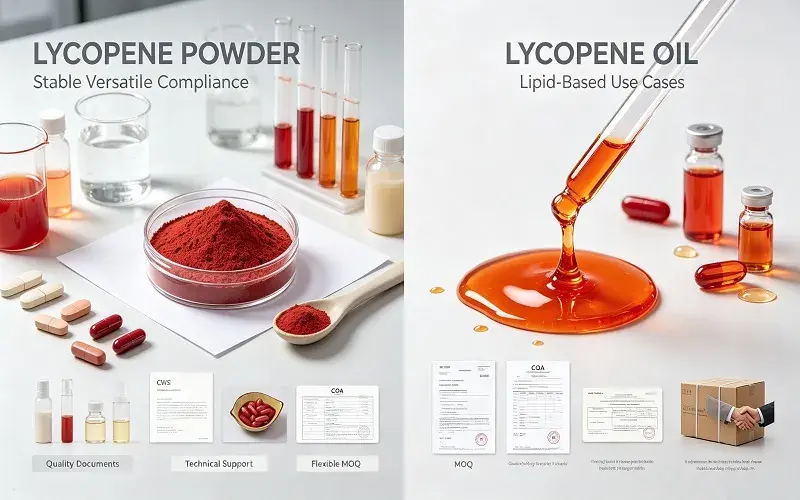
Lycopene Powder vs. Lycopene Oil: Which to Use? Lycopene powder, especially fermentation-derived versions in uniform 5%-98% concentrations and cold-water dispersible forms, is more stable, has more dosage options, and can be used in a wider range of nutraceutical, functional beverage, and cosmetic products. While oil suspensions can still be useful in some lipid-based formulations, the powder format meets important B2B buying needs like batch stability, longer shelf life, easier handling, and regulatory compliance in all global markets. To successfully source ingredients, you need to work with makers who offer full quality documentation, technical support, and flexible MOQ structures that allow for both standard bulk purchases and unique private-label development.
FAQ
1. Can Lycopene Powder and Lycopene Oil Be Used Interchangeably in Formulations?
How possible a substitution is depends on the type of composition and the way it is made. Lycopene powder is needed for dry dosage forms like pills, capsules, and sachets because oil solutions make it hard to encapsulate and keep stable. On the other hand, lipid-based delivery systems can work with either form, though powder forms usually need to be mixed with oils first or added during production. CWS Lycopene Powder has special benefits in water-based systems where oil-based systems don't work. When moving between forms, it's important to do reformulation studies and stability tests to make sure the bioequivalence and shelf life work.
2. What Certifications Should Buyers Prioritize When Sourcing Lycopene Ingredients?
Priority certifications include ISO 9001 for quality control, HACCP for food safety, and registrations relevant to the country (FDA for goods going to the US). Non-GMO approval is becoming more and more important as customer demand and government scrutiny grow. Credentials that are specific to an application, like HALAL and KOSHER for the right markets, organic approval when it makes sense, and cGMP compliance for pharmaceutical-grade uses, make it easier to get into new markets. For target countries, ask for full paperwork packages that include certificates of analysis, stability studies, and evidence of regulatory status.
3. How Can Buyers Verify Bioavailability Claims for Different Lycopene Formats?
Ask for pharmacokinetic data from bioavailability studies of humans that compare how lycopene is absorbed from different forms. Reliable suppliers show that supplements raise plasma lycopene levels through published research or their own data. Particle size analysis, dissolution tests in artificial stomach and intestine fluids, and solubility profiles can all be used to guess how well something will be absorbed. Details about microencapsulation technology, such as the composition of the carrier matrix and the distribution of particle sizes, have a big effect on the bioavailability of different types of lycopene powder, especially CWS variants that are designed to disperse and absorb better.
Partner with Hisy for Premium Lycopene Powder Supply
Shaanxi Hisy Biotechnology Co., Ltd. is an expert in making Lycopene Powder from fermentation. They offer consistent quality in 5%, 6%, 10%, and 98% specifications, as well as CWS 5% and 10% cold-water dispersible formulations. With 18 years of experience in the field, the ability to produce more than 200 metric tons of lycopene powder every year, and a full list of certifications, including FDA registration, HACCP, ISO, HALAL, and KOSHER, we are a reliable lycopene powder producer for global brands in nutraceuticals, functional beverages, and cosmetics. We offer free samples (50–100g), fast delivery (4–8 days) on standard orders, and full regulatory documentation to help with customs clearance around the world. Get in touch with our technical team at sales@hisybio.com to talk about custom product development, private-label options (500 kg MOQ), and how our fermentation-derived non-GMO Lycopene Powder can help you meet DSHEA compliance standards and solve your unique manufacturing problems.
References
1. Erdman J.W., Ford N.A., Lindshield B.L. "Are the health attributes of lycopene related to its antioxidant function?" Archives of Biochemistry and Biophysics, 2009, 483(2): 229-235.
2. Story E.N., Kopec R.E., Schwartz S.J., Harris G.K. "An update on the health effects of tomato lycopene. "Annual Review of Food Science and Technology, 2010, 1: 189-210.
3. Giovannucci E., Rimm E.B., Liu Y., Stampfer M.J., Willett W.C. "A prospective study of tomato products, lycopene, and prostate cancer risk." Journal of the National Cancer Institute, 2002, 94(5): 391-398.
4. Rao A.V., Rao L.G. "Carotenoids and human health. "Pharmacological Research, 2007, 55(3): 207-216.
5. Cooperstone J.L., Schwartz S.J. "Recent insights into health benefits of carotenoids." Handbook on Natural Pigments in Food and Beverages, 2016, Chapter 16: 473-497.
6. Unlu N.Z., Bohn T., Clinton S.K., Schwartz S.J. "Carotenoid absorption from salad and salsa by humans is enhanced by the addition of avocado or avocado oil." Journal of Nutrition, 2005, 135(3): 431-436.