

_1752718207094.png)

How to distinguish genuine lycopene powder from counterfeit products?
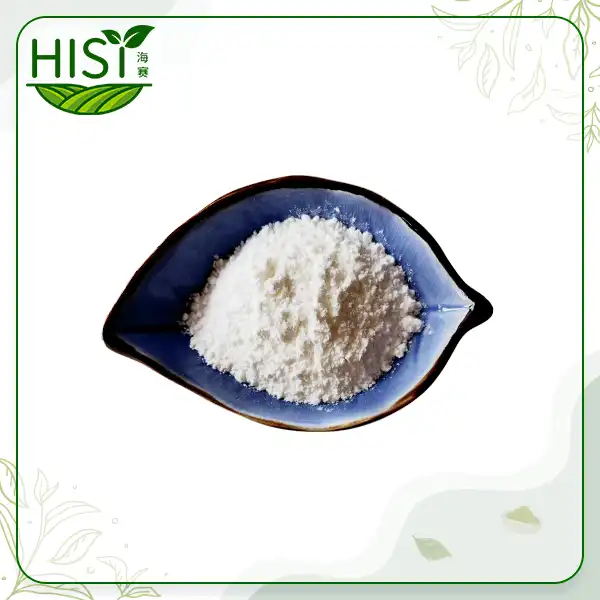
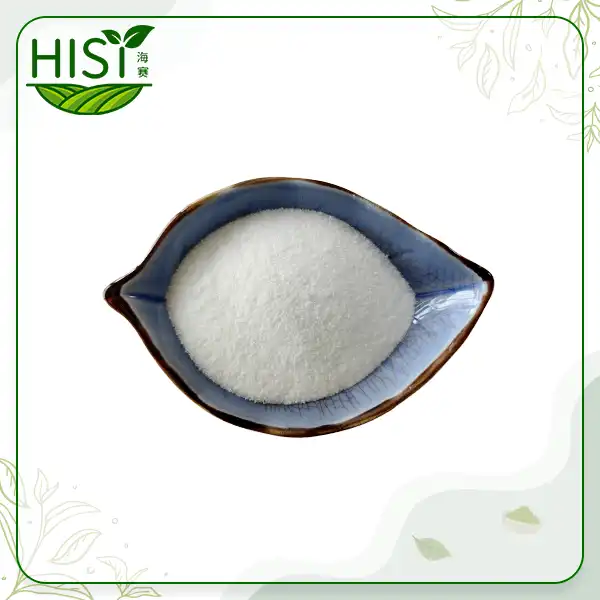
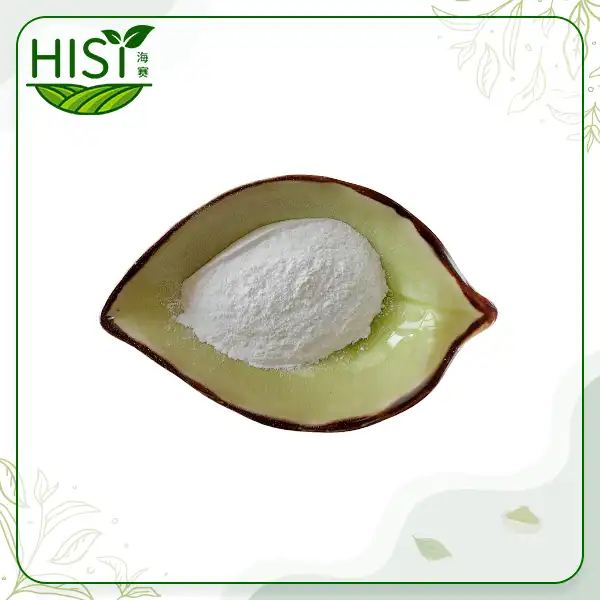
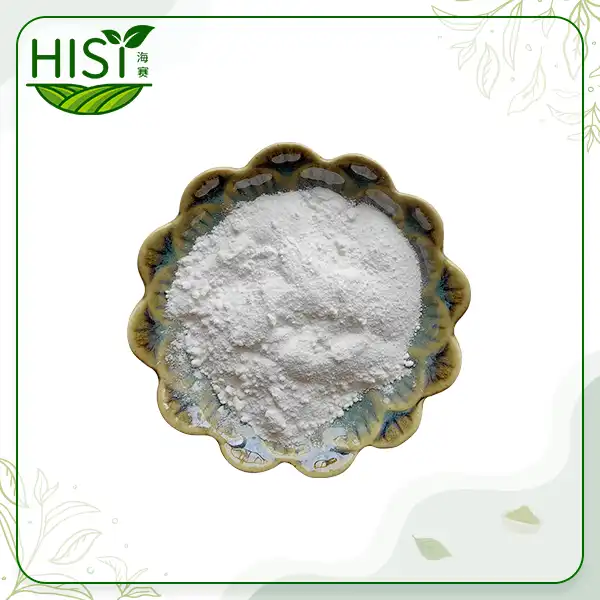
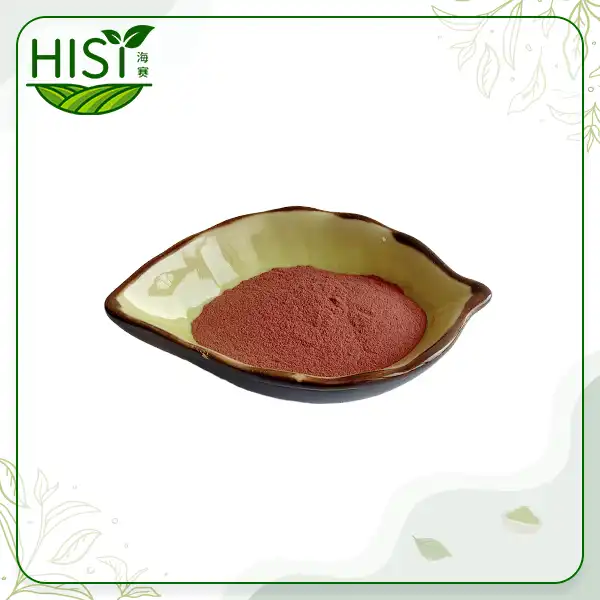
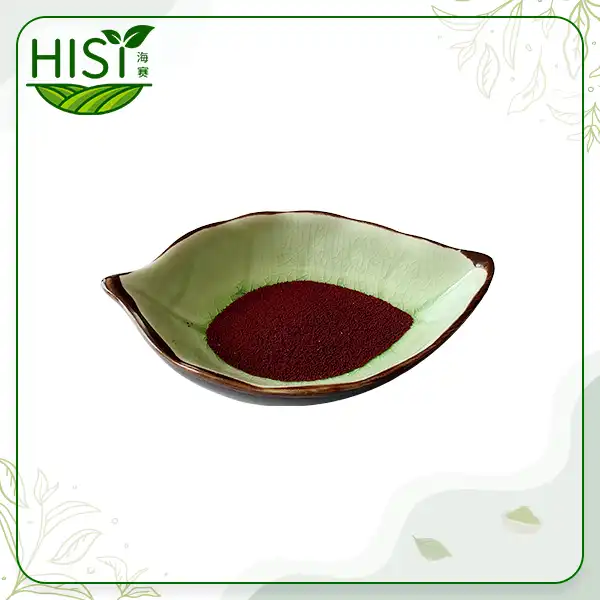
Distinguishing genuine lycopene powder from counterfeit products starts with understanding production methodologies and quality benchmarks. Authentic Lycopene Powder (CAS: 502-65-8) derived through fermentation of non-GMO Blakeslea trispora strains delivers consistent purity levels—typically 5%, 10%, or 98% concentrations—unlike adulterated products that blend synthetic dyes with trace carotenoids. Genuine formulations exhibit dark red colouration, dissolve uniformly without sediment in cold-water dispersible (CWS) formats, and come backed by HPLC certificates verifying isomer profiles and heavy metal screenings below ICH limits. Recognising these scientific markers protects your supply chain integrity and regulatory standing in competitive nutraceutical markets.
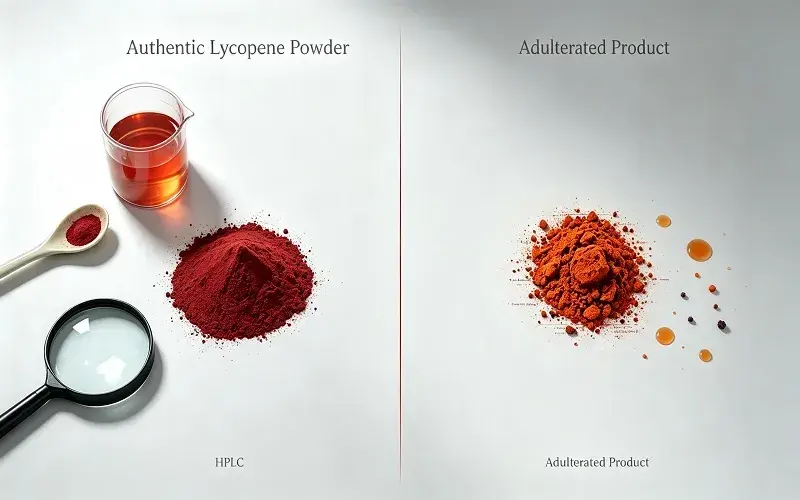
Causes Behind the Prevalence of Counterfeit Lycopene Powder
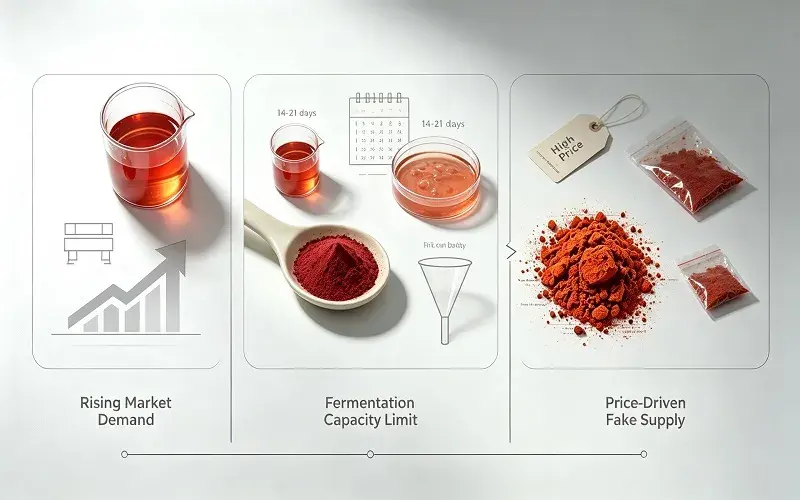
Supply-Demand Imbalance Driving Market Pressures
The healthy beverage market is growing very quickly—8.2% per year—faster than fermentation-derived carotenoids can be made. Authentic lycopene powder needs controlled Blakeslea trispora cultures for 14–21 day fermentation cycles, which restricts how quickly producers can increase output. This biological limitation on production leads to higher prices that encourage replacement scams. At the same time, people are moving away from tomato extraction because they are worried about pesticide residues. This has increased demand for fermentation sources, which has made the supply even tighter. When procurement managers are under a lot of pressure to keep their shelves stocked, they sometimes skimp on checking out potential suppliers. This can lead to the spread of fake goods.
Absence of Unified Industry Standards
In the US, DSHEA rules don't require the dietary supplement business to get pre-market approval. This means that producers, not regulators, are responsible for checking the products. Even though groups like USP put out papers on how to identify lycopene powder, following them is still up to the individual. There isn't a normal way to use fast screening to tell the difference between fermentation-derived lycopene powder, tomato extract, and synthetic analogues. Because of this regulatory gap, fakers can use vague labelling terms like "natural source" or "nature-identical" to trick buyers into thinking that the products are made in a different way. Because there aren't any blockchain-based traceability standards, batch verification relies on paperwork given by the seller, which is easy for skilled counterfeiters to fake.
Variability in Raw Material Sourcing
Chemically different lycopene powder profiles are made by different production methods, which makes it harder to judge quality. Lycopene from tomato fruit has higher amounts of trans-isomer ratios and natural co-extractives like phytosterols. Fermentation, on the other hand, makes mostly all-trans configurations with predictable isomer distributions. Solvent-based extraction can leave behind hexane or acetone levels that are too high for safety, but supercritical CO₂ methods don't leave behind this contamination. Some providers mix different sources to meet specific requirements, which leads to inconsistent batch performance. Because of how complicated the technology is, fakes can say they have "equivalent functionality" while using lower-quality materials. Without third-party test confirmation, buyers who don't know much about chromatography have a hard time telling these differences apart.
These systemic weaknesses show why procurement professionals need to use strict supplier qualification processes instead of just looking at how fast or cheap a supplier is.
Core Principles to Identify Genuine Lycopene Powder
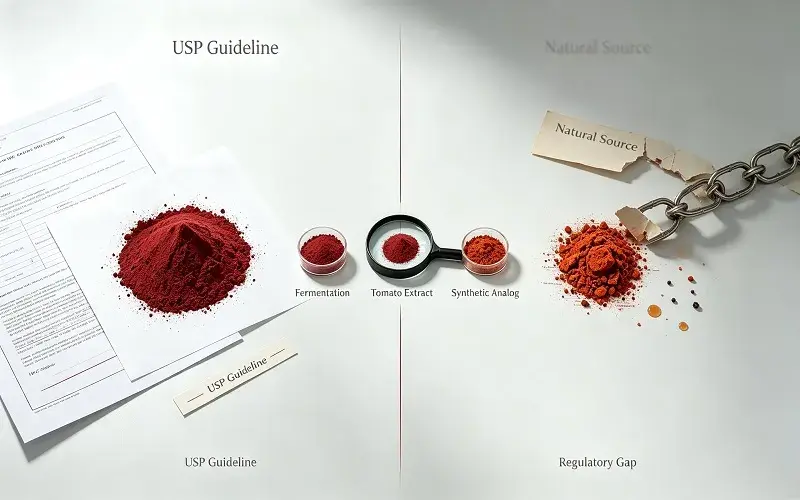
Verifying Supplier Credentials and Certifications
Real producers have thorough quality control systems that are checked by recognised organisations. Look for ISO 22000 certification that covers managing food safety, HACCP protocols that list important control points in fermentation and drying processes, and GMP compliance that is checked every year. Suppliers you can trust will give you an FDA business registration number that can be searched in the agency's public database. Kosher and Halal approvals from well-known groups like OK Kosher or IFANCA show that ingredients can be tracked and output is supervised. Instead of depending on old certificates, ask for audit reports from recent customer checks.
In addition to certifications, look at facility documentation to see how transparent the manufacturing process is. Well-known makers share thorough process flowcharts that show the parameters for fermentation, the methods for extraction, and the microencapsulation techniques. Instead of just giving final COA results, they give batch records that show testing that is still happening at important stages. Suppliers who offer video tours of their facilities or are open to on-site checks show that they have confidence in their operations. Companies that have been making the same product for 15 years or more have institutional knowledge and quality consistency that newer companies can't match.
Analytical Testing Methods for Purity Verification
HPLC measurement is the best way to be sure of the name and concentration of lycopene powder. Material that comes from fermentation has typical retention times of 12 to 15 minutes on C30 columns, and its UV-Vis absorption spectrum shows maxima near 472 nm. The chromatogram should mostly show all-trans-Lycopene Powder, with a few cis-isomer peaks below 15% that match the standards. Ask for full spectral data instead of just summary percentages, because fakes change peaks by adding manufactured dyes.
USP standards say that heavy metal testing with ICP-MS should show that lead levels are below 0.5 ppm, arsenic levels are below 1.0 ppm, and cadmium levels are below 0.5 ppm. GC-MS/MS tests on pesticide residues should show that common farming chemicals are not detectable if the seller says the sources are not tomatoes. Total plate counts must be less than 1000 CFU/g, yeast and mould counts must be less than 100 CFU/g, and pathogens like Salmonella and E. coli must not be present. A study of particle size distribution confirms that milling powders evenly, with D50 values usually falling between 80 and 150 microns for the best mixing results.
These technical standards make sure that the recipe stays the same from one production run to the next and stop recalls caused by contamination.
Evaluating Packaging and Documentation
Suppliers that are honest use pharmaceutical-grade packing materials that are made to keep carotenoids stable. Oxidative breakdown is stopped by aluminium foil bags that are flushed with nitrogen, and UV-protective secondary packing makes the food last longer. Each container should have a batch number that can be traced back to the manufacturing records, an expiration date that is based on stability studies instead of a random time frame, and information about how the food should be stored. Labels must correctly state the amount of lycopene powder in grammes, the carrier materials for CWS formulas, and, if relevant, whether the product is non-GMO.
Shipments should come with COAs signed by quality control staff and with their contact information for verification, specification sheets listing the physical and chemical properties, allergen declarations stating that common sensitizers are not present, and certificates of origin indicating the place where the goods were made. For products such as Lycopene from tomato fruit, suppliers who provide data from stability studies conducted under accelerated conditions show that they stand behind their claims about a product's shelf life. Instead of using generic templates, material safety data sheets should show what the materials are made of. This amount of documentation separates well-known producers from those that are trying to hide information about the supply chain.
Case Studies: Success Stories of Procuring Genuine Lycopene Powder
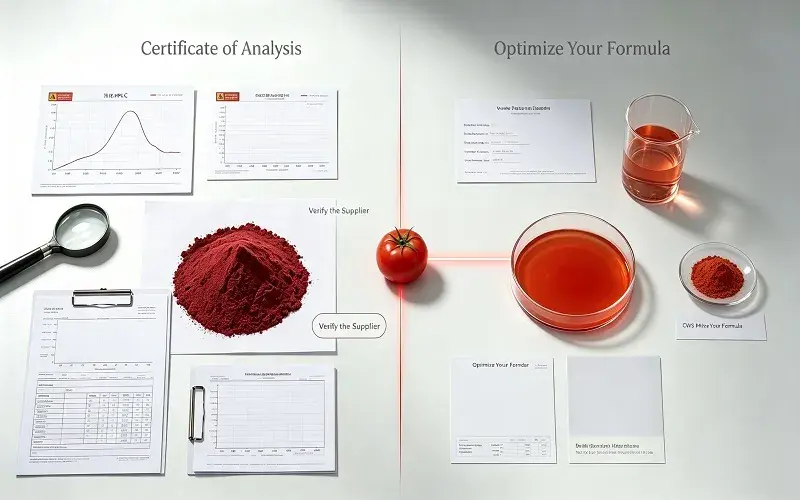
Distributor Verification Through Multi-Lab Testing
A Texas-based nutraceutical distributor had trouble getting consistent quality 10% lycopene powder from several Asian suppliers whose prices were 30% less than the market average. Customers were complaining about colour differences and bad dispersibility, so the procurement team set up parallel testing methods. They sent samples to three separate labs for HPLC testing and found that one supplier's material only had 6.8% lycopene powder content, even though the COA said it had 10.2%. Hexane residues were found in 42 ppm of another supplier's product, which is 270% more than what the ICH allows. Over 24 months, the distributor was able to achieve 98.7% batch-to-batch uniformity by working with a recognised manufacturer that provided fermentation-derived materials and clear batch records. 34% more customers stayed with the company, and the higher prices could be maintained because the quality was proven to be better.
OEM Formulation Optimisation Through Source Selection
For its "natural" marketing, a California-based private-label supplement company that was making a prostate health formula first chose lycopene powder extracted from tomatoes. During pilot production, they ran into problems with solubility that meant they had to use too many excipients. During six-month shelf life tests, 18% of the drug's effectiveness was lost. After talking to experts about the ingredients, they changed the recipe and used 10% CWS Lycopene Powder microcapsules that were made through fermentation. The cold-water dispersible format got rid of clumping problems, lowered formulation costs by getting rid of extra emulsifiers, and kept 96% of its effectiveness through fast stability tests. When they first came out on the market, clinical feedback showed that their absorption markers were better than those of their previous version. This change to the specifications cut down on production waste by 23% and gave the brand a premium place in stores thanks to better product performance.
Practical Tips for Safe Lycopene Powder Procurement
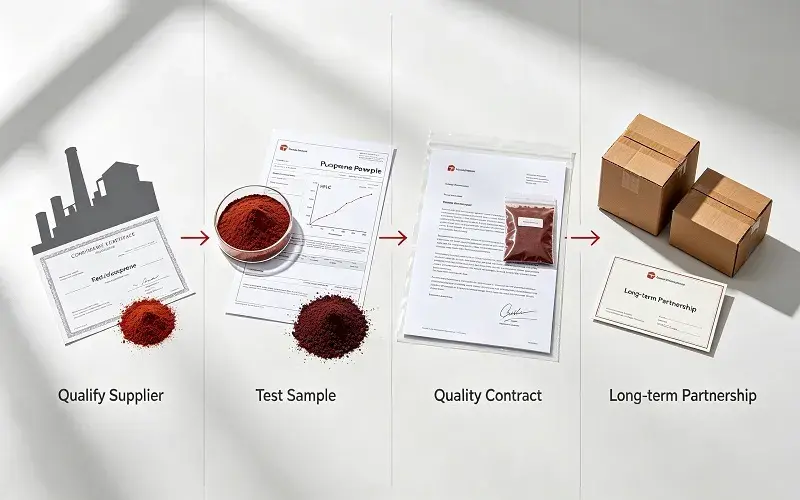
Setting non-negotiable supplier qualification criteria before evaluating price proposals is the first step to successful procurement. Ask possible suppliers to fill out thorough questionnaires that record their production methods, quality control processes, and history of following the rules. Ask well-known brands for customer references from companies that are ready to confirm long-term supply agreements. Set up a three-sample protocol: first, initial qualification samples should go through full analytical testing; next, pilot production runs should be done to see how well they work with manufacturing before placing bulk orders.
Talk about quality agreements that spell out the acceptable ranges for important factors such as lycopene powder content, particle size, and microbial limits. Include rules for batch-hold processes, in which new shipments are tested by a third party before they are sent to production. Set up clear steps for fixing out-of-spec material, such as when it can be returned and when it needs to be replaced. Keep track of all conversations about product specs in version-controlled systems and write down all technical data sheets.
Aside from the quality guarantee, building strategic relationships with qualified makers gives you a number of other competitive benefits. Direct relationships make it possible to talk about customisation based on specific needs, such as making 15% concentrations for certain uses or creating custom microencapsulation matrices. Long-term contracts make sure there is a supply when the market is short, and they can often unlock volume-based prices that lower the cost of high-quality goods. Collaborative product development shortens the time it takes to bring new formulas to market while using production knowledge to improve stability and create regulatory paperwork.
Over time, techniques for continuous growth make procurement results better. Do supplier audits once a year, looking at quality trend data and efforts to make the process better. Keep an eye on trade publications to find new ways to test that make verification easier. Join trade groups where people in the same line of work can share their experiences with how well suppliers do their jobs and how to spot fakes. With these preventative steps, procurement goes from being a one-time thing to smart supply chain management that helps a business grow over the long term.
Conclusion
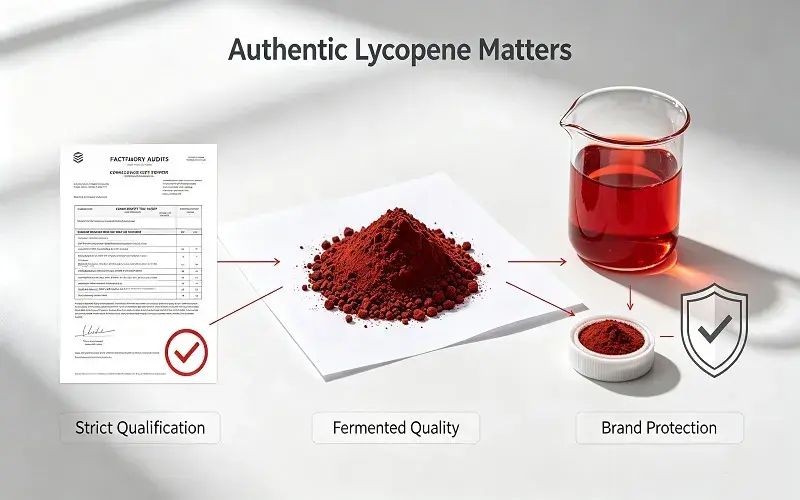
In order to tell the difference between real lycopene powder and fake versions, production methods, analytical testing protocols, and supplier credentials must be carefully checked. There are a lot of fake products on the global market, which makes it hard for B2B buyers in the nutraceutical, beverage, and cosmetics sectors to follow the rules and protect their brands' reputations. Authentic material produced from fermentation is more consistent, has been proven to be pure, and works better than substitutes or weakened versions. Purchasing managers who set strict qualification standards, ask for lots of paperwork, and work together with certified makers protect their supply lines from poor quality and service interruptions. Putting money into third-party testing and verifying suppliers pays off in a big way: more stable formulations, happier customers, and less risk of recalls in markets that are getting more competitive.
FAQ
1. How can I verify lycopene powder purity before bulk purchasing?
Ask independent labs for HPLC chromatograms that show retention times and UV-Vis spectra that match standard samples. Authentic lycopene powder that comes from fermentation has a mostly all-trans structure and absorbs light best around 472 nm. Ask for heavy metal testing with ICP-MS and pesticide residue testing that are acceptable for the products that are said to come from them. Suppliers with a good reputation give batch-specific COAs instead of general certificates, include proof from a third-party lab, and let you test samples before shipping through your chosen lab.
2. What specifications indicate cold-water dispersibility for beverage applications?
CWS Lycopene Powder uses microencapsulation technology to make particles that dissolve quickly in water without sticking together. For the best suspension stability, technical standards should list particle size ranges with D50 values between 5 and 20 microns. Protocols for dispersibility tests determine how long it takes for a substance to dissolve completely in room-temperature water. For functional beverage grades, this time is usually less than 60 seconds. The performance is affected by the composition of the carrier matrix. Simple maltodextrin blends are less stable than modified starches or gum arabic systems.
3. Does fermentation-derived lycopene require non-GMO certification?
Lycopene powder made from Blakeslea trispora fermentation should have non-GMO claims that can be backed up by genetic testing of the production strains. In normal manufacturing processes, the fungus is not genetically modified. However, buyers from the EU or natural product stores need proof that the fungus has not been genetically modified. This certification is especially important for organic products and products aimed at health-conscious people, whose decisions about what to buy are affected by whether the product is non-GMO.
Partner With a Trusted Lycopene Powder Supplier
Hisy offers Lycopene Powder made from fermentation in standardised amounts ranging from 5% to 98%. This includes microcapsule forms that can be dispersed in cold water and are made for high-demand beverage and nutritional uses. Our 18 years of experience making botanical extracts help you reach your purchasing goals through ISO, HALAL, and KOSHER-certified production methods that keep batch-to-batch uniformity, which takes the guesswork out of formulating. We offer free samples so that you can test their compatibility before committing to buying a lot of them. We also offer full documentation packages to help with customs clearance and regulatory filings, as well as technical support for developing co-formulations.
Our Xi'an plant has four dedicated production lines that can make more than 200 metric tonnes of goods every year. This means that we always have stock on hand for when your projects need to be finished quickly. Standard orders are sent out within 4 to 8 days, while orders with specific requirements are managed by a project manager throughout the development and scale-up stages. Our flexible MOQ structure works for businesses at all stages of growth, whether they need 25 kg for a test run or 500 kg for a private label. Email our technical sales team at sales@hisybio.com to talk about your particular needs and ask for batch paperwork that shows our quality standards.
References
1. Rao AV, Rao LG. "Carotenoids and Human Health: Perspectives on Lycopene Bioavailability and Chromatographic Analysis in Quality Control. "Pharmaceutical Biology, Vol. 45, 2007, pp. 1095-1106.
2. Cooperstone JL, Schwartz SJ. "Recent Insights into Health Benefits of Carotenoids: New Analytical Approaches for Authentication of Lycopene Sources. "Annual Review of Food Science and Technology, Vol. 7, 2016, pp. 185-212.
3. Erdman JW, Ford NA, Lindshield BL. "Are the Health Attributes of Lycopene Related to Its Antioxidant Function? Implications for Fermentation-Derived vs. Tomato-Extracted Forms." Archives of Biochemistry and Biophysics, Vol. 483, 2009, pp. 229-235.
4. Stahl W, Sies H. "Bioactivity and Protective Effects of Natural Carotenoids: Authentication Methods for Commercial Lycopene Products. "Biochimica et Biophysica Acta, Vol. 1740, 2005, pp. 101-107.
5. Unlu NZ, Bohn T, Clinton SK, Schwartz SJ. "Carotenoid Absorption from Salad and Salsa: Influence of Isomerization and Detection of Adulteration in Dietary Supplements." American Journal of Clinical Nutrition, Vol. 82, 2005, pp. 896-901.
6. Grolier P, Azais-Braesco V. "Lycopene Bioavailability: Lessons from Processing, Encapsulation Technology, and Quality Control Methodologies for Ingredient Procurement. "International Journal for Vitamin and Nutrition Research, Vol. 77, 2007, pp. 270-280.