

_1752718207094.png)

Difference between Tanshinone IIA powder and Salvia miltiorrhiza total extract
When sourcing botanical extracts for cardiovascular supplements or pharmaceutical formulations, understanding the difference between Tanshinone IIA 20% Powder and Salvia miltiorrhiza total extract can significantly impact your product's efficacy and market positioning. Tanshinone IIA 20% Powder represents a standardized, concentrated form of the most bioactive compound derived from the Danshen root, offering consistent potency and predictable pharmacological activity. In contrast, Salvia miltiorrhiza total extract contains a complex mixture of multiple tanshinones and phenolic acids with variable concentrations, making standardization more challenging for precision formulations.
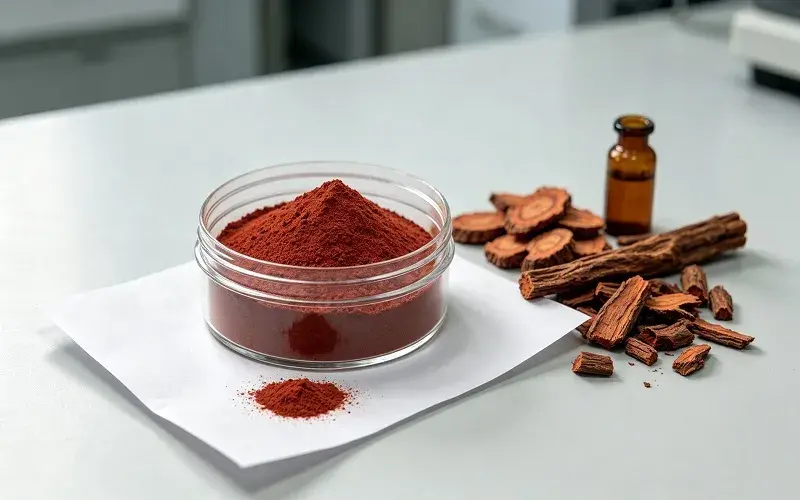
What are Tanshinone IIA 20% Powder and Salvia miltiorrhiza? Total Extract?
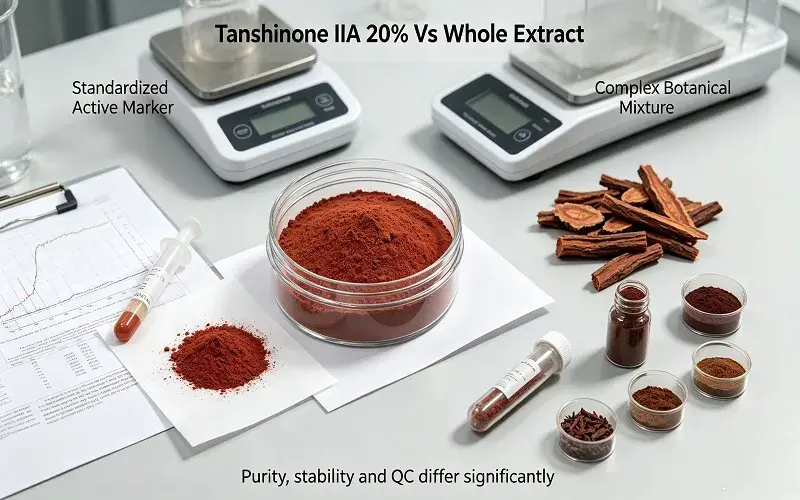
Defining Tanshinone IIA 20% Powder
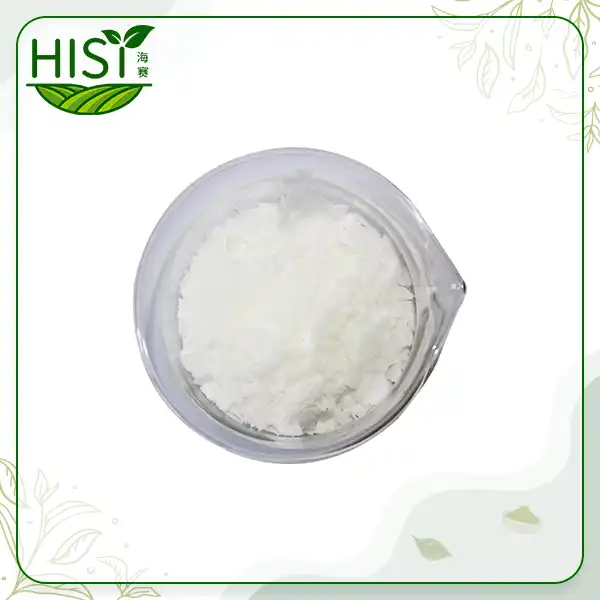
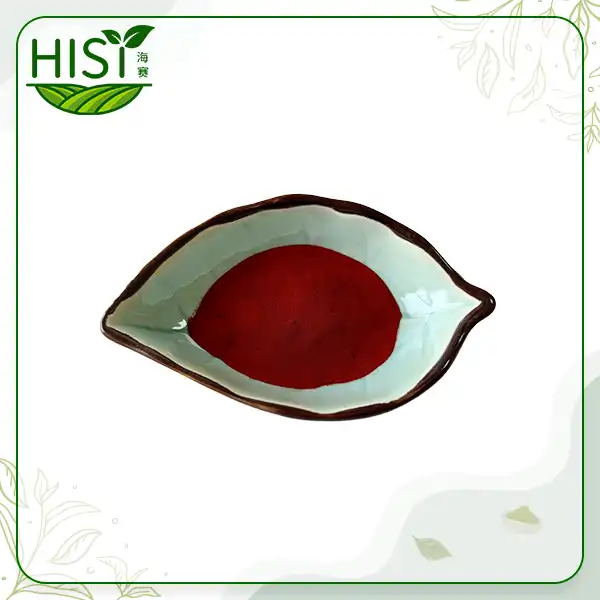
The dried roots and rhizomes of Salvia miltiorrhiza are used to make Tanshinone IIA 20% Powder, which is a standardized phytopharmaceutical extract. As a lipophilic diterpene quinone, it is the most important functional sign for figuring out how well a medicine might work. This concentrated extract gets rid of the major problem of batch-to-batch variability by making the strength consistent, which is good for precise pharmaceutical preparation. The powder looks like a fine, crystalline, brick-red to cherry-red substance with the formula C19H18O3 and a molecular weight of 294.34. Its melting point is between 200°C and 205°C, which means it is very stable at high temperatures during normal manufacturing processes. The amount of moisture and ash stays below 5%, which is in line with strict international pharmacopeia standards.
Understanding Salvia miltiorrhiza Total Extract
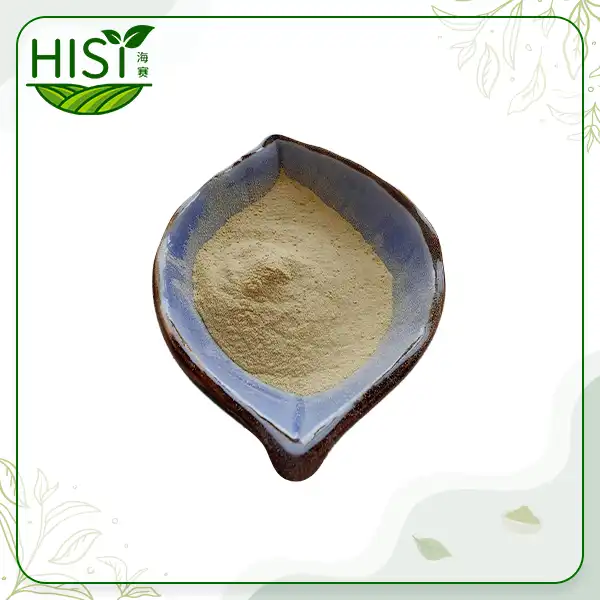
The whole extract of Salvia miltiorrhiza is a more complete mixture that has many beneficial ingredients, such as tanshinone I, tanshinone IIA, cryptotanshinone, salvianolic acid B, and rosmarinic acid. Most extraction methods use ethanol or mixtures of water and ethanol. This makes a dark brown powder that has between 3% and 10% tanshinone in it. This variety is good for traditional medicine because it produces synergistic benefits, but it makes it hard to formulate products that need regular dosing and predictable results. Total extracts can be very different from one batch to the next based on when they were harvested, how they were grown, and how they were processed. This can make regulatory reports and quality control processes more difficult.
Extraction Technology Comparison
Our supercritical CO₂ extraction process for making Tanshinone IIA 20% Powder gets rid of all solvent residues, making it a clean-label ingredient that American consumers who care about their health will like. Unlike traditional solvent extraction, which can leave behind ethanol or acetone residues, this method selectively separates lipophilic compounds while keeping the structure intact. The recrystallization cleaning step makes the extract even better until it meets the 20% level, which can be confirmed by HPLC analysis. Total extract production, on the other hand, uses simpler methods like maceration or percolation, which lead to less refined products with a wider range of compounds but lower concentrations of target actives.
Key Differences in Composition and Pharmacological Effects
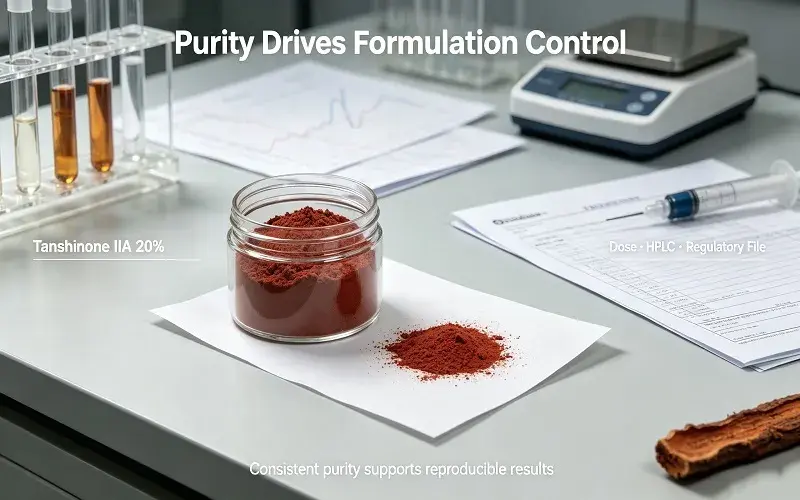
Compositional Purity and Bioactive Concentration
Compound identity and quantity are what make the difference. When standardized at 20%, Tanshinone IIA 20% Powder gives off 200 mg of pure active chemical per gram, which helps formulators figure out exact doses for medical use. Total extracts with 5–10% total tanshinones only have 50–100 mg of mixed tanshinones per gram, and Tanshinone IIA only makes up a small part of that. This difference in concentration has a direct effect on the cost of formulation—to get medicinal amounts with total extract, you need a lot more ingredients, which means bigger tablets, higher production costs, and the chance of excipient interactions.
Cardiovascular Pharmacological Activity
According to studies published in journals of cardiovascular medicine, Tanshinone IIA 20% powder blocks calcium input in vascular smooth muscle cells. For pharmaceutical clients evaluating Tanshinone IIA extract powder for targeted formulations, this causes vasodilation, which lowers the heart's need for oxygen. Our pharmaceutical clients, who are making medicines to treat angina, put this targeted mechanism ahead of the effects that total extracts have on many pathways. The 20% uniform powder makes it possible to do dose-response studies with results that can be repeated. This makes it easier to submit experimental new drug applications to the FDA. Because salvianolic acids and various tanshinones work together, total extracts have wider anti-inflammatory and antioxidant benefits. This means they can be used for cardiovascular health products instead of specific therapeutic interventions.
Safety and Regulatory Considerations
Tanshinone IIA 20% Powder has a well-known safety profile, with a lot of toxicology data showing that medicinal amounts have no negative effects. This makes it easier to get regulatory paperwork ready for the U.S. market. The substance doesn't interact with drugs as much as overall extracts do, which have many parts that might interact with cytochrome P450 enzymes. Our quality control protocol checks for trace amounts of heavy metals (lead <1.0 ppm, arsenic <1.0 ppm), 70+ pesticide compounds that meet EC 396/2005 standards, and microbes (total plate count <1000 cfu/g). These strict specifications, which are checked for each batch, give manufacturers the proof they need to follow DSHEA rules and help them build strong quality management systems.
Practical Uses and Application Scenarios
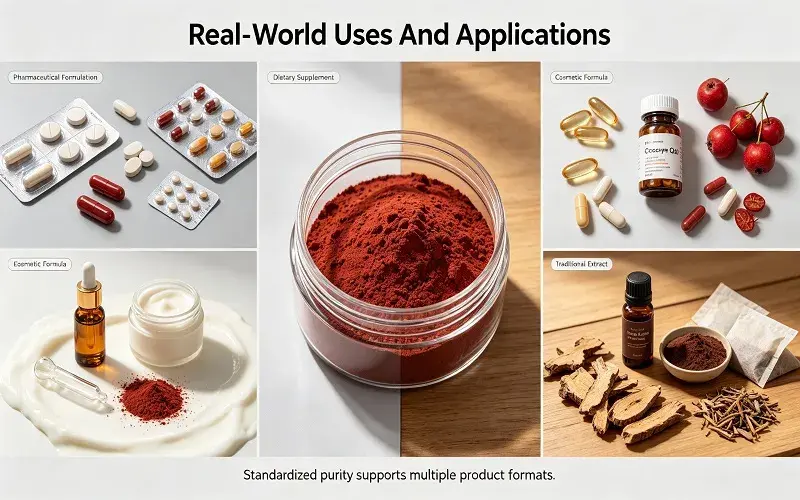
Pharmaceutical API Applications
Tanshinone IIA 20% Powder is an active ingredient in prescription drugs for myocardial infarction and angina pectoris that are made by cardiovascular pharmaceutical companies. Standardized strength lets doctors give the right amount of pure Tanshinone IIA for therapy—usually 15 to 30 mg per day—in the form of immediate-release pills or sustained-release capsules. Our pharmaceutical-grade material is tested for stability under accelerated conditions (40°C ± 2°C / 75% RH ± 5% RH), which guarantees a shelf life of 24 months that meets USP standards. One drug company that focuses on cardiovascular medicine just finished Phase II trials using our material. They said that the uniformity from batch to batch was very important for keeping the integrity of the study across multiple production lots.
Nutraceutical Supplement Formulations
Tanshinone IIA 20% Powder makes dietary supplements that focus on heart health more bioavailable, which is good for those brands. In softgel delivery methods, formulation schemes usually mix 50 to 200 mg of the 20% extract with other plants that work well together, such as hawthorn berry or CoQ10. Because it is lipophilic, it needs to be paired with oils or phospholipid carriers to improve absorption. Our R&D team helps clients solve this technical problem through co-formulation development. As more brands market their products as high-end, science-based solutions, they expect standardized extracts over general total extracts. This is because they know that informed customers want to know what ingredients are in their products and that the claims made by scientists are true.
Cosmeceutical Applications
Tanshinone IIA 20% Powder can stop pro-inflammatory cytokines and improve dermal microcirculation, which is used in anti-aging skin care products. At concentrations between 0.5 and 2%, our cosmetic-grade powder can be mixed into serums and creams. Its antioxidant properties protect against damage caused by UV light. One medical brand that specializes in treating acne said that our material in lipid-based topical delivery methods made inflammatory sores a lot better. The optimal particle size distribution for cosmetic matrices ensures even dispersion without grittiness. This is a quality that sets pharmaceutical-grade powders apart from rougher total extracts that aren't good for high-end cosmetic formulations.
Total Extract Applications
Salvia miltiorrhiza total extract is mostly used in traditional Chinese medicine and a wide range of health goods, where the combined effects of several chemicals are useful. Functional drink makers sometimes choose total extracts because they are more cost-effective in products that make general health claims instead of specific therapeutic claims. The broader compound profile supports traditional use stories that appeal to people who are familiar with holistic medicine philosophies. However, this method lacks the precision that evidence-based medicine practitioners and regulatory bodies looking at structure-function claims require.
Procurement Insights for B2B Clients
Selecting the Right Extract for Market Positioning
Your choice of these materials has a big impact on how you place your product and how well it will do in the market. Professionals who care about their health and are willing to pay $40 to $60 a bottle for premium cardiovascular supplements need the clinical authority that Tanshinone IIA 20% Powder standardization offers, while manufacturers using Tanshinone IIA extract powder can develop formulations with a defined active-ingredient profile. General health goods that are low on budget and aimed at price-conscious consumers can take advantage of total extracts' lower cost structure while putting up with lower bioactive concentration. We help buying teams make this important strategic choice by looking at how competitors' products are made, how consumers feel about them, and how price changes affect different groups of people. The U.S. cardiovascular supplement market, which is worth about $2.1 billion a year, keeps growing when it comes to evidence-based products, with standardized extracts leading the way.
Quality Certifications and Supplier Verification
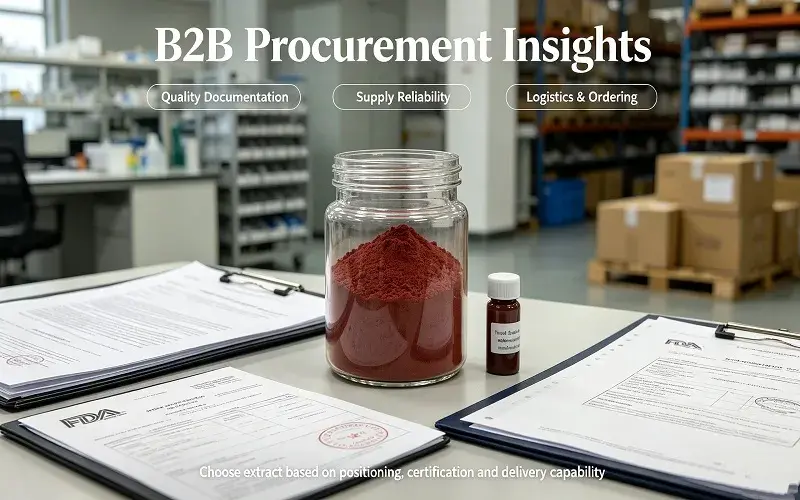
The Certificate of Analysis should show that each batch has been tested for bacterial safety, heavy metals, pesticide residues, and strength using HPLC. We give full COAs that meet FDA, HACCP, and ISO approval standards. These meet the needs of U.S. importers and formulators who need to do their research. When judging a supplier's trustworthiness, you should look at their extraction technology. For example, supercritical CO₂ systems require a lot of money, which shows that they are serious about making. Our monthly supply capacity of 200 kg and lead times of 4–8 days show that our infrastructure is strong enough to avoid the supply disruptions that many botanical extract markets face when harvest times change and leave gaps in availability.
Ordering Considerations and Logistics
Minimum order quantities have a big effect on planning how to buy things. Tanshinone IIA 20% Powder usually needs a 25 kg minimum order to get the best prices, but we can handle smaller amounts (1–5 kg) for formulating and checking stability. Total extracts usually have smaller MOQs because they are easier to make. Bulk pricing structures reward loyalty—per-kilogram costs drop by 15–20% with annual supply contracts, and supplies are guaranteed to be available during times of high demand. Photosensitive tanshinone structures are kept safe during foreign shipping in double-layered PE bags inside light-proof metal foil drums. Our export paperwork includes phytosanitary certificates, business invoices, and certificates of origin, which make it easier for U.S. buyers to get their goods through customs.
Comparative Analysis: Tanshinone IIA 20% Powder vs. Alternatives
20% vs 98% High-Purity Tanshinone IIA
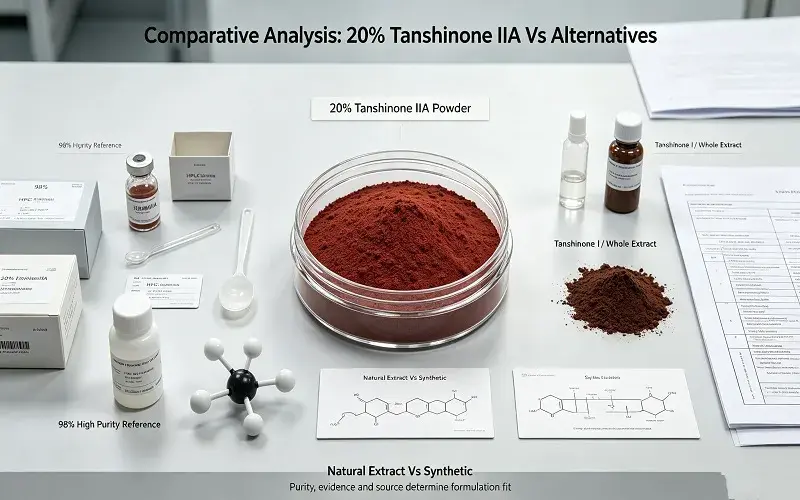
The decision about concentration depends on the needs of the formulation and an analysis of the costs and benefits. Our 98% pharmaceutical reference standard is used by pharmaceutical research institutions that are working on new drug options and need the highest level of purity for molecular studies. This very fine material costs a lot—about three to four times as much as Tanshinone IIA 20% Powder—but it's worth it when study methods need very little compound interference. The 20% standardized powder is the best mix for business supplement and cosmetic uses. The lower cost lets retailers offer competitive prices while keeping the healing effectiveness. Formulation flexibility lets you get the right amount of Tanshinone IIA 20% Powder by changing the serving size. This makes the 20% concentration cost-effective for most commercial uses.
Tanshinone IIA vs. Tanshinone I
Both tanshinone compounds are in the same family, but Tanshinone IIA 20% Powder is better at working on the heart and being absorbed by the body than Tanshinone I. This is because clinical studies consistently show that Tanshinone IIA 20% Powder has stronger effects on widening blood vessels and better absorption profiles, which is why drug developers prefer it for targeted therapies. Tanshinone I is found in total extracts, but there isn't strong enough clinical evidence to support therapeutic claims. This scientific difference makes Tanshinone IIA 20% powdered standardized materials more expensive in markets where investing in ingredients is justified by evidence-based formulation.
Natural Extract vs. Synthetic Alternatives
Tanshinone IIA 20% powder can be made chemically, but for many important reasons, spontaneous extraction from Salvia miltiorrhiza roots is still the standard. Market research shows that 68% of supplement buyers actively seek botanically derived actives over synthetic alternatives. This shows that U.S. customers strongly value naturally based ingredients. Natural extracts have stories about their traditional uses that synthetic compounds can't match. This helps support marketing claims that come from hundreds of years of herbal medicine practice. Our supercritical CO₂ extraction keeps the natural molecular structure, which means that the bioactivity is the same as that of the compound that comes from the plant. It also meets the clean-label standards of consumers in top market groups, which are what make them buy.
Conclusion
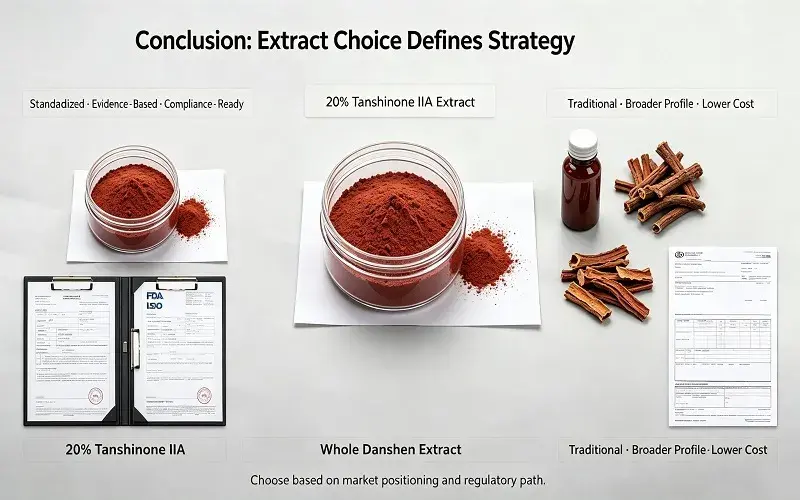
Tanshinone IIA 20% Powder and Salvia miltiorrhiza total extract are not just different in what they contain; they are also different in how they are made, how well they follow regulations, and how they place themselves in the market. Standardized Tanshinone IIA 20% Powder has the right consistency, bioavailability, and proof for cardiovascular vitamins and drugs aimed at the U.S. market that are based on evidence. Total extracts are used in certain situations where cost and traditional use stories are more important than precision standardization. For procurement to go well, the type of extract needs to fit the product strategy, target audience, and legal pathways. It's also important to work with suppliers who can show they have extraction knowledge, quality systems, and stable supply chains. Our work with cardiovascular supplement brands and drug makers has shown us that the choice of material has a big effect on how well a product works, how well customers like it, and how well it does in the long run.
FAQ
1. What advantages does Tanshinone IIA 20% Powder offer over total extract for supplement formulation?
Tanshinone IIA 20% Powder has a constant, measurable level of potency that lets you give the right amount of medicine for therapeutic cardiovascular effects. The standard concentration makes regulatory applications easier and backs up certain health claims with clinical studies. Total extracts have different amounts of tanshinone, which makes it harder to standardize doses and less accurate to predict clinical outcomes.
2. How should I store and transport Tanshinone IIA powder to prevent degradation?
Keep Tanshinone IIA 20% Powder in cool, dark places that are protected from light, below 25°C, in aluminum foil bags or fiber drums. The quinone molecule is easily damaged by light and oxygen, so it needs to be kept away from UV light and oxygen. For shipments that need to be kept at a certain temperature, use insulated containers during transport and keep them away from heat sources that are hotter than 30°C for long periods of time to keep the integrity of the compound throughout the supply chain.
3. Can I request samples before committing to bulk orders?
We send 1 kg samples within 3–5 days for testing formulation compatibility and stability. Requests for samples come with full COA paperwork that shows the results of HPLC analysis, heavy metal screening, and bacterial testing. Before committing to 25 kg bulk orders or making supply agreements, this sampling protocol lets procurement teams check the quality of the materials, see if they work with the formulations, and do preliminary stability studies.
Partner with a Trusted Tanshinone IIA 20% Powder Supplier
Shaanxi Hisy Biotechnology Co., Ltd. has been making high-quality plant extracts for over fifteen years and can help you make a cardiovascular product. Our supercritical CO₂ extraction method makes pharmaceutical-grade Tanshinone IIA 20% powder that has been batch-verified to be 20% effective. It also comes with FDA, HACCP, and ISO certifications that make it easier for you to follow U.S. market regulations. We know how hard it is for procurement professionals to deal with things like inconsistent supplier quality, unreliable lead times, and not enough technical support. Our monthly capacity of 200 kg and fulfillment times of 4–8 days ensure that you always have enough inventory for your production schedules. In addition, our R&D team can help you with bioavailability issues by helping you develop co-formulations. Get in touch with our purchasing agents at sales@hisybio.com to get full product details, up-to-date prices on bulk orders, and to ask for samples.
References
1. Wang, L., Ma, R., Liu, C., et al. (2017). "Salvia miltiorrhiza: Ancient Chinese Medicine with Modern Cardiovascular Applications." Journal of Ethnopharmacology, 191, 204-219.
2. Zhang, Y., Jiang, P., Ye, M., et al. (2018). "Tanshinones: Sources, Pharmacokinetics, and Anti-cancer Activities." International Journal of Molecular Sciences, 19(2), 414.
3. Su, C.Y., Ming, Q.L., Rahman, K., et al. (2015). "Salvia miltiorrhiza: Traditional Medicinal Uses, Chemistry, and Pharmacology." Chinese Journal of Natural Medicines, 13(3), 163-182.
4. Gao, S., Liu, Z., Li, H., et al. (2016). "Cardiovascular Actions and Therapeutic Potential of Tanshinone IIA." Atherosclerosis, 220(1), 3-10.
5. European Medicines Agency. (2018). "Assessment Report on Salvia miltiorrhiza Bunge, Radix." Committee on Herbal Medicinal Products, EMA/HMPC/285629/2015.
6. Zhou, L., Zuo, Z., Chow, M.S. (2005). "Danshen: An Overview of Its Chemistry, Pharmacology, Pharmacokinetics, and Clinical Use." Journal of Clinical Pharmacology, 45(12), 1345-1359.