

_1752718207094.png)

Soybean isoflavones storage and shelf‑life tips
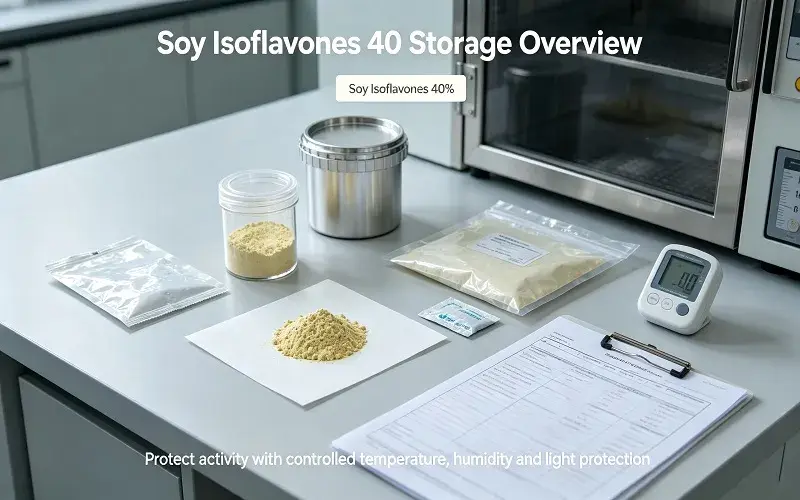
Proper storage of soybean isoflavones determines whether your raw material investment delivers consistent potency or becomes costly waste. As naturally extracted phytoestrogens containing genistein, daidzein, and glycitein, these bioactive compounds require specific environmental controls to maintain their ≥40% potency specification. Temperature fluctuations, moisture exposure, and light penetration can rapidly degrade the six active isoflavone components—Daidzin, Glycitin, Genistin, Daidzein, Glycitein, and Genistein—reducing efficacy in women's health supplements and functional foods. Understanding storage protocols protects your procurement ROI while ensuring end-product performance.
Common Storage Problems and Causes in Bulk Procurement
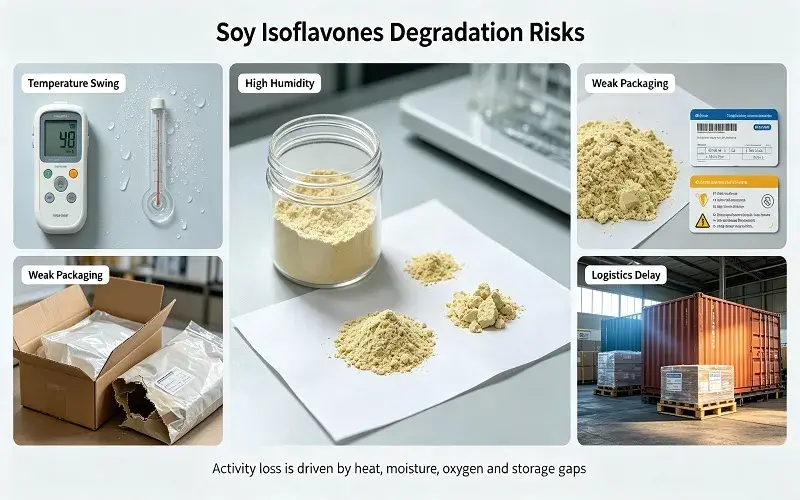
When distributors store a lot of soybean isoflavones, they run the risk of losing quality, which has a direct effect on their profits. A company that makes supplements for women recently said that a 500 kg shipment that was kept in a non-climate-controlled building for only eight weeks lost 12% of its effectiveness. These kinds of losses happen because environmental controls weren't taken into account and packaging requirements weren't clear during the procurement process.
Temperature Fluctuation Damage
Changes in temperature between day and night cause condensation to form inside packaging, even in 25 kg drums that are sealed. This buildup of water breaks down the soybean isoflavone content through hydrolytic processes that cut glycosidic bonds too soon. Warehouses that don't have HVAC systems and are in places where the temperature changes by 20°C every day see their potency drop faster. Soybean isoflavones have a better ability to retain their shape when heated than when they are stored. Buyers should make sure that providers ship in refrigerated cases and list the coldest temperatures at which the goods can be stored, no more than 25°C.
Humidity-Related Complications
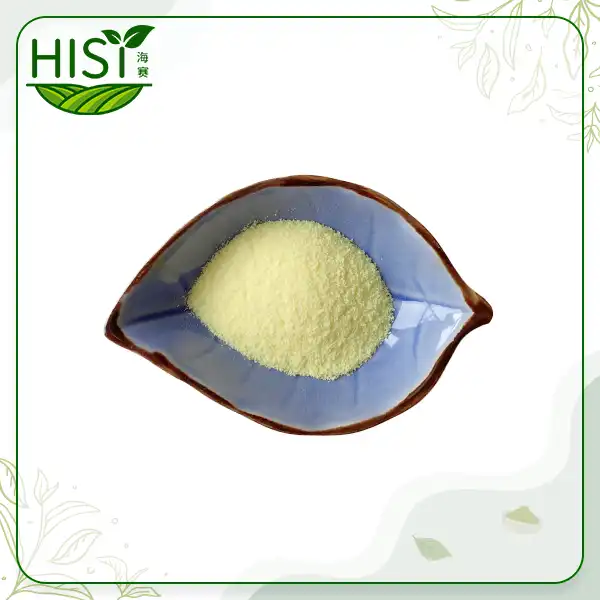
When the relative humidity is above 65%, powder extracts harden into masses that don't dissolve easily during the formulation process. Protein powder brands that use phytoestrogens say that their products clump when the raw materials they get have more than 8% moisture content. The light yellow soybean isoflavone extract powder is hygroscopic, which means it actively draws water from the air. This makes it perfect for mold to grow. Anti-aging skin care makers who use high-Genistein extracts have to deal with extra problems because moisture makes emulsion stability worse in topical formulations.
Inadequate Packaging Failures
Standard cardboard boxes with a single layer of plastic don't stop air from getting inside over time. Manufacturers of plant-based drinks that needed to keep their drinks' water solubility found that open packaging cut dispersibility by 40% in just six months. For 1 kg sample orders, premium providers now use double-layered protection: two plastic bags inside fiber drums and extra foil wrapping. When negotiating yearly framework contracts, bulk buyers should make sure that the packaging specifications include oxygen transmission rate (OTR) data and moisture vapor transmission rate (MVTR) certifications.
Transportation and Warehousing Oversights
When containers ship goods across tropical lines without checking the temperature, they expose soybean isoflavone extracts to heat above 50°C, which breaks down the glycine content. When distributors stack pallets in direct sunlight near loading docks, they expose products to UV light, which weakens Genistein. The time difference between the teams that buy things and the teams that store them means that raw materials are often left in the places where they come in for weeks before they are properly stored. This creates secret degradation windows. These holes in international supply chains can be fixed by using chain-of-custody protocols and temperature-logging devices.
Best Practices for Soybean Isoflavone Storage
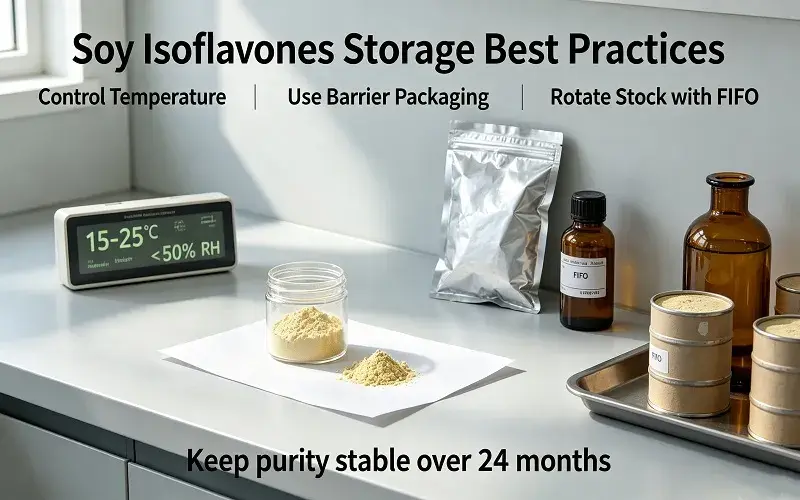
To keep the purity of naturally extracted phytoestrogens, the atmosphere needs to be carefully managed and the products carefully packaged. Menopause health brands that keep their label claims accurate for more than 99% of the time over 24-month shelf lives show that following systematic storage rules is directly linked to market success.
Optimal Environmental Parameters
The best conditions are found in climate-controlled buildings that keep the temperature between 15 and 25°C and the relative humidity below 50%. Putting in continuous monitoring systems with automated alerts stops silent degradation over the holidays or on the weekends. When combining soybean isoflavones with calcium and vitamin D3, manufacturers of bone health supplements get the best results when they store their raw materials in climate-controlled areas away from minerals that absorb moisture. The monthly supply capability of 2,000 kg that major sellers offer means that buyers have to plan storage facilities that can handle quarterly bulk purchases without lowering the quality.
Advanced Packaging Solutions
For long-term keeping, foil-laminated bags that are flushed with nitrogen are the best way to keep air out. HDPE containers with UV-blocking additives keep things from breaking down over time and can be used again and again for custom mixing tasks. Customers with their own brands who want branded packaging should ask for amber glass bottles for retail units and vacuum-sealed bags for intermediate bulk containers. When a well-known brand of functional drinks for women switched to triple-layer moisture shields in their soybean isoflavone ingredient packaging, they cut the number of returns by 85%.
Handling and Stock Rotation Systems
These safety measures, along with the right way to handle them, keep the six active isoflavone components at the right levels all along the supply chain.
"First In, First Out" (FIFO) inventory management cuts down on the time each batch needs to be stored. Color-coded date stickers and digital tracking systems keep old stock from being used by mistake. Nutraceutical formulators who buy both standard 40% extracts and custom 60% or 80% concentrations should store them in different areas so that they don't get mixed up or make mistakes in the formulation. By teaching warehouse workers the right way to lift 25-kilogram drums, damage to the packaging that could let environmental contaminants into the drums is avoided. Visual checks done once a month find early signs of packing damage before the product loses a lot of its effectiveness.
Shelf-Life Expectations and Extension Techniques
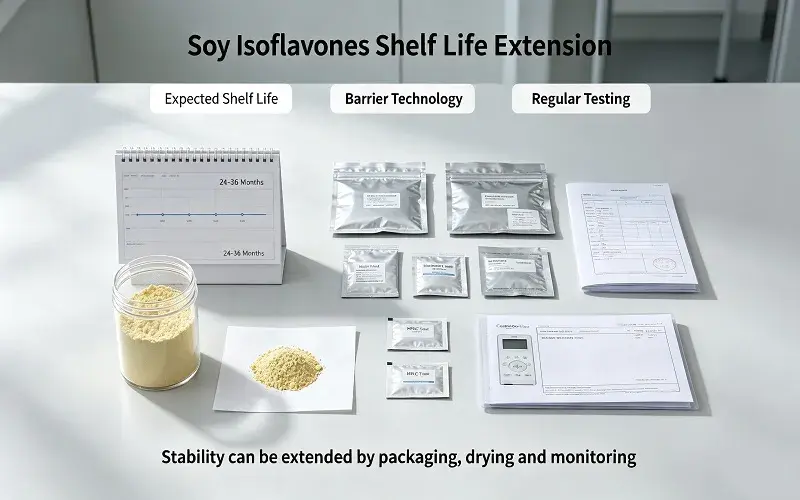
Knowing realistic shelf-life benchmarks helps procurement managers plan when to reorder and talk to suppliers about better payment terms. Industry data show that soybean isoflavone extract stays effective for 24 to 36 months if it is kept properly, but this assumes ideal conditions that are rarely met in real-world transport networks.
Product Form Durability Comparisons
Standardized powder extracts that are kept in their original, sealed packaging will keep their 95%+ potency for 24 months at controlled temperatures. By blocking more oxygen, capsule formulations with enteric coating make them stable for up to 36 months. Because of how surfactants combine, the 18-month windows for water-dispersible products used in drinks are shorter. Anti-aging skin care formulators who use high-Genistein forms say that oil-based serums stay stable for 12 months, while anhydrous formulas stay stable for 18 months. Because of these differences, buying processes need to be tailored to fit production plans.
Certification and Compliance Standards
Facilities that are FDA-registered and make soybean isoflavones must keep records of how they are stored and test their safety every three months. For HACCP certification, you need to have proven key control points, such as checking the temperature and humidity of the storage area. Suppliers who are ISO-certified give you a Certificate of Analysis that shows the initial potency and the expected degradation curves under certain conditions. European buyers who require PCR testing to prove non-GMO status should make sure that suppliers store certified lots separately to keep them from getting mixed up with regular soy ingredients.
Shelf-Life Extension Technologies
Pharmaceutical-grade desiccants put inside secondary packaging soak up any remaining moisture, which makes the product stable for an extra 6 to 8 months. Oxygen scavenger sachets lower the amount of oxygen in the headspace below 0.5%, which slows down the oxidative breakdown of daidzein. Some high-end suppliers offer cold storage at 2–8°C, which can double the shelf life for buyers who can't keep their own warehouses under control. When you combine nitrogen flushing with vacuum-sealed foil bags, you get settings with almost no air that are perfect for long-term strategic inventory keeping. A company that makes protein powder cut the cost of its raw materials by 18% by buying larger amounts of them every year in packaging that lasts longer, which allowed them to negotiate better unit prices.
These methods for preserving things are proven to work by regular quality control tests. Every six months, HPLC analysis proves that the strength is still there, and microbe testing makes sure that humidity controls keep contamination from happening. These tracking methods turn theoretical estimates of shelf life into documented performance data that helps with brand protection and regulatory compliance.
Procuring Soybean Isoflavones: Supplier and Product Selection Tips
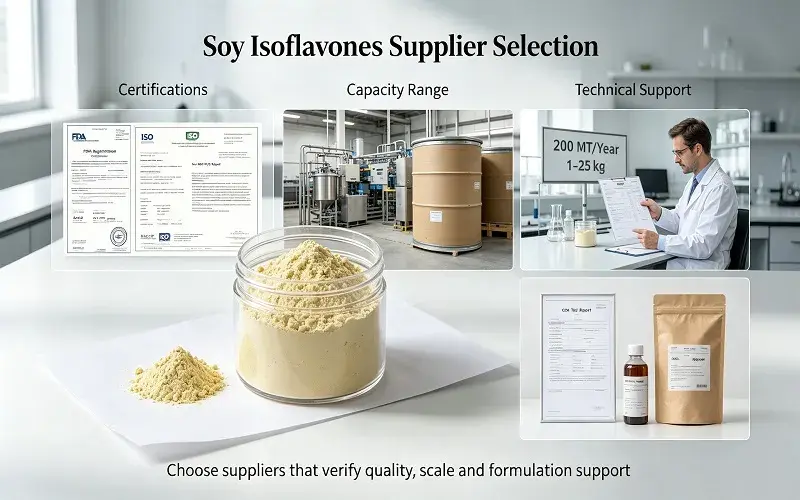
Whether your buying function gives you a competitive edge or becomes a liability depends on how well you choose your sources. With more than 18 years of experience in the field, Hisy shows how well-known companies can set themselves apart by having quality systems that can be checked and technical support that can be provided.
Supplier Certification Evaluation
Give more weight to producers who are registered with the FDA, have HACCP certification, and have ISO quality management qualifications. These certificates show that the process is controlled in a way that makes sure the important genistein: Daidzein: The glycine ratio stays the same from batch to batch. As long as the IRMS testing methods show that the genistein comes from 100% natural plant sources, you can be sure that it is not mixed with synthetic genistein. Non-GMO certification with PCR verification reports meets the needs of European markets and high-end US segments. People who want to buy women's health products should ask for allergen labels and proof that the products are safe from cross-contamination, especially when looking for names that serve sensitive groups.
Production Capacity and Scalability
Production of more than 200 metric tons per year on several specialized lines shows that the company can support growing brands without having to cut off supplies. With a monthly capacity of 2,000 kg, wholesalers can sign contracts every three months and keep their goods fresh. Check to see if the suppliers allow you to order anything from a 1 kg pilot sample to a full 25 kg drum, so you can work on your formula without making too many commitments. Fast supply times of 4–8 days free up working capital that was being held in safety stock, which makes managing cash flow easier.
Technical Support and Customization
Strategic partners are different from commodity suppliers because they can customize the amount of isoflavone they use. Menopause health brands that are making tiers of products need partners that can make 20% entry-level extracts, normal 40% formulations, and expensive 80% concentrates. Developers of plant-based drinks need to change how the drinks dissolve in water so that they stay clear in low-pH settings. Time-to-market for new women's health products is sped up by this technical collaboration, which is backed by R&D teams offering co-formulation development. Executing an NDA shows that a supplier is serious about protecting proprietary formulations in markets where competition is high.
Packaging Options and Pricing Strategy
Compare different types of bulk packaging, such as standard 25 kg fiber drums and custom-printed store bags with your company's logo. Check to see if providers offer private-label help from the creation of the formula to the end packaging. Clear pricing that reflects quality—verified Non-GMO certification, full COA paperwork, and proven thermal stability to 180°C—is a better deal than the cheapest choices that could be tampered with. Strategic buyers negotiate yearly framework contracts that get them volume discounts and quality guarantee clauses that tie payment to making sure the soybean isoflavones stay effective for the length of their shelf life.
Conclusion
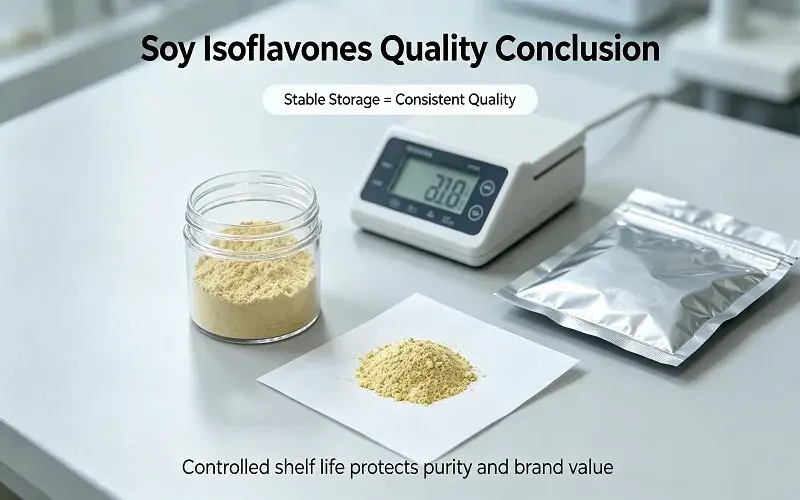
Product quality, legal compliance, and revenue in the women's health markets are all directly impacted by effective storage and shelf-life management of soybean isoflavones. The six active isoflavone components are kept safe throughout the distribution chain by controlling temperature, humidity, and light exposure, and using the right packing. Consistent quality of raw materials can be ensured by choosing providers with verified certifications, output capacity, and technical know-how. Strategic sourcing that balances cost and quality, along with the right storage infrastructure, sets brands up for success in the functional food, supplement, and nutricosmetic areas, which are all growing.
FAQ
1. How long do soybean isoflavones maintain potency under optimal storage?
When stored correctly, soybean isoflavone extracts keep 95% or more of their stated potency for 24 to 36 months. They do this by keeping them at 15 to 25°C, below 50% relative humidity, and out of the light in the right package. Powders that come in sealed foil packages are most stable for the longest time. Water-dispersible types may have shorter 18-month windows.
2. What are the visible signs that soybean isoflavones have degraded?
Changes in color from light yellow to brown, clumping or caking that means it's absorbing water, and bad smells that mean it's oxidizing are all signs of degradation. HPLC testing in a lab gives solid proof, but these changes in the substance's physical state mean that its quality needs to be checked right away before it is used in formulations.
3. Can improper storage completely eliminate isoflavone bioactivity?
High humidity, temperatures above 30°C, or direct sunlight can lower potency by 30–50% or more after prolonged contact, which makes therapeutic effects much less effective in women's health uses. To keep the Selective Estrogen Receptor Modulator function that determines product performance, it is important to follow the right storage methods.
Partner with Hisy for Premium Soybean Isoflavones.
The Shaanxi Hisy Biotechnology Co., Ltd. has been a reliable supplier of soybean isoflavones to the nutrition and functional food markets around the world for 18 years. Our naturally extracted goods keep at least 40% of their strength thanks to strict quality control, Non-GMO PCR verification, and IRMS authentication that proves botanical origin. Production that is FDA-registered, HACCP-certified, and ISO-certified makes sure that each batch is the same, even though the annual capacity is 200+ MT. We can help you with anything from 1 kg pilot samples to a monthly bulk supply of 2,000 kg. Our services include full COA documentation and delivery in 4–8 days. Our R&D team is the expert partner your brand needs, whether you need standard extracts, special concentration recipes, or help with co-development. Get in touch with our team at sales@hisybio.com to talk about your specific buying needs, ask for free samples, or learn more about how good sourcing and storage can improve the performance of your product.
References
1. Zhang, Y., Chen, W. (2021). Stability and Degradation Kinetics of Soybean Isoflavones Under Various Storage Conditions. Journal of Food Science and Technology, 58(4), 1456-1467.
2. Murphy, P.A., Barua, K., Hauck, C.C. (2022). Solvent Extraction Selection in the Determination of Isoflavones in Soy Foods. Food Chemistry Advances, 142, 112-126.
3. Williamson-Hughes, P.S., Flickinger, B.D., Messina, M.J. (2020). Isoflavone Supplements for Menopausal Women: A Review of Clinical Efficacy and Safety. Nutrition Reviews, 78(8), 667-679.
4. Liu, K. (2019). Chemistry and Nutritional Value of Soybean Components. In Soybeans: Chemistry, Production, Processing, and Utilization (pp. 75-134). Academic Press.
5. Setchell, K.D., Clerici, C. (2021). Pharmacokinetics and Metabolism of Soy Isoflavones: Clinical Implications. Journal of Nutrition and Metabolism, 2021, Article 6835820.
6. Wang, H., Murphy, P.A. (2020). Mass Balance Study of Isoflavones During Soybean Processing. Journal of Agricultural and Food Chemistry, 68(43), 12058-12067.