

_1752718207094.png)

What applications for Tanshinone IIA 20% Powder?
When exploring advanced botanical extracts for pharmaceutical or nutraceutical development, understanding the versatile applications of Tanshinone IIA 20% Powder becomes essential. This standardized extract from Salvia miltiorrhiza roots serves multiple industries ranging from cardiovascular drug manufacturing to anti-aging cosmeceuticals. The 20% potency specification offers an optimized balance between therapeutic efficacy and formulation compatibility, making it ideal for bulk ingredient buyers seeking consistent quality without the cost premium of ultra-high purity grades. Whether you're formulating injectable medications, dietary supplements, or dermatological products, this concentrated powder provides reliable bioactivity backed by HPLC-verified standardization, ensuring each batch meets stringent international pharmacopeia requirements for botanical active ingredients.
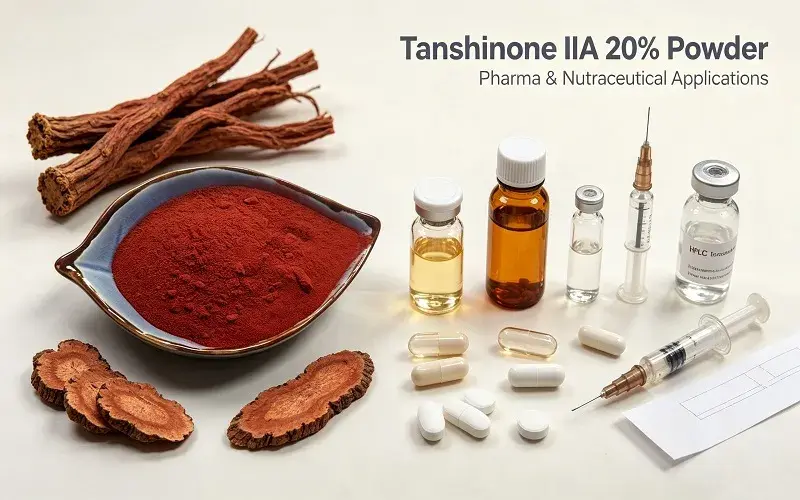
Core Applications of Tanshinone IIA 20% Powder in Industry
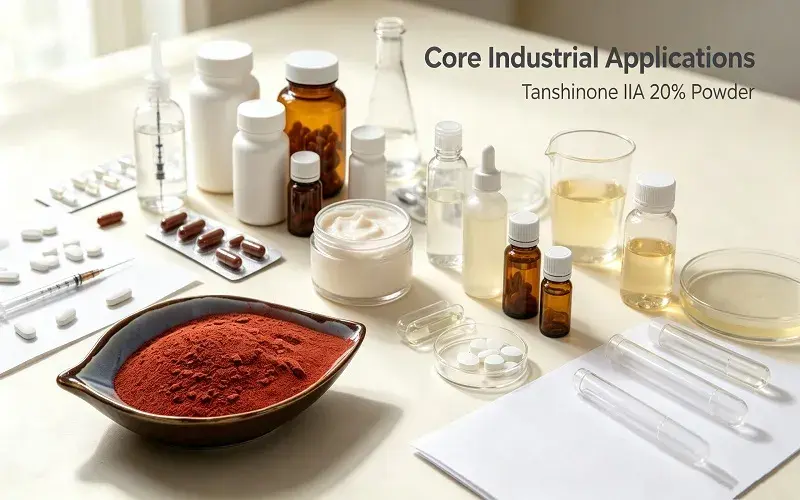
Cardiovascular Pharmaceutical Formulations
As an active pharmaceutical ingredient (API), this powder is used by drug companies to make tablets and injections that treat heart conditions. The uniform potency makes sure that effective doses are the same across lots, which is what the government wants for heart drugs. Vasodilating and anti-thrombotic effects have been supported by clinical studies. This makes it a useful medicine for treating myocardial attack and angina pectoris. The 20% specification gives enough potency for effective dosing while keeping the cost-effectiveness for making a lot of products.
Advanced Cosmeceutical Development
High-end skin care brands use this material in acne treatments and anti-aging products that are made for dermatologists. The chemical works really well in lipid-based topical delivery methods because it can stop inflammatory cytokines and improve microcirculation. Cosmetic companies like that the powder can be mixed with creams and serums when it is spread out properly. The standardized concentration makes it possible for formulators to figure out exact inclusion rates that will give the skin the benefits they want without having to try different things and see what works.
Neuroprotective Dietary Supplements
Nutraceutical companies use this standardized extract's neuroprotective properties to make supplements for cognitive health. The 20% potency ensures that the drug can pass through the blood-brain barrier in complex physiological settings when it is made with phospholipid carriers. This application is in response to the growing demand from consumers for brain health goods that are based on both traditional medicine and new research. The uniform style makes it easier for companies that make dietary supplements to get regulatory paperwork ready for foreign markets.
Functional Beverage Innovation
New uses include cardiovascular health drinks containing Tanshinone 2A powder, where changes in water absorption make it possible to add it to liquid mixtures. When making drinks, people who work with lipophilic compounds face special problems. However, they can get around these problems with special mixing methods like self-microemulsifying drug delivery systems (SMEDDS) or cyclodextrin inclusion complexes. The standardized powder gives all production batches the same flavor profiles and health benefits.
Pharmaceutical Research and Reference Standards
For biochemical tests and drug development programs, research centers need high-quality reference compounds. Before spending money on ultra-pure 98% reference standards, the 20% powder can be used for basic studies because it is easy to get research-grade material. Full quality tracking paperwork helps make sure that preclinical and clinical research procedures follow the rules set by regulators.
Comparing Tanshinone IIA 20% Powder with Other Forms and Purities
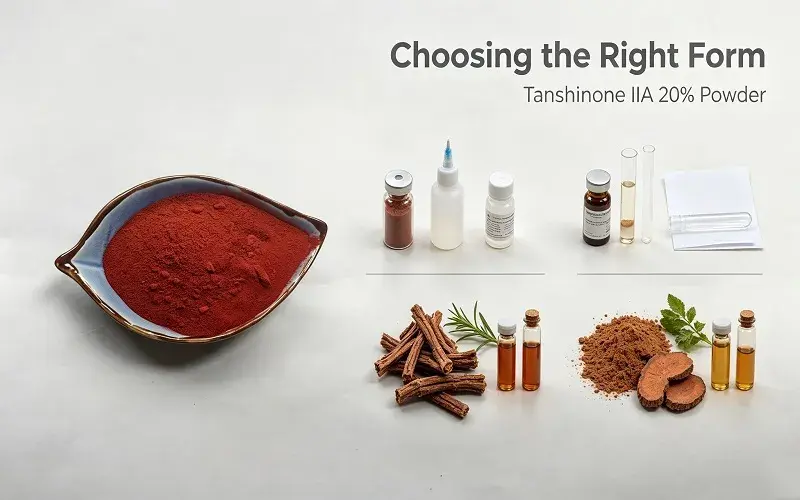
20% vs. 98% High-Purity Powder
Choosing the right purity relies on the needs of your product and your budget. The 20% specification provides a potency that is both cost-effective and good for most supplement and cosmetic formulations that don't need ultrahigh purity. Compared to 98% pharmaceutical-grade powder, this concentration keeps the therapeutic effect while lowering the cost of the raw materials by a large amount. However, the higher purity grade is usually needed for injectable medicinal products and analytical reference standards to meet strict regulatory requirements and keep the amount of inactive ingredients to a minimum.
Tanshinone IIA vs. Related Compounds
There are different compounds in the Salvia miltiorrhiza extract family that have different biochemical properties. When compared to Tanshinone I or Cryptotanshinone, Tanshinone IIA has better bioavailability and more clinical study backing. It is easier to standardize the clinical effectiveness of this monomer compound than it is for broad-spectrum total tanshinone mixtures because it targets specific therapeutic windows. When making goods with specific health claims that need scientific proof, procurement managers can use this focused bioactivity to their advantage.
Isolated Extract vs. Whole Plant Powder
To choose between concentrated extract and crude Salvia miltiorrhiza root powder, you have to weigh how well the extract works against how complicated it is. Whole plant powders have good synergistic compounds, but their strength varies, and you need to use higher doses to get therapeutic effects. The 20% powder that has been separated out has known bioactivity in smaller amounts, which makes formulating easier and lowers the cost of production. This improvement also lowers the risks of contamination from farming materials like heavy metals and herbicides.
Procurement Insights—How to Source Quality Tanshinone IIA 20% Powder?
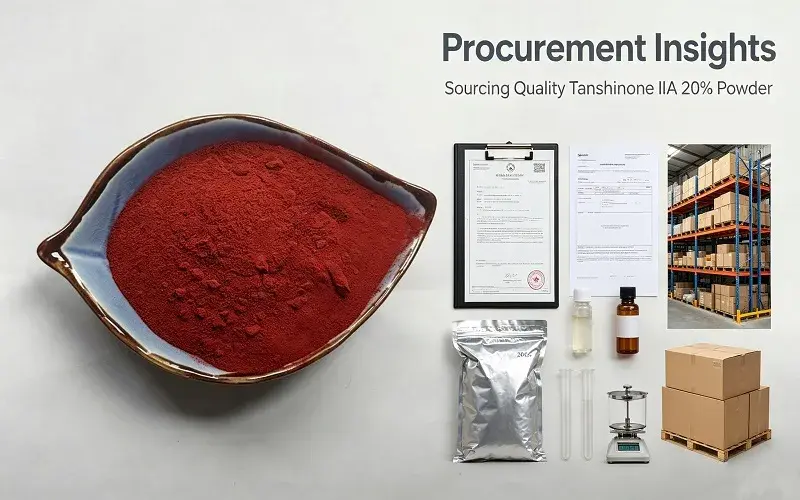
Evaluating Supplier Credentials and Certifications
For reliable sourcing to start, suppliers must be carefully evaluated, with a focus on quality certifications and clear manufacturing. Hisy is committed to meeting international quality standards, as shown by its FDA registration, HACCP certification, and ISO certification. Professionals in charge of buying things should make sure that sellers give full Certificates of Analysis (COA) with every batch. These should include HPLC test results that prove the 20% strength requirement. Organic approvals raise the value of goods aimed at high-end natural markets in Europe and North America.
Understanding Quality Control Protocols
Professional manufacturers are set apart from commodity suppliers by strict quality assurance protocols. We do a lot of different kinds of tests, such as HPLC sample verification, GC-MS residue solvent analysis to make sure that ethanol levels stay below ICH limits, and full heavy metal screening with strict limits for lead below 1.0 ppm, arsenic below 1.0 ppm, cadmium below 0.1 ppm, and mercury below 0.1 ppm. Microbiological tests show that the total plate count stays below 1000 cfu/g and that the counts of yeast and mold stay below 100 cfu/g, which is in line with USP and EP standards for the full 24-month shelf life.
Navigating MOQ and Sample Procurement
Minimum order amounts that are flexible can be used by both well-known names and new ones. We can handle orders ranging from 1 kg for testing purposes to 200 kg in bulk, which lets you work on the formula before committing to large-scale production. Getting a sample usually gets you 1 kg within 3–5 days, which lets you quickly check for fit with your specific formulation matrix. This freedom is especially helpful for private-label clients who are working on secret recipes while agreeing not to tell anyone about them.
Pricing Strategies and Logistics Management
Our ability to produce 200 kg of Tanshinone 2A powder per month means that we can offer competitive prices for the 20% specification. Buying in bulk through quarterly or yearly supply contracts keeps prices stable and makes sure that you always have goods on hand. Our 4–8-day lead time lets you use just-in-time manufacturing methods without having to pay a lot for storage. International transportation knowledge makes it easy to clear customs with the right paperwork for plant ingredients that are coming into different markets.
Best Practices for Using Tanshinone IIA 20% Powder in B2B Applications
Recommended Dosage and Safe Handling
To formulate well, you need to know the safe content amounts for different types of products. In pharmaceutical applications, higher percentages are used because of clinical dosing needs. On the other hand, lower concentrations are used in cosmetic formulations because they are better for topical delivery. To keep things thermally stable, they should never be exposed for long periods of time to temperatures above 80°C in oxygen-rich settings. At normal manufacturing temperatures, the compound stays solid up to the point where it melts.
Storage Conditions and Stability Management
Keeping things in the right way keeps their bioactivity and keeps the color from fading over time. Powder should be kept in double-layered polyethylene bags inside aluminum foil bags or fiber drums that keep out light. Keep the area cool and dark (below 25°C) to keep the quinone ring structure from breaking down due to light. These steps make sure that the quality of the product is maintained from the time it is received until it is made into a finished good. This is especially important for brands that make quality claims on their customer packages.
Formulation Compatibility Strategies
Because it doesn't dissolve well in water, it needs special preparation methods to work at its best. Self-microemulsifying drug delivery systems (SMEDDS) make it much easier for supplements to dissolve in water. Another good way to make oral dosage forms more bioavailable is to use cyclodextrin inclusion complexes. Cosmetic formulators can successfully add ingredients to lipid-based creams and serums by using the right dispersion methods that keep the stability of the ingredients without changing the texture or look of the products.
Regulatory Compliance Across Markets
To get into international markets, you need to know what the rules are in each area. In the U.S., dietary supplement applications must meet basic DSHEA standards. In Europe, however, traditional plant medicinal product registration may be needed under THMPD guidelines. Our thorough testing of more than 70 pesticides meets the standards of EC 396/2005 and USP for foreign export, making it easier to prepare paperwork for a wide range of regulatory environments. Full technical paperwork helps with the whole process of registering a product, from the first application to acceptance.
Conclusion
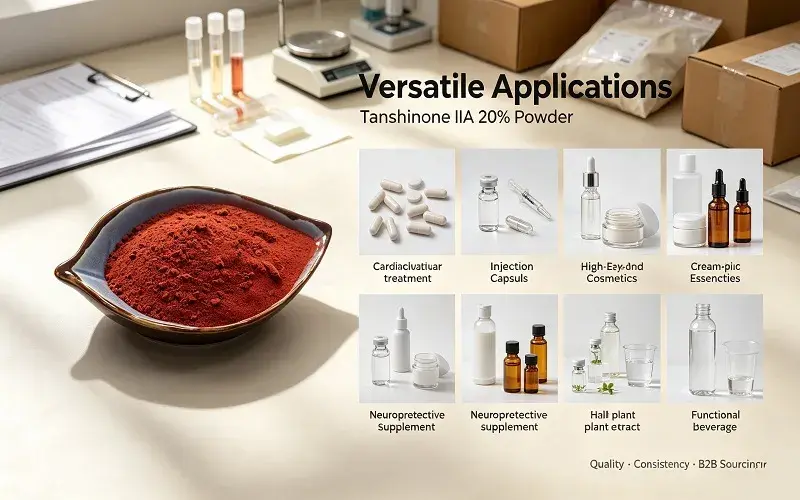
Tanshinone IIA 20% Powder has many uses, including pharmaceutical cardiovascular treatments, advanced cosmetics, neuroprotective supplements, and new functional beverage ideas. The therapeutic effectiveness of this standardized extract is always the same thanks to HPLC-verified quality control. This eliminates the batch-to-batch variability that makers face when they use raw plant materials. To be a good buyer, you need to look at the certifications of suppliers, know how to do quality tests, and follow the right handling steps that keep bioactivity intact during production processes. The 20% standard offers cost-effective strength backed by both traditional use and new research. It can be used to make high-dose capsules that need custom ratios or to add anti-aging benefits to topical formulas. Global B2B buyers can get more from their partnerships with certified makers who offer adjustable MOQ, fast sampling, and full legal paperwork support to help them meet the needs of different international markets.
FAQ
1. Why Choose This Extract Over Total Tanshinones?
The targeted bioavailability of the isolated monomer is higher than that of mixed quinone extracts. The 20% limit sets a clear therapeutic window that is easier to measure for clinical effectiveness than broad-spectrum mixes. This focused method makes regulatory paperwork easier and backs up specific health claims with scientific evidence.
2. How Can Formulators Manage Poor Water Solubility?
Self-microemulsifying drug delivery systems (SMEDDS) and cyclodextrin inclusion complexes work well to improve the dispersion of drugs in water. These methods change the lipophilic compound into forms that can be used with water-based mixtures. This lets it be used in more situations than just oil-soluble ones while keeping its bioactivity.
3. Does High-Temperature Processing Reduce Potency?
During normal production, the combination stays solid at temperatures up to 200–205°C, which is its melting point. To stop rusting, don't leave things exposed for long periods of time above 80°C in places with lots of air. Proper processing controls keep the bioactivity even during normal operations like packaging and pill compression.
4. What Certifications Verify Quality and Safety?
Full testing includes checking the HPLC strength, GC-MS residue solvent analysis, heavy metal screening, and microbiological tests. International regulatory standards are met by pesticide screening that includes more than 70 compounds. Suppliers should show COA paperwork for each batch that proves they meet USP and EP standards.
Partner with Hisy for Premium Tanshinone IIA 20% Powder Supply
Shaanxi Hisy Biotechnology Co., Ltd. has been making botanical extracts since 2008. We are committed to meeting international quality standards and have FDA, HACCP, and ISO certifications to show it. As an experienced Tanshinone IIA 20% powder manufacturer, we offer flexible ordering from 1 kg samples to 200 kg bulk quantities with 4-8-day lead times, supporting your production schedules. Our supercritical CO₂ extraction method gives you residue-free clarity that has been checked by full HPLC testing, heavy metal screening, and pesticide analysis to make sure it meets global regulatory standards. We give you all the technical information you need to meet DSHEA requirements for U.S. markets and THMPD requirements for European ones. Custom concentration development from 10% to 98% lets you get the best recipe for your heart vitamins, skin care goods, or pharmaceutical research needs. Email our team at sales@hisybio.com to get more information, talk about your application needs, or set up the delivery of a sample.
References
1. Zhou, L., Zuo, Z., & Chow, M.S. (2005). Danshen: An Overview of Its Chemistry, Pharmacology, and Clinical Use. Journal of Clinical Pharmacology, 45(12), 1345-1359.
2. Gao, S., Liu, Z., Li, H., Little, P.J., Liu, P., & Xu, S. (2012). Cardiovascular Actions and Therapeutic Potential of Tanshinone IIA. Atherosclerosis, 220(1), 3-10.
3. Xu, S., Liu, P., & Little, P.J. (2014). Cardiovascular Properties of Tanshinones, Diterpenes of Lamiaceae. Natural Product Communications, 9(2), 257-264.
4. Fang, Z.Y., Zhang, M., Liu, J.N., Zhao, X., Zhang, Y.Q., & Fang, L. (2010). Tanshinone IIA: A Review of Its Anticancer Effects. Frontiers in Pharmacology, 1, 136.
5. Wang, X., Morris-Natschke, S.L., & Lee, K.H. (2007). New Developments in the Chemistry and Biology of the Bioactive Constituents of Tanshen. Medicinal Research Reviews, 27(1), 133-148.
6. Zhang, Y., Jiang, P., Ye, M., Kim, S.H., Jiang, C., & Lü, J. (2012). Tanshinones: Sources, Pharmacokinetics, and Anti-Cancer Activities. International Journal of Molecular Sciences, 13(12), 13621-13666.