


How to Choose a Top Phosphatidylserine Powder Factory?
Choosing the right phosphatidylserine powder factory is one of the most consequential decisions a supplement brand or distributor can make. The quality of your PS ingredient directly affects product efficacy, regulatory compliance, and customer trust. When evaluating a supplier, look for verified purity levels (50% or 70% PS), non-GMO sourcing from soybean or sunflower lecithin, HPLC-ELSD testing protocols, and certifications including FDA registration, HACCP, and ISO. A reliable phosphatidylserine powder manufacturer should also offer flexible MOQ, fast delivery, and full documentation transparency. This guide walks you through every evaluation step so you can source with confidence.
Understanding the Core Requirements When Choosing a Phosphatidylserine Powder Factory
You need to know exactly what your product needs before you call any phosphatidylserine powder suppliers. Skipping this step can lead to specs that don't match, formulas that don't work, and expensive re-formulations.
Define Your Purity and Source Requirements
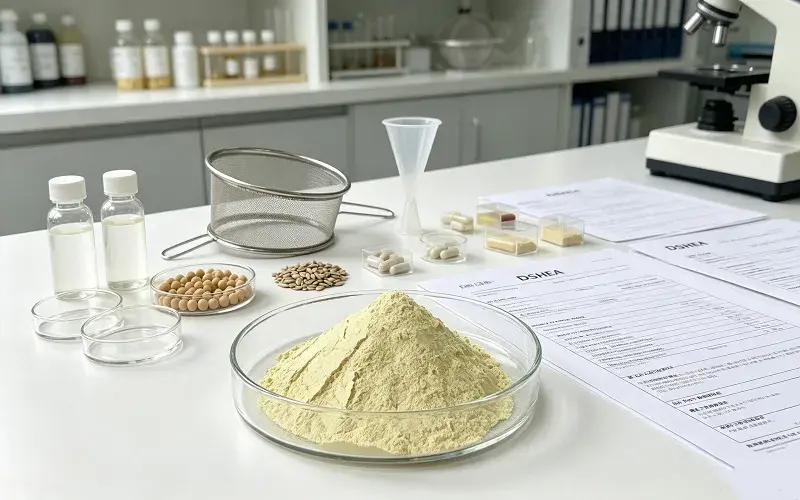
There are two PS amounts of phosphatidylserine powder: 50% and 70%. The 70% grade is good for high-power brain vitamins and medical-grade uses, and the 50% grade is good for sports nutrition mixes. Source type is also important. PS made from soy (CAS No.: 51446-62-9) is the most well-studied and least expensive, while PS made from sunflowers is better for markets that are sensitive to allergens. Always check the scientific name. For sunflower, it's Helianthus annuus L., and for soy, it's Glycine max (L.) Merr.
Match Specifications to Your End Market
A factory that makes PS for adult nootropic capsules has different goals than a factory that makes nutrition powders for babies. For capsules, particles with a size of 80 mesh make sure that the fill weight stays the same and the material flows well. When adding to drinks or food, dispersibility in water-based systems is the most important thing to think about. Specification mismatch between you and the factory can be avoided if you know what the product will be used for before you start looking for it.
Verify Regulatory Compliance Expectations
Labels and chemical lists must be DSHEA-compliant for the US market. Any serious company that exports phosphatidylserine powder to the United States needs to be registered with the FDA. The work environment meets widely known safety and process standards as shown by the HACCP and ISO certifications. If your product is meant to be used for sports nutrition, having a third party test it for banned substances gives it more credibility.
Evaluating Factory Capabilities and Quality Control Systems
Once you know what you need, the next step is to see if a factory can deliver it regularly, on a large scale, and with full paperwork.
Assess Production Technology and Capacity
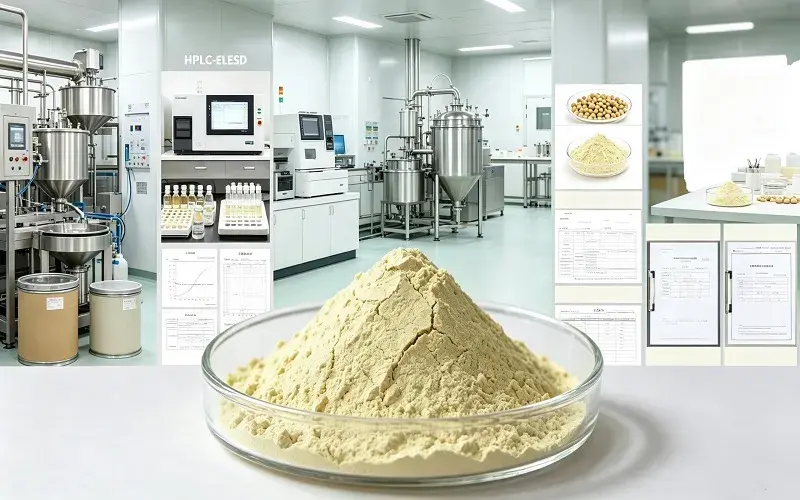
A plant that makes phosphatidylserine powder should have strict environmental controls and specific production lines to keep the powder from oxidizing and absorbing water, which are both very bad for the stability of phospholipids. Hisy's Xi'an facility has a 150 m² production workshop with 4 dedicated lines that can make more than 200 metric tons of goods every year. This scale works for both trial samples and large sales without changing the quality of the product.
Require Batch-Level Testing Documentation
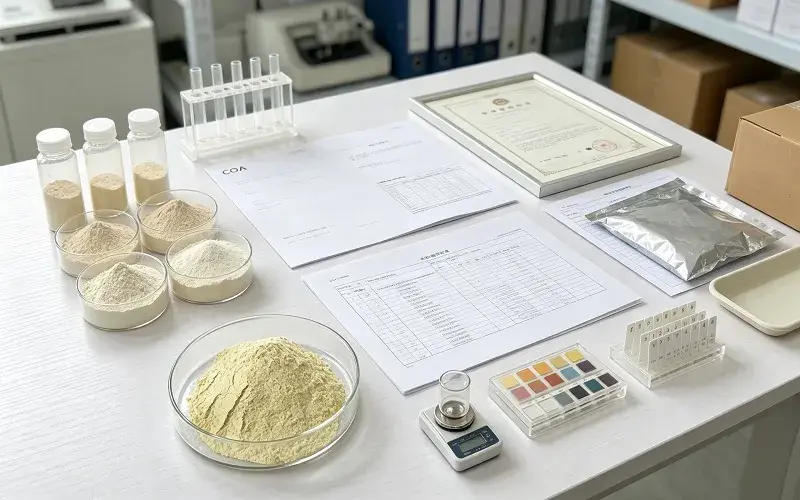
All shipments of PS powder should have a full Certificate of Analysis (COA) that has been checked by HPLC-ELSD testing. The industry standard for measuring PS, this method gives accurate results for phospholipid content tests. In addition to the COA, you should also ask for tests for heavy metals, data on the peroxide value (ideally less than 5 meq/kg), and reports on solvent residue. These papers keep you safe during customs checks, customer reports, and any review by the government.
Evaluate Raw Material Sourcing Transparency
How pure your finished PS product is will depend on the quality of the raw lecithin that was used for enzymatic transphosphatidylation. Ask potential companies if they use non-GMO soybean lecithin, test the raw materials they receive, and can provide paperwork that shows how the soybeans were grown. Being open about the raw materials used is a strong sign of general production discipline.
Comparative Analysis: How to Weigh Phosphatidylserine Powder Suppliers
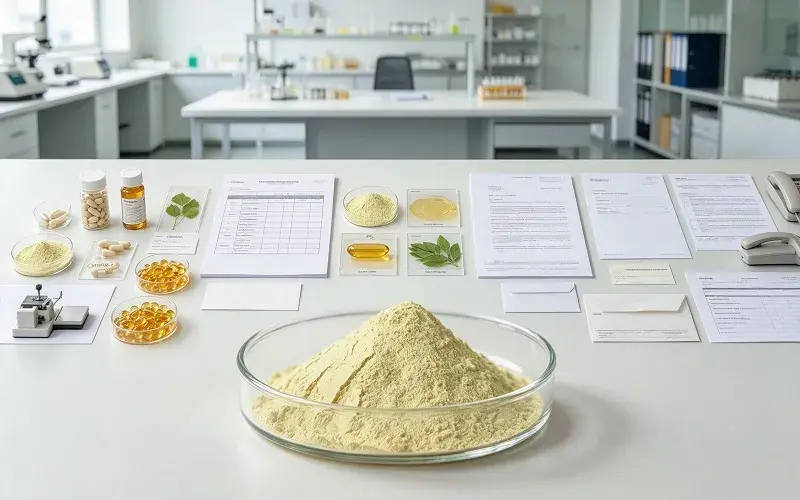
Not every company that sells PS ingredients follows the same rules. Here's how to compare your choices without bias.
Powder vs. Encapsulated Formats for OEM Flexibility
When you buy phosphatidylserine powder, you can choose the exact amount to use, the blend ratios, and the size of the capsules. This is not possible with finished capsules. Raw powder is the best form for companies that are making their own cognitive health formulas or sports nutrition stacks. With this, you can mix PS with Ginkgo Biloba, Bacopa Monnieri, or omega-3 fatty acids without having to stick to a certain dose.
Benchmark Against Other Cognitive Health Ingredients
Phosphatidylserine powder is one of a kind when it comes to nootropic raw materials. A Qualified Health Claim from the US FDA says that it lowers the risk of cognitive dysfunction and dementia. It is one of the few ingredients that has this claim. This is not a category for fish oil or Ginkgo Biloba. This difference gives PS-based goods a real business edge in the US supplement market, especially among people aged 50 and up.
Evaluate Supplier Track Record and Transparency
Established PS powder providers should have references that can be checked, quality documents that can be seen by anyone, and quick contact. Hisy was started in 2008 and has built a reputation on global markets by running its business honestly and making sure its products always work well. When looking at different suppliers, get references from current customers in the group you want to sell to. When you talk to these customers, make sure you ask about batch consistency, paperwork turnaround time, and the past of how problems were solved.
Procurement and Supply Chain Considerations for Bulk Purchase
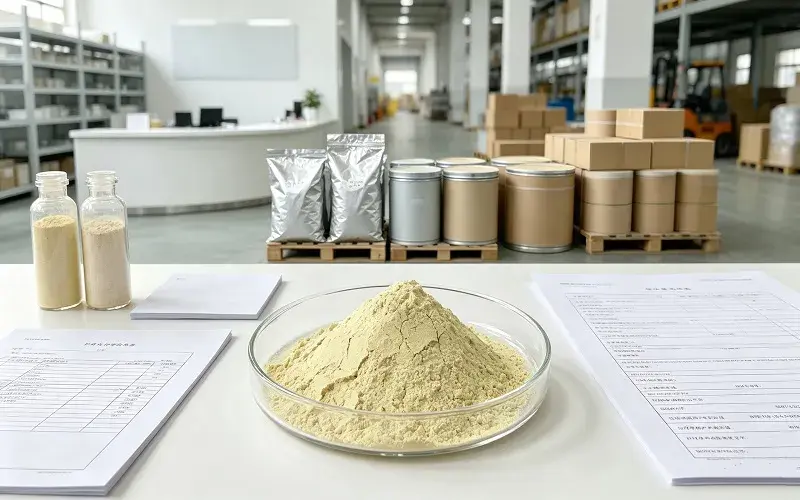
Quality by itself doesn't decide how well a relationship with a supplier works. It's just as important to have operational efficiency.
Your total cost of ownership and supply consistency are directly affected by the following:
- Pricing structure by concentration: 70% PS commands a premium over 50% PS due to higher processing intensity. Confirm whether pricing scales proportionally with order volume and whether long-term contracts offer locked-in rates.
- MOQ flexibility: Hisy accepts orders from 1 kg sample quantities up to 25 kg drum bulk shipments, with packaging options including foil bags and paper drums with double inner liners. This range supports both pilot testing and commercial production.
- Delivery lead time: Standard delivery for PS powder from Hisy runs 4–8 days, which supports lean inventory management. Confirm whether this timeline applies to both sample and bulk orders.
- Customs and documentation support: For US imports, your supplier should provide accurate HS codes, country-of-origin documentation, and full COA sets to prevent customs holds.
These practical factors for phosphatidylserine powder can affect whether or not a relationship with a supplier can last at a large scale. Once the technical specs are clear, you should always check to see if the provider can ship on time, communicate clearly, and easily fix any paperwork problems.
Final Decision-Making and Ensuring Long-Term Partnership Success
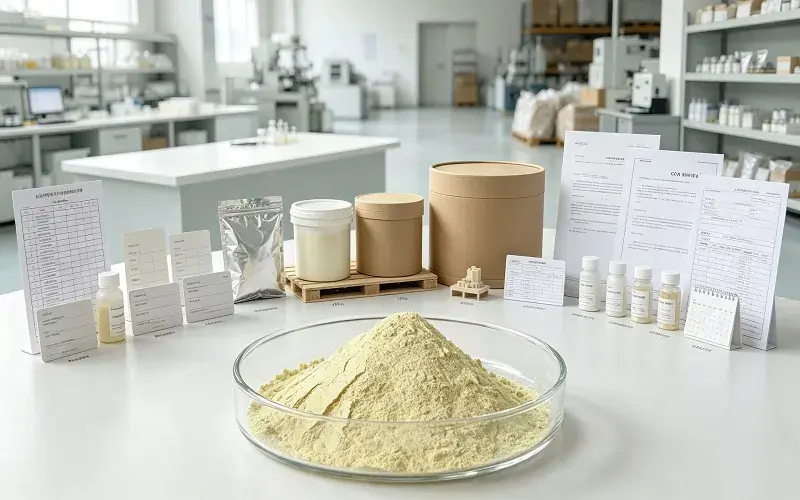
The final choice is based on how well your growth plans and the factory's abilities match up. This is done after technical evaluation and operational due diligence.
Score Suppliers on Objective Criteria
Make a simple evaluation that includes things like checking for purity, wait time, MOQ flexibility, and how quickly you respond to communications. Use your business's top goals to decide how to weight each factor. This gets rid of emotional bias and helps you defend your choices about suppliers to other people.
Prioritize Suppliers Who Grow With You
If your firm only does large orders, it might not be able to help you with your early-stage sample needs. On the other hand, a dealer that only does small amounts might have trouble when you need to buy more. Hisy supports both ends of this range by giving away free samples to test the quality and having enough production capacity to handle big business orders without any problems.
Build in Quality Review Cycles
Even after hiring a reliable PS powder provider, you should still plan regular COA reviews and requalification audits. Conditions for storing and processing phospholipid ingredients can change. Quality checks done on a regular basis keep your product safe over time and let you know right away if the supplier's process changes.
Conclusion
To choose the best phosphatidylserine powder factory, you need to carefully look at its technical, legal, and operational aspects. You can find a seller that can help your product succeed in the long term by laying out your purity standards, checking certifications, looking over batch paperwork, and figuring out how reliable the supply chain is. The US market for cognitive health supplements keeps growing, and how people feel about your brand will depend on the quality of the ingredients that make up your formula.
FAQ
What concentration of phosphatidylserine powder should I order?
Most supplements for brain health use 50% PS in their normal formulas and 70% PS in their high-potency or clinical-grade goods. The amount you want to take per meal and the size of the capsule should help you decide. Talk to an expert in composition before you finalize your plan.
Is soy-derived PS powder safe for allergy-sensitive consumers?
After being cleaned, soy-derived phosphatidylserine powder usually has very little soy protein in it. But sunflower-derived PS is better for places that have strict rules about allergen labels or for people who are sensitive to soy. Check the allergy status with the COA from your seller.
How do I verify a supplier's quality claims?
Ask for a full COA that includes the results of the HPLC-ELSD test, the heavy metals test, the peroxide value, and the microbiological test. Find out if the testing is done by the company itself or by a separate lab. Factory checks and references from past clients are two more ways to be sure.
What certifications should a PS powder factory hold for the US market?
At the very least, make sure the building is registered with the FDA, has HACCP certification, and ISO certification. All three of these show that the company is ready to meet legal requirements and has the right quality management and process control in place to meet US trade requirements.
Source Your Phosphatidylserine Powder Supplier With Confidence — Contact Hisy Today
Since 2008, Shaanxi Hisy Biotechnology Co., Ltd. has sold high-quality phosphatidylserine powder all over the world. Hisy gives your buying team the proof and trust it needs with FDA registration, HACCP and ISO certifications, HPLC-ELSD-confirmed batches, and delivery in 4–8 days. You can get free samples. You can email our sales team at sales@hisybio.com or go to hisybio.com to get your specification sheet and group price right away.
References
1. Glade, M. J., & Smith, K. (2015). Phosphatidylserine and the human brain. Nutrition, 31(6), 781–786.
2. Crook, T. H., et al. (1991). Effects of phosphatidylserine in age-associated memory impairment. Neurology, 41(5), 644–649.
3. United States Food and Drug Administration. (2003). Qualified Health Claims: Letter of Enforcement Discretion — Phosphatidylserine and Cognitive Dysfunction and Dementia. FDA.
4. Kidd, P. M. (2007). Omega-3 DHA and EPA for cognition, behavior, and mood: clinical findings and structural-functional synergies with cell membrane phospholipids. Alternative Medicine Review, 12(3), 207–227.
5. Benton, D., Donohoe, R. T., Sillance, B., & Nabb, S. (2001). The influence of phosphatidylserine supplementation on mood and heart rate when faced with an acute stressor. Nutritional Neuroscience, 4(3), 169–178.
6. International Fish Oil Standards Program & Natural Health Products Directorate, Health Canada. (2018). Guidance for Industry: Botanical Ingredient Safety and Phospholipid Standardization in Nutraceuticals. Health Canada.