

_1752718207094.png)

How to identify qualified berberine sulfate powder?
Identifying qualified berberine sulfate powder demands attention to rigorous quality parameters, source verification, and certification authenticity. As the global metabolic health market expands, B2B buyers need reliable benchmarks to distinguish pharmaceutical-grade materials from inferior alternatives. Qualified berberine sulfate exhibits consistent purity levels (≥98% by HPLC), traceable botanical origin from Phellodendron amurense, pharmacopeia compliance (CP2020, USP, or EP), and transparent heavy metal testing below regulatory thresholds. This guide addresses procurement challenges by outlining definitive quality criteria, comparative advantages against alternative salts, and best practices for partnering with credible suppliers to ensure product efficacy, regulatory compliance, and long-term manufacturing success.
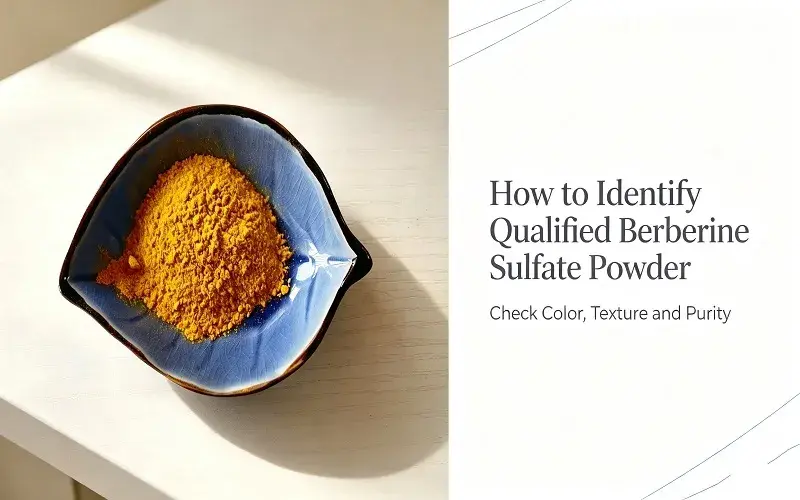
Key Criteria to Identify Qualified Berberine Sulfate Powder
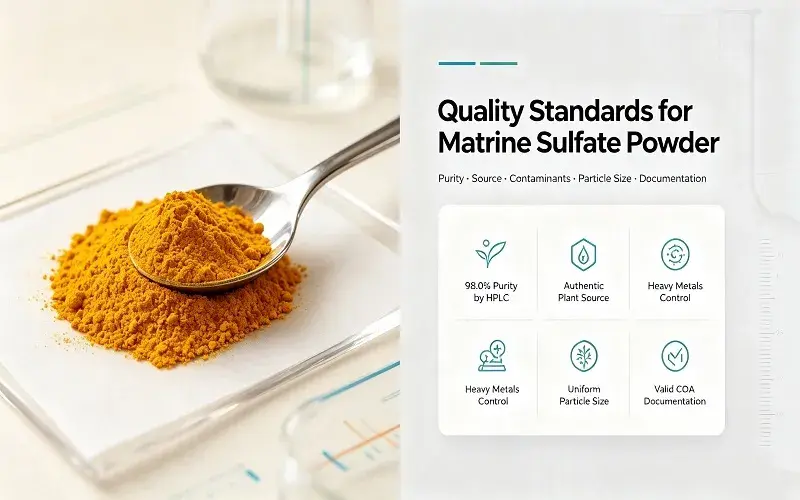
Purity Standards and Assay Requirements
Premium Berberine Sulfate Powder must be at least 98.0% pure when tested by High-Performance Liquid Chromatography (HPLC), and the results are calculated on a dry basis. This method of analysis accurately measures the amount of active alkaloid and finds any impurities. Lower purity grades might have leftover plant matter, extraction solvent residues, or breakdown products that make the drug less bioavailable and raise safety concerns.
Source Verification and Botanical Authentication
Botanical source identification fixes a major flaw in the supply lines for Berberine. Some sellers use cheaper sources or man-made Berberine, which might not have as many phytochemicals as natural products. TLC fingerprinting looks at the chromatographic patterns of samples and compares them to verified Phellodendron amurense reference materials. This shows unique alkaloid profiles that show the difference between natural and artificial sources.
Heavy Metal and Contaminant Control
Heavy metal pollution is very dangerous for both health and safety. Qualified berberine sulfate raw material and berberine sulfate powder should comply with strict international safety requirements. ICP-MS tests must show that levels are below important limits for lead (Pb) at less than 3.0 parts per million, arsenic (As) at less than 1 part per million, cadmium (Cd) at less than 1 part per million, and mercury (Hg) at less than 0.1 part per million. These limits are in line with California's Proposition 65, which is needed to get into the US market without having to put up warning labels.
Physical Properties and Particle Size Specifications
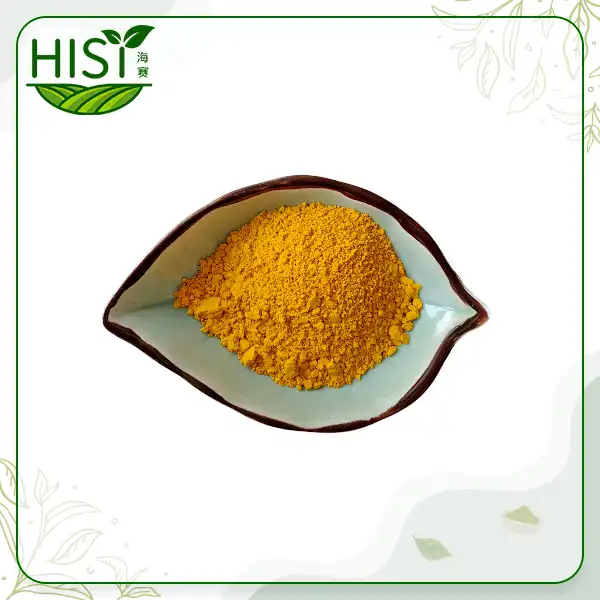
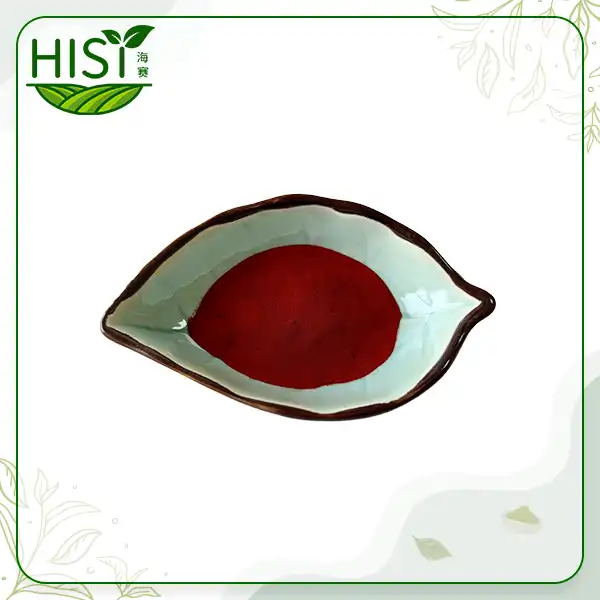
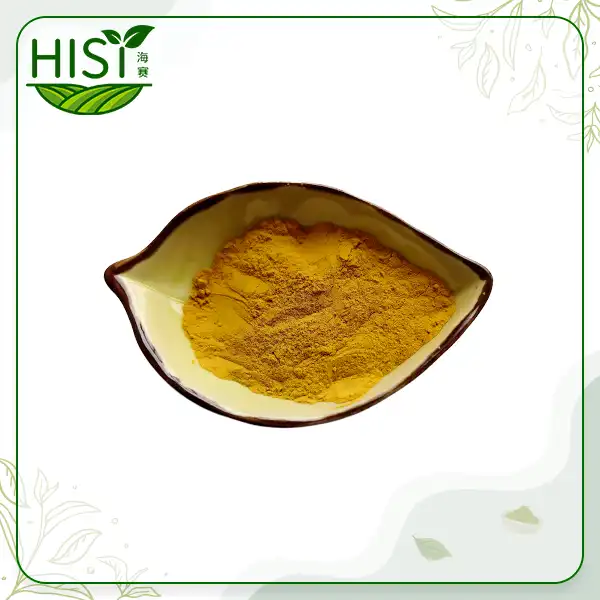
Physical traits have a direct effect on how well a product works and how efficiently it is made. When Berberine Sulfate Powder is ready, it looks like a bright yellow to orange-yellow solid powder with evenly spaced particles. The 80-mesh particle size standard (about 180 micrometers) makes sure that the powder flows smoothly through automatic filling equipment. This cuts down on production downtime and improves dosage uniformity in the making of capsules and tablets.
Documentation and Certification Verification
Real paperwork backs up boasts of quality and compliance with regulations. Certificates of Analysis should come from third-party laboratories that have been approved by a reputable organization and use approved analytical methods that can be traced back to international reference standards. Look for ISO/IEC 17025 certification, which shows that the lab knows how to do certain tests that are relevant to botanical extract analysis.
Comparing Berberine Sulfate Powder with Alternative Products
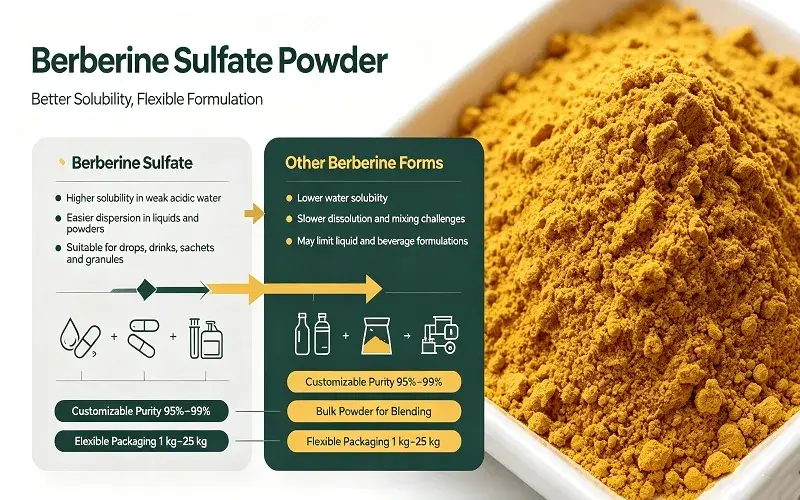
Berberine Sulfate versus Berberine Hydrochloride
Berberine sulfate powder dissolves better in water-based solutions with a slightly acidic pH (pH 4.5–6.0), which makes it the best choice for liquid supplements, oral drops, and powder formulations that dissolve in water. This better dissolving property comes from the sulfate anion's contact with water molecules, which makes solvation better than with the chloride anion.
Powder versus Pre-formulated Delivery Forms
When it comes to formulation, raw powder gives producers the most freedom. They can make their own blends, change dosage levels, and mix them with plant extracts that work well together, like silymarin or cinnamon extract. This adaptability helps brands stand out by letting them use special formulas that are kept secret during the manufacturing process. Powder form lets you change the purity from 95% to 99% depending on the price point and type of product (entry-level vs. premium). This works for a range of market segments.
Berberine Sulfate versus Alternative Natural Compounds
Comparative effectiveness research shows that berberine sulfate raw material, formulated as berberine sulfate powder, is more effective than other metabolic health ingredients. Cinnamaldehyde and procyanidins in cinnamon extract help control blood sugar levels a little, but Berberine is much better at lowering fasting glucose levels and HbA1c percentages, as shown by clinical studies. Meta-analyses show that berberine lowers blood sugar levels about as well as the gold standard drug, metformin. On the other hand, the benefits of cinnamon extract are still statistically significant but not very useful in real life.
Procurement Best Practices for B2B Buyers
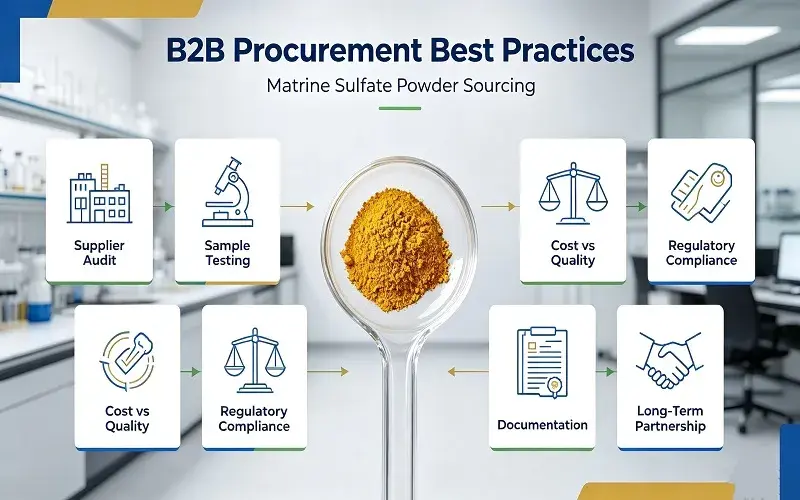
Supplier Evaluation and Qualification Processes
Thoroughly checking out suppliers guards against poor quality and problems in the supply chain. Start by going through all of the paperwork, such as business licenses, registrations for manufacturing facilities, and ISO 9001 and GMP quality system certifications. Ask for pictures or virtual tours of the building that show the production tools, quality control labs, and areas where raw materials are stored. Established sellers keep HPLC systems, spectrophotometers, and bacterial testing tools on hand to check the quality of goods before they are shipped.
Sample Evaluation and Testing Protocols
Sample evaluation protocols should be the same as those used for commercial batch testing. Ask for 1 kg of samples, which is enough for a full analysis that includes testing for purity (HPLC), heavy metals (ICP-MS), microbes, particle size distribution, and solubility under the conditions that will be used for the formulation. Parallel testing at both the supplier's lab and an independent lab finds differences that point to problems with quality control or missing information in the paperwork.
Cost Optimization and Quality Balance
Berberine sulfate powder prices run from $80 to $150 per kilogram for pharmaceutical-grade material that is ≥98% pure and CP2020 compliant. Prices can change depending on the size of the order, the package requirements, and any certifications that are included. If the price is suspiciously low (less than $60/kg), it's likely that the quality has been lowered, testing wasn't done properly, or the source has been tampered with, which would require extra costs to verify that the savings are real.
Regulatory Compliance and Documentation Requirements
To enter the US market, you need to provide certain regulatory paperwork. The Dietary Supplement Health and Education Act (DSHEA) rules say that supplements must have identity statements, standardized supplement facts panels, and be made in a GMP environment. Suppliers should give allergy statements that say common allergens like gluten, dairy, and soy are not present, as well as country-of-origin certificates and ingredient declarations that can be used on product labels. Proof that heavy metal levels are below the action limits required by California Proposition 65 avoids expensive warning sign requirements and possible legal exposure.
Building Strategic Supplier Relationships
Long-term relationships with suppliers have benefits that go beyond just buying things once. Set up rules for communication that will make sure you can respond quickly to technical questions, concerns about quality, or problems in the supply chain. Performance measures like on-time delivery rates, certificate accuracy, and how well complaints are handled are evaluated every three months. This creates responsibility systems that keep service standards high.
Conclusion
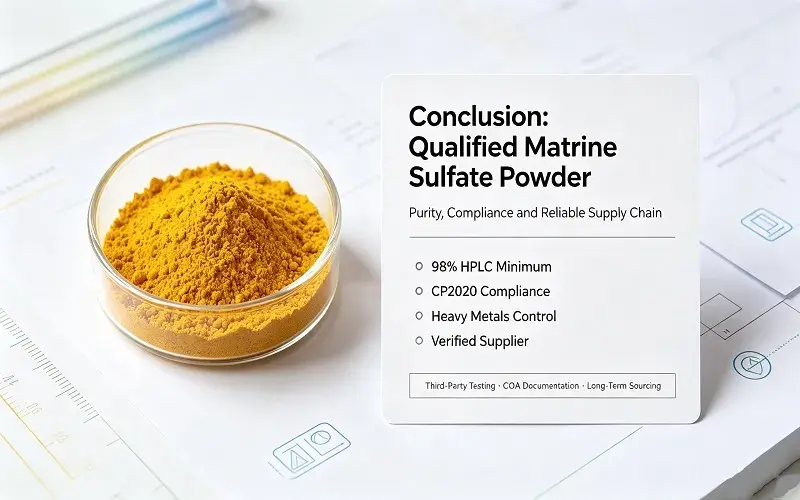
Finding good berberine sulfate powder requires a full analysis of purity standards, botanical authentication, contamination control, and the supplier's abilities. Materials that meet at least 98% of the assay requirements via HPLC, CP2020 pharmacopeia compliance, and heavy metal tests below regulatory limits should be given priority. Choose between the sulfate and hydrochloride forms based on the needs of the formulation, keeping in mind that the sulfate form dissolves better in liquids. To lower quality risks, make sure that suppliers are thoroughly qualified by reviewing their paperwork, trying samples, and having third parties check their work. Cost should be weighed against the total cost of buying, and costs for transportation, testing, and following rules should be taken into account when choosing a provider. These practices protect the effectiveness of products, make sure they follow the rules, and set up reliable supply chains that help businesses grow in the long term.
FAQ
1. Is berberine sulfate powder safe for large-scale pharmaceutical production?
Berberine Sulfate Powder is safe for making a lot of medicines as long as the materials meet pharmacopeial purity standards (CP2020, USP, or EP), heavy metal levels are tested and found to be below regulatory limits, and GMP-certified manufacturing processes are used to make sure there is no microbial contamination. The safety of the production rests on the certifications of the suppliers, such as FDA registration, HACCP application, and ISO quality management systems. These qualifications prove that there are systematic controls for contamination, proven cleaning methods, and written batch release routines that make sure the quality is always pharmaceutical-grade and ready for regulated production environments that need to be ready for FDA review.
2. How can I verify the authenticity of berberine sulfate powder certificates?
Verification of a certificate's authenticity uses more than one method of validation. Ask third-party laboratories that are ISO/IEC 17025-accredited for Certificates of Analysis. Then, check the official databases of accreditation bodies to see if the laboratories are still accredited. Parallel tests should be done at different labs, and the results should be compared to the supplier's COAs to find any differences that could mean the paperwork was fake. Supplier audits check calibration records for lab equipment, documentation for analyst qualifications, and how long raw data is kept. For example, to make sure that the stated qualifications (FDA registration numbers, HACCP certification validity) were issued, contact the certifying bodies directly. These multiple layers of verification steps find fake documents and make sure materials meet the requirements given.
3. What is the typical lead time for bulk berberine sulfate powder orders?
Lead times for bulk orders of berberine sulfate powder are usually between 4 and 8 days for established suppliers who keep stock on hand for immediate shipment. This includes quality testing confirmation, export documentation preparation, and international logistics. Custom specs that need changes to the purity (95%–99% ranges) or specialized tests add 10–15 days to the delivery time, which includes making changes to the production process and checking the quality more thoroughly. Initial orders from new sources may take 3–5 weeks, which includes time for testing samples, planning production, and gathering all necessary paperwork. Quarterly supply contracts shorten lead times by planning ahead for production runs and allocating specific amounts of inventory. This makes sure that repeat orders are filled quickly, which supports continuous manufacturing operations.
Partner with Hisy for Premium Berberine Sulfate Powder Supply
Since its founding in 2008, Shaanxi Hisy Biotechnology Co., Ltd. has been providing high-quality berberine sulfate powder that meets the strict standards of pharmaceutical companies, supplement brands, and animal health product makers all over the world. Our top-notch stuff is ≥98% pure, as proven by HPLC, and it was only taken from real Phellodendron amurense bark in line with CP2020 rules. We keep our yearly production capacity at more than 200 metric tons across four specialized production lines. This makes sure that there is consistency from batch to batch, which is important for controlled manufacturing settings.
Our center is registered with the FDA and has HACCP and ISO certifications. We offer a wide range of tests, such as chromatographic impurity tracking, leftover solvent proof, and microbiology screening. As an expert seller of Berberine Sulfate Powder, we can customize the purity (95% to 99%), help you come up with complex formulas, and send you samples quickly (1 kg in 3–5 days). You can choose from a range of minimum order sizes, from 1 kg for trial runs to 450 kg for bulk shipments. Executing an NDA protects your secret formulas, and our help with regulatory paperwork makes it easier to get into markets in North America, Europe, and the Asia-Pacific region.
Email our technical team at sales@hisybio.com to talk about your particular needs, get competitive quotes, and ask for full product specs.
References
1. Chen, C., Zhang, Y., & Huang, C. (2020). Berberine in metabolic disease: From mechanisms to therapeutics. Pharmacological Research, 159, 104942.
2. Kumar, A., Ekavali, Chopra, K., & Mukherjee, M. (2019). Current perspectives on berberine as an AMPK activator in cardiovascular health. Current Medicinal Chemistry, 26(12), 2158-2171.
3. Neag, M. A., Mocan, A., Echeverría, J., Pop, R. M., Bocsan, C. I., Crisan, G., & Buzoianu, A. D. (2018). Berberine: Botanical occurrence, traditional uses, extraction methods, and relevance in cardiovascular, metabolic, hepatic, and renal disorders. Frontiers in Pharmacology, 9, 557.
4. Yin, J., Xing, H., & Ye, J. (2021). Efficacy of berberine in patients with type 2 diabetes mellitus: A systematic review and meta-analysis. Metabolism, 117, 154698.
5. Zhang, H., Wei, J., Xue, R., Wu, J. D., Zhao, W., Wang, Z. Z., & Wang, S. K. (2019). Berberine lowers blood glucose in type 2 diabetes mellitus by increasing insulin receptor expression. Metabolism, 59(2), 285-292.
6. Zhao, J. V., Yeung, W. F., Chan, Y. H., Li, H. J., Tai, W. C., Wong, S. H., & Schooling, C. M. (2021). Effect of berberine on cardiovascular disease risk factors: A mechanistic randomized controlled trial. Nutrients, 13(8), 2550.