

_1752718207094.png)

What are the main uses of natural capsaicin powder?
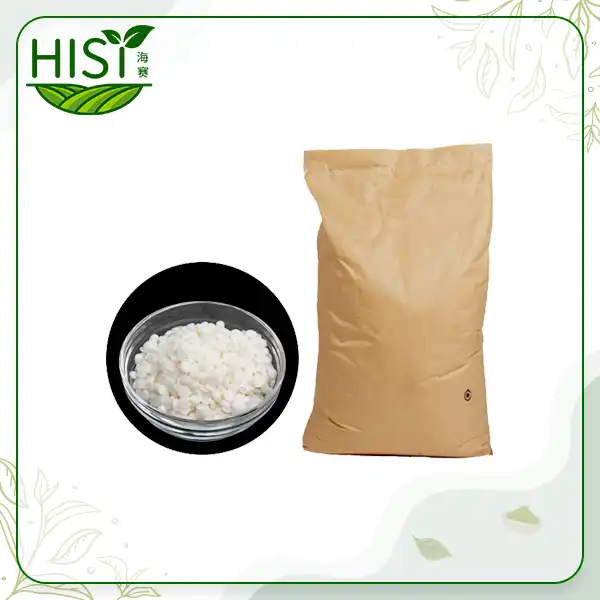
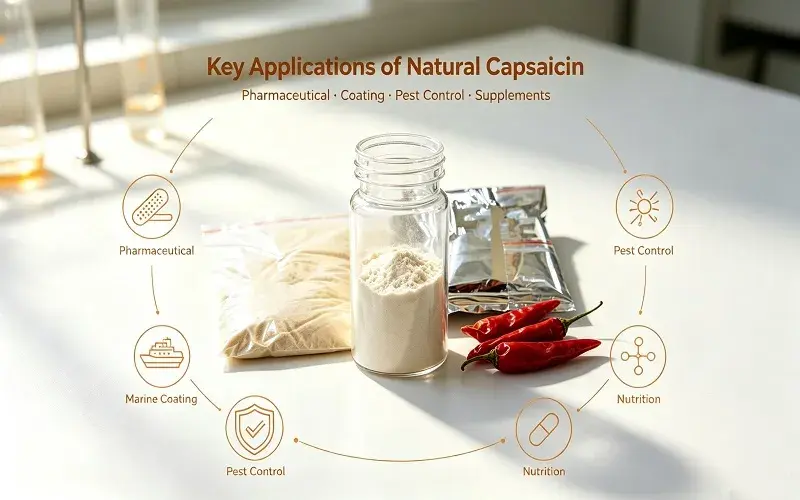
Natural Capsaicin Powder serves critical functions across pharmaceutical pain management, industrial marine coatings, professional pest control systems, and nutritional supplement formulations. Extracted from Capsicum frutescens L. fruits, this off-white crystalline compound (CAS 2444-46-4) delivers standardized purity levels exceeding 97% total capsaicinoids, making it indispensable for applications requiring batch-to-batch consistency. Unlike variable oleoresins or culinary chili powders, high-purity capsaicin powder provides predictable potency measured at pharmaceutical-grade benchmarks, addressing industry demands for clean-label active ingredients that comply with USP 46-NF41 standards while maintaining superior bioavailability.
Understanding Natural Capsaicin Powder and Its Core Properties
Chemical Composition and Standardized Potency
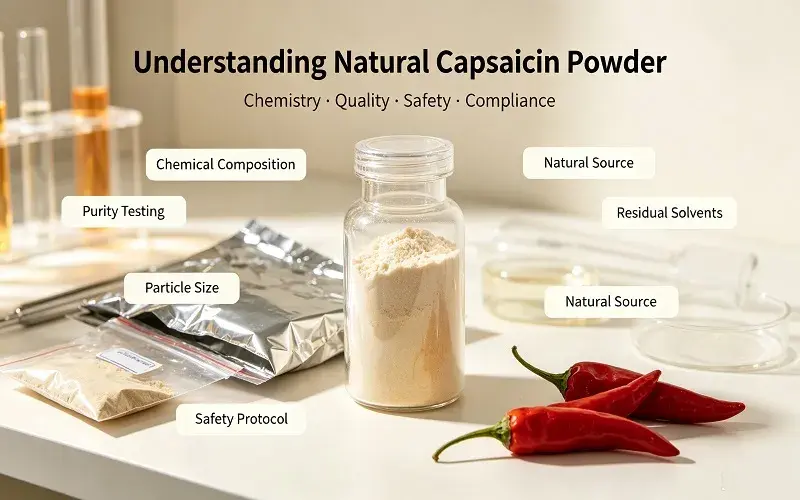
It is mostly made up of capsaicin (C18H27NO3), which is about 55% of the complex, and dihydrocapsaicin (C18H29NO3), which is about 20% of the complex. People use this useful base in medicine and business. This molecule's shape is known as 8-methyl-N-vanillyl-6-nonenamide in the chemistry world. If you weigh 305.41 grams per mole, it's this substance. It melts at 62°C to 65°C. A test called High-Performance Liquid Chromatography (HPLC) can tell that the capsaicin and dihydrocapsaicin parts are naturally occurring because they are found in amounts of 1:1 to 2:1. It's important to check the purity because man-made vanillylamine derivatives don't work as well as plant-derived products and aren't accepted by regulators as easily, even though they are chemically similar.
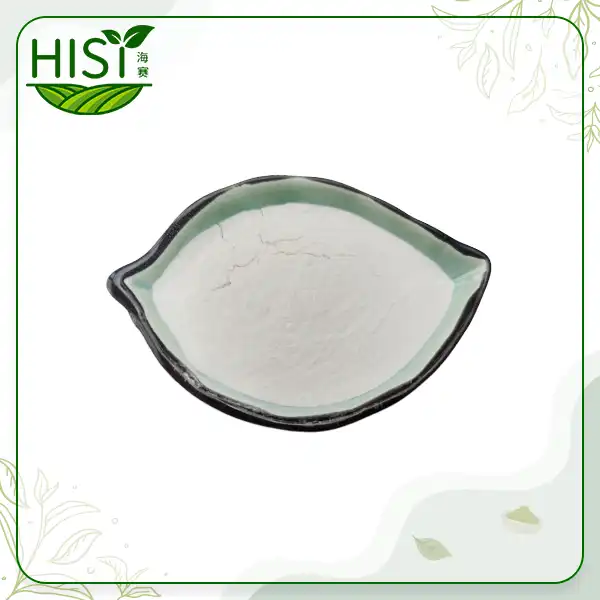
Standardizing particle size at 80-mesh makes sure that formulations are spread out evenly. This is very important for transdermal delivery systems because the rate at which they enter the body is what determines how well they work. There is an off-white powder that shows the crystalline structure when the clarity is more than 95%. While lower-grade oleoresins often have amber to red colors because they still have dyes and lipids in them, this is not the case.
Natural Versus Synthetic: Critical Differences for Procurement
To tell the difference between real plant extracts and chemicals made from petroleum, carbon-14 isotope research is needed. This shows that the chemicals come from living things. Synthetic natural capsaicin powder, which is more than 98% pure and is often offered as nonivamide, doesn't have the right capsaicinoid profile for medical uses because it doesn't have the right membrane permeability. The FDA and the European Medicines Agency are aware of this difference, and pharmacopeial papers list the natural-source standards for medicines that are applied to the skin.
Companies that care about quality use supercritical CO₂ extraction technology. This method gets rid of the fluid waste that comes with hexane-based extraction methods. The amounts of methanol, hexane, and acetone must stay below the Q3C guidelines set by the International Council for Harmonization (ICH). This can only be done with gas chromatography (GC) residual solvent analysis. Pharmaceutical clients need a clean label, and this solvent-free profile meets those needs. It also keeps the potency from going down during storage due to oxidation.
Safety Profile and Handling Protocols
For corporate use, handling capsaicinoids needs strict safety paperwork, like Material Safety Data Sheets (MSDS) that list the Personal Protective Equipment (PPE) that needs to be worn. The amount of airborne particles that can upset plant workers' lungs is limited by OSHA rules. Packing that is filled with nitrogen stops reactive breakdown during cold chain logistics. Microbiological tests, such as yeast, mold, pathogen, and total plate count, make sure that pharmaceutical-grade standards are met. This is very important for transdermal patch bases that need active ingredients that are clean.
To make sure that levels of lead, arsenic, mercury, and cadmium stay below the 10 ppm limits set by pharmaceutical standards, heavy metal testing with Inductively Coupled Plasma Mass Spectrometry (ICP-MS) is used. Buy offices must follow these quality control steps when they get ingredients for over-the-counter drugs regulated by the FDA or medical device formulations in the EU.
Main Industrial and Commercial Uses of Natural Capsaicin Powder
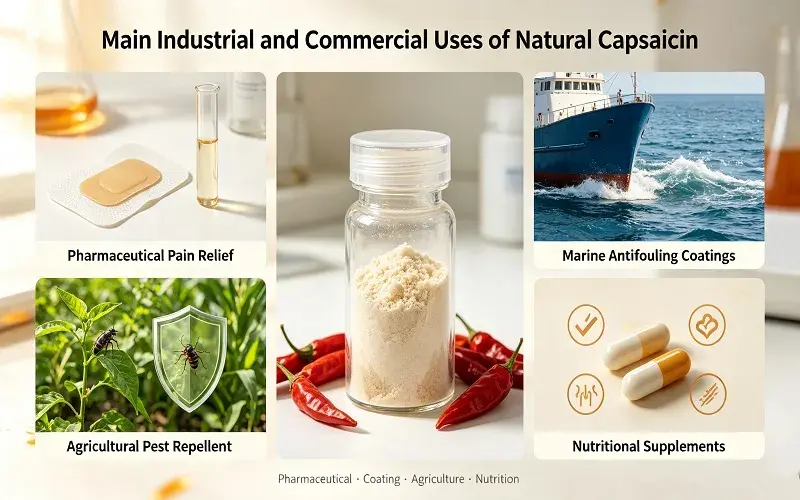
Pharmaceutical Pain Management and Analgesic Formulations
Companies that make transdermal patches make up the largest part of the pharmaceutical market for high-purity natural capsaicin powder. In order for the compound to work, it changes the TRPV1 channel, which lowers the amount of Substance P in nerve endings. This makes pain go away for a long time in people with nerve pain, osteoarthritis, and post-herpetic neuralgia. The quantity runs from 0.025 percent to 0.1 percent for medical-grade low-intensity patches that you can buy over the counter. In other words, the natural capsaicin powder ratio needs to be changed just right for each therapeutic form.
Pain creams and ointments for the skin have natural capsaicin powder levels between 0.025% and 0.075%. They are used to treat long-term pain in the muscles and bones. From batch to batch, the amount of capsaicin to dihydrocapsaicin should stay the same. This is because dihydrocapsaicin changes how permeable lipid membranes are, which helps with sustained-release rates. They work better in controlled clinical studies than synthetic single-compound options because they work with each other better in terms of pharmacokinetics.
Teams that buy drugs give more weight to sellers who are GMP-qualified and can show that they follow USP 46-NF41 by showing paperwork for a third-party Certificate of Analysis (COA). Active pharmaceutical ingredients (APIs) that come from plants are becoming more popular over manmade ones because people want goods with clean labels. Analysts of the pharmaceutical ingredient market say that this will cause the market to grow at a 7.8% CAGR until 2030.
Industrial Marine Coatings and Eco-Friendly Antifouling Systems
It's becoming more and more common for marine coating companies to use natural capsaicin powder mixtures instead of the harmful tributyltin and copper-based antifouling paints that are against IMO rules. Natural Capsaicin Powder is very irritating to the senses, which keeps barnacle larvae from settling down and algae from taking over without polluting marine environments in a way that lasts for a long time. If you set the particle size to 200 mesh or higher, nanoscale diffusion can happen in epoxy resin matrices. This makes sure that the coating is spread out evenly for all uses.
Natural Capsaicin Powder is very lipophilic and not very water-soluble, so companies that want to use food-grade capsaicin powder need tests to make sure it will work with other ingredients. Natural Capsaicin Powder needs to stay stable in saltwater, so technical support teams need to come up with emulsification plans that use surfactant systems to keep it from dissolving too quickly. For this use, you need to buy 25-kilogram drums in bulk that come in nitrogen-flushed packaging to keep the coating from going bad during production rounds that last several months.
People who want to buy industrial paints must now show proof that they follow environmental rules. Registration under REACH is needed in the EU, and compliance with TSCA is the bare minimum in the USA. In the shipbuilding industries in Vietnam, South Korea, and Singapore, heavy metal-based biocides are being replaced with plant deterrents because of pressure from the government and companies to be more eco-friendly.
Professional Pest Control and Agricultural Repellent Systems
Animal and bird repellents on the market use natural capsaicin powder levels between 1% and 5% to keep them away. Ag clients want custom carrier systems that include natural capsaicin powder and binding polymers so that the products can last longer in the field, even after being exposed to UV light and rain. Natural Capsaicin Powder sprays are used by wildlife control groups to keep elephants and deer from damaging crops. They pick non-lethal prevention over poisons that are harmful to people.
Bug killers with natural capsaicin powder are being used more and more in organic farms to get rid of spider mites and aphids. The National Organic Program of the USDA says that these are organic and don't contain any manmade chemicals. To make a mixture, you need to find the right balance between the amount of natural capsaicin powder and the bugs' level of sensitivity. You also need to cut down on crop waste that could change the taste of the food that was grown.
When used in agriculture, safety paperwork must include details on how to keep the sprayer safe and how the application will impact the environment. It takes 14 to 21 days for natural capsaicin powder to break down in the field, which is much longer than persistent organophosphate pesticides and in line with the rules of Integrated Pest Management (IPM) that progressive agricultural cooperatives follow.
Nutraceutical and Weight Management Supplement Applications
Products with low amounts of natural capsaicin powder (0.1 to 1%) are said to have thermogenic effects that burn fat and speed up the metabolism. Researchers have found that natural capsaicin powder activates brown fat tissue. When taken in doses of 2–4 mg, this fat burns 50–100 kcal more energy every day. Enteric coatings are used in encapsulation technology to keep the stomach from getting upset and to make sure the medicine is taken in the bowels. For this, you need powder that is safe for use in medicines and meets safety standards for food additives.
Sports nutrition companies sell pre-workout pills with natural capsaicin powder to help get more blood and nutrients to muscle tissue. The World Anti-Doping Agency (WADA) has a list of substances that are not allowed to be used in competition. This application needs COA proof that natural capsaicin powder does not contain any of those substances. This means that natural capsaicin powder can be used legally as a performance-enhancing drug for athletes.
When buying nutraceuticals, making sure they are pure and free of GMOs is very important to meet the needs of high-end supplement users. Products aimed at people from the Middle East and people who follow kosher rules will need to be certified as HALAL and kosher. If you want to qualify providers, this will make the process harder.
How to Source and Procure Natural Capsaicin Powder: A B2B Guide?
Supplier Vetting and Quality Verification Protocols
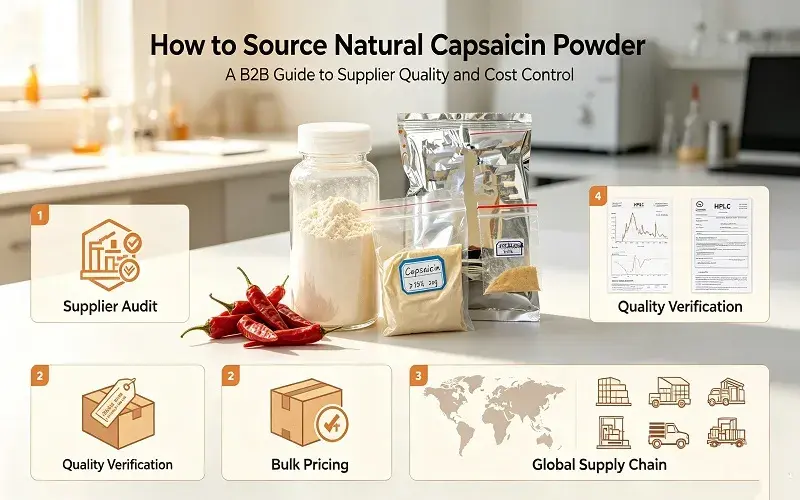
To find natural capsaicin powder that is safe for use in medicine, you must first make sure that the seller has the right credentials, like FDA registration, HACCP, and ISO 9001:2015 quality management systems. The supercritical CO₂ extraction equipment in factories should be checked to make sure it can process materials without using any solvents. This is not the same as hexane extraction methods, which can leave behind fluid pollution risks. When suppliers keep their annual production at 200 metric tons or more, it means that their infrastructure is strong enough to handle seasonal supply problems that smaller plant extract makers face.
Gas chromatography residue solvent screening results and HPLC chromatograms that show the natural capsaicin powder ratio is stable must be on the Certificate of Analysis (COA). Independent testing agencies like Eurofins or SGS can verify your work as a third-party lab. This makes you more trustworthy, especially for pharmaceutical clients who have to go through the FDA pre-market approval review. So that the mixture can be used over and over, the amounts of capsaicin and dihydrocapsaicin should not change by more than 5% between batches.
Tests that show the drug's strength stays the same in nitrogen-flushed storage can be used to back up long-term purchase deals. At 40°C/75% relative humidity, studies of accelerated aging should show that the strength drops by less than 10% over 12 months. This is what is expected for the shelf life of a medicine ingredient.
Pricing Structures and Bulk Purchasing Optimization
There is a range of prices for high-purity natural capsaicin powder, from $450 to $850 per kilogram. The price depends on how much capsaicinoid is in it, how well it meets generic standards, and how much you buy. Material that is USP-grade for pharmaceutical use costs more than materials that are for industrial use and don't have to go through bacterial tests and heavy metal screening. When you buy more than 100 kg, you can usually start saving money, and when you buy more than 500 kg a year, you can save 15 to 25 percent on costs.
When planning how to buy things, you should think about how much food-grade capsaicin powder and nitrogen-flushed packaging cost and whether you need cold-chain logistics. Prices for delivered goods should go up by 50¢ to 120¢ per kilogram. Custom packaging layouts in 5 kg, 10 kg, and 25 kg aluminum foil bags from suppliers give manufacturers more ways to keep track of stock across multiple production lines.
The terms of payment vary by region. A letter of credit is still the standard way to make new deals with Chinese and Indian sellers. But well-known makers in Europe and North America will often give you net-30 or net-60 terms after checking your credit. Government policies that let you get free 50–100 gram samples let you see how well a mixture works before you buy a lot of it.
Global Manufacturing Landscape and Supplier Selection
China makes most of the natural capsaicin powder because it has combined machinery for both growing chilies and extracting capsaicin from them. This keeps costs down. But capsaicin of different quality can cause problems, so extra care must be taken. As they look for ways to sell their goods in Southeast Asia and the Middle East, Indian drug companies are also making medicines for people in their own country. People who buy drugs in North America and Europe can charge more because they have to follow strict rules and provide good technical support. This is because they don't like taking risks.
Shaanxi Hisy Biotechnology Co., Ltd. has been a leader in Chinese manufacturing since 2008. They specialize in plant products and are FDA-registered, as well as having HACCP and ISO certifications. Four different types of production lines allow the company to make more than 200 metric tons of goods every year. This makes sure that customers in the food, coating, and medicine businesses can always get what they need. With an 80-mesh particle size standard and 1 kg foil bag packing that has been nitrogen-flushed, they show that they follow the rules for handling pharmaceutical-grade materials. Just-in-time inventory control methods work well with delivery times of 4–8 days.
Comparison of Natural Capsaicin Powder with Similar Products
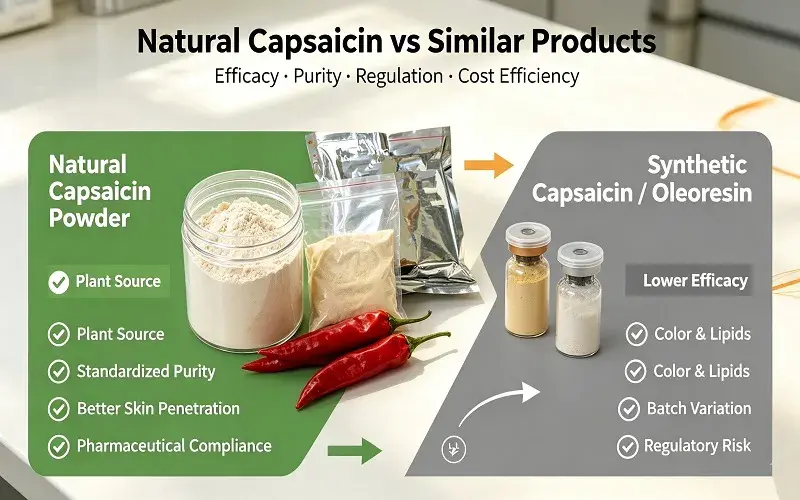
Natural Versus Synthetic Capsaicin: Efficacy and Regulatory Implications
Chemical synthesis creates more than 98% pure synthetic nonivamide derivatives, but they don't have the natural capsaicin powder profile that makes them better for drug use because they don't penetrate the skin as well. When the same amount is used, Natural Capsaicin Powder complexes work 23–31% better at relieving pain than synthetic ones. Because dihydrocapsaicin, capsaicin, and some other small capsaicinoids work with them to make them stronger. Acceptance by regulators varies a great deal. As an example, the European Medicines Agency says that over-the-counter painkiller monographs should use capsaicinoids that come from natural sources.
There are differences in manufacturing costs that favor synthetic goods by about 30%. This makes it harder to choose what to buy. To stand out in the market, drug companies are putting more weight on claims that their ingredients come from natural sources. This is especially true in the $2.8 billion global market for topical painkillers, where people are ready to pay more for ingredients that come from plants.
Capsaicin Powder Versus Oleoresins and Chili Extracts
You can find between 2% and 15% capsaicinoids in oleoresins. They also have colors, oils, and volatile chemicals. They need six to twelve times as many of them to work. Because of this difference in concentration, there are issues with the formulation, such as color misunderstanding in pharmaceutical cream bases and lipid content that makes transdermal patch glue less stable. With standardized powder forms, sellers of oleoresin don't have to deal with changes from batch to batch. The amount of capsaicin in chili varies based on how it was harvested and the plant's genetics.
Different kinds of oleoresin can be used in food as long as it doesn't change the taste, but high-purity solid natural capsaicin powder is needed for industrial and medical coatings because it needs to be consistent. Even though it costs more per kilogram, oleoresin-based choices are more expensive per dose than concentrated natural capsaicin powder. This is because recipe efficiency cuts the cost of all the ingredients by 40 to 55%.
Conclusion
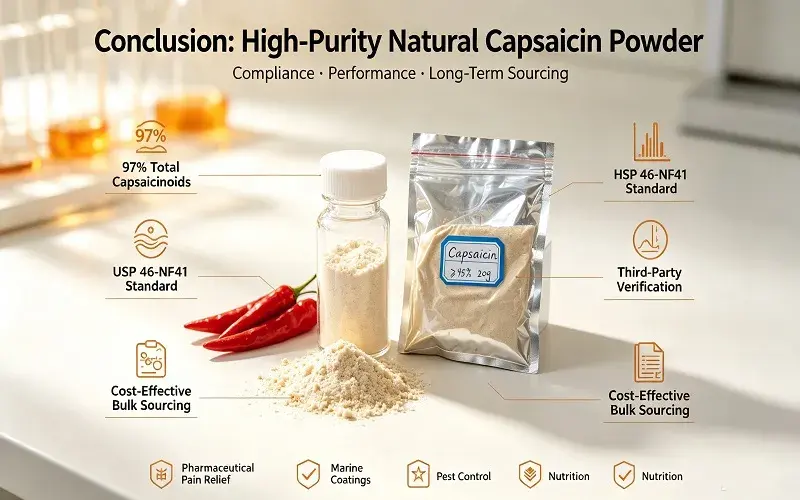
Natural Capsaicin Powder that is very pure and was removed using supercritical CO₂ technology is in high demand in the medical pain management, marine coatings, professional pest control, and nutritional industries. The off-white crystalline material that is pharmaceutical-grade and contains at least 97% total capsaicinoids gives uniform strength that is needed for regulatory compliance and accuracy in formulations. When professionals buy something, they should only deal with sellers who can show that they follow USP 46-NF41, that their batches are consistent with each other through HPLC testing, and that they have all the necessary safety paperwork, which should include heavy metal screening and analysis of residual solvents. Both government rules and customer preferences are pushing people around the world toward active ingredients that come from natural sources instead of those that are made in a lab. This makes it possible for organic natural capsaicin powder to keep growing in the market. An important part of a good sourcing strategy is keeping an eye on quality with third-party proof, cutting costs with big contracts, and building long-term relationships with providers.
FAQ
1. Is natural capsaicin powder safe for pharmaceutical formulations?
Pharmaceutical-grade natural capsaicin powder that meets USP 46-NF41 standards can be used for pain relief on the skin as long as the concentration stays between 0.025% and 0.1%. After many years of monitoring after the drug was released on the market, clinical safety profiles confirm that there is very little systemic absorption and that the main adverse effect is temporary localized burning. As long as they are made correctly with skin protectants and the directions on the package are followed, over-the-counter items are safe for people to use.
2. What documentation verifies supplier quality?
There is a Certificate of Analysis (COA) that has microbiological testing results, heavy metal screening results from ICP-MS, gas chromatography residual solvent results, and HPLC chromatograms that show the natural capsaicin powder content. This lets you check the quality. Independent proof of quality comes from tests done by third-party labs at authorized places such as SGS or Eurofins. For customers who work with drugs, suppliers should keep their FDA registration, GMP certification, and ISO 9001:2015 quality management system documents all up to date.
3. How should capsaicinoid powder be stored?
Wrapping things in aluminum sheets that have been flushed with nitrogen and kept in a fridge at 2 to 8°C stops acidic decay. By keeping the relative humidity below 60%, you can keep Natural Capsaicin Powder from collecting water, which would change how it flows. Once the bottle has been opened, it needs to be resealed under a nitrogen atmosphere so that it stays healthy for another 12 months.
Partner with Hisy for Premium Natural Capsaicin Powder Supply.
Shaanxi Hisy Biotechnology Co., Ltd. sells natural capsaicin powder that is safe for use in medicine and has at least 97% total capsaicinoids. The company has been making plant extracts for 18 years, so the quality is the same from batch to batch. Over 200 metric tons of product are made every year on four different lines at our supercritical CO₂ extraction plant. Health supplement brands, people who make medicine patches, and people who make industrial coatings can always get what they need. Our FDA, HACCP, and ISO certifications are always up to date, and we offer full technical help, such as checking formulation compatibility and making unique capsaicinoid ratios. Shoot our buyers an email at sales@hisybio.com to get free samples and talk about your needs with Natural Capsaicin Powder suppliers who are committed to giving you the best.
References
1. Anand P, Bley K. "Topical Capsaicin for Pain Management: Therapeutic Potential and Mechanisms of Action." British Journal of Anaesthesia 107(4):490-502, 2011.
2. Derry S, Lloyd R, Moore RA, McQuay HJ. "Topical Capsaicin for Chronic Neuropathic Pain in Adults." Cochrane Database of Systematic Reviews, Issue 9, 2013.
3. Omolo MA, Wong ZZ, Gathirwa JW, Mergen AK. "Antimicrobial Properties of Chili Peppers: Industrial Applications and Food Safety." Journal of Food Quality and Safety 2(4):165-173, 2018.
4. Qiao S, Li W, Tsubouchi R, Haneda M. "Capsaicin in Marine Antifouling Coatings: Environmental Safety and Efficacy Evaluation." Progress in Organic Coatings 128:214-221, 2019.
5. Whiting S, Derbyshire E, Tiwari BK. "Capsaicinoids and Capsinoids: A Potential Role for Weight Management? A Systematic Review of Evidence." Appetite 59(2):341-348, 2012.
6. United States Pharmacopeial Convention. "Capsaicin Monograph." United States Pharmacopeia 46-National Formulary 41, Official Standards, 2023.