

_1752718207094.png)

What factors affect the bioavailability of curcumin 95%?
Bioavailability challenges remain the central concern when working with curcumin 95%, a highly concentrated extract containing at least 95% total curcuminoids derived from Curcuma longa. Despite its powerful antioxidant and anti-inflammatory properties, the human body struggles to absorb this lipophilic compound effectively. Poor water solubility, rapid metabolism, and quick elimination combine to limit therapeutic outcomes. Understanding these barriers—and how formulation technologies, enhancers like piperine, manufacturing standards, and storage conditions influence absorption—becomes essential for supplement manufacturers, OEM brands, and distributors seeking to deliver effective, market-competitive products that genuinely support joint health, cognitive function, and overall wellness.
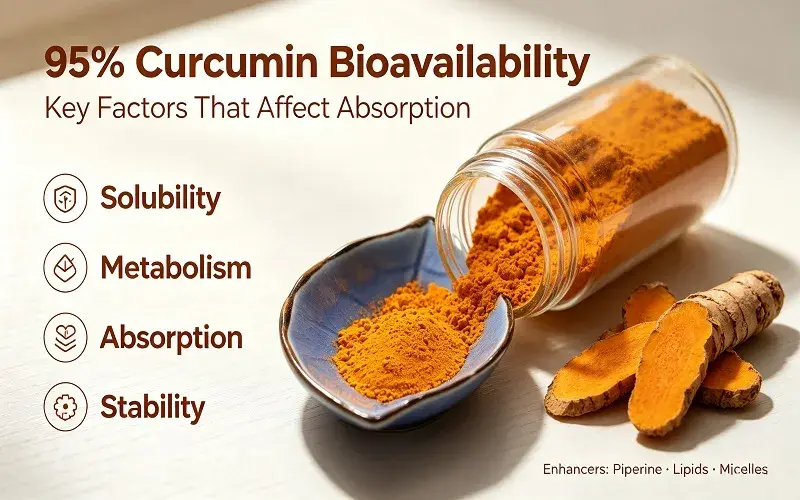
Key Factors Affecting the Bioavailability of Curcumin 95%
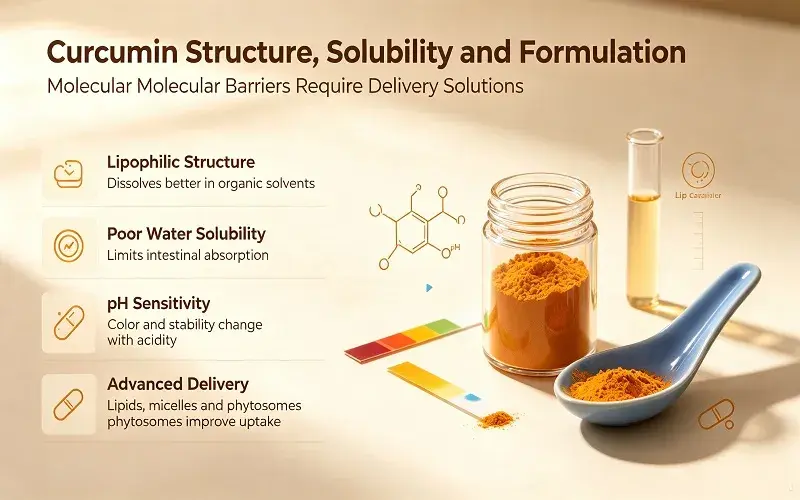
Molecular Structure and Solubility Limitations
The way curcumin molecules are built chemically has a direct effect on their ability to be absorbed. If something is lipophilic, it dissolves easily in organic solvents like acetone and ethanol but not at all in water or gastrointestinal fluids that contain water. This difference makes a basic barrier—curcuminoids can't break down enough to get through digestive walls and into the bloodstream.
Curcumin also changes color depending on the pH level. It goes from yellow at acidic pH levels to a deep reddish-brown color in alkaline pH levels above 7.5. This makes recipe design more difficult, especially for drinks and enteric-coated pills, where pH changes as the body digests food. When manufacturers choose delivery methods and excipients that keep active ingredients safe in stomach conditions that aren't friendly, they need to think about these physicochemical qualities.
Formulation Types and Delivery Systems
The format of a product has a big effect on how well it absorbs. Traditional capsules that are filled with powder are convenient, but they don't help with problems with solubility. Using lipid carriers like medium-chain triglycerides or phospholipids in softgel forms makes it easier for curcumin to dissolve, which makes it much easier for the body to absorb than regular pills.
The next step forward in curcumin supplementation is the use of advanced transportation methods for Curcuma longa standardized extract. Nano-emulsion systems make particles as small as a few nanometers, which greatly increases the surface area and rate of dissolution. Phytosome complexes connect curcuminoids to phosphatidylcholine, making a structure that is compatible with lipids and can pass through digestive walls more easily. Liposomal encapsulation keeps curcumin molecules safe inside lipid vesicles, keeping them from being broken down and making it easier for cells to take them in. When compared to unformulated extracts, these advanced methods can increase bioavailability by 10 to 20 times. However, they need more money and special manufacturing skills.
Bioavailability Enhancers and Co-Ingredients
Piperine, an alkaloid that is taken from black pepper, is still the most researched and least expensive absorption booster. Piperine stops glucuronidation enzymes in the liver and intestinal wall at a concentration of just 1% of curcumin content. This slows down the metabolism of curcuminoids and increases their time in the plasma. Researchers have found that taking piperine with curcumin can increase its absorption by up to 2000%. This makes a molecule that isn't easily absorbed into a useful healing ingredient.
Quercetin and bromelain co-formulation is another way to improve things. They change metabolic pathways in different ways. Lipid-based carriers, like lecithin and essential fatty acids, improve solubility profiles without stopping metabolism. Manufacturers have to weigh the effectiveness of enhancements against regulatory issues, consumer preferences for clear ingredient lists, and possible drug interactions with medicines their target audience may be taking.
Dosage Timing and Dietary Factors
The setting of consumption has a big effect on how well intake works. It is easier for the body to dissolve and absorb curcumin supplements when they are eaten with foods that contain dietary fats. This is because lipophilic compounds need lipid micelles to be absorbed in the gut. Studies have shown that giving something with fats can double or triple its bioavailability compared to when the person is fasting. This is why dosing instructions are such an important part of product labels and teaching customers how to use them.
When it's taken in relation to other supplements or medicines, it's also important. When you eat a lot of lipid-soluble nutrients at the same time, they may not be absorbed as well by your body. This is called competitive absorption. However, combinations that work well together, like curcumin with omega-3 fatty acids or ginger extract, can provide extra anti-inflammatory benefits and help each other absorb through similar metabolic and transport routes.
Manufacturing Standards and Quality Control
Choosing the right supplier has a direct effect on how well the product works beyond meeting basic purity requirements. How the curcuminoids are extracted affects their profiles and the amount of residual solvent that is present. Using Class 3 solvents to remove ethanol and ethyl acetate makes the goods cleaner and safer than older methods that used hexane or other harmful solvents. GMP-certified facilities use consistent production methods that stop cross-contamination and keep the regularity of each batch.
Independent confirmation of label claims comes from testing by a third party. HPLC testing proves the amount of curcuminoid and that the ratio is consistent. Heavy metal screening checks for lead, cadmium, and arsenic to make sure it meets Prop 65 standards. C14 isotope testing tells the difference between extracts that really come from plants and synthetic compounds that are said to be "nature-identical" but don't have the full phytochemical matrix of natural sources. Businesses that buy from other businesses (B2B buyers) trust these quality marks because they show that the ingredients are real and the company is following the rules.
Storage Conditions and Stability Considerations
Over time, environmental factors weaken curcumin, which has a direct effect on bioavailability by lowering the concentration of the active ingredient. Photosensitivity makes UV light especially harmful—direct sunlight can break down curcuminoids in hours, turning them into a bright orange powder that turns brown as the molecular structures break down. For proper keeping, things need to be kept in cool, dark containers that don't let light through.
Controlling moisture stops clumping and chemical breakdown. When you store bulk powder in 25 kg drums, you should use desiccant packets and moisture barrier covers to keep the quality high for the 36 months that premium curcumin has a shelf life compared to standard 24-month options. Distributors can better handle their stock when the stability lasts longer, and end-product makers can rely on more predictable performance when the formulations they use depend on the raw materials' steady potency.
Comparative Insights: Curcumin 95% vs. Other Curcumin Products
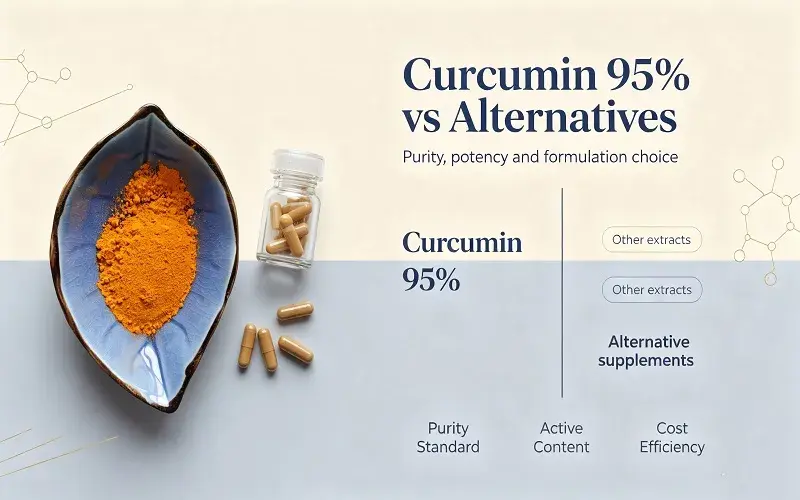
Purity Levels: 80% vs 95% vs 98%
People who want to save money on raw materials may think about buying 80% extracts, but this can have unexpected effects. Higher numbers of inactive plant fibers and starches mean lower purity, which means bigger capsule sizes or multiple capsule meals are needed to get the same amount of curcuminoid. This makes it harder for customers to follow the rules and makes the product seem less valuable, which could hurt the brand's position in the supplement market.
Premium positioning strategies like the 98% specification but it doesn't really offer any practical advantages over 95% content. Bioavailability is affected more by the method of delivery than by small increases in purity above 95%. Curcumin 95% is the most cost-effective choice for most dietary supplement and functional food uses where formulation science is more important than raw potency because the small price increase for 98% extracts rarely leads to proportional performance improvements.
Proprietary Formulations and Raw Materials
Patented mixes like BCM-95 contain turmeric essential oils and Curcuma longa standardized extract, which naturally improve digestion without adding any chemicals. These formulas cost more, but they make marketing stories about "whole plant" benefits and clean labels easier. Even though they cost more per kilogram than regular curcumin products, brands that want to sell to natural health stores and smart customers often think the extra expense is worth it.
On the other end of the spectrum is raw turmeric powder, which is cheap and easy to find but not effective enough for therapeutic use without huge doses. Whole turmeric-based products can't give you useful amounts of curcumin in dose sizes that make sense. Because of this, raw powder can only be used in cooking and as an introductory supplement, where low cost is more important than effectiveness when deciding what to buy.
Organic Certification and Contamination Risks
People who care about their health and are willing to pay more for certified-organic labels are interested in organic curcumin extracts. However, being organic does not automatically mean that something is pure or more bioavailable. Heavy metals and pesticides can get into both standard and organic supply lines. For B2B quality assurance, strict testing methods are more important than farming certifications.
No matter what the organic claims are, procurement policies should put a high priority on full COA documentation that includes HPLC chromatograms, microbial testing, and heavy metal analysis. Verification of non-GMOs and compliance with Prop 65 protect market access in key areas like California while also addressing customer safety concerns that could lead to expensive recalls or damage to the brand if contaminated goods get to the market.
Practical Recommendations for B2B Procurement Clients
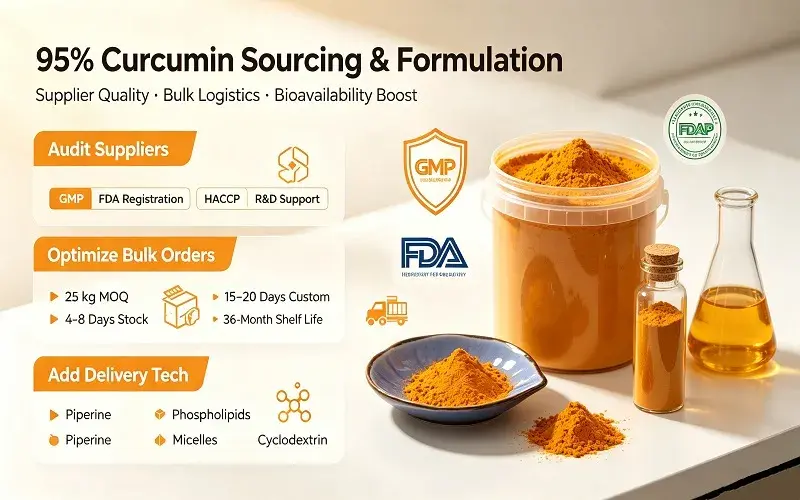
Evaluating Supplier Credentials
Standard certifications help make sure the quality of a product, but more thorough research is needed to tell the difference between genuine suppliers and commodity brokers. GMP approval shows that quality control is carried out in a planned way throughout the whole production process. Even though it's not needed for supplements, registering with the FDA shows a willingness to follow the rules above and beyond what is required by law. HACCP rules make sure that food safety is managed, which is especially important for curcumin that will be used in functional foods.
When custom formulations need expert teamwork, manufacturing openness is important. Suppliers with their own research and development departments can come up with bioavailability improvement solutions that are perfect for each product idea, like phospholipid complexes for brain health supplements or nano-emulsions for clear functional drinks. To figure out if you could work together, get references from current OEM clients and see how quickly they are during the sampling and technical question stages.
Bulk Purchasing and Supply Chain Logistics
For normal curcumin 95% powder, the minimum order quantity is usually 25 kg drums. When you order more than one drum, you save money. Delivery times depend on how customized the order is; stock items are sent out within 4–8 days, while custom formulations need 15–20 days for development and batch production. For international logistics to work, they need help clearing customs, especially for markets in North America and Europe where strict rules about paperwork go hand-in-hand with regulations.
The price per kilogram changes based on the market for the raw materials, the quality requirements, and any value-added processes like micronization or encapsulation. Strategic buyers make long-term deals with suppliers that lock in prices and guarantee consistent quality from batch to batch. This keeps product formulations from changing in ways that could affect both customer satisfaction and regulatory compliance. Premium extracts have a 36-month shelf life edge that should be taken into account when planning your inventory. This lets you place bigger orders that spread out the cost of shipping over time while keeping their effectiveness through longer distribution cycles.
Incorporating Enhancement Technologies
In crowded supplement markets, the ultimate success of a product depends on its formulation strategy. Piperine co-formulation mixed with herbs like Boswellia serrata and ginger extract, which work together to reduce inflammation, is good for brands that are aimed at people who have problems with their joints. Some cognitive health products may combine curcumin with phospholipid complexes that help the blood-brain barrier work better. This supports neuroprotective claims that are backed up by clinical research.
Bioavailability is still being pushed to new heights by new delivery methods. Micelle technology spreads curcumin in carriers that dissolve in water. This makes it possible to use curcumin in clear beverages, which wasn't possible before because of problems with solubility. Cyclodextrin complexes lessen the intense yellow color that makes cosmetic formulations harder to work with. They also make it easier for anti-aging products to be absorbed by the skin. Keeping up with changes in technology helps buying teams predict what competitors will do next and set up their product lines so they stay relevant in the market.
Case Studies and Applications in Industry
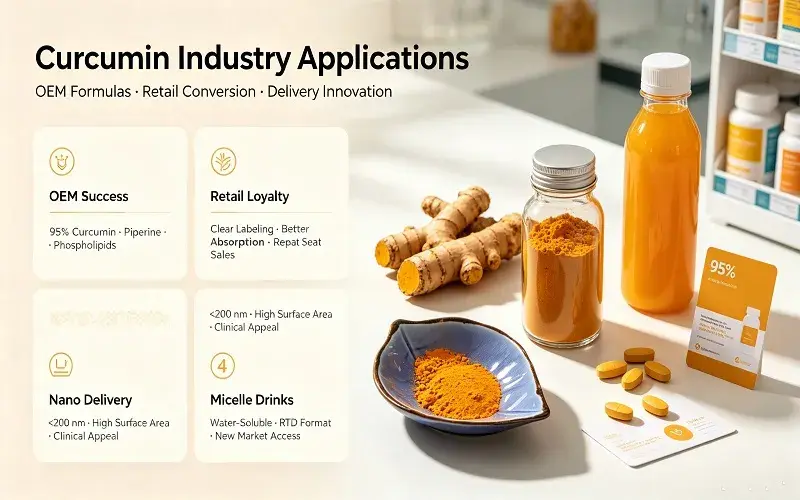
OEM Success Stories in Supplement Manufacturing
Leading names in joint health have improved the performance of their products by switching from simple curcumin pills to complex formulations that combine 95% curcumin with piperine and phospholipid delivery methods. Customers are happier with these improved goods and are more likely to buy them again, which supports charging more for them, which increases profits and builds brand loyalty in a market where prices are competitive.
Distributors who work with natural product stores say that curcumin formulations with improved bioavailability work much better than standard products. Labels that clearly state absorption technology on products get more attention from customers and make it easier for browsers to become buyers. This shows that technical innovation can directly lead to business success when marketed correctly.
Innovative Technologies Shaping Market Trends
Nanoparticle engineering is the most cutting-edge way to give curcumin. Getting particles smaller than 200 nanometers makes a huge surface area compared to volume, which speeds up the rate of dissolution and lets substances pass through intestinal membranes without being absorbed. When companies invest in nano-formulation, they gain a competitive edge in market segments that focus on effectiveness, where customers judge products based on clinical support and bioavailability claims.
Micelle-based delivery systems can get curcumin into drinks that regular curcumin can't. Water-dispersible versions keep the product's clarity while providing therapeutic amounts in ready-to-drink shapes. This makes it possible for functional beverage shops and fitness-focused stores to sell the product. These new ideas reach more people than just standard supplement users, which helps the field grow and opens up chances for brands and suppliers who are looking ahead.
Conclusion
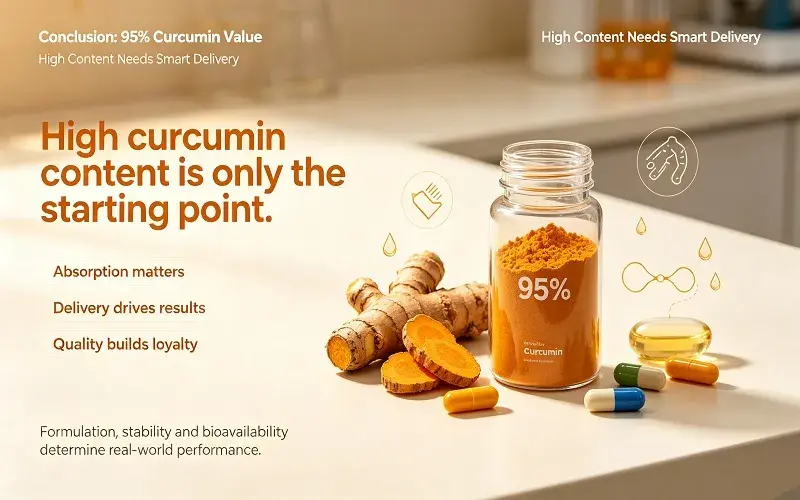
Bioavailability is still the main difference between curcumin supplements that work and expensive placebos. Although curcumin 95% is very pure chemically and has therapeutic potential, it is hard for the body to absorb. To solve this problem, scientists need to come up with new ways to formulate it that include enhancement technologies, the right delivery systems, and high standards for quality manufacturing. B2B buyers shouldn't just look at price when choosing a provider; they should also look at technical skills, legal compliance, and batch consistency. Procurement professionals can find ingredients that really deliver clinical benefits by understanding how molecular solubility, metabolism pathways, co-ingredients, and storage conditions work together. This builds consumer trust and brand reputation in health and wellness markets that are becoming more complex.
FAQ
1. What Does a 95% Curcumin Dosage Optimize Absorption?
Formulation technology determines how well the dose works. Curcumin preparations that aren't boosted with piperine need 1000–2000 mg of daily doses to reach low plasma concentrations. Piperine-enhanced versions, on the other hand, only need 500–1000 mg of daily doses while providing better bioavailability. Nanoemulsions and phospholipid complexes lower effective doses even more, to between 250 and 500 mg. Instead of arbitrary curcuminoid amounts, manufacturers should base serving sizes on how well the delivery system works. This will make sure that products have therapeutic effects that are worth the money consumers spend on them.
2. How Can Buyers Verify Supplier Quality and Bioavailability Claims?
Ask for full COA paperwork that includes HPLC chromatograms showing curcuminoid profiles, C14 isotope proof proving that the plant came from a natural source, heavy metal test results showing that Prop 65 is followed, and bacterial analysis making sure safety standards are met. Before placing a large order, ask for samples to be tested by a third party. Check out certificates for production, such as GMP, delivery, and HACCP. Request case studies and references from current OEM clients that show formulation skills related to your product category and target market positioning.
3. Are Higher Curcumin Doses Safe?
Clinical research shows that it is safe at a wide range of doses. For example, studies have given 4000-8000 mg daily without any major side effects. Curcumin is not very dangerous because it is quickly broken down and flushed out of the body. Very high doses, on the other hand, may cause mild stomach pain in sensitive people. By stopping digestive enzymes from working, piperine enhancement brings up new questions about drug interactions. Manufacturers who are responsible give clear dose instructions and warnings about side effects to people who are taking medicines that are metabolized in similar ways. This protects both the safety of the buyer and the brand's reputation.
Partner with Hisy for Premium Curcumin 95% Supply Solutions
Shaanxi Hisy Biotechnology Co., Ltd. has been working with botanical extracts for more than 15 years and can help business customers find trusted Curcumin 95% suppliers. Our GMP-certified factory makes USP/EP-compliant curcumin that has been tested and found to be 95.16% effective. It also comes from a certified C14 plant and is fully compliant with California Prop 65 heavy metal rules. We work with supplement makers, OEM brands, and distributors in over 40 countries. Our minimum order quantity (MOQ) is as low as 1 kg, and we can also do bulk 25 kg drums and custom formulation development using technologies that improve bioavailability, such as piperine metabolism, phospholipid complexes, and nano-emulsion systems. Our technical team helps with formulations for joint health, cognitive function, cosmetics, and functional foods. Samples can be sent out in 3–5 days, and custom production takes 15–20 days. Email our team at sales@hisybio.com to talk about your unique needs, ask for product trials, or look into the possibility of a custom formulation.
References
1. Anand, P., Kunnumakkara, A. B., Newman, R. A., & Aggarwal, B. B. (2007). Bioavailability of curcumin: Problems and promises. Molecular Pharmaceutics, 4(6), 807-818.
2. Shoba, G., Joy, D., Joseph, T., Majeed, M., Rajendran, R., & Srinivas, P. S. (1998). Influence of piperine on the pharmacokinetics of curcumin in animals and human volunteers. Planta Medica, 64(4), 353-356.
3. Cuomo, J., Appendino, G., Dern, A. S., Schneider, E., McKinnon, T. P., Brown, M. J., ... & Dixon, B. M. (2011). Comparative absorption of a standardized curcuminoid mixture and its lecithin formulation. Journal of Natural Products, 74(4), 664-669.
4. Prasad, S., Gupta, S. C., Tyagi, A. K., & Aggarwal, B. B. (2014). Curcumin, a component of golden spice: From bedside to bench and back. Biotechnology Advances, 32(6), 1053-1064.
5. Hewlings, S. J., & Kalman, D. S. (2017). Curcumin: A review of its effects on human health. Foods, 6(10), 92.
6. Schiborr, C., Kocher, A., Behnam, D., Jandasek, J., Toelstede, S., & Frank, J. (2014). The oral bioavailability of curcumin from micronized powder and liquid micelles is significantly increased in healthy humans and differs between sexes. Molecular Nutrition & Food Research, 58(3), 516-527.