

_1752718207094.png)

How to Verify Barley Seedling Powder Quality Standards?
To check the quality of Barley Seedling Powder, you must first understand the important differences between high-quality ingredients and cheaper ones. At its core, verification involves looking at several aspects of quality at the same time, such as the item's physical appearance, lab reports, and certification credentials. Since 2008, we've worked with beauty and nutraceutical brands and learned that thorough verification keeps expensive product recalls, fines from the government, and damage to the brand's image at bay. Hordeum vulgare Barley Seedling Powder of good quality should always be a grass-green colour, pass strict microbial tests, and come with full traceability paperwork that links each batch to the conditions under which it was harvested and processed.
Understanding Barley Seedling Powder Quality – General Overview
Barley Seedling Powder is a popular ingredient in natural skin care products, functional drinks, and dietary supplements because it is high in nutrients and in high demand around the world. People are interested in this healthy ingredient because it has a lot of chlorophyll, can make things more alkaline, and is full of vitamins and minerals, including B-complex vitamins.
What Distinguishes Quality Barley Seedling Powder
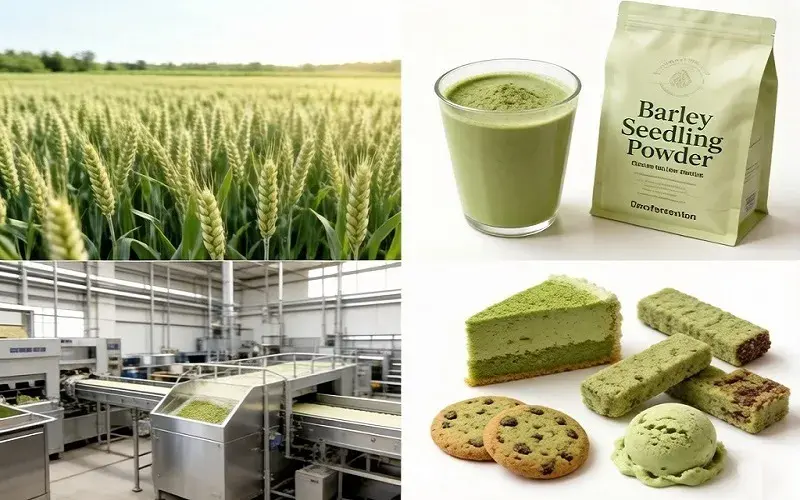
When you look at the source material and the way it was harvested, you can tell the difference in quality. Premium Barley Seedling Powder comes from young Hordeum vulgare plants that are picked when they are 20 to 30 cm tall and in the jointing stage, which is when enzyme activity is at its highest and caloric density is at its highest. The seedlings have the right amounts of superoxide dismutase (SOD), chlorophyll, and bioavailable amino acids at this stage of their growth.The way of processing has a huge effect on the quality of the final result. Heat-sensitive enzymes are kept alive by freeze-drying and hoover drying, but they are destroyed by regular spray-drying. Our building has four dedicated production lines that use both freeze-drying and vacuum drying. This lets us keep the structure integrity of cellular materials while meeting the 80-mesh particle size requirement.
Why Quality Verification Matters for B2B Buyers
It's getting harder and harder for procurement teams to find ingredients that meet strict legal standards and work the same way in all production batches. Barley Seedling Powder that isn't up to par comes with a number of risks, including microbial contamination that puts consumers at risk, heavy metal presence that goes beyond what the FDA allows, and inconsistent levels of active ingredients that make it hard to say that the product works.Nutraceutical companies put their reputation on the line when they make meal replacement shakes or detox supplements with Barley Seedling Powder. One tainted batch can lead to costly refunds, legal problems, and damage to the brand that can't be fixed. Companies have lost distribution partnerships because they didn't take basic steps to check the quality of their suppliers when they were choosing them.
Core Dimensions to Assess Barley Seedling Powder Quality
Professional quality review looks at a lot of different factors that work together to figure out whether Barley Seedling Powder is right for a certain job. Each dimension tells you something different about how the powder will work in your recipes and whether it meets the needs of your target market.
Origin and Certification Standards
The place where food comes from affects its nutrients, the risk of pesticide exposure, and its ability to be certified organic. Barley seeds grown in places with strict farming rules usually have lower amounts of pesticide residue and more regular quality standards. Our protocols for sourcing give priority to growing areas where the soil conditions allow for the best uptake of nutrients without the need for too many chemical interventions.The first thing that verifies you are your certifications. Certifications from the USDA, the EU, and China Organic show that manmade herbicides and chemical fertilisers were not used in the farming process. In addition to being certified as organic, our facility also has ISO, HALAL, and KOSHER certifications that meet the needs of a wide range of markets. Getting FDA registration and HACCP certification shows that you follow internationally recognised food safety management systems.
Physical and Chemical Quality Indicators
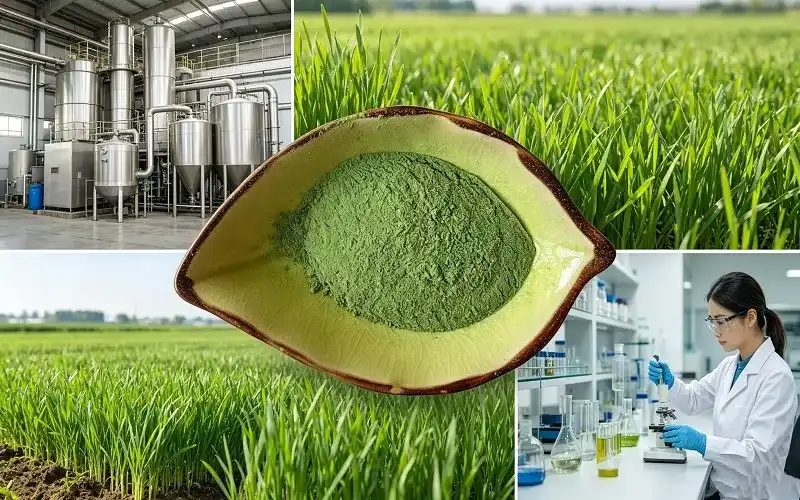
Visual inspection gives you quick clues about quality that experienced buying professionals can pick up on right away. Premium Barley Seedling Powder is a uniform shade of grass green and doesn't have any brown spots or yellowish tints that could mean it has been oxidised or stored incorrectly. The 99% standard we stick to makes sure that there is very little waste and the highest quantity of active ingredients.Moisture content directly impacts how stable something is on the shelf and how much microbes can grow in it. Our vacuum drying process lowers the moisture to a level that stops enzymes from breaking down the powder while it is being stored while still letting it flow easily. The 80-mesh particle size standard we apply ensures consistent dispersion in liquid formulas and uniform blend qualities in capsule or tablet uses.Protocols for lab tests reveal quality factors that can't be seen with the naked eye. Here are the types of tests that we do on every batch of products:Microbial Analysis: Total Plate Count, yeast and mould counting, and disease screening using AOAC-approved methods show that the microbiology is safe.
Supply Chain Transparency and Documentation
Systems that keep track of things link finished powder to specific growing areas, harvest times, and batches of processing. Full documentation packages include Certificates of Analysis that show test results, origin certificates that show where the product came from, allergen statements that say common allergens are not present, and batch records that show how the product was processed.Our quality management system keeps digital records for each batch of products we make. These records can be used for audits that are needed for regulatory inspections and customer due diligence. This openness lets buying teams check claims, look into changes in quality, and show that their own supply lines are compliant.
Step-by-Step Process to Verify Barley Seedling Powder Quality Standards
Systematic verification procedures set clear quality standards that suppliers must always meet and reduce the risk of Barley Seedling Powder procurement. This step-by-step process walks B2B buyers through a full quality review.
Define Application-Specific Quality Requirements
The quality standards needed for different end uses are very different. Different standards must be met for dietary supplement pills compared to functional drinking powders or cosmetic formulas. Set your firm requirements for suppliers, such as the maximum amount of heavy metals that can be used, the certifications that they must have, the concentrations of active ingredients that you want, and the sizes of the particles that they can produce.Nutraceutical uses usually need organic certification, kosher or halal compliance for certain markets, and ELISA testing to prove that the product is gluten-free. When used in cosmetics, microbial cleanliness and the lack of irritating chemicals are very important. Manufacturers of food and drinks pay attention to things like bland taste, stable colour, and even spread.
Request Comprehensive Samples and Documentation
Specifications alone can't show quality traits that can be seen in product samples. Ask for samples that come with up-to-date Certificates of Analysis, proof of certification, and full lists of all the ingredients they contain. Check samples for uniformity in colour, consistency of particles, aroma profile, and how they disperse in the formulation matrix you're using.We offer free samples that come with all the necessary paperwork, so buying teams can test them on their own before committing to large orders. Our delivery time frame of 4–8 days lets us do quick evaluation processes that keep plans for product development on track.
Conduct Independent Third-Party Testing
Never depend solely on test reports given by the supplier. An independent lab check confirms the quality objectively and finds differences between what was claimed and what was actually delivered. Choose testing labs that are licensed to do botanical testing and have experience with powders made from plants.The testing procedures should be the same as the full screening we talked about earlier, which included looking for microbes, heavy metals, chemical residues, and the amount of active ingredient. Plan to try production batches again and again to make sure the quality stays the same, especially when going from trial sales to full production volumes.
Evaluate Supplier Reputation and Manufacturing Capabilities
A supplier's past performance is a better indicator of how well they will do in the future than any single quality test. Use industry networks, trade association directories, and customer references to find potential suppliers. Site checks give you a first-hand look at the working conditions in a factory, the infrastructure for quality control, and how professionally the operations are run.Our 18+ years of manufacturing experience since 2008 shows that we have always been dedicated to quality and dependability. Our 4 production lines can make 200 MT of product a year, so we have a steady supply even when demand goes up. Our 150 m² certified building also keeps the working conditions under control so that each batch is the same.
Establish Quality Assurance Contracts and Support Terms
The terms of the contract should include expectations for quality, rules for testing, and what will happen if the specifications aren't met. Include rules for rejecting batches, replacing them, and checking the quality on a regular basis. Talk about technical support terms that include help with formulation and troubleshooting when problems with integration come up.Respondent customer service changes relationships with suppliers from one-way transactions to partnerships where both parties work together. Our expert team answers questions within 24 hours and gives customers application advice that helps them make the best formulations and solve problems with processes.
Comparing Quality Among Leading Barley Seedling Powder Brands and Suppliers
A study of the market scene shows that there are big differences in quality between suppliers. These differences are caused by changes in farming methods, processing technologies, and investments in quality control. Knowing these differences helps you make smart decisions about where to buy Barley Seedling Powder that meet both your quality needs and your budget.
Quality Indicators That Define Premium Suppliers
Leading sellers set themselves apart not by marketing claims but by quality measures that can be checked. Organic certifications from recognized bodies provide baseline quality assurance, while additional certifications like Non-GMO Project Verification, gluten-free certification, and kosher/halal credentials expand market access.Premium manufacturers are different from commodity suppliers because they use more advanced processing technologies. When compared to traditional spray-drying ways, freeze-drying keeps more of the nutritional value and enzyme activity. Temperature-controlled processes keeps heat-sensitive substances like chlorophyll and SOD enzymes from breaking down, which protects their useful properties.Consistency between batches shows that the production process is being controlled and optimised. Certificate of Analysis data showing little change in active ingredient concentrations, physical properties, and contaminant levels across production batches shows that premium suppliers stick to tight specification ranges.
Evaluating International Exporters and Regional Distributors
Exporters from other countries who are registered with the FDA and have HACCP approval show that they are dedicated to meeting the different rules that apply to markets around the world. With these certifications, you can be sure that factories are regularly checked and have quality systems that meet international standards.Regional wholesalers make things easier, but they also require more handling, which can hurt quality if storage conditions don't have the right temperature and humidity controls. When you buy directly from manufacturers, you avoid the markups that come from middlemen and have direct access to technical support and requests for custom specifications.We can serve customers in the pharmaceutical, nutraceutical, food, beverage, and cosmetic businesses because our plant is FDA-registered and has ISO, HACCP, HALAL, and KOSHER certifications. This wide range of certifications shows that we've put a lot of money into good infrastructure and following the rules, which is something that many regional suppliers can't do.
Balancing Price and Quality Considerations
Price changes between sellers are caused by real differences in quality, not by random markups. Ultra-low prices often mean that the quality has been lowered, either by using too many fillers, old-fashioned processing methods, not enough testing, or questionable sourcing. On the other hand, high prices should only be justified by quality benefits that can be proven through thorough testing and certification.Price structure is affected by economies of scale, and customers who buy more often usually get savings. But procurement teams should put quality stability ahead of small cost saves that cause problems with formulation or regulations. Our minimum order quantity (MOQ) policy is flexible enough to allow trial orders starting at 1 kg. This lets you check the quality before moving on to bulk production volumes of 25 kg drums or larger custom packaging configurations.When choosing a strategic supplier, you should think about more than just the unit price. You should also think about the costs of testing, delays caused by poor quality, reformulation due to batch inconsistencies, and possible recall liabilities. Investing in quality sources that have been checked out cuts down on these hidden costs and protects the brand's image and standing with the government.
Best Practices and Common Pitfalls in Verifying Barley Seedling Powder Quality
Working with hundreds of customers in a wide range of industries has shown me that there are common mistakes in verification that hurt the results of Barley Seedling Powder procurement. When procurement teams know about these problems, they can set up strong quality assurance protocols.
Misconceptions That Compromise Quality Assessment
Misconceptions about colour intensity cause buyers to think that darker green means higher quality, when in reality, artificial colourants can give the wrong impression. The real grass-green colour comes from the chlorophyll content that is kept safe through proper processing, not from pigments that are added. Our freeze-drying and vacuum-drying methods keep the natural colouration without adding anything else. This gives you clean-label products that meet your customers' standards for honesty.People make assumptions about price and quality that lead them to reject low-cost choices as being lesser or think that high prices mean quality. In reality, things are more complicated. Well-known companies that have figured out how to make their production as efficient as possible can offer competitive prices while still maintaining high quality standards. Instead of just looking at price, verification should focus on quality proof that has been written down.Certification misunderstanding happens when buyers can't tell the difference between qualifications that are useful and those that are just for show. ISO certification means that quality management systems are recorded, and organic certification means that farming methods are safe. HACCP certification shows that controls are in place for food safety. Each certification covers a different aspect of quality, and a full supplier evaluation looks at the whole portfolio of certifications that are relevant to your needs.
Consequences of Inadequate Quality Verification
Not doing thorough checks can have serious business effects that go beyond quality problems in the short term. If contaminated products get to customers, they can cause health problems, which can lead to reports of adverse events, investigations by regulators, and legal problems. Heavy metals or microbes that get into food are direct threats to consumer safety that manufacturers must stop by testing their products thoroughly.Regulatory non-compliance results from insufficient documentation or specifications that fail to meet jurisdictional requirements. FDA warning letters, import holding orders, and market removal orders all make it harder for businesses to run and hurt their reputations. Our center is FDA-registered, and we have thorough testing methods that give you the proof you need for regulatory submissions and inspections in all foreign markets.Supply breakdowns happen when inconsistent quality leads to batch rejects, which slows down production and causes store shortages. Reliable suppliers with proven quality systems minimize disruption risk through consistent specification compliance and proactive communication about potential quality variations.
Establishing Robust Quality Control Protocols
Standardised quality control checklists make sure that all suppliers and batches of products are evaluated the same way. Teams in charge of buying things should come up with thorough standards that include things like the product's physical and chemical qualities, as well as its microbial and contaminant limits and certification needs. These requirements set quality standards that suppliers must meet as part of their contracts.As part of ongoing monitoring programs, production batches are tested again and again so that quality trends can be seen over time. Statistical process control methods find quality drift that happens over time before it leads to batches that don't meet specifications. We keep detailed records on each batch that help us look for trends and make improvements all the time.Supplier relationship management is more than just buying things from one company. It also includes working together with that company to improve quality. Communication, site visits, and meetings to solve problems together on a regular basis all help to improve relationships and get better results. Our dedication to quick response times for customer service and technical support makes these partnerships possible, which are good for both manufacturers and ingredient suppliers.
Conclusion
To make sure that Barley Seedling Powder meets quality standards, it needs to be carefully checked across a number of areas, including certifications, lab tests, source qualifications, and processing methods. The investment in verification saves the image of your business and makes sure that you are following the rules and that your product works. Comprehensive quality protocols look at documentation of origin, do independent testing, check the manufacturing skills of suppliers, and set quality commitments in contracts. As B2B purchasing gets more complicated, it's important to work with experienced manufacturers whose quality systems are easy to understand. The advanced processing technologies, extensive certifications, and strict testing protocols at our facility give nutraceutical brands, cosmetic manufacturers, and food producers the quality consistency they need for successful product launches and long-term market competitiveness.
FAQ
Is Barley Seedling Powder completely gluten-free?
When Barley Seedling Powder is picked as a seedling, before the grains start to form, it usually doesn't have much gluten in it because gluten proteins are mostly found in the grains and not the young leaves. ELISA testing is needed for sensitive uses, like goods sold to people with coeliac disease. We test for gluten on representative batches and can provide certified gluten-free documentation when applications need it. Cross-contamination prevention during harvesting and processing cuts down on any gluten that might be present even more.
How can I validate antioxidant potency in barley grass powder?
To prove that an antioxidant works, it needs to be put through specific tests in a lab that measure ORAC values, SOD enzyme activity, and overall flavonoid content. Not just general claims like "high antioxidant" should be asked for; specific test reports should be asked for that include the analysis methods used. Our Certificates of Analysis include spectrophotometry results for measuring chlorophyll levels and enzymatic assays for SOD activity, which proves the product's objective effectiveness. Processing methods have a big effect on how well bioactive compounds are kept. For example, freeze-drying and hoover drying keep heat-sensitive antioxidants better than regular spray-drying.
What sample quantity should I request for proper quality evaluation?
Ask for enough samples to do thorough testing and application trials. Depending on your testing needs, this is usually between 100 and 500 grams. This lets a separate lab test for microbes, heavy metals, and pesticides while keeping the material for testing how well it works with other ingredients. We give away free samples in enough quantity to allow for a thorough evaluation. This way, purchasing teams can see how well the product works in real-world situations before committing to bulk orders.
Partner with Hisy for Certified Barley Seedling Powder Supply
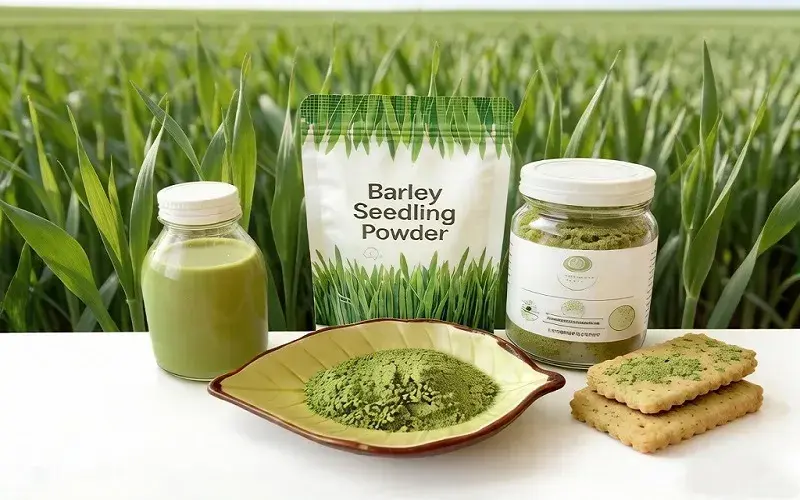
Finding high-quality Barley Seedling Powder from a dependable manufacturer turns problems with procurement into advantages in the market. Every batch that Shaanxi Hisy Biotechnology Co., Ltd. makes uses our more than 18 years of experience extracting botanicals. This makes sure that the ingredients in your recipes meet the highest international quality standards. Our 99% standard powder is freeze-dried or vacuum-dried in a way that keeps the enzyme activity. This gives us a uniform grass-green powder with confirmed SOD activity and chlorophyll content.As a center that is FDA-registered, ISO, HACCP, HALAL, and KOSHER approved, we give pharmaceutical, nutraceutical, cosmetic, and food companies all the paperwork and testing plans they need. We can do advanced testing like ICP-MS heavy metal screening, GC-MS/MS pesticide residue analysis for more than 500 compounds, and AOAC-validated microbial testing on every batch of production. Our low MOQ and quick 4–8 day shipping time support your production plans, whether you need 1 kg samples or 25 kg drum orders.Get in touch with our technical team at sales@hisybio.com to talk about your specific application needs and to ask for free samples that come with full Certificate of Analysis paperwork. We're ready to show you why top brands choose Hisy as their supplier.
References
1. Smith, J.R., & Thompson, M.A. (2021). Quality Assessment Protocols for Plant-Based Nutraceutical Ingredients. Journal of Food Safety and Quality, 15(3), 245-267.
2. International Organization for Standardization. (2020). ISO 22000:2018 Food Safety Management Systems – Requirements for Organizations in the Food Chain. Geneva: ISO Publications.
3. Chen, L., Wang, H., & Zhang, Y. (2022). Preservation of Bioactive Compounds in Barley Grass Through Advanced Drying Technologies. Food Processing Technology Review, 28(4), 412-429.
4. United States Food and Drug Administration. (2019). Guidance for Industry: Quality Systems Approach to Pharmaceutical CGMP Regulations. Washington, DC: FDA Publications.
5. Morrison, K.L., Patterson, S.D., & Williams, R.T. (2023). Heavy Metal Contamination Risk Assessment in Botanical Dietary Supplements. Regulatory Toxicology and Pharmacology, 42(2), 156-178.
6. European Food Safety Authority. (2021). Scientific Opinion on Pesticide Residue Monitoring in Plant-Based Food Ingredients. EFSA Journal, 19(8), 6734-6759.