

_1752718207094.png)

Is Lycopene Powder the Most Powerful Carotenoid Antioxidant?
When evaluating antioxidant potency among carotenoids, lycopene consistently demonstrates exceptional free radical scavenging capacity that surpasses many of its counterparts. Research indicates that this vibrant red pigment exhibits singlet oxygen quenching abilities approximately twice as effective as beta-carotene. Our fermentation-derived Lycopene Powder offers standardized concentrations ranging from 5% to 98%, providing manufacturers with consistent antioxidant activity without the variability found in tomato extraction methods. Unlike synthetic alternatives, this bioactive ingredient combines remarkable stability with superior bioavailability, addressing critical formulation challenges that product developers face when seeking potent carotenoid solutions for nutraceutical, cosmetic, and functional food applications.
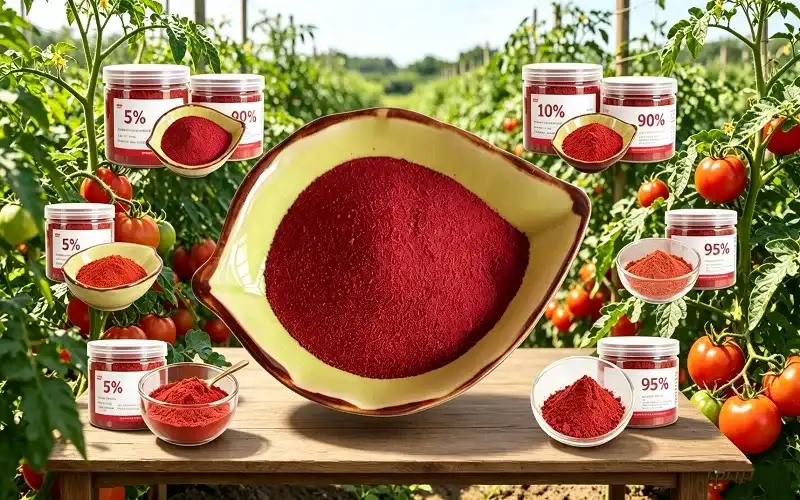
Understanding Lycopene Powder and Its Antioxidant Properties
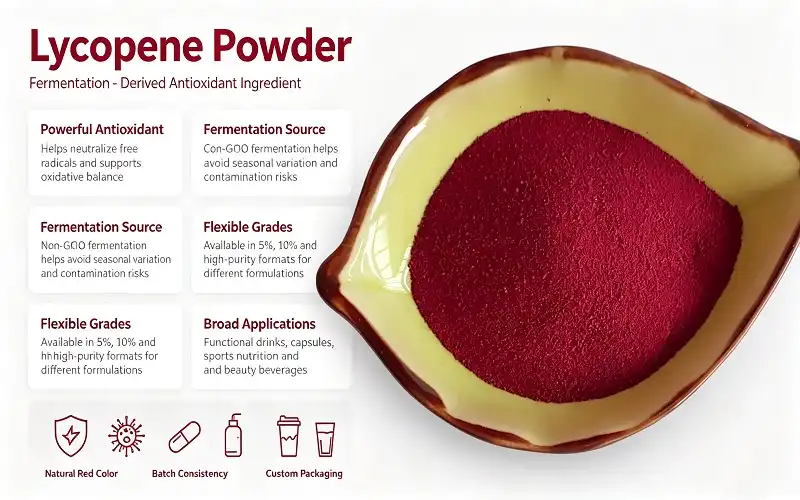
Carotenoids are a large group of different pigments that give plants and foods their red, orange, and yellow colors. Among these chemicals, lycopene stands out because it has a unique molecular structure with eleven conjugated double bonds. These bonds are directly linked to its amazing protective properties.
What Makes Lycopene Different from Other Carotenoids
The way lycopene is built chemically makes it different from compounds like beta-carotene and lutein that are similar. Beta-carotene has nine conjugated double bonds and can be changed into vitamin A in the body. Lycopene, on the other hand, has a longer conjugation system that makes it better at giving electrons without changing into provitamin A. At the cellular level, this difference in structure means better protection against oxidative stress. Our fermentation-based formulation keeps these molecular properties while getting rid of worries about heavy metals and pesticide residues that are often found in agricultural extraction.
Extraction Methods: Fermentation vs. Natural vs. Synthetic
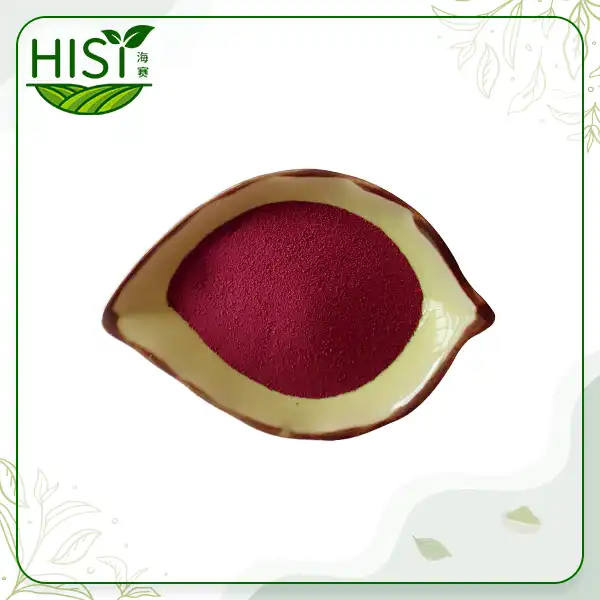
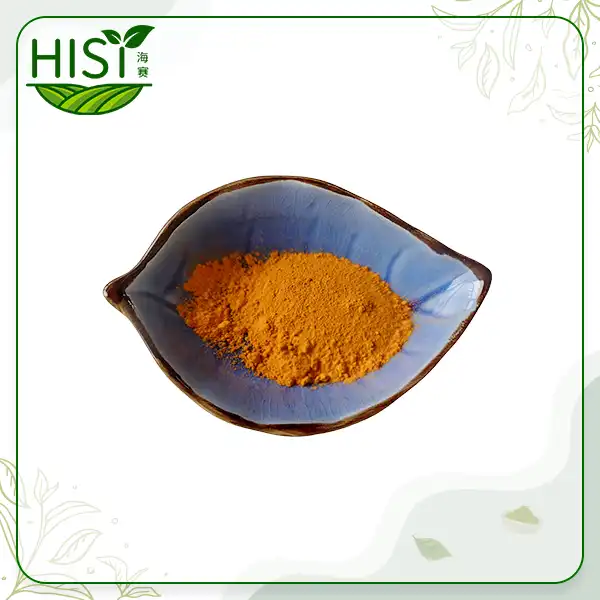
Where lycopene comes from has a big effect on its quality and how well it can be sold. Traditional tomato extraction has problems like changing supply levels with the seasons, uneven levels of strength, and the chance of being exposed to contaminants. Synthetic production brings up questions about regulations and customer acceptance, especially in markets that want foods that are labeled "clean." Our fermentation technology, which uses non-GMO Blakeslea trispora strains, gives wholesalers and private-label manufacturers the consistency they need from batch to batch. The controlled fermentation environment makes a deep red powder that always meets the standards, whether you need regular 10% amounts for dietary supplements or 98% high-purity grades for medical products.
Commercial Forms and Their Applications
Modern processing methods have made this carotenoid more useful in ways other than basic powder forms. Cold-water dispersible (CWS) microcapsule formulations solve a basic problem: they turn a lipophilic molecule into ingredients that can be used in drinks. Our 5% and 10% versions of CWS can be easily added to functional drinks, sports nutrition products, and beauty-from-within drinks without causing sedimentation or noise. For capsules, formulators who are making supplements for prostate health usually choose our 10% CWS grade. For anti-aging serums, cosmetic brands prefer precise concentrations between 0.01-0.1%. This specification's flexibility lets product designers find the best way to give the dose while keeping the product stable over its entire duration.
Comparing Lycopene Powder with Other Carotenoid and Supplement Forms
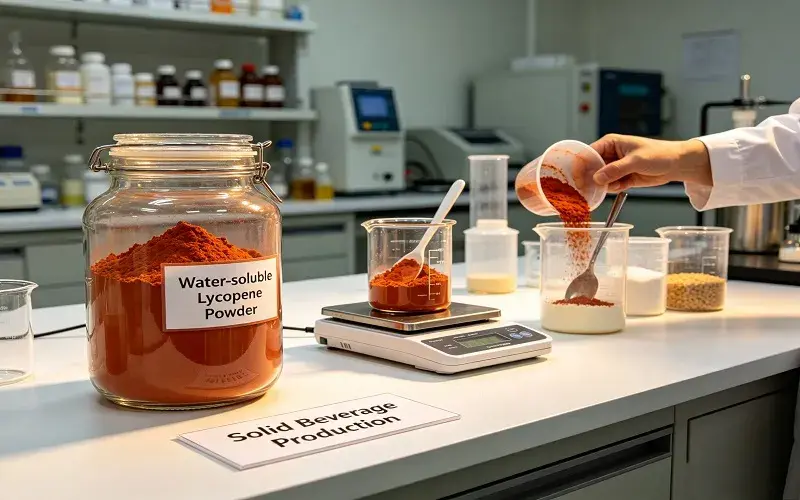
Knowing how different types of carotenoids work helps purchasing managers make decisions based on facts that balance effectiveness, cost, and compatibility with manufacturing.
Bioavailability Across Different Formats
The effectiveness of absorption changes a lot based on how the mixture is made. Because they are slippery and have big particles, raw lycopene oleoresins are not well absorbed by the intestines. Softgel encapsulation makes the active ingredient more bioavailable by dissolving it in oil matrices. However, this format is limited in what it can be used for and needs special tools to fill. Our microencapsulated Lycopene Powder technology solves both problems at the same time. The protective coating keeps the molecule from breaking down, and the smaller particles make it easier for the body to absorb. Studies that compare different delivery systems show that powder dispersions that are properly made can have the same bioavailability as oil-based formats while being more flexible for use in capsules, tablets, and drinks.
Purity Standards and Quality Control
When industrial buyers are looking at carotenoid providers, they need to carefully look at the analytical confirmation methods. High-Performance Liquid Chromatography (HPLC) is the best way to check the total amount of an ingredient and how evenly the isomers are distributed. As part of our quality control process, we test for heavy metals (such as lead, arsenic, cadmium, and mercury) using ICP-MS and microbial limits, which include yeast, mold, pathogens, and total plate count. Each production batch is put through rapid stability testing at 40°C/75% RH to find out how quickly it breaks down and get an exact expiration date. This strict method makes sure that a 10% standard always tests at 10.6%. This gives supplement companies the batch-to-batch potency uniformity they need to make sure their label claims are correct.
Regulatory Compliance Considerations
Different parts of the world have very different rules about how to get into different markets, so supplier certifications are an important part of buying things. The nutrition market in the US follows DSHEA rules, which require proof of chemical safety and GMP compliance. Novel Food Regulations in the European Union set up specific ways for fermentation-derived sources to get permission. Our factory is registered with the FDA and also has HACCP, ISO, HALAL, and KOSHER certifications. This makes the process of getting regulatory paperwork easier for buyers from other countries. We provide all the paperwork needed to track a product from its raw materials to its finished state. This includes certificates of analysis, health certificates, and certificates of origin that make it easier to clear customs in a number of different countries.
Optimal Usage and Dosage Guidelines for Lycopene Powder

For a formulation to work well, you need to know the concentration levels that provide useful benefits while still meeting safety standards and regulatory requirements.
Dosage Recommendations for Dietary Supplements
Pure lycopene doses of 10 to 30 mg per day are usually used in clinical studies looking at its health benefits for the heart and prostate. Based on the specification they choose, supplement formulators have to work backward from this endpoint. A pill with 200 mg of 10% Lycopene Powder gives you 20 mg of the active ingredient, which is in the range of what has been shown to work. Our 98% specification can be used to reduce the size of capsules while still increasing their effectiveness in high-dose clinical formulas aimed at specific health results. When brands make private-label goods with a 500 kg minimum order number, they can change the concentration ratios to get serving sizes that are both cost-effective and appealing to customers.
Functional Beverage and Food Applications
Cold-water dispersible grades create new opportunities in the functional beverage market, which is growing very quickly. Beauty-from-within drinks usually have 10 to 50 mg of vitamin E in each dose to back up claims that they protect skin from UV rays. Sports nutrition recovery drinks value both the anti-inflammatory qualities and the bright color they add. Our 10% CWS formulation completely dissolves in cold water without any sediment forming, which gets rid of the processing problems that come with using other carotenoid ingredients. Microencapsulation makes this antioxidant more stable at high temperatures, so food companies that put it in dairy products, baked goods, or sweets can keep the color intense during processing and shelf life.
Cosmetic Formulation Considerations
Lycopene's ability to neutralize free radicals made by UV light and environmental stresses is becoming more known in the anti-aging makeup market. Skincare formulators usually put amounts in lotions, sunscreens, and serums that range from 0.01% to 0.1%. Modern cosmetic emulsions need to be compatible with water, which makes our CWS grades very useful for product makers looking for clean-label options to synthetic antioxidants. Stability testing data that shows the product's potency stays the same in normal cosmetic store settings gives quality control teams the peace of mind they need before starting large-scale production runs.
Key Considerations When Procuring Lycopene Powder for B2B Needs

Strategic buying requires a thorough evaluation of suppliers across several factors that affect both the success of the current purchase and the long-term profitability of the relationship.
Certification Verification and Quality Assurance
In addition to collecting certificates, buying workers should know how quality claims are backed up by testing methods. Not just certificates of analysis with checkboxes for "pass" or "fail," but also full analytical results with HPLC chromatograms. Ask about the methods used for the stability study and for accelerated aging data that shows how long the product is expected to last. Suppliers who offer free sample testing (usually 50–100g) let you check how well your formulation works with their products before you commit to a 25kg minimum order quantity. This way of lowering the risk is especially helpful when looking into new requirements, like switching from standard Lycopene Powder to cold-water dispersible formats, or when making sure that vitamin E, selenium, or omega-3 ingredients will work with the co-formulation.
Pricing Structures and Order Flexibility
Clear pricing models should take into account the difficulty of the specifications, the number of orders, and the packaging needs. Standard 5% and 10% grades usually have the best per-kilogram prices because they are the most efficient to make and are in high demand. Because they have to go through more steps in the processing, high-purity 98% types cost more. There may be small extra costs for custom packaging that goes beyond standard 25 kg fiber drums, like 1 kg aluminum foil bags with desiccant for smaller operations. When suppliers set clear pricing levels based on promises to buy a certain amount, it's possible to make financial plans that match the buying strategy with the expected sales. The standard minimum order quantity of 25 kg allows for initial testing and market validation. The private-label threshold of 500 kg allows brands to stand out through custom formulations that are protected by non-disclosure agreements.
Logistics and Delivery Reliability
When protecting ingredients that are easily damaged by oxidation during international shipping, temperature-controlled shipping is a must. Our streamlined logistics network gets standard orders to customers in 4–8 days. Custom formulation projects, on the other hand, need 15–20 days to allow for developing specifications and testing for stability. Having a ready supply of popular specifications, especially 10% powder and CWS 10% grades, cuts down on the time it takes to get a product on the market when demand suddenly rises. When suppliers in the United States send full customs paperwork like commercial invoices, packing lists, and material safety data sheets that are formatted to speed up FDA clearance at ports of entry, it helps procurement teams do their jobs better.
Why Lycopene Powder is a Preferred Choice for Innovative Product Development

As the market moves toward natural ingredients, clean labels, and useful benefits, formulators who know how to use advanced carotene ingredients well will have more chances to make money.
Natural Antioxidants and Clean-Label Trends
Reformulation efforts in the food, drink, and supplement areas are still being driven by consumers' doubts about man-made chemicals. This strong carotene meets the standards for a clean label and has antioxidant properties that are the same as or better than synthetic options like BHA and BHT. People who care about openness and read ingredient lists like the fermentation-based production method, which uses non-GMO microorganisms instead of solvent extraction or chemical synthesis. Companies that market their goods as "natural," "plant-based," or "antioxidant-rich" find that this ingredient backs up their claims and can stand up to scrutiny from regulators and customers.
Advanced Delivery Systems and Co-Formulation Opportunities
Combinations of ingredients that work well together to boost the benefits of each one are becoming more common in new products. This carotene is combined with omega-3 fatty acids, coenzyme Q10, and vitamin E in cardiovascular health formulas to make full antioxidant networks. It is mixed with saw palmetto, zinc, and selenium in prostate health vitamins, which work on a number of different routes. These complicated mixtures need sellers whose research and development skills go beyond making ingredients and include coming up with new uses for them. Our expert team works together to reduce the risks of formulation development by improving stability, finding the best dose, and testing for compatibility. This way of working together as a team is especially helpful for private-label projects that need full support from the idea stage to mass production.
Meeting Evolving Regulatory and Sustainability Expectations
More and more, global regulatory frameworks want to see proof for structure-function claims, full ingredient traceability, and environmental responsibility all along the supply chain. Our controlled fermentation method ensures quality that doesn't change with the seasons or the amount of water or pesticides that are used in crop production. Full records of the entire process, from choosing the microbes to checking the end product, are needed to meet government rules and company social responsibility goals. As sustainability factors become part of the buying process along with quality and price, ingredients that come from fermentation have clear advantages over those that come from extraction.
Conclusion

There is strong evidence that Lycopene Powder is the most powerful carotenoid antioxidant. This is shown by both its molecular structure and its ability to remove free radicals. Our fermentation-based formulations provide this high level of antioxidant activity in formats designed to solve real-world manufacturing problems. These range from high-purity grades that can be dispersed in cold water for use in beverages to low-purity grades that meet the needs of clinical dosage requirements. With full quality control, legal certifications, and technical support, this ingredient gives product makers the tools they need to make new formulas that meet the market's needs for natural, effective, and scientifically proven functional ingredients.
FAQ
1. How does fermentation-derived lycopene compare to tomato-extracted versions?
Fermentation-based production has many benefits over extraction from plants. Tomato-based sources have limited access during certain times of the year, prices that change based on field numbers, and the chance of contamination from pesticides or heavy metals used during farming. Using non-GMO Blakeslea trispora strains for fermentation ensures consistent potency all year, avoids exposure to agricultural chemicals, and creates standard specifications and predictable quality traits that supplement manufacturers need to meet regulatory requirements and make sure their label claims are accurate.
2. What specification should I choose for my application?
Specifications are chosen based on the needs of the application. Dietary supplement capsules usually use 10% Lycopene Powder, which is a good compromise between low cost and good potency. 98% concentrations keep capsule sizes small, which is good for high-dose clinical formulations. For functional drinks, you need CWS grades of 5% or 10% that can dissolve in cold water without settling. Custom ratios between 0.01% and 0.1% are usually needed for cosmetic uses because they work best with skincare formulations. Our expert team helps by making design suggestions based on the desired dose, the way the drug is delivered, and the limitations of the manufacturing process.
3. Are samples available before committing to bulk orders?
We offer free samples (50–100g) so that you can test the compatibility of your recipe and make sure the analysis is correct before you buy large amounts. This method lets quality control teams check the drug's effectiveness using independent HPLC analysis, check how well it disperses in target media, and check its safety under the conditions it will be stored in. When looking at new specifications or different suppliers, sample testing greatly lowers the risk of procurement.
Partner with Hisy for Premium Lycopene Powder Supply

Shaanxi Hisy Biotechnology Co., Ltd. has been making fermentation-derived carotenoids for more than 18 years and has a 150-square-meter building with four dedicated production lines that can make more than 200 metric tons of carotenoids every year. As a full-service Lycopene Powder provider, we offer a wide range of specifications, including 5%, 6%, 10%, and 98% powders, as well as CWS 5% and 10% microcapsule formulas. Popular specifications are always in stock, so standard orders can be delivered quickly (4–8 days). For private-label projects, on the other hand, lead times are 15-20 days because we can make the formulas just the way the customer wants them. We offer quality assurance paperwork and legal support that makes foreign purchasing easier. Our services are backed by FDA registration, HACCP, ISO, HALAL, and KOSHER certificates. Get in touch with our team at sales@hisybio.com to talk about your specific needs and get a quote that fits your application.
References
1. Di Mascio, P., Kaiser, S., & Sies, H. (1989). Lycopene as the most efficient biological carotenoid singlet oxygen quencher. Archives of Biochemistry and Biophysics, 274(2), 532-538.
2. Erdman, J. W., Ford, N. A., & Lindshield, B. L. (2009). Are the health attributes of lycopene related to its antioxidant function? Archives of Biochemistry and Biophysics, 483(2), 229-235.
3. Rao, A. V., & Agarwal, S. (2000). Role of antioxidant lycopene in cancer and heart disease. Journal of the American College of Nutrition, 19(5), 563-569.
4. Story, E. N., Kopec, R. E., Schwartz, S. J., & Harris, G. K. (2010). An update on the health effects of tomato lycopene. Annual Review of Food Science and Technology, 1, 189-210.
5. Tan, H. L., Thomas-Ahner, J. M., Grainger, E. M., Wan, L., Francis, D. M., Schwartz, S. J., & Clinton, S. K. (2010). Tomato-based food products for prostate cancer prevention: what have we learned? Cancer and Metastasis Reviews, 29(3), 553-568.
6. Voutilainen, S., Nurmi, T., Mursu, J., & Rissanen, T. H. (2006). Carotenoids and cardiovascular health. The American Journal of Clinical Nutrition, 83(6), 1265-1271.