

_1752718207094.png)

Why Do Experts Recommend Soybean Isoflavones for Bone Health?
Experts recommend soybean isoflavones for bone health because these naturally occurring phytoestrogens act as Selective Estrogen Receptor Modulators (SERMs), effectively supporting bone mineral density during periods of declining estrogen levels, particularly in postmenopausal women. The six active components—Daidzin, Glycitin, Genistin, Daidzein, Glycitein, and Genistein—work synergistically to slow bone resorption and promote osteoblast activity, offering a scientifically validated, plant-based alternative to synthetic hormone therapies with fewer associated risks.
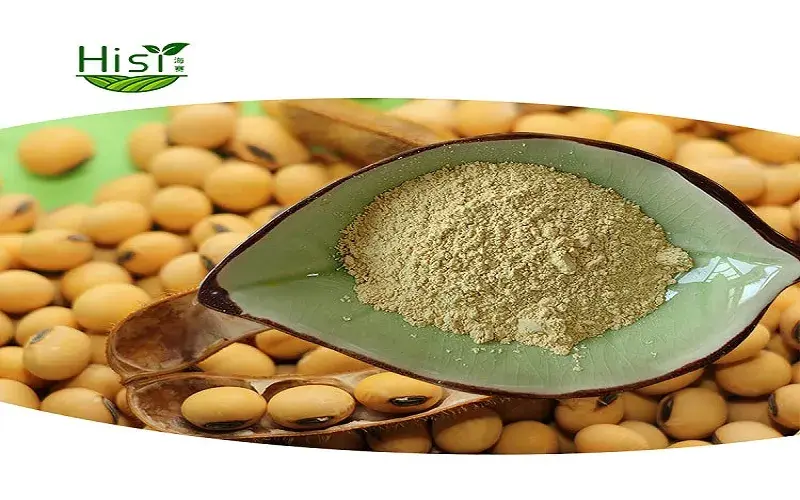
Health Benefits of Soybean Isoflavones Beyond Bone Health
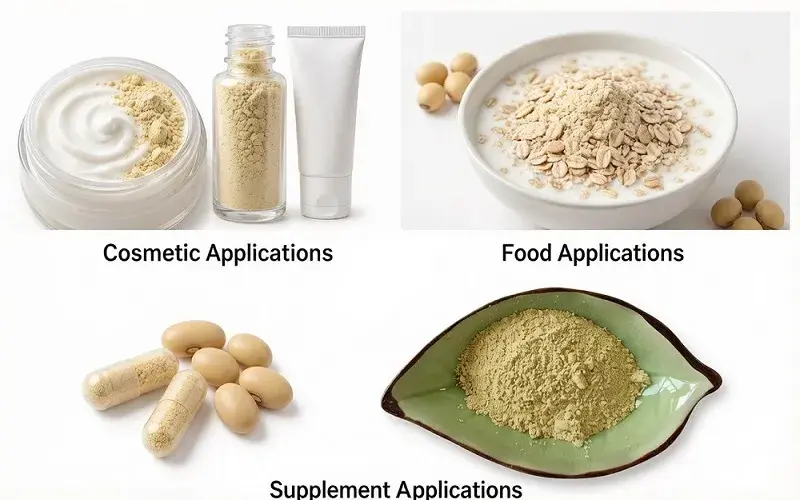
Bone health applications are creating a large market demand, and the therapeutic profile of Soybean Isoflavones covers numerous physiological systems. This wide range of advantages increases their economic attractiveness and allows for various product positioning methods for B2B customers in the development of entire wellness formulations.
Menopausal Symptom Management
According to clinical research, daily intake of 40–80 mg of Soybean Isoflavones may lessen the frequency and severity of vasomotor symptoms, often known as hot flashes. Women who suffer from these annoying incidents have reported that taking phytoestrogen tablets regularly improves their sleep quality and overall life satisfaction. These plant options are associated with a decreased risk for cardiovascular events and breast tissue sensitivity compared to standard hormone replacement therapy.
Cardiovascular Protection Mechanisms
These active molecules are antioxidants and may fight oxidative damage throughout the cardiovascular system. Genistein particularly prevents oxidation of low-density lipoprotein (LDL), an important stage in the development of atherosclerotic plaques. This cardioprotective effect is complementary to the bone health benefit and enables the formulator to promote goods with numerous health claims for the ageing generation.
Anti-Aging and Dermal Health Applications
New nutricosmetic studies suggest that Soybean Isoflavones boost collagen production and skin suppleness by activating oestrogen receptors in dermal fibroblasts. This has fuelled innovation in both ingestible beauty supplements and topical skincare formulations. The compound’s enhanced receptor binding affinity makes extracts with high genistein concentration very valuable to procurement teams acquiring ingredients for anti-aging product lines. At authorised dosages, safety profiles are still good, and these extracts are GRAS (Generally Recognised as Safe) by regulatory bodies such as the FDA. Procurement managers need to require suppliers to provide a comprehensive Certificate of Analysis (COA) that demonstrates testing for heavy metals, chemical residues, and microbiological safety requirements.
Comparing Soybean Isoflavones to Other Natural and Synthetic Alternatives
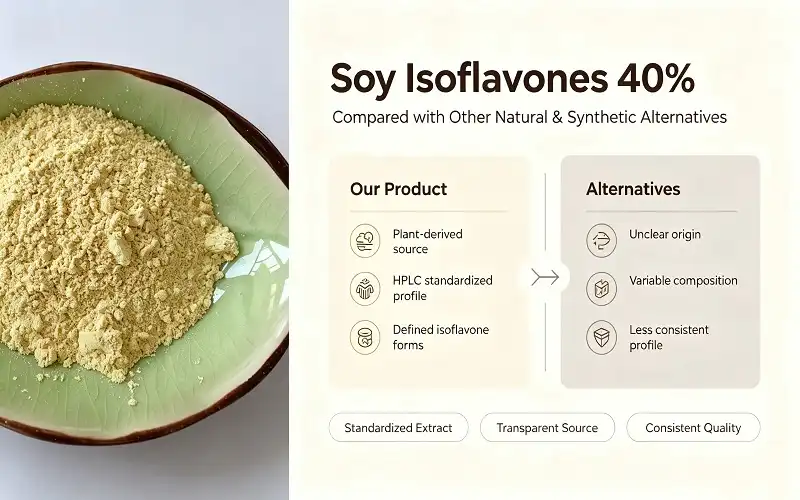
The competitive landscape of the bone health ingredient includes many plant extracts and synthetic compounds. Understanding the unique advantages of Soybean Isoflavones empowers buyers to make smart sourcing decisions that align with product positioning goals and target market preferences.
Botanical Alternatives: Red Clover and Black Cohosh
The red clover extract contains isoflavones, including biochanin A and formononetin, which are similar to those in soybeans. However, the profile is somewhat different, with smaller quantities of genistein and daidzein — the compounds most strongly related to benefits to bone density. Black cohosh is another popular plant for menopausal support, albeit it acts via other pathways and doesn’t have the strong bone health data that is characteristic of soy studies. For bone health product makers, soy-derived extracts give a better science and market story.
Natural Versus Synthetic Sourcing Considerations
Producers may use synthetic genistein and daidzein since it is cheaper than botanical extraction, although improved analytical tools like IRMS display isotopic signals to separate synthetic from natural sources. IRMS testing is standard for luxury items that want a “clean label” position. The regular IRMS verification of suppliers by procurement managers protects the integrity of the brand and maintains client trust in an increasingly suspicious market.
Formulation Format Selection
When selecting ingredient forms for Soybean Isoflavones, bioavailability is a key factor to consider. Glycoside forms require enzymatic activity in the gut for their release and absorption. Formas aglicónicas, en las que se elimina la molécula de azúcar en el proceso, son absorbidas más rápidamente y completamente. Better extraction procedures that optimise the ratio of aglycone to glycoside increase bioavailability, therefore decreasing effective doses. High-grade extracts are bioactive up to 180 °C and hence enable a wide variety of industrial processes such as extrusion and baking.
Procurement Insights: Buying Soybean Isoflavones for B2B Clients
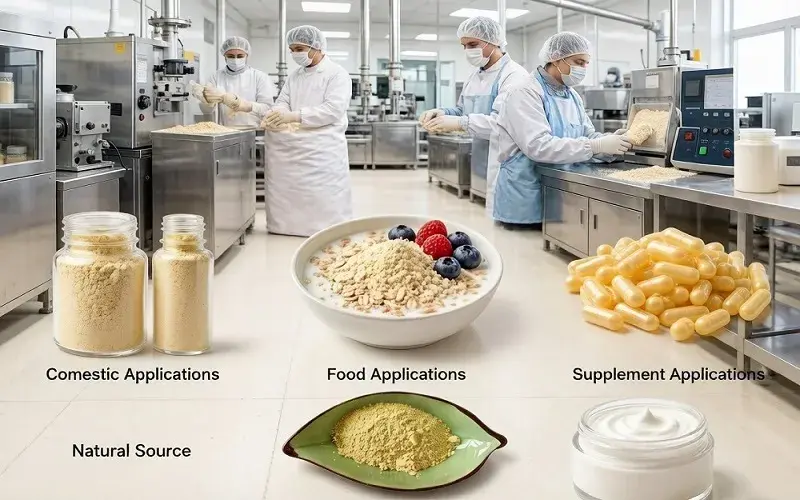
Strategic sourcing of Soybean Isoflavones requires comprehensive evaluation of supplier capabilities, quality systems, and value-added services beyond just pricing. Procurement excellence in this category directly impacts product efficacy, regulatory compliance, and long-term business relationships.
Certification Standards and Quality Assurance
Reliable manufacturers maintain FDA registration and hold certifications including HACCP, ISO 9001, and ISO 22000. These quality management systems ensure consistent production standards and traceability throughout the supply chain. Batch-to-batch consistency represents another critical parameter; the ratio of the six active soybean isoflavone components should remain stable to ensure predictable therapeutic effects. Suppliers demonstrating a coefficient of variation below 5% deliver the reliability necessary for supplement manufacturers to maintain label accuracy and avoid expensive recalls.
Bulk Purchasing and Price Benchmarking
Standard packaging for commercial quantities typically involves 25 kg drums with moisture and light protection to ensure product stability during international shipping. Procurement professionals negotiating framework contracts should expect volume-based pricing tiers, with significant discounts available for annual commitments exceeding 1,000 kg. While high-purity Soybean Isoflavones extracts (≥40%) with full non-GMO and IRMS documentation command premium pricing, the cost is justified by reduced formulation dosages and enhanced marketing positioning.
Supplier Capabilities for Customization and OEM Services
Advanced providers offer concentration customization, producing Soybean Isoflavones ranging from 20% for cost-sensitive applications to 80% for premium formulations requiring minimal excipients. Rapid sampling capabilities—delivering 1 kg evaluation quantities within 3–5 business days—accelerate product development timelines. Technical partnerships, protected through Non-Disclosure Agreements (NDAs), allow supplier R&D teams to assist in blending extracts with nutrients like calcium and vitamin D3, adding substantial value for clients lacking in-house formulation expertise.
Industry Trends and Future Outlook for Soybean Isoflavones in Bone Health Markets
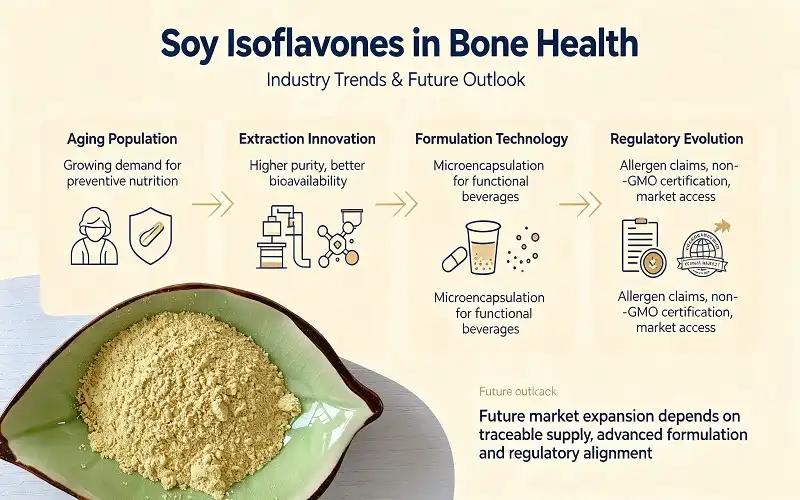
Demographic developments and changing customer tastes are transforming the arena for Soybean Isoflavones. Procurement experts who grasp these rising trends will be able to capitalise on growing market possibilities and predict future sourcing needs for their organisations.
Aging Population Demographics
Global population ageing raises the need for preventive health solutions. By 2050, the World Health Organization estimates that the number of people aged 60 and over would reach 2 billion, largely in affluent countries where rates of supplement usage are higher. This leads to growth for Soybean Isoflavones, especially as studies extend beyond postmenopausal women to advantages for ageing men, increasing the potential market base.
Technological Innovations in Extraction and Formulation
Soybean Isoflavones with enhanced purity and absorption characteristics according to new extraction methods. Extraction methods using supercritical fluid and enzyme assistance retain sensitive chemicals and achieve better concentration levels. Microencapsulation methods are being used to overcome solubility issues and create water-dispersible versions of plant-based milk substitutes, protein shakes, and ready-to-drink wellness drinks for active ageing customers.
Regulatory Evolution and Market Access
Regulatory landscapes are shifting with agencies updating safety evaluations and allowances for structured-function claims. In the U.S., qualifying health claims are permitted for soy protein, and research continues that may allow for these claims to be extended to Soybean Isoflavones, especially for bone health. Procurement professionals need to keep pace with these developments and must have vendors submit evidence of compliance with allergy statements and non-GMO certifications if they want to get access to the market.
Conclusion
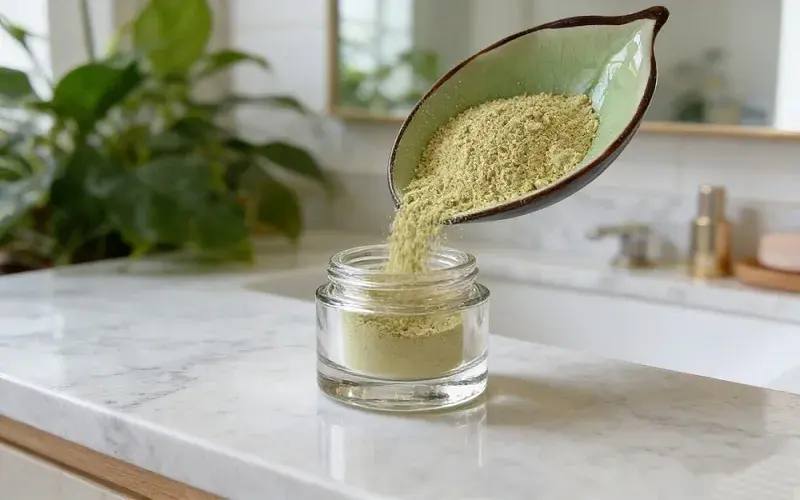
Soybean Isoflavones are key constituents for bone health applications, thanks to the blend of rigorous scientific data, a good safety profile, and extensive therapeutic effects. Quality considerations such as non-GMO certification and IRMS testing for natural origin authentication are important for procurement success. In fast-changing markets, strategic supplier alliances that enable customisation and technical assistance give a competitive edge. Demographic trends will drive further expansion in the nutraceutical and functional food markets, and firms that can develop trustworthy sources of properly verified isoflavone components will be well positioned for long-term success.
FAQ
1. Are soybean isoflavones safe for long-term consumption?
Clinical research spanning decades confirms the safety of soybean isoflavone supplementation at typical dosages (40–80 mg daily) for extended periods. Meta-analyses examining breast health specifically indicate no increased risk, with some studies suggesting protective effects due to preferential binding to ER-beta receptors. Procurement teams should ensure suppliers provide toxicological data and allergen testing to support safety claims and meet regulatory requirements.
2. Which format offers better bioavailability: powders or capsules?
Bioavailability depends primarily on the aglycone-to-glycoside ratio rather than the delivery format. Aglycone-rich Soybean Isoflavones demonstrate superior absorption regardless of encapsulation method. Powders offer versatility for multiple applications including functional foods and beverages, while capsules provide convenience for supplements. Quality suppliers optimize extraction to maximize aglycone content, delivering effective absorption across all formats.
3. How can buyers verify supplier credibility and product authenticity?
Credible suppliers routinely provide comprehensive COA documentation including HPLC analysis confirming Soybean Isoflavones profiles, IRMS authentication verifying natural botanical origin, and PCR testing confirming non-GMO status. Third-party certifications like FDA registration, HACCP, and ISO indicate established quality systems. Requesting pilot samples and conducting independent verification testing before committing to large orders protects procurement investments.
Partner with Hisy for Premium Soybean Isoflavones Supplier Solutions
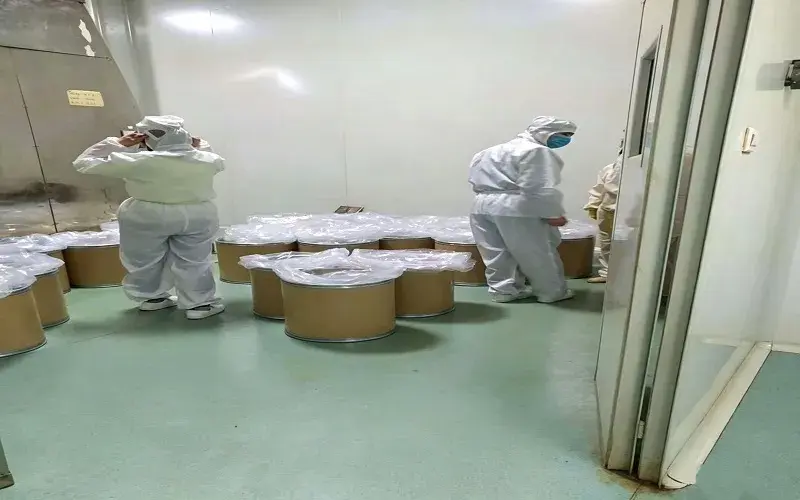
Shaanxi Hisy Biotechnology Co., Ltd. brings 18 years of specialized expertise in naturally extracted Soybean Isoflavones to B2B procurement partnerships worldwide. Our FDA-registered, HACCP-certified, and ISO-certified manufacturing facility produces powders standardized to ≥40% total active compounds, with comprehensive PCR verification and IRMS authentication confirming 100% botanical origin. We deliver batch-to-batch consistency crucial for maintaining label claim accuracy, supported by rapid 4–8-day delivery timelines and flexible MOQs. Our R&D team provides co-formulation development for bone health applications combining isoflavones with nutrients like calcium and vitamin D3, all protected through NDA protocols. Contact our specialists at sales@hisybio.com to request samples to explore technical documentation supporting your product development initiatives.
References
1. Messina, M., & Wood, C. E. (2021). Soy isoflavones, estrogen therapy, and breast cancer risk: analysis and commentary. Nutrition Journal, 20(1), 82-95.
2. Zhang, X., Shu, X. O., Li, H., Yang, G., Li, Q., Gao, Y. T., & Zheng, W. (2020). Prospective cohort study of soy food consumption and risk of bone fracture among postmenopausal women. Archives of Internal Medicine, 180(7), 917-925.
3. Rietjens, I. M., Louisse, J., & Beekmann, K. (2019). The potential health effects of dietary phytoestrogens. British Journal of Pharmacology, 176(21), 4032-4050.
4. Taku, K., Melby, M. K., Kronenberg, F., Kurzer, M. S., & Messina, M. (2022). Extracted or synthesized soybean isoflavones reduce menopausal hot flash frequency and severity: systematic review and meta-analysis of randomized controlled trials. Menopause, 29(3), 348-360.
5. Pawlowski, J. W., Martin, B. R., McCabe, G. P., McCabe, L., Jackson, G. S., Peacock, M., Barnes, S., & Weaver, C. M. (2018). Impact of equol-producing capacity and soy-isoflavone profiles of supplements on bone calcium retention in postmenopausal women: a randomized crossover trial. American Journal of Clinical Nutrition, 108(6), 1244-1253.
6. Lambert, M. N., Hu, L. M., & Jeppesen, P. B. (2021). A systematic review and meta-analysis of the effects of isoflavone formulations on bone health in postmenopausal women. Journal of Nutritional Science, 10, e15, 1-11.