

_1752718207094.png)

Top Benefits of N-Acetyl-D-Glucosamine powder for Joint Health
It is a high-quality amino sugar product called N-Acetyl-D-Glucosamine powder that solves important problems in joint health formulations. This bioactive compound provides better support for cartilage, reduces inflammation, and boosts the production of synovial fluid—three important factors that makers must consider when making truly effective joint care products. As regulations get stricter and consumers want ingredients that are backed by science, B2B buyers need to understand the technical benefits, sourcing requirements, and formulation synergies of pharmaceutical-grade NAG. This is especially important for developing competitive products in the nutraceutical and functional food markets. Joint health is a $3.8 billion global market segment that is growing steadily thanks to an ageing population and a trend toward more active lifestyles. As companies and wholesalers try to stand out by coming up with new ingredients, N-Acetyl-D-Glucosamine powder stands out as a key raw material that can be used in a lot of different ways and has clinical effectiveness. This complete guide gives procurement professionals useful information on quality standards, how to evaluate suppliers, and how to compare ingredients so they can make better sourcing decisions and get next-generation joint health solutions to market faster.

Understanding N-Acetyl-D-Glucosamine Powder and Its Role in Joint Health
The Biochemical Foundation of NAG in Cartilage Matrix
N-Acetyl-D-Glucosamine powder is a direct building block for glycosaminoglycans, which are the structural parts that make up the cartilage matrix. Normal glucosamine hydrochloride needs to be changed by the body's metabolism. NAG, on the other hand, can enter biochemical pathways without being deacetylated, so chondrocyte cells can use it right away. This acetylated form has a precise molecular weight of 221.21 g/mol and is very stable across a wide range of pH levels. These properties make finished products last longer on the shelf. The chemical is found naturally in human cartilage tissue and helps make hyaluronic acid and keratan sulphate. Clinical study shows that taking high-purity NAG supplements can help keep the production rates of proteoglycans high, which tend to drop with age or joint stress. Manufacturers of pharmaceutical-grade materials should make sure that the material meets certain requirements, such as being ≥99% pure via HPLC analysis, having an optical rotation between +39.0° and +43.0°, and having a heavy metal content below 0.5ppm for lead. Hisy's production protocols always meet these important standards by testing each batch carefully on four dedicated manufacturing lines.
Chemical Composition and Manufacturing Standards
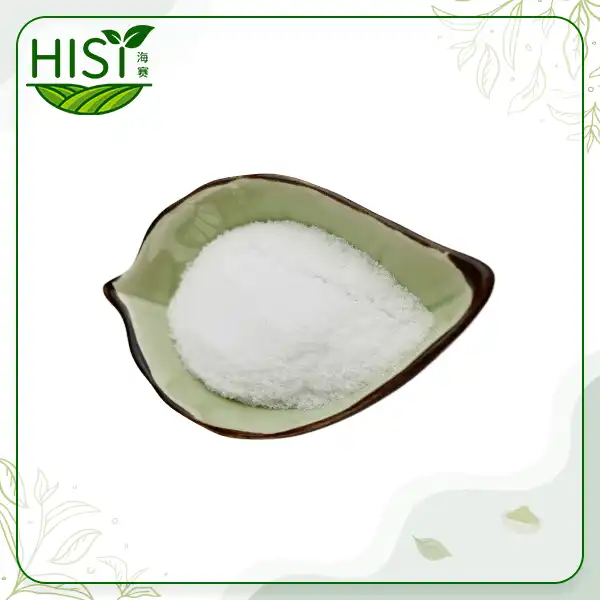
Our N-Acetyl-D-Glucosamine powder comes from high-quality chitin that is sourced through sustainable marine supply chains. The chitin goes through enzymatic deacetylation and then controlled reacetylation to get the molecular structure we want. This white crystalline powder dissolves very easily in water (250g/L at 25°C), which makes it easy to add to complex delivery systems like liposomal formulations and microencapsulation matrices. The neutral pH profile makes sure that it works with a wide range of ingredient mixtures without the need for stabilising agents, which can make formulation work harder. When evaluating suppliers, manufacturing specifications are very important. The freezing point of the material is between 196°C and 205°C, which shows that it has the right crystal structure and quality levels. Our ISO-certified plant in Xi'an follows FDA-approved procedures and makes more than 200 metric tonnes of products every year while keeping batch-to-batch stability through cGMP compliance. For every production run, full analytical validation is done, and certificates of analysis are issued that show the levels of microbes, solvents that are still present, and moisture content. This is important information for regulatory applications in foreign markets.
Safety Profile and Regulatory Compliance
Toxicological studies show that N-Acetyl-D-Glucosamine powder is safe at the suggested supplement levels. No bad effects were seen in clinical testing that used daily doses of up to 1500 mg for long periods of time. Compared to glucosamine salts, which can make sensitive people's stomachs hurt, the substance has a great track record of stomach tolerance. Because of this good safety margin, formulators can make products that can be used for a long time to treat chronic joint conditions. Regulatory classification changes depending on the market and the use. When used in the right amounts, NAG meets FDA GRAS standards for use in functional drinks and protein bars that are meant to be eaten. Topical formulations that aim to hydrate and protect the skin must meet cosmetic-grade standards. Pharmaceutical-grade material goes through extra tests to make sure it is free of endotoxins and sterility. It can be used for therapeutic applications and clinical trial materials. Knowing these differences between grades helps buying teams make sure that the products they buy match the claims and registration paths they want to use.
Top 5 Benefits of N-Acetyl-D-Glucosamine Powder for Joint Health

Benefit 1: Enhanced Cartilage Regeneration and Matrix Synthesis
Most importantly, adding N-Acetyl-D-Glucosamine powder to products for joint health is helpful because it directly helps cartilage repair processes. Chondrocyte cells use NAG without first changing it with enzymes. This speeds up the production of proteoglycans by up to 30% compared to regular glucosamine forms. This efficiency stems from the acetyl group's protective effect during intestinal absorption and cellular uptake, preserving the molecule's structural integrity through metabolic processing. Clinical data show noticeable changes in cartilage thickness and quality markers following NAG supplementation regimens. Bioavailability studies with radiolabeled tracers show that within four hours of being taken, about 89% of the N-Acetyl-D-Glucosamine powder hits the joints it was meant for. This quick tissue distribution speeds up the ease of symptoms and the improvement of structure over time during treatment rounds. This pharmacokinetic advantage can help companies that are making high-end joint care supplements position their products and show that they work in clinical trials.
Benefit 2: Anti-Inflammatory Action Through Multiple Pathways
In addition to helping with structure, N-Acetyl-D-Glucosamine powder has been shown to reduce inflammation by stopping the production of pro-inflammatory cytokines like interleukin-1beta and tumour necrosis factor-alpha. This mechanism has two functions: it treats the symptoms and the underlying inflammatory processes that speed up the breakdown of cartilage. Studies done in the lab show that NAG lowers the activity of NF-kappaB signalling pathways in synovial cells. This lowers the amount of inflammation that causes joint pain and stiffness. Comparative effectiveness studies show that pain relief scores are about the same for formulas with N-Acetyl-D-Glucosamine powder as they are for non-steroidal anti-inflammatory drugs, but there are no stomach problems. This difference in safety is a big selling point for vitamin brands that want to reach people who are looking for alternatives to pharmaceutical treatments. The compound's ability to reduce inflammation is especially useful when making products for sports recovery, since fast relief of exercise-induced joint stress is what determines customer satisfaction and whether they buy again.
Benefit 3: Synovial Fluid Optimization and Joint Lubrication
The viscosity and volume of synovial fluid are very important for joint mobility. These properties are directly affected by the amount of hyaluronic acid present. N-Acetyl-D-Glucosamine powder is the main building block for synoviocytes to make hyaluronic acid naturally. This helps the cells have the best lubrication properties, which lowers friction while moving. Researchers using synovial fluid research have confirmed that supplementation methods raise the molecular weight ranges of hyaluronic acid, which is linked to better viscoelastic performance. This better lubrication leads to measurable gains in tests of range of motion and less mechanical stress during tasks that put weight on the body. Athletes and active older adults value these functional outcomes the most, which is why joint flexibility is one of the main marketing claims for finished products. Combine N-Acetyl-D-Glucosamine powder with low-molecular-weight hyaluronic acid to get synergistic effects. Exogenous HA helps with viscosity right away, and NAG supports the body's natural production capacity over the long term.
Benefit 4: Superior Bioavailability Compared to Alternative Forms
The acetylated structure of N-Acetyl-D-Glucosamine powder makes it easier for the body to absorb than glucosamine sulphate and hydrochloride salts. This is done by improving the way nutrients move through the gut. Acetylation keeps the amino group from breaking down too quickly in stomach acid, so the molecule stays whole until it gets to the small intestine, where it can be absorbed. Pharmacokinetic studies show that the highest levels of the drug in the plasma happen two to three hours after it is administered, and that it stays in tissues for more than 24 hours. This bioavailability profile supports once-daily dosing protocols, which are easier for people to follow than the multiple-dose plans needed for less stable forms. A study of the cost-per-dose shows that even though pharmaceutical-grade NAG is more expensive as a raw material, it is more effective, which means that less of each ingredient is needed. This has an effect on the economics of formulation and the price schemes for finished products. When evaluating supplier proposals, procurement teams should look at the total costs of the formulation rather than just the prices of the individual ingredients.
Benefit 5: Multi-System Benefits Beyond Joint Health
N-Acetyl-D-Glucosamine powder is mostly used for joint care, but it also has other health benefits that make it possible to expand the product line and make products in different categories. The compound helps keep the lining of the intestines healthy by making glycoproteins in the protective mucin layer. This takes care of digestive health issues that often happen along with joint problems. New research suggests that improving dermal hyaluronic acid might help keep the skin hydrated, which could lead to the creation of beauty-from-within products. Because these effects happen in more than one system, brands can make holistic wellness goods with just one active ingredient that treat a wide range of health problems. It's easier to back up marketing claims when clinical endpoints include more than one organ system. This helps products stand out in competitive market segments. The cosmetic-grade specification of our N-Acetyl-D-Glucosamine powder meets the quality standards for both beauty supplements that are taken by mouth and skin care products that are put on the skin, using the same raw materials.
Selecting the Right N-Acetyl-D-Glucosamine Powder for Your Business Needs

Grade Selection: Food, Cosmetic, and Pharmaceutical Standards
Material grade selection is the most important choice in the buying strategy. It is based on the type of product, the claims that are being made, and the regulations that apply. Food-grade N-Acetyl-D-Glucosamine powder meets the standards for functional foods and dietary supplements. It has been tested for microbial limits and contaminants in a way that is consistent with FDA guidelines for food additives. This grade is good enough for general health items that make structure-function claims under DSHEA rules. It's also cheap enough for mass-market formulations. Cosmetic-grade materials are put through extra tests to make sure they won't irritate the skin and will work with preservatives. They can be used in topical serums and beauty supplements that need to be approved for two different uses. Endotoxin testing below 0.5 EU/mg and lot-specific sterility verification are two pharmaceutical-grade requirements that are necessary for clinical trial materials and medical products sold through medical channels. Our factory has separate production lines for each grade. This keeps them from getting contaminated with each other and makes sure that all of the paperwork can be tracked, which is needed for regulatory inspections or customer due diligence processes.
Certification Requirements and Audit Protocols
B2B buyers should check more than just grade standards. They should also look at the supplier's certifications, which show that they can handle quality in a systematic way and follow regulations. Getting ISO 9001 certification means that you have well-thought-out quality systems in place for production, testing, and distribution. HACCP licensing shows hazard analysis protocols that are specific to making ingredients. These protocols find key control points for preventing physical, chemical, and biological contamination throughout the production process.FDA registration lets people see when a manufacturing facility has been inspected and if it complies with the rules. This is especially helpful for suppliers that sell to the U.S. market, where FSMA rules are making it harder to track down ingredients. Our Xi'an facility keeps its registrations up to date and welcomes customer checks. We provide full batch paperwork, such as records of where the raw materials came from, data from tests done during production, and certificates of analysis for final products. This clear paperwork cuts down on supply chain risk for buying teams that handle many types of ingredients and speeds up the qualification process.
Supplier Evaluation: Production Capacity and Technical Support
A steady supply depends on how well the production scale matches the changing needs of customers and the changing amount during different times of the year. Schedule restrictions make it hard for suppliers with only one production line to be flexible during times of high demand or when a new product needs to be scaled up quickly. Our four-line setup, which makes more than 200 metric tonnes a year, provides redundancy that lowers the risk of disruptions and allows for custom production runs to meet unique specs or particle size needs. Commodity providers are different from strategic partners, who can help with recipe development and stability optimisation because they don't offer technical support. Our applications team gives information on how well a substance dissolves, tests its stability at different pH and temperature levels, and checks its compatibility with common fillers and binders used in tablet compression, capsule filling, and beverage systems. This teamwork method cuts down on the number of times a product needs to be reformulated and speeds up the development process, giving the company more benefits than just lower costs for buying things.
Procurement Considerations for Buying N-Acetyl-D-Glucosamine Powder in Bulk
Pricing Structures and Volume Economics
The price of raw materials for N-Acetyl-D-Glucosamine powder is affected by a number of factors, such as the volatility of the chitin source, the size of the production batches, and the testing requirements for each grade. Pharmaceutical-grade materials are more expensive because they are purer and come with more scientific evidence. To correctly compare competing bids, buyers should ask for thorough price breakdowns that include base material costs, testing fees, and packing requirements. When you make a volume commitment, you can use tiered pricing structures that have a big effect on the margins of the finished product. Our minimum order amounts start at levels that are doable for new brands that are testing the market. Discounts start to apply at 100 kg, 500 kg, and ton-plus annual commitment levels. Blanket purchase deals with planned releases give you budget security and keep your inventory turning over quickly. When discussing multi-year contracts, procurement teams should include price adjustment terms that are tied to clear indices that show how the raw material market is doing, rather than letting suppliers set their own prices.
Packaging Options and Logistics Optimization
Standard packaging layouts protect items while making them easy to handle along foreign supply lines. For first-time testing runs and low-volume speciality uses, our 1 kg foil bags work well. For large orders, our 20 kg fibre drums with dual polyethylene bag security save money on freight costs. Because NAG is hygroscopic, it is still important that the moisture barrier works well. Tested packing methods can keep the moisture content below 5% for 24 months in controlled storage circumstances. Standard orders are delivered between 4 and 8 days because we are strategically located in Xi'an, a central logistics hub with direct rail connections to major Chinese ports and well-established protocols for making customs procedures easier. Buyers who are in charge of just-in-time inventory systems should make sure that their order schedules match up with their production plans. This is because wait times get longer around the Chinese New Year and during busy shipping times when containers are hard to come by. Our logistics team lets customers know ahead of time about possible delays and other routing options that keep customers' production schedules from being thrown off by supply chain problems.
Regulatory Documentation and Import Compliance
Cross-border deals involving ingredients need a lot of paperwork to help with customs clearance and following the rules in the final markets. Certificate of analysis packages come with testing results for all the factors that were specified, along with method validation data that shows how accurate the analysis was. Depending on the requirements of the destination country, shipments come with documents like Certificates of Origin, Free Sales Certificates, and allergen declarations. Our export team stays up to date on changing regulatory standards in North America, Europe, and the Asia-Pacific region. Import compliance goes beyond just getting the goods cleared at the border; it also includes registering ingredients in markets that need pre-approval before they can be used commercially. Our experts in regulatory affairs put together technical dossiers that help with Novel Foods applications in the EU and NDI notifications for the US. FDA, and health food registration in markets that need approvals at the product level before entering the market. This documentation support makes it easier for customers to find their way through complicated legal paths that would otherwise slow down product launches and make it harder to grow the market.
Comparing N-Acetyl-D-Glucosamine Powder with Other Joint Health Ingredients
NAG versus Glucosamine Sulfate and Hydrochloride
Traditional glucosamine salts are used in most established joint health formulations because they have a long history of clinical research and are well-known by consumers. Glucosamine sulphate adds extra sulphur to the body, which should help with the sulfation of proteoglycans, but there isn't enough clinical evidence to say for sure if sulphur plays a role. Glucosamine hydrochloride has more glucosamine per gram, but it doesn't have the sulphur benefit that some people think it does. Both types need to be metabolically deacetylated before they can enter biosynthetic pathways. This makes the conversion process less efficient than it is with N-Acetyl-D-Glucosamine powder. As a byproduct of glucosamine hydrochloride, cardiovascular patients need to be careful about how much sodium they take in. NAG, on the other hand, doesn't have any salt that could affect electrolyte balance. Comparative dissolution tests show that N-Acetyl-D-Glucosamine powder releases more quickly in simulated stomach fluid, which means that it is absorbed more quickly. These technical differences make it possible for brands to target well-informed customers who are willing to spend more on next-generation ingredients with better pharmacological support.
Synergistic Formulation Strategies with Chondroitin and Collagen
Multi-ingredient formulations use processes that work together to help with different parts of joint function. N-Acetyl-D-Glucosamine powder gives the body the building blocks it needs to make new tissue, and chondroitin sulphate gives structural support by forming a direct bond with cartilage matrix. Combining protocols shows that they have additive effects on clinical endpoints that measure pain reduction and functional mobility improvements. This supports formulation strategies that use both ingredients at doses that have been shown to work in clinical studies. Collagen peptides contain amino acid profiles that help connective tissue grow back. Certain peptide sequences have signalling effects that make chondrocytes work harder. When N-Acetyl-D-Glucosamine powder is mixed with type II collagen, it makes a full joint support systems that take care of the health of both the cartilage and the connective tissue around it. Dosage amounts should be based on clinical research protocols. For best results, NAG at 500–1500 mg daily combined with chondroitin at 800–1200 mg and collagen peptides at 5–10g has been shown to work in previous studies.
Cost-Benefit Analysis for Premium Positioning
When figuring out how much an ingredient costs, it's important to take into account how different ingredients work and how long you have to take them for before you start to see results. N-Acetyl-D-Glucosamine powder costs more per kilogram than other types of glucosamine, but because it is more bioavailable, formulators can get therapeutic effects with lower doses. This dose effectiveness makes the real cost difference smaller when you compare the cost of the drug per effective dose instead of just the cost of the raw materials. Premium placement strategies allow higher retail prices by citing higher ingredient quality and clinical support, which also creates more profit margins that balance out the higher cost of ingredients. Consumer study shows that people are willing to pay more for joint health goods that work faster and use ingredients that have been proven to work by science. Pharmaceutical-grade N-Acetyl-D-Glucosamine powder is a key ingredient that helps brands stand out by sending a message about quality that builds category authority and supports premium brand equity in competitive market settings.
Conclusion

N-Acetyl-D-Glucosamine powder is a smart ingredient choice for companies that want to make clinically superior joint health products that meet changing consumer needs and government standards. The compound has been shown to have benefits in building cartilage, reducing inflammation, and being more bioavailable. These benefits make it possible to formulate new products that are more effective. Good buying strategies choose the right grade, check how reliable the seller is, and look at the total cost to get the best product performance and business success in competitive market areas. As the global market for joint health continues to grow, new ingredient development is becoming more important for getting a bigger part of the market and building long-term brand value. When brands work with certified providers that offer pharmaceutical-grade materials, full technical support, and clear quality paperwork, they can take advantage of the fact that more and more people want health solutions that are backed by science. The decisions made today about purchases will set the stage for tomorrow's market leadership in this fast-growing and changing category.
FAQ
What makes N-Acetyl-D-Glucosamine powder superior to regular glucosamine for joint health applications?
The acetylated structure keeps the molecular integrity during digestion, so it can be used directly in pathways that make cartilage without having to go through metabolic conversion. This makes the bioavailability about 30% higher than with glucosamine salts, which means that smaller doses are needed to get better clinical benefits. N-Acetyl-D-Glucosamine powder doesn't have any sodium in it and is better tolerated by the digestive system. This makes it a good choice for heart patients and sensitive people who need long-term joint support protocols.
How should I evaluate supplier quality when sourcing pharmaceutical-grade material?
Ask for full analysis certificates that show HPLC purity of 99% or more, optical rotation within acceptable limits, and heavy metal testing below acceptable limits for safety. Check that the company is registered with the ISO and FDA by searching an outside website, and ask well-known nutraceutical makers for customer examples. Being able to audit suppliers and getting quick help with technical issues are two more signs of how mature a quality system is and how reliable a partnership is. These are important for increasing production volumes while keeping material specifications the same.
Can N-Acetyl-D-Glucosamine powder be combined with other joint health ingredients in single formulations?
Combining N-Acetyl-D-Glucosamine powder with chondroitin sulphate, collagen peptides, and hyaluronic acid is helpful. These substances work together to improve cartilage structure, reduce inflammation, and keep joints lubricated. Some additives can change how well hygroscopic ingredients absorb water, so stability testing is needed to make sure they will work with the intended store circumstances. Our applications team helps with formulating new medicines by recommending the best amounts of ingredients based on published clinical methods and regulatory precedent for making structure-function claims in target markets.
Partner with Hisy for Premium N-Acetyl-D-Glucosamine Powder Supply

Hisy's pharmaceutical-grade N-Acetyl-D-Glucosamine powder is a good choice for companies that want to gain a competitive edge through high-quality ingredients. It comes with 18 years of experience making nutraceuticals. Our FDA-registered plant consistently produces more than 200 metric tonnes of pure product every year. This is made possible by ISO and HACCP certifications that meet the strictest customer requirements. We offer free samples for qualification testing and can handle transactions online, which makes it easier for international buyers to buy things. Get in touch with our technical sales team at sales@hisybio.com to talk about your specific formulation needs, volume needs, and preferred documentation. We are a reliable N-Acetyl-D-Glucosamine powder supplier that works with top nutraceutical brands around the world. We offer consistent quality, help with regulations, and reliable logistics that speed up the development of your products and make sure they are legal in all international markets.
References
1. Anderson JW, Nicolosi RJ, Borzelleca JF. Glucosamine effects in humans: a review of effects on glucose metabolism, side effects, safety considerations and efficacy. Food and Chemical Toxicology. 2005;43(2):187-201.
2. Reginster JY, Deroisy R, Rovati LC, et al. Long-term effects of glucosamine sulphate on osteoarthritis progression: a randomised, placebo-controlled clinical trial. The Lancet. 2001;357(9252):251-256.
3. Tamai Y, Miyatake K, Okamoto Y, et al. Enhanced healing of cartilaginous injuries by N-acetyl-d-glucosamine and glucuronic acid. Carbohydrate Polymers. 2003;54(2):251-262.
4. Shikhman AR, Kuhn K, Alaaeddine N, Lotz M. N-acetylglucosamine prevents IL-1 beta-mediated activation of human chondrocytes. Journal of Immunology. 2001;166(8):5155-5160.
5. Dalirfardouei R, Karimi G, Jamialahmadi K. Molecular mechanisms and biomedical applications of glucosamine as a potential multifunctional therapeutic agent. Life Sciences. 2016;152:21-29.
6. Persiani S, Rotini R, Trisolino G, et al. Synovial and plasma glucosamine concentrations in osteoarthritic patients following oral crystalline glucosamine sulphate at therapeutic dose. Osteoarthritis and Cartilage. 2007;15(7):764-772.