

_1752718207094.png)

Vitamin A Palmitate Powder storage condition requirement
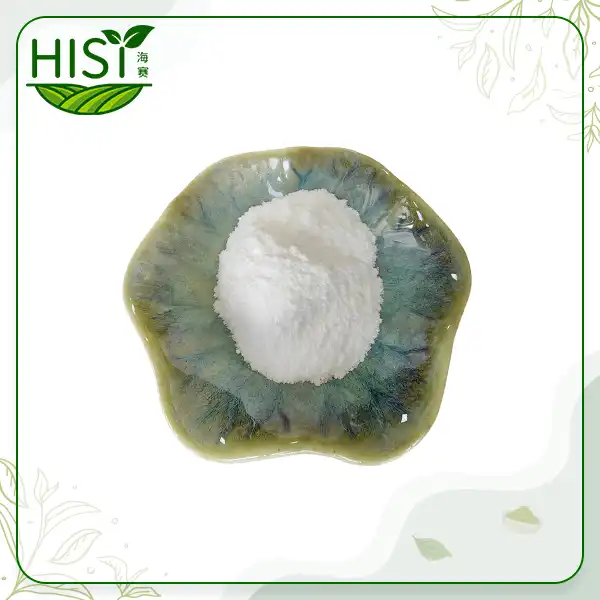
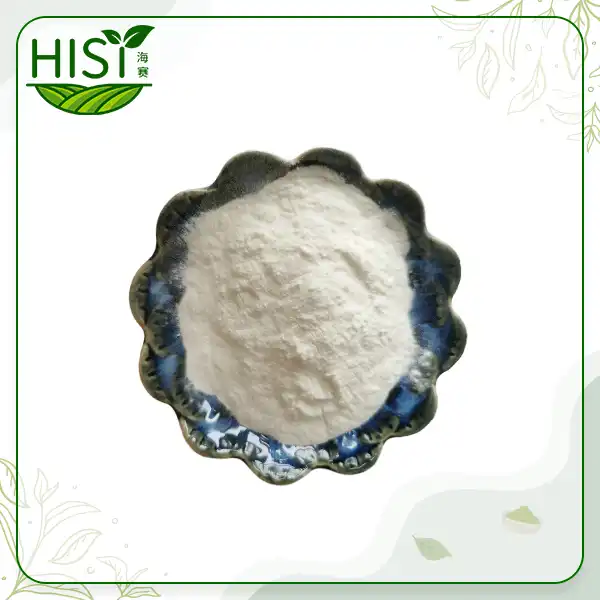
Vitamin A Palmitate Powder must be stored under controlled conditions to maintain its stability and potency. Proper storage typically requires cool temperatures between 2 and 8 °C, protection from light exposure, and low-humidity environments below 60% RH. The water-soluble beadlet form with potency ≥325,000 IU/G should be kept in sealed, moisture-proof packaging such as foil bags or fiber drums with desiccants. Oxygen exposure accelerates degradation of the retinyl palmitate molecule, making airtight containers critical. Understanding these storage requirements ensures batch-to-batch consistency and prevents costly quality failures in your supply chain.
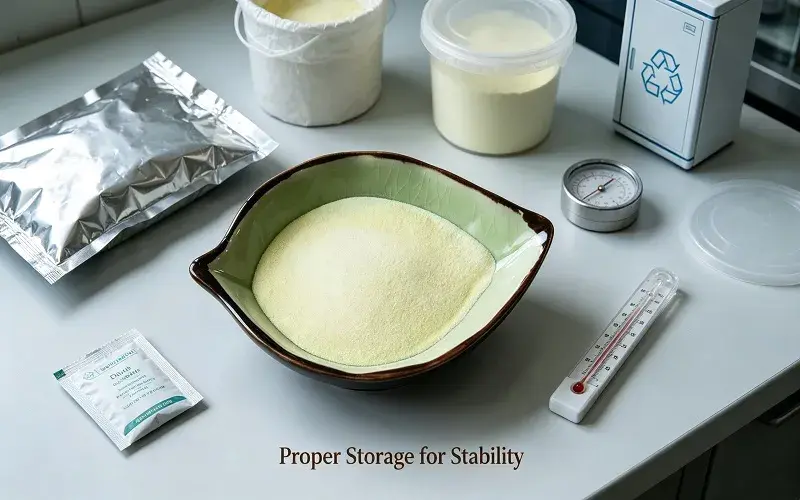
Optimal Storage Conditions for Vitamin A Palmitate Powder
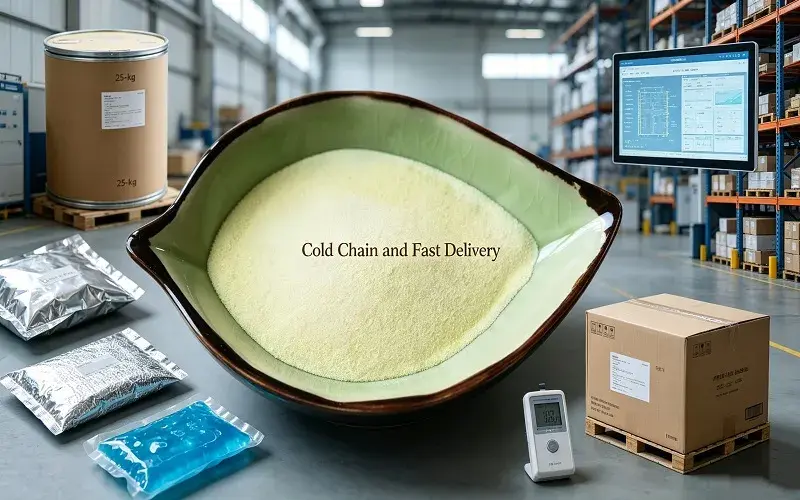
To get the longest possible shelf life, you need to use multiple layers of protection that target all the ways that food breaks down. Our technical paperwork says that for Vitamin A palmitate supplement powder, long-term stability, storage between 2°C and 8°C is best. However, stable ambient storage up to 25°C is fine for shorter periods of time, as long as the right safety measures are in place for the packing.
Temperature Management Protocols
Refrigerated storage between 2 and 8°C is the best way to keep the potency for as long as possible. At these temperatures, the rate of breakdown slows down a lot, which means that the shelf life goes from 24 months at room temperature to 36–48 months when kept cool. Standard cold storage pallets can fit our 25 kg fiber drum packaging, which makes it easy to keep track of goods in temperature-controlled stores.
For atmospheric storage to be acceptable, temperature limits must be strictly followed. Keep the product below 25°C and change it very little every day. Store things away from strong sunlight, heat sources, and places where air can't flow well. Temperature tracking devices should keep track of data all the time and send out alerts when limits are crossed. We suggest testing the potency of ambiently stored goods every three months to make sure they are stable.
Maintain the integrity of the cold chain during transport by using refrigerated containers for international shipments or insulated packaging with gel packs for deliveries within the United States. Our 4–8-day lead time lets us fulfill orders quickly, so there is little time-in-transit risk. This quick turnaround helps procurement teams that are in charge of just-in-time inventory systems where space is limited for storage.
Humidity Control and Moisture Barriers
Relative humidity below 60% stops damage caused by wetness. Keep drums in places that are climate-controlled and have dehumidification systems, especially if you live near the coast or somewhere humid. Two plastic bags nested inside fiber drums are part of our standard packaging. This creates two layers of moisture barriers that protect the contents even if the outer drum gets slightly damaged.
Inside each drum, desiccant bags actively absorb any remaining moisture, keeping the environment dry for the whole life of the product. When these silica gel or molecular sieve packets get full, they change color, which shows that the barrier is still working. When packing or when drums stay open during sampling processes, desiccants need to be replaced.
Foil bags are better at keeping moisture out of smaller amounts. The metal layer completely blocks the flow of water vapor, which makes 1 kg foil packages perfect for R&D samples or small batches of custom formulas. Our flexible MOQ, which starts at 1 kg, lets you make prototypes without having to commit to full drum numbers.
Light Protection and Packaging Design
Harmful wavelengths can't pass through packaging that is amber-colored or opaque. Our fiber drums are made of kraft paper, which blocks UV light, and the plastic bags inside have opaque agents in them. Do not put the powder in clear containers or store drums in places with a lot of light. When lighting a warehouse, low-UV fixtures should be placed so that direct exposure is kept to a minimum.
Nitrogen flushing during packing can help lower the amount of air in the headspace. This movement of the neutral atmosphere lowers the amount of oxygen left to below 2%, which greatly speeds up the oxidative breakdown process. Each batch is tested for strength using HPLC analysis, which separates the active all-trans isomers from the breakdown products. This makes sure that the ≥325,000 IU/G standard is met.
Consequences of Improper Storage and How to Prevent Degradation
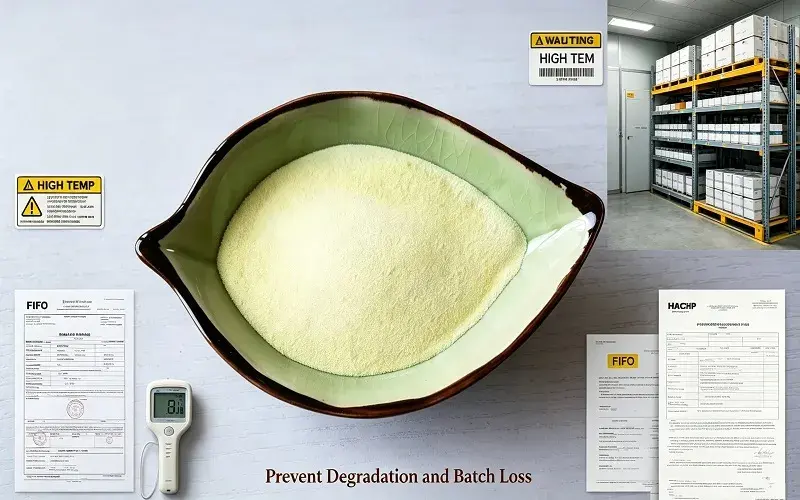
As oxidation progresses, the color darkens from pale yellow to orange-brown, which is a sign of degradation. If something is clumping or caking, it means that water got in and broke down the protective cover. Bad smells are a sign that fatty acids are going bad because of ester breakdown. If you see any of these signs, you should test the strength right away and possibly reject the batch.
Real-World Case Studies of Storage Failures
A company that makes multivitamins once took delivery of a shipment that had been kept at 35°C all summer. Even tho it looked fine, testing showed that it only had 280,000 IU/G of potency, which is 14% less than what was required. The batch failure cost $45,000 in rejected raw materials and lost production time while new inventory was found. After more checks, it was found that the wholesaler didn't have temperature-controlled operations, which led to a change in suppliers.
A company that makes infant formula saw a slow loss of potency across several batches. The problem was found to be in storage in the warehouse near steam lines, where temperatures hit 32°C in some places. The quality deviation was fixed by moving the inventory to a climate-controlled area and putting in place constant tracking. This case shows that even suppliers who follow the rules can have problems if they don't have the right storage facilities.
Preventative Measures and Quality Assurance
Use first-in, first-out inventory rotation to cut down on the time things need to be stored. Mark each drum with the date it was received and the date it will be tested again, which is usually 12 months after it was made in normal conditions. Do incoming inspection testing to make sure the potency is correct when it arrives, setting a baseline for stability trending.
Create seller qualification procedures that check the storage space available. Our buildings are HACCP-certified and have approved cold storage with backup refrigeration systems and temperature tracking 24 hours a day, seven days a week. We give buying teams stability data that shows how well the product works in fast-paced situations (40°C/75% RH), so they can be sure that it will last.
Procurement Considerations for Vitamin A Palmitate Powder Storage
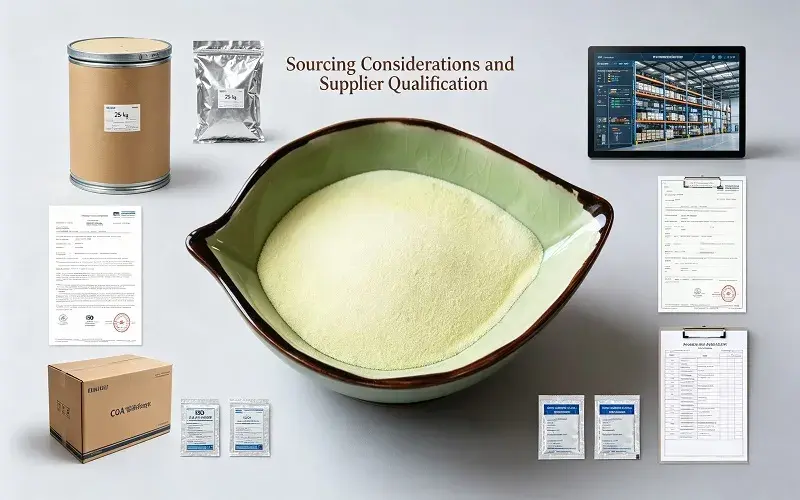
As part of your process for qualifying vendors, you should look at how much storage space they offer. Ask for proof of their temperature-controlled storage space, tools for keeping an eye on the surroundings, and stability testing methods for Vitamin A palmitate supplement powder. Suppliers who can't show they have the right storage facilities pose unacceptable quality risks, no matter how much they charge.
Certification Verification and Compliance
Systematic quality management is shown by FDA registration, HACCP certification, and ISO certification. These certificates show that the company follows written rules for how to store, handle, and distribute the goods. Our ISO 9001 certification covers the whole supply chain, from receiving the raw materials to delivering the finished goods. This makes sure that all 4 dedicated production lines follow the same set of rules.
Ask for a Certificate of Analysis (COA) with every package. This should include statistics on heavy metals, potency, and loss on drying. The COA should list the exact batch number so that problems with quality can be tracked. We provide full legal paperwork, like MSDS, TDS, and allergy statements, that meets the needs of the US market and is in line with California Prop 65.
Packaging Options and Logistics Considerations
Standard 25 kg fiber drums are the most cost-effective option for buyers who buy in bulk, while 1 kg foil bags are better for sampling or special formulations. We can customize your packaging with branded labels and different types of desiccant based on where you store it. The dual plastic bag inner lets you reseal the bag after trying without damaging the rest of the product.
For international shipments, climate-controlled logistics are very important. We work with freight forwarders who know how to handle the cold chain for pharmaceuticals. For ocean freight, we use chilled containers, and for smaller orders, we use priority fast shipping. The 4–8-day arrival window limits the amount of time the item is exposed, which lowers the risk of damage during transport.
Balancing Cost and Quality Factors
Even tho it costs more to run, storing your raw materials in a fridge saves their value. Not only should the purchase price be used to figure out the total landed cost, but also any waste that may come from old inventory. If a supplier offers 10% lower prices but doesn't have the right storage space, it may end up costing more in the long run because of poor quality and production delays.
Our competitive edge comes from 18 years of experience making things and an efficient production scale—a monthly capacity of 2,000 kg lets us offer low prices without lowering the quality. With direct factory pricing, you don't have to pay markups to distributors, which increases your profits and makes sure that you can track your products and get expert help.
How to Incorporate Vitamin A Palmitate Powder Storage into Your Supply Chain Strategy
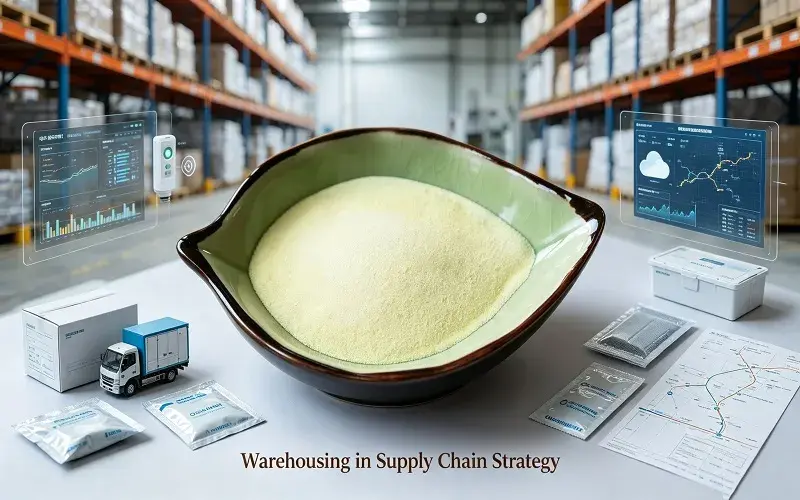
Including storage needs in the criteria for evaluating suppliers makes everyone in your supply network responsible. Make scorecards that include storage compliance along with price and delivery performance. This will give suppliers a reason to keep the infrastructure in good shape.
Monitoring Technologies and Real-Time Control
IoT-enabled temperature sensors allow for constant tracking, and both buyers and sellers can view cloud-based dashboards. When conditions don't match the specifications, these systems send out automatic alerts. This lets quick fixes be made before things get much worse. These technologies are used in our stores so that customers can see exactly how the storage is set up.
Do regular checks on your own storage spaces. Teach warehouse workers the right way to handle things, like how to minimize the time it takes to open containers, how to properly reseal them, and FIFO cycle rules. Standard working procedures should spell out exact places to store things, the temperature ranges that are okay, and what to do if something goes wrong.
Emerging Innovations in Packaging and Logistics
Using active packaging technologies with oxygen scavengers and moisture controls can make food last longer on the shelf than passive barriers alone. These next-generation solutions aggressively burn any oxygen that is still inside the package, keeping the environment anaerobic even if there are small seal flaws. We are always looking at new technologies to make our products more stable for challenging uses.
New ideas in the cold chain, like phase-change materials and vacuum insulation panels, make it possible to keep temperatures stable for longer periods of time without using refrigeration. These solutions are especially helpful for people who live in places where electricity isn't always reliable because they let them store things safely in places with bad infrastructure. Our technical team can help you choose the right packaging based on the logistics you're working with.
Building Long-Term Supply Chain Resilience
Dual-sourcing methods lower the risk of supply disruptions, but both providers must show that they can store the same amount of goods. Include requirements for storage conditions in master supply agreements. Make sure there are clear quality expectations and ways to fix problems if they aren't met. Customers are welcome to do checks of our GMP facilities, which include our 150m² production room that is free of contamination.
With collaborative forecasting, sellers can make sure they have enough cold goods without having to pay too much for them. Please send us your production schedules so that we can plan our storage and production around the way you use your products. This partnership-based method improves the whole value chain by cutting down on waste and making sure that raw materials are always available.
Conclusion
How Vitamin A Palmitate Powder is stored has a direct effect on the quality of the product, how well it meets regulations, and how well the business does financially. Temperature control between 2°C and 8°C, humidity below 60%, and light protection thru the right packaging are all important for keeping the ≥325,000 IU/G potency needed for making supplements, adding vitamins to food, and using it in beauty products. Professionals in procurement need to carefully look at a supplier's storage facilities along with their prices and certifications. They need to know that bad handling can turn what seems like savings into expensive quality problems. Monitoring technologies, tested packing systems, and joint supply chain partnerships all work together to make things less likely to break down. Our manufacturing skills include FDA-approved production sites and fast delivery (4–8 days), giving B2B customers the dependability they need to keep their businesses running smoothly.
FAQ
1. What is the ideal temperature range for storing this ingredient?
For the longest shelf life, the best temperature range for storage is between 2°C and 8°C. This cool place keeps things from breaking down too quickly, so they stay effective for 36 to 48 months. Ambient storage up to 25°C is still fine for shorter amounts of time as long as the right moisture and light protection is in place, but stability drops to about 24 months in these situations.
2. Can the powder be stored at room temperature?
When the temperature stays below 25°C, and the relative humidity stays below 60%, things can be stored at room temperature. Make sure the packaging stays sealed in the original fiber drums or foil bags with desiccants that are still whole. Do potency tests every three months to keep an eye on stability trends and make sure the ingredient stays as specified for as long as it's supposed to be used.
3. How long does the product remain stable under optimal conditions?
Stability lasts for 48 months from the date of manufacture when stored in the fridge and kept away from moisture and light. This is cut down to 24 months for ambient storage. Our fast stability tests at 40°C/75% RH show strong retention, with less than 10% potency loss over 6 months of stress, which confirms what we expect the drug to do in the real world.
Partner with a Trusted Vitamin A Palmitate Powder Manufacturer
Hisy provides pharmaceutical-grade food ingredients and has been making them well for 18 years. Our Vitamin A Palmitate Powder stays potent at ≥325,000 IU/G because it is stored in strict ways in HACCP- and ISO-certified facilities. To make sure it meets US legal standards, each batch goes thru HPLC testing to check its strength, heavy metal screening, and microbiological testing. We offer free samples to help you test your formulations, a flexible MOQ starting at 1 kg, and fast delivery (4–8 days) to fit your production schedules. Whether you need a large quantity of a product for mass production or a custom formulation protected by an NDA, our experienced research and development team is here to help you with the technical side of product development. Get in touch with our purchasing experts at sales@hisybio.com to talk about your unique needs and find out how our dependable supply chain solutions can help your business run more smoothly.
References
1. Desai, K.G.H. & Park, H.J. (2005). "Encapsulation of Vitamin A Palmitate in Gelatin-Sodium Alginate Microspheres." Journal of Microencapsulation, 22(2), 179-192.
2. Gonçalves, A., Estevinho, B.N., & Rocha, F. (2016). "Microencapsulation of Vitamin A: A Review." Trends in Food Science & Technology, 51, 76-87.
3. Ottaway, P.B. (2008). "Food Fortification and Supplementation: Technological, Safety and Regulatory Aspects." Woodhead Publishing Limited, Cambridge, UK.
4. Ribeiro, H.S. & Guerrero, J.M.M. (2010). "Vitamin A Palmitate Stability in Water-Dispersible Beadlets." Food Research International, 43(4), 1211-1219.
5. Tan, B. & Soderstrom, T. (2014). "Stability and Degradation Mechanisms of Retinyl Palmitate in Fortified Food Systems." Critical Reviews in Food Science and Nutrition, 54(9), 1121-1135.
6. USDA-FDA Joint Guidelines (2020). "Storage and Handling Requirements for Vitamin-Fortified Ingredients in Food Manufacturing." Federal Register, Vol. 85, No. 142.