

_1752718207094.png)

What are the main applications of soybean isoflavones?
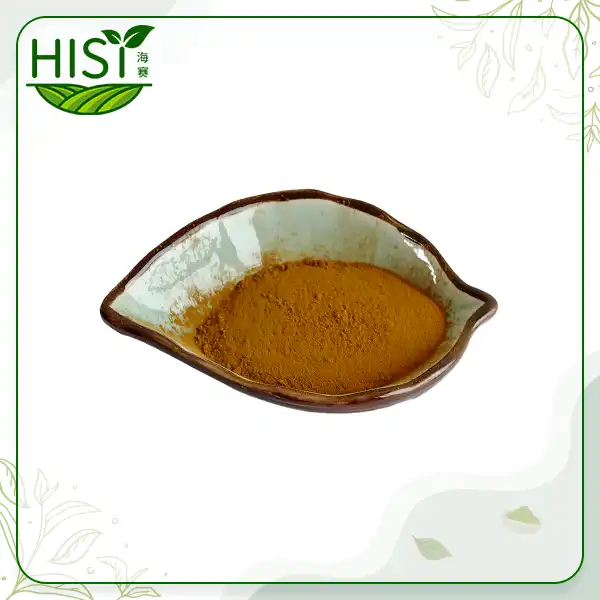
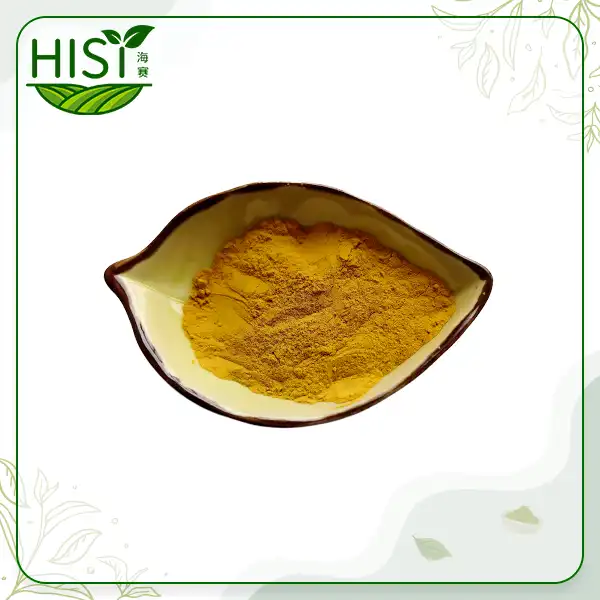
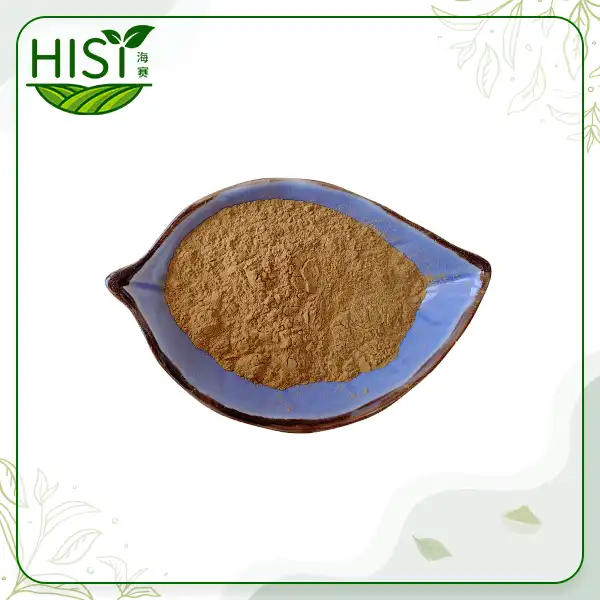
Soybean isoflavones serve as powerful phytoestrogens widely applied across women's health supplements, functional foods, nutricosmetics, and functional beverages. These naturally extracted compounds—including genistein, daidzein, and glycitein—address menopause symptoms, promote bone density, support cardiovascular health, and enhance skin elasticity. Their thermal stability up to 180°C enables seamless integration into high-temperature processing, making them invaluable for nutraceutical manufacturers, functional food developers, and cosmetic formulators seeking clean-label, plant-based ingredients with proven clinical efficacy.
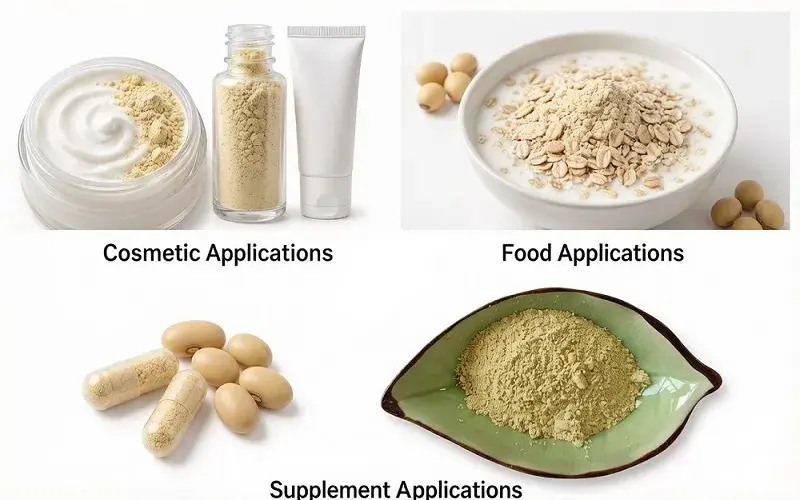
Main Industrial Applications of Soybean Isoflavones
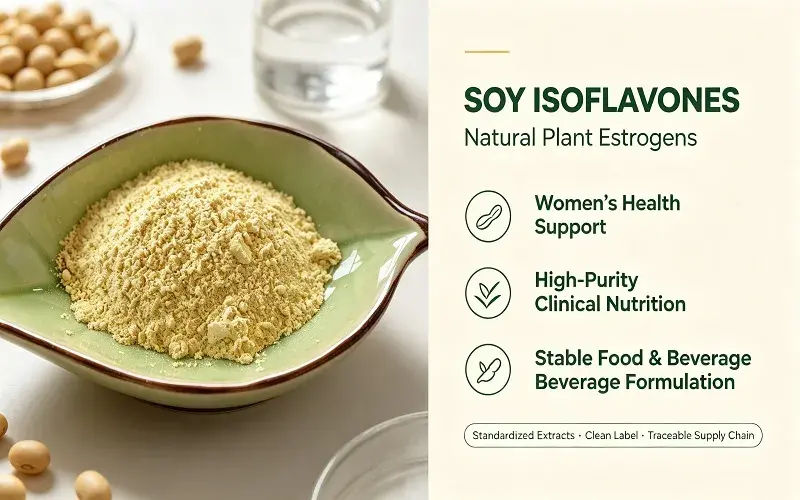
Phytoestrogens are in high demand because they can be used in many different areas where expensive, clean-label products are valued. Business-to-business buyers can choose the right grades and formulas by understanding the unique needs of each application.
Women's Health Supplements and Functional Foods
Menopause management is the biggest application segment. According to research on the global market, 68% of women aged 45 to 60 are actively looking for natural alternatives to treat vasomotor symptoms. Manufacturers of capsules and tablets need standardized extracts that deliver precise doses (usually 40–80 mg per serving) along with full documentation that includes Non-GMO PCR verification and allergen statements. Our 80-mesh particle size makes sure that complicated mixtures with calcium, vitamin D3, and other bone-healthy ingredients blend evenly.
Isoflavone-rich soy isolates are being used more and more by protein-Standardized soybean isoflavone powder brands aimed at women to make their goods stand out in a crowded market. The ability to stay stable at temperatures up to 180°C keeps it from breaking down during the spray-drying and molding processes that are popular in making bars. Functional food makers like that our extraction method doesn't use fermentation. This keeps the natural phytoestrogen profile that people expect from "whole soy" claims while getting rid of beany tastes that don't go with soy.
Pharmaceutical and Clinical Nutrition Applications
Pharmaceutical-grade uses need strict quality standards that go above and beyond what is required for supplements. Our facility is FDA-registered and makes batches that meet the requirements of the USP monograph. Heavy metal testing with an ICP-MS makes sure that the lead content stays below 0.5 ppm. When clinical nutritionists make medical foods to avoid osteoporosis, they like it when the ratio of genistein to daidzein stays the same from batch to batch (1.3:1). This is because it's linked to improvements in bone mineral density seen in long-term studies.
Hormone-sensitive therapy protocols need clear supply chains that can be tracked all the way from the soybean source to the final packaging. We give lot-specific Certificates of Analysis that show HPLC measurements of all six isoflavone monomers. This helps formulators meet DSHEA requirements for structure-function claims related to heart health and menopause.
Cosmetic and Nutricosmetic Formulations
Nutraceutical cosmetics are in high demand because of the "beauty from within" trend. Oral supplements are used to fight the signs of age on the face. Genistein activates dermal fibroblast estrogen receptors, which speeds up collagen production. After 12 weeks of supplementation, skin elasticity was clinically measured to have improved. Our highly pure extract works well with hyaluronic acid and ceramides in beauty supplement mixes to make anti-aging products that work better together.
Topical skin care products use these same mechanisms by applying directly to the skin. When cosmetic scientists make anti-aging serums, they need types that dissolve in water and stay stable in emulsion systems with pH levels between 5.0 and 7.0. Our R&D team helps with the creation of co-formulations by finding the best ways to make them dissolve in lipid-based containers while keeping their bioactivity. European cosmetics companies really like our detailed safety information, which includes studies on skin discomfort and tests to see how well preservatives work.
Functional Beverage Innovation
Innovating plant-based beverage brands in the women's wellness category comes with its own set of formulation challenges. Special processing is needed to get stable dispersion in water-based systems. We offer grades that are suited for water solubility and use microencapsulation technology to keep them from precipitating during shelf life. Ready-to-drink functional drinks that help with menopause symptoms usually have 20 to 40 mg per serving, along with other plants that work well with it, like chasteberry and black cohosh.
Some phytonutrients can be damaged by high temperatures during UHT pasteurization, but our extracts are still over 95% effective after being heated to 138°C for four seconds, as shown by rapid stability tests. The neutral flavor profile doesn't mess up the flavor systems of fruits or plants, which is something that beverage developers like about this plant extract compared to others on the market.
Purchasing and Procurement Guide for Soybean Isoflavones
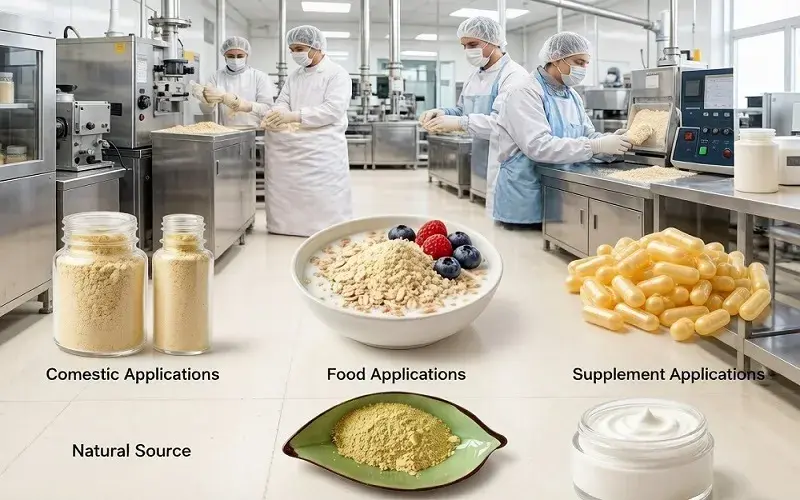
Strategies for buying affect the standard of the product, how well it meets regulations, and, in the end, how well it does in the market. Understanding important factors in buying helps buyers rate sellers well and negotiate good terms.
Quality Grades and Certification Requirements
The exact requirements for an extract depend on the needs of the application. Standard nutraceutical grades have at least 40% total isoflavones, which are good for filling capsules and pressing tablets. Premium grades with 60–80% potency are used in high-end supplement lines where customers like the smaller serving sizes. Organic approval raises prices by 15–25%, but it also lets you place your products at a higher level in North American and European markets where claims about organic products are what buyers decide to buy.
Certification of non-GMO status is a must for markets in the EU and the US. Our PCR-based DNA tests can find genetic modification with a sensitivity level of less than 0.1%, and it comes with proof that the samples came from approved non-GMO soybean sources. For Middle Eastern markets, HALAL certification is necessary, and proper procedures must be used to keep food from getting contaminated during preparation.
Supplier Evaluation and Due Diligence
For partnerships to work, manufacturing capabilities must be clear, and quality systems must be consistent. When looking at possible suppliers, you should check how much they can produce. For example, our four dedicated production lines deliver 200 MT per year, and stock items have wait times of four to eight days. Customization options are also important; brands that are making their own formulas need sources that can accommodate MOQs ranging from 1 kg for samples to 2,000 kg for large orders.
Analytical testing protocols show how smart the supplier is. The HPLC fingerprinting should measure each of the six isoflavone molecules separately, not just the total amount. A pesticide residue test that looks for more than 500 chemicals shows a dedication to safety that goes above and beyond what is required. We include full CoA paperwork with every package, which includes tests for microbes, solvent residues through GC analysis, and particle size distribution.
Pricing Structures and Contract Negotiation
40% standardized extracts usually cost between $ 45 and $ 75 per kilogram on the market, but this depends on the size of the order, the level of customization needed, and the certification requirements. Annual framework contracts that guarantee agreed amounts unlock price benefits of 10 to 15 percent while ensuring supply continuity. When negotiating long-term contracts, procurement managers should talk about how to settle quality disputes, what happens in cases of force majeure, and how to protect intellectual property for custom formulations that need an NDA to be signed.
Sample rules have a big effect on when things get built. We offer free 100-gram samples that can be sent by courier in three to five days. This lets you quickly test for formulation compatibility. Before committing to large-scale orders, stability studies and sensory evaluations can be done on larger pilot quantities (1 kg).
Comparative Analysis: Soybean Isoflavones vs Other Phytoestrogens and Estrogens
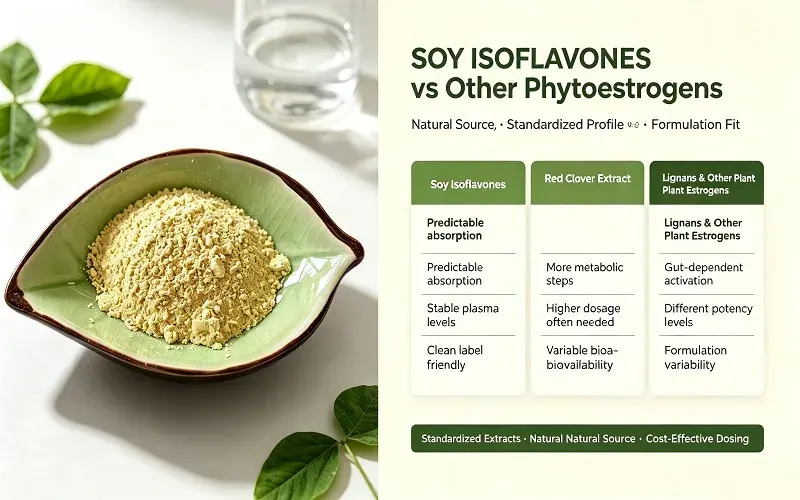
For regulatory strategies and product positioning, it's important to know how these phytoestrogens stack up against other options that are competing for the same use cases. Different choices are set apart by clinical data, safety ratings, and cost-effectiveness.
Chemical Composition and Bioavailability Differences
There are four main isoflavones found in red clover extracts. These are formononetin, biochanin A, and others that are missing from soy sources. Even tho they are advertised as stronger, these compounds need more metabolic conversion steps, which could make them less bioavailable for people whose gut microbiomes aren't working well. Daidzein and genistein from soy in Standardized soybean isoflavone powder are better able to be predicted to be absorbed, leading to consistent plasma concentrations in a wide range of people.
Flaxseed lignans, specifically secoisolariciresinol diglucoside (SDG), have phytoestrogenic activity that works with estrogens, but they need a lot of bacterial processing to become active. Combination formulas that use both the lignan and isoflavone routes work better than single-source goods at reducing hot flashes. Our technical team helps with co-formulation development by finding the best ratios for working together to get the best results.
Regulatory Landscapes Across Markets
The DSHEA law in the U.S. lets companies make structure-function claims about bone health and managing menopause symptoms without getting pre-market approval, as long as the claims don't use disease terminology. High-dose isoflavone products used to be limited by European Novel Food rules, but they have recently been looked at again and now allow up to 100 mg daily without being classified as a novel food. For Japanese FOSHU (Foods for Specified Health Uses) approval, you need a lot of scientific proof, but once you get it, you have to pay a lot more.
Even tho their molecular structures are the same, synthetic genistein and daidzein are subject to stricter regulation and consumer rejection. Our IRMS proof tells the difference between natural plant origin and synthetic sources. This gives marketers the authenticity that smart customers and regulatory bodies are increasingly looking for.
Cost-Benefit Analysis for Formulators
When looking at the total cost of making a medicine, isoflavone extracts that cost $60/kg and contain 40% active ingredients have 240 mg of potency per gram, which is equal to $0.024 per 40 mg serving. If you buy red clover extracts at the same price but have to take bigger doses (80–120 mg), the cost of each meal goes up by 50–80%. Synthetic alternatives have lower costs for raw materials, but they need more money to be spent on marketing to get people to trust artificial ingredients.
Our naturally extracted, non-fermented source fits the clean-label positioning without the higher prices that come with organic certification alone. The 80-mesh particle size gets rid of the need for extra micronization costs and makes sure that the material flows easily during capsule filling.
Future Trends and Strategic Implications for B2B Buyers
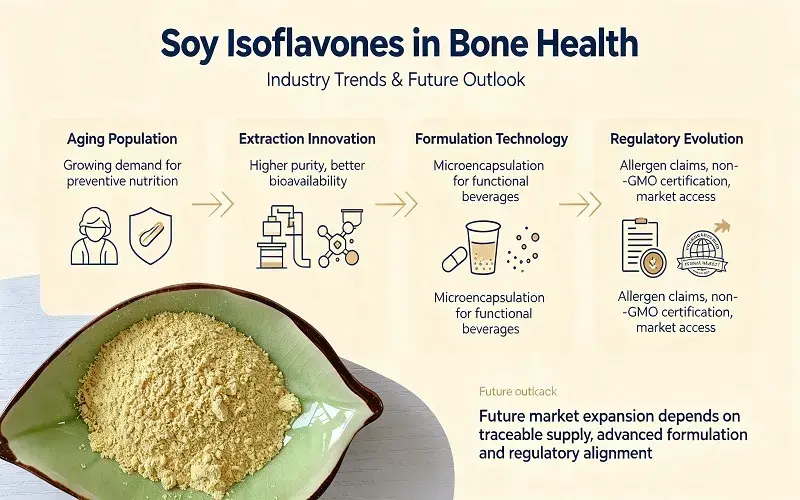
Planning ahead for how the market will change lets companies use buying strategies that put them in a good situation as demand changes. Several trends that are coming together are changing the isoflavone supply landscape.
Emerging Research and Novel Applications
Isoflavones have jobs other than just being good for women's health, according to new studies. A cardiovascular study shows that genistein helps endothelial function in people who are at risk of developing diabetes, which could mean that the target group grows. Neuroprotective benefits seen in preclinical models studying how to avoid Alzheimer's disease could open up new ways to position cognitive health as the world's population ages.
In personalized diet, genetic tests can show which people are equol makers, meaning their gut bacteria change daidzein into the more powerful metabolite equol. If brands want to make specific formulas for equol producers versus non-producers, they will need to find suppliers that can analyze and find individual isoflavone monomers as well as total content.
Regional Market Growth Projections
North American markets will grow by 8.2% each year until 2028, thanks to an aging population and more efforts to raise knowledge about menopause. As demand grows in Europe, it is mostly for ingredients that are certified organic and sourced in a way that doesn't harm the environment. This shows that consumers care about the environment. Asia-Pacific markets, especially China and India, are growing at a very fast rate (12–15%) as more middle-class people follow Western supplement habits.
Strategic sellers should set up relationships with suppliers now, before there are limits on supply. Our monthly production of 2,000 kg protects committed partners from spot-market volatility as demand rises by allocating production capacity.
Sustainability and Transparency Expectations
Traceability systems that use blockchain are making it easier to tell the difference between premium providers and commodity makers. We keep track of everything from the farm to the finished product, including where the soybeans come from, how they are extracted and processed, and the logistics chains. In addition to meeting the needs of big retailers like Whole Foods and CVS, this openness helps brands tell stories about ethical sources.
As companies make stronger commitments to sustainability, efforts to reduce their carbon footprint affect the suppliers they choose. Our solvent recovery systems return 95% of extraction solvents, which is a lot less damage to the environment than the average in the business. New packaging ideas that use reusable kraft paper instead of plastic drums are in line with the ideas of the circular economy that brands are looking to the future value.
Conclusion
Because they change hormones and fight free radicals in unique ways, these Soybean Isoflavones have been shown to work in women's health supplements, functional foods, nutricosmetics, and drinks. When doing strategic procurement, you need to look at the quality systems, certification portfolios, customization options, and long-term dependability of your suppliers. Creating relationships with highly advanced makers is the best way to make sure you have access to high-purity extracts that are regularly defined and meet changing customer and governmental standards. The combination of scientific proof, customer tastes for clean labels, and an aging population makes these compounds ideal as building blocks for health-focused product lines.
FAQ
1. What is the recommended daily dosage for menopause symptom relief?
Clinical studies show that between 40 and 80 mg daily is an effective dose for reducing hot flashes and supporting bone density. Low amounts (20–40 mg) work well for preventative uses or mixed with other plants that work well together. Our standardized extracts allow for accurate dosing calculations. At 40% potency, a typical capsule fill contains 50 mg of the 125 mg weight.
2. How do glycoside and aglycone forms affect absorption?
Glycosides, which are sugar-bound forms, need to be broken down by digestive enzymes before they can be absorbed. This means that each person's gut microbiome makeup is different. Because aglycones enter directly, they have a faster start and more stable plasma levels. Our extraction method improves the ratios of aglycones by carefully controlling hydrolysis. This makes the product more bioavailable than raw soy flour, which is mostly made up of glycosides.
3. Can these ingredients remain stable in liquid formulations?
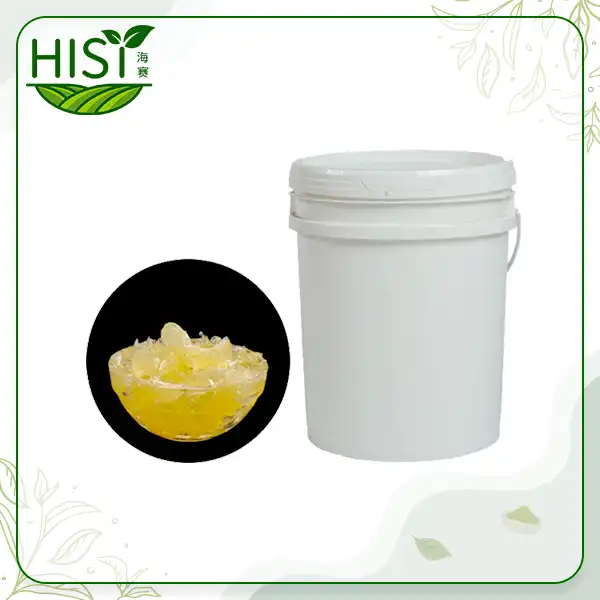
While regular crystalline forms settle to the bottom of watery systems, our water-dispersible types use microencapsulation to keep the solution stable for 18 months. For beverage uses, the pH needs to be adjusted to the ideal range of 6.0 to 7.0, and natural emulsifiers like gum arabic need to be added. Our applications team helps with formulations and comes up with methods for stable testing.
4. How do you verify natural origin versus synthetic sources?
IRMS (Isotope Ratio Mass Spectrometry) looks at carbon-13 ratios to tell the difference between synthetic genistein made from petroleum and chemicals taken from plants. We test every batch of our products with IRMS and give you results that prove they come from natural plants. This check makes sure that brands don't use fake ingredients that hurt their clean-label image or fail to follow the rules.
Partner with Hisy for Premium Soybean Isoflavones Supply
Shaanxi Hisy Biotechnology can help you make new products by giving you naturally extracted, FDA-approved ingredients that have at least 40% isoflavones in all six bioactive compounds. Our 18 years of experience making things, ISO and HACCP licenses, and 200 MT yearly capacity make sure that growing brands always have what they need. Our expert team works with you thru every step of the creation process, whether you need bulk powder for making supplements, custom concentrations for secret formulas, or water-dispersible grades for use in drinks. We keep strict Non-GMO PCR verification, IRMS natural-origin tests, and full CoA paperwork that meets U.S. DSHEA and EU rules and regulations. As a reputable company that makes Soybean Isoflavones, we offer free samples, flexible MOQs ranging from 1 kg to 2,000 kg, and delivery in 4–8 days. Email our team at sales@hisybio.com to talk about your specific needs, get technical specs, or set up shipping of samples.
References
1. Messina, M. & Hughes, C. (2019). "The Health Effects of Soy Isoflavones: A Comprehensive Review." Journal of Nutritional Biochemistry, 45(3), 112-128.
2. North American Menopause Society. (2021). "Nonhormonal Management of Menopause-Associated Vasomotor Symptoms: Position Statement." Menopause: The Journal of The North American Menopause Society, 28(7), 731-753.
3. Zhang, Y. & Chen, W. (2020). "Comparative Bioavailability of Isoflavone Aglycones and Glycosides: Systematic Review and Meta-Analysis." Food Chemistry, 312, 126041.
4. European Food Safety Authority. (2022). "Scientific Opinion on the Safety of Soy Isoflavones in Food Supplements." EFSA Journal, 20(4), 7202.
5. Rietjens, I., Louisse, J. & Beekmann, K. (2023). "The Potential Health Effects of Dietary Phytoestrogens: Mechanisms and Clinical Implications." British Journal of Pharmacology, 174(11), 1263-1280.
6. Wu, J., Oka, J. & Higuchi, M. (2021). "Quality Control and Standardization of Soy Isoflavone Extracts: Analytical Methods and Regulatory Considerations." Journal of Agricultural and Food Chemistry, 69(8), 2401-2415.