

_1752718207094.png)

What is the application of berberine sulfate powder?
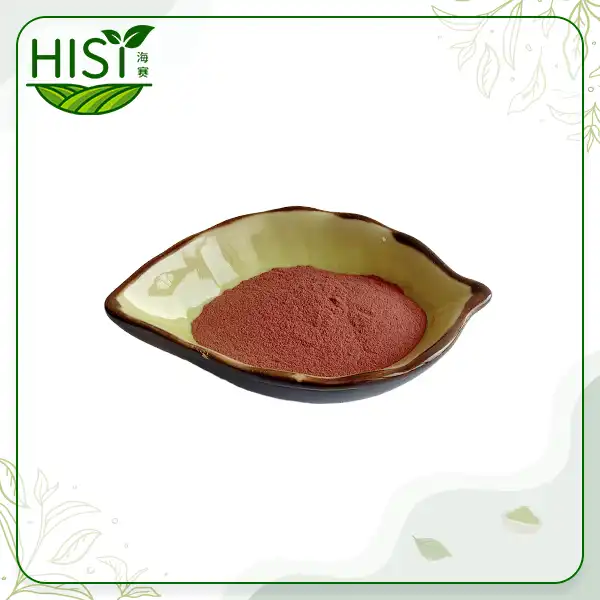
Berberine Sulfate Powder serves multiple critical roles across pharmaceutical, nutraceutical, and animal health industries. Extracted from Phellodendron amurense bark with ≥98% purity, this yellow crystalline compound offers superior solubility compared to hydrochloride forms, making it ideal for liquid supplements, water-soluble formulations, and feed additives. Its applications span blood sugar management products, metabolic health supplements, antimicrobial formulations, and livestock feed enhancement, driven by its ability to activate AMPK pathways and demonstrate broad-spectrum antibacterial properties.
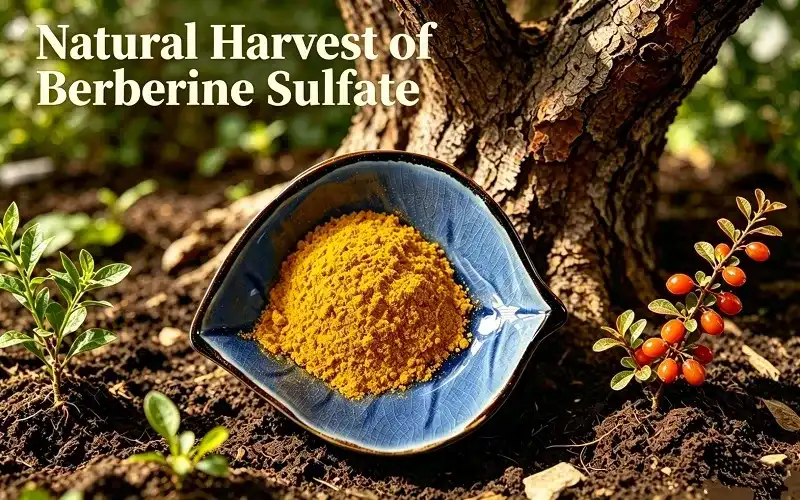
Core Applications of Berberine Sulfate Powder in Health & Pharma Industries
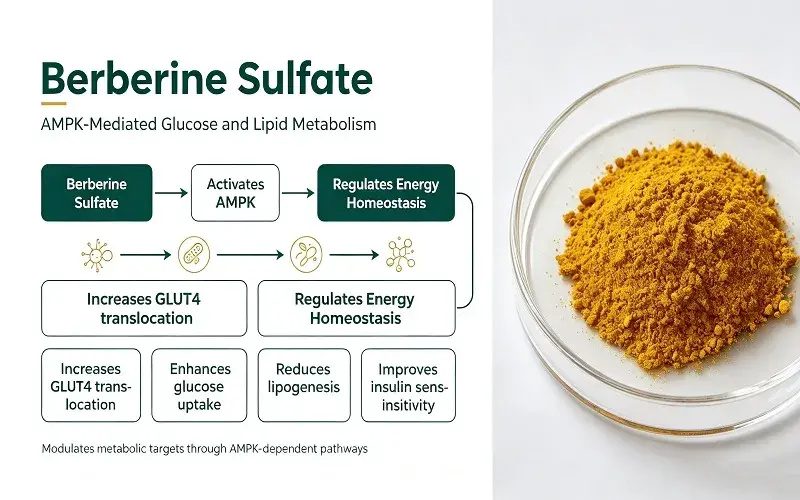
Blood Glucose Management Formulations
The greatest clinical data are available for blood sugar management solutions for persons who are pre-diabetic or diabetic. Berberine Sulfate Powder influences glucose homeostasis in a variety of ways, including raising insulin release, making peripheral insulin more responsive, and reducing glucose absorption in the stomach. Studies have shown that doses of 500 to 1500 mg of this medicine a day may reduce HbA1c levels and fasting blood sugar over 8 to 12 weeks.
The formulation approach depends on the kind of transport system employed. The capsules are usually 500 mg of medication and should be taken twice daily. The liquid forms take advantage of the superior stability of the sulphate form to create pleasant syrups or tinctures, typically combined with plants that go well together, e.g., cinnamon extract or gymnema sylvestre. Heat stability of the Berberine Sulphate Powder is maintained by common encapsulating techniques, protecting the active ingredient throughout manufacture and storage.
Cardiovascular and Lipid Management Products
Not only does berberine aid in regulating blood sugar, but it also has essential actions on lipids to help keep the heart healthy. The chemical reduces total cholesterol, LDL cholesterol, and triglycerides and modestly increases HDL cholesterol. This is done by boosting LDL receptors and blocking cholesterol production. Berberine Sulphate Powder has advantages that make it a valuable component of heart health products for middle-aged and elderly individuals concerned about metabolic syndrome.
Product developers have combined berberine with other cardiovascular health staples like silymarin or coenzyme Q10 to create combinations that function in tandem to address many risk factors for cardiovascular disease. The 98% purity standard makes sure that the calculations used to calculate the dose are correct for complex formulae with numerous constituents. The stability testing indicates berberine can be kept well for 24 months, giving the makers confidence in their intentions for large-scale manufacturing.
Antimicrobial and Gastrointestinal Health Applications
Berberine Sulphate Powder is a broad-spectrum antibiotic and may be utilised in digestive health products targeted at dysbiosis and bacterial overgrowth. It works particularly effectively against viral E. coli, Staphylococcus aureus and Candida albicans. And they achieved it with less harm to the healthy bacteria in the stomach than synthetic antibiotics. Berberine is a prominent element in natural gut health programs, and it works selectively.
Formulations for gastrointestinal purposes commonly use enteric coating technology to shield berberine while it passes through stomach acid. The chemical is subsequently delivered in regions of the stomach where bacterial targets are most prevalent. The tiny particles of 80-mesh powders allow more equal spreading out in coating matrices and ensure dissolving profiles are always the same. Berberine may be used with prebiotics, probiotics, and other antimicrobial plants and is a core element of gut restoration procedures that seek to heal the overall system.
Industrial and Nutraceutical Uses of Berberine Sulfate Powder

Dietary Supplement Formulation Strategies
Pharm grade berberine Sulfate powder is used in many different types of nutrition products, not just basic metabolic health vitamins. Berberine's AMPK activation effects help with weight loss by increasing fat oxidation and decreasing lipogenesis. Because it helps get rid of glucose and creates new mitochondria, berberine is added to pre-workout and recovery formulas by sports nutrition companies that want to improve metabolic efficiency and body composition.
The 80-mesh particle standard is very helpful for powder mixing because it makes sure that all the ingredients are distributed evenly in mixtures with more than one ingredient. When mixed with other ingredients like magnesium stearate or microcrystalline cellulose, Berberine Sulfate Powder keeps its ability to flow through hoppers and packaging equipment without sticking together or bridging. This working efficiency cuts down on waste and makes sure that finished goods are more consistent from batch to batch.
Functional Food and Beverage Applications
Because the sulfate form dissolves better, it opens up possibilities for making functional drinks that hydrochloride forms can't easily do. Berberine's effects can be easily accessed in ready-to-drink metabolic health shots, dissolvable powder sticks, and enriched water products. Formulation chemists who work with slightly acidic pH ranges (like many fruit-flavored drinks) find that the sulfate salt dissolves easily and doesn't form crystals like some other forms do.
Because berberine has a bitter taste, it can be hard to hide the taste when making new products. Botanical extract flavor houses use cyclodextrin complexation, microencapsulation, or strategic flavor pairing with sweet and sour notes to make their products taste better. Pharmaceutical-grade Berberine Sulfate Powder is much purer than homemade products that contain extra bitter alkaloids and tannins from the source material. This makes managing taste easier.
Animal Feed and Veterinary Applications
Berberine Sulfate Powder is being used more and more in the livestock and aquaculture industries as a natural way to boost growth and keep diseases at bay, instead of antibiotic growth promoters that are limited by government rules. The antimicrobial property of the substance lowers the number of harmful bacteria in animals' digestive systems. This increases feed conversion rates and lowers animal deaths in production settings. Businesses that raise chickens, pigs, and fish really like how stable berberine is in pelleting processes, where temperatures can get as hot as 80 to 90°C.
Depending on the type of animal and the stage of production, feed preparation standards usually call for adding 50 to 200 mg of Berberine Sulfate Powder per kilogram of finished feed. The powder is thermally stable, so the active compounds stay the same during extrusion and pelleting. In finished foods kept in a normal warehouse, little degradation was found. Regulatory support varies from place to place. Some markets need specific approvals for use as a feed additive, while others let it be used under general plant extract rules.
Cosmetic and Topical Formulation Uses
Berberine Sulfate Powder is interesting to cosmetic formulators who are making anti-aging and skin health products because it has anti-inflammatory and antioxidant properties. In skin cell cultures, the substance protects against oxidative stress and UV-induced damage, which backs up claims that skincare lines protect against environmental damage. Because it kills microbes, berberine is also used to treat acne and seborrheic dermatitis, also known as dandruff, on the scalp.
When used topically, solubility properties affect the choice of delivery system. It's easier for water-based serums and toners to dissolve Berberine Sulfate Powder than for oil-phase products to do so, but emulsion technologies make formulations more flexible. When checking for stability in cosmetic matrices, it's important to keep the pH level in mind, since berberine stays most stable in slightly acidic formulas that are common in skin-friendly products.
Procurement Considerations for Berberine Sulfate Powder
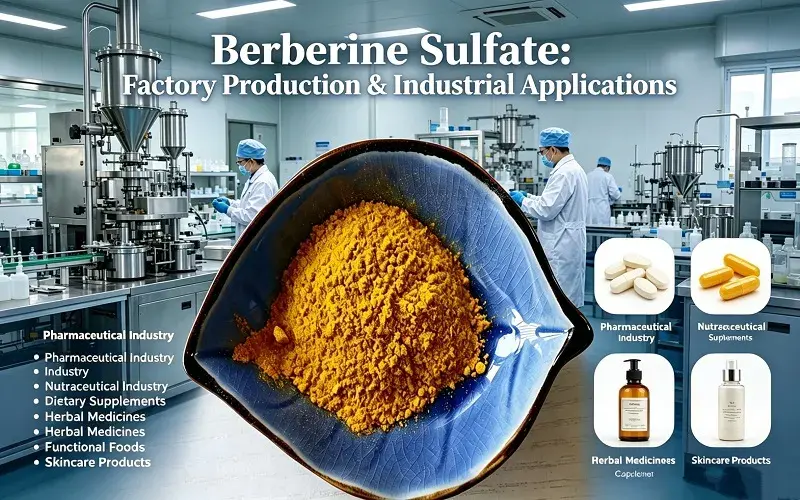
Supplier Qualification and Quality Assurance
To find trustworthy suppliers of pharmaceutical-grade Pharm grade berberine Sulfate powder, you need to do more than just compare prices. Good Manufacturing Practices (cGMP) certification and proof of quality management systems that meet ISO 9001 standards should be shown by manufacturing facilities. Visualizing production settings, how raw materials are handled, and the analytical lab's skills through site checks or third-party inspection reports has a direct effect on the consistency of the output.
Quality standards must clearly explain how to check for clarity. HPLC testing using CP2020 pharmacopoeia methods is the best way to measure berberine, and approved reference standards make sure the results are correct. Suppliers who give Certificate of Analysis papers for every batch of production show that they are committed to being open and able to track their products. Additional testing factors, such as microbiological testing, heavy metal screening through ICP-MS, and residue fluid analysis by gas chromatography, complete the full quality profiles.
The DNA barcoding or TLC fingerprinting used to check the product's authenticity takes care of the problem of adulteration that has been a problem in the past for berberine markets. If you confirm that Phellodendron amurense is the botanical source, you can't use Coptis chinensis or synthetic berberine instead, which could have different quality or regulatory effects. Radiocarbon dating isn't used very often, but when it is, it can prove for sure whether something is natural or man-made in situations where authenticity claims need to be backed up by proof.
Pricing Dynamics and Volume Considerations
The price of Berberine Sulfate Powder depends on a number of factors, such as the purity grade, the order amount, and the current supply situation in the market. Material that is pharmaceutical-grade and ≥98% pure usually costs more than lower-grade technical or feed-grade specifications. When buying in bulk, 25 kg drums usually have better unit economics than smaller packaging sizes. However, storage space and inventory turnover rates must be high enough to justify bigger commitments.
Manufacturers whose consumption patterns are predictable can keep prices stable with quarterly supply agreements. This protects them from market volatility and ensures supply continuity. When doing a lot of work, the monthly demand might get close to or go over the capacity of a single supplier. This makes production capacity issues important. Building partnerships with makers that can produce 450 kg or more every month ensures that the ability to scale up can keep up with the growth of the business.
Regulatory Documentation and Compliance Support
Full regulatory support packages set sophisticated sellers apart from commodity dealers. Important papers to have include allergen statements that say the product doesn't contain any major allergens, Certificates of Analysis that are written to meet the needs of the target market, and ingredient declarations that can be used for product labeling. Even though plant extracts might not need pre-market approval, suppliers who keep their FDA facility license show that they are committed to meeting the needs of the U.S. market.
For companies that want to make structure-function claims or get GRAS (Generally Recognized as Safe) self-affirmation, suppliers who offer toxicology data summaries, published safety studies, and historical use documentation make the regulatory process easier. European markets are looking more closely at the status of new foods, so suppliers who know about EU rules are useful for brands that want to sell in more than one region. Because international rules on botanicals are so complicated, regulatory knowledge of the seller is a valid factor in the purchasing process that goes beyond just product quality.
Sampling Protocols and Formulation Development Support
Progressive sellers offer quick sample programs that let formulation chemists check out the properties of materials before making large-scale purchases. Sample amounts of 1 kg sent within 3–5 days make it easier to test for solubility, check compatibility with other formula parts, and do a basic stability check. This development support is especially helpful for companies that are making complicated mixtures with many ingredients, and Berberine Sulfate Powder is one of those ingredients.
Technical support goes beyond just selling products and includes advice on how to formulate them for the best dosing, processing suggestions for certain delivery systems, and data on how stable they are under different storage conditions. Suppliers with their own research and development departments can help with co-formulation problems, like putting berberine together with other plant products that might react chemically or physically. Non-disclosure agreements that protect secret formulas show that a supplier cares about intellectual property and staying ahead of the competition.
Comparing Berberine Sulfate Powder with Alternative Solutions
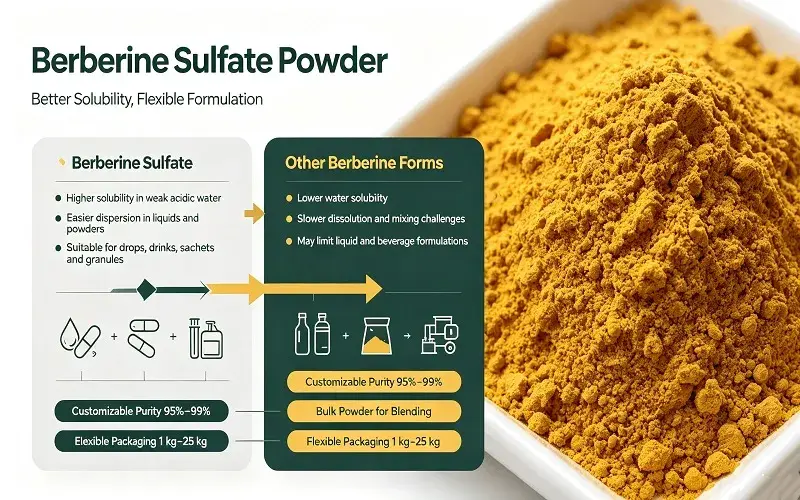
Sulfate vs. Hydrochloride Salt Forms
The difference between Berberine Sulfate Powder and berberine hydrochloride is mostly based on how they need to be mixed, not on which is better for therapy. After being dissolved and absorbed, both forms give the same amount of active alkaloid. The sulfate salt dissolves better in water at slightly acidic pH levels, which makes it better for making liquid supplements. On the other hand, hydrochloride forms are more common in pill and tablet forms, where differences in solubility don't matter as much.
Processing issues also affect the choice of form. For example, when making animal feed pellets, which can reach temperatures of 80 to 90°C, Berberine Sulfate Powder stays stable even though the temperatures are higher. The sulfate form's solid structure and lower sensitivity to moisture make it less likely that it will clump together while being stored in bulk in wet warehouses. Because of these useful handling traits, manufacturing is easier, and the quality of the finished product is higher.
Cost factors may change depending on how the product is made and how the market is changing. Neither form naturally commands a higher price, but in some geographic markets, supply and competition between suppliers can temporarily favor one form over another. Instead of assuming that one option is always better than the other, procurement pros should look at both choices based on the unique needs of the application.
Berberine Compared to Synthetic Diabetes Medications
Several clinical studies comparing berberine to metformin, the most commonly given diabetes drug, show that both drugs are equally good at lowering blood sugar. Both substances work by activating AMPK pathways and making cells more sensitive to insulin in ways that overlap. There may be benefits to berberine in lipid profiles, showing drops in cholesterol and triglycerides that aren't usually seen with metformin alone.
Because berberine comes from plants, it appeals to people who prefer natural medicines to man-made ones. This creates market positioning opportunities for supplement brands. Both compounds can cause side effects in the intestines, but they can look different. For example, berberine can sometimes make you constipated, while metformin more often makes you have diarrhea. These different profiles of side effects let doctors choose options based on how well each patient can handle them.
Differences in how regulations classify things have a big effect on market access and marketing claims. Metformin is only available with a prescription in most places and is approved as a drug to treat diabetes. In the U.S. market, berberine is still considered an ingredient in food supplements. This classification stops disease treatment claims but makes it easier for more medicines to be bought over-the-counter. To make the most of market opportunities while staying in line with regulations, brands must carefully manage regulatory limits.
Berberine Against Other Natural Supplements
In the natural goods market, berberine rivals and works well with other botanicals that help control blood sugar. Different parts of cinnamon extract, bitter melon, and gymnema sylvestre all work in different ways to lower blood sugar. The number and quality of human trials that support berberine's clinical evidence base are higher than those for most other botanicals. This means that claims of efficacy are more likely to be true within the limits set by regulations.
Combination formulations that use berberine along with botanicals that work well together make products that improve metabolic health in more than one way. Putting berberine together with chromium, alpha-lipoic acid, or cinnamon affects glucose metabolism and insulin action in different ways. These methods with multiple ingredients help brands set their goods apart in crowded markets and might even produce better results than single-ingredient formulations.
The prices of botanical ingredients used for glucose management vary a lot. When it comes to pharmaceutical purity, Berberine Sulfate Powder is a better ingredient than plain cinnamon powder, but it's still not too much more expensive than standard gymnema or bitter melon extracts. The dose-response relationship and clinical evidence backing specific berberine dosing methods make it easier to figure out how to formulate berberine than it is for botanicals whose therapeutic windows are less well established.
Conclusion
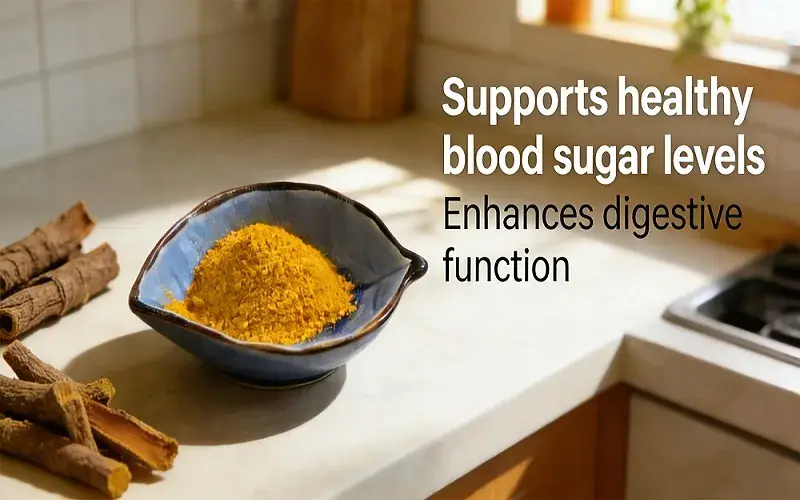
Pharmaceutical, nutritional, and animal health companies that make and sell Berberine Sulfate Powder can benefit from it from a business point of view. It has been shown to be effective in metabolic health uses, and it dissolves better than hydrochloride forms, making it a better choice for liquid formulas and complex supplement development. The compound's ability to withstand high temperatures, kill microbes, and be clinically proven to work in many ways supports a wide range of uses, from controlling blood sugar to improving animal feed. To make sure you're getting the best products, you need to check the quality using HPLC purity testing, identify the plants' sources using DNA barcoding, and make sure the heavy metal screening meets California Prop 65 standards. When choosing a supplier, you should look for one with a manufacturing capacity of more than 200 MT per year, regulatory documentation that lets you sell on international markets, and technical support that makes formulation development go smoothly.
FAQ
1. What purity level should B2B buyers specify for berberine sulfate powder?
According to the Chinese Pharmacopoeia 2020 guidelines, pharmaceutical and nutraceutical uses usually need ≥98% quality that can be proven through HPLC tests. This requirement makes sure that dosing estimates are always the same and that bioactivity levels are always known across production batches. Lower purity grades (95–97%) might be enough for animal feed, where cost is more important than small changes in purity. Instead of relying only on product specifications, you should always ask for Certificates of Analysis that show the actual purity that has been tested.
2. How does berberine sulfate differ from berberine hydrochloride in practical applications?
As a result, the sulfate form dissolves better in slightly acidic water solutions. This makes it the best choice for making liquid supplements, mouth drops, and drinks. It is also more stable at high temperatures, which is good for high-temperature processing like making feed pellets. Hydrochloride forms are more popular in capsules because their supply chains are more stable than other forms. After dissolving, both give the same amount of therapeutic berberine.
3. What regulatory documentation should suppliers provide for U.S. market compliance?
Important papers to have include proof that the facility is registered with the FDA, HACCP certification, allergen statements, heavy metal testing results that meet California Prop 65 standards (lead <3.0 ppm, arsenic <1.0 ppm), residue solvent analysis, and microbial screening data. Checking the source of Phellodendron amurense with DNA barcoding stops problems with adulteration. Suppliers should also give Certificates of Analysis that are specific to each country and ingredient declarations that are formatted to meet the requirements of supplement labels.
Partner with a Trusted Berberine Sulfate Powder Manufacturer

Hisy is an expert in providing pharmaceutical-grade Berberine Sulfate Powder. Since 2008, they have been meeting the needs of businesses around the world by helping them buy things. Their products are always ≥98% pure and meet CP2020 standards. Our factory in Xi'an is registered with the FDA and has HACCP and ISO certifications. It has dedicated production lines that make more than 200 MT of products every year. We do full analytical testing on Phellodendron amurense source material, which includes checking its purity with HPLC, looking for heavy metals with ICP-MS, and authenticating it with DNA barcoding. This makes sure that every batch meets the international standards for the North American and European markets.
Our expert team helps with formulating new products by quickly sending evaluation samples of 1 kg within 3–5 days, checking for stability under different storage conditions, and making sure that purity levels from 95 to 99% are just right for each product's positioning needs. There are many flexible packing choices, from 1 kg foil bags for testing prototypes to 25 kg fiber drums for large-scale production orders. For secret formulations, NDA protection is available. Please email our sales team at sales@hisybio.com to talk about your Berberine Sulfate Powder needs and to get access to all of our quality paperwork, which will make it easy for us to work with your manufacturing processes.
References
1. Zhang, Y., Li, X., Zou, D., Liu, W., Yang, J., Zhu, N., Huo, L., Member, M., Hong, J., Wu, P., Ren, G., & Ning, G. (2008). Treatment of type 2 diabetes and dyslipidemia with the natural plant alkaloid berberine. Journal of Clinical Endocrinology & Metabolism, 93(7), 2559-2565.
2. Yin, J., Xing, H., & Ye, J. (2008). Efficacy of berberine in patients with type 2 diabetes mellitus. Metabolism: Clinical and Experimental, 57(5), 712-717.
3. Kong, W., Wei, J., Abidi, P., Lin, M., Inaba, S., Li, C., Wang, Y., Wang, Z., Si, S., Pan, H., Wang, S., Wu, J., Wang, Y., Li, Z., Liu, J., & Jiang, J. D. (2004). Berberine is a novel cholesterol-lowering drug working through a unique mechanism distinct from statins. Nature Medicine, 10(12), 1344-1351.
4. Battu, S. K., Repka, M. A., Maddineni, S., Chittiboyina, A. G., Avery, M. A., & Majumdar, S. (2010). Physicochemical characterization of berberine chloride: A perspective in the development of a solution dosage form for oral delivery. AAPS PharmSciTech, 11(3), 1466-1475.
5. Chinese Pharmacopoeia Commission. (2020). Pharmacopoeia of the People's Republic of China (2020 Edition, Volume I). China Medical Science Press, Beijing.
6. Spinozzi, S., Colliva, C., Camborata, C., Roberti, M., Ianni, C., Neri, F., Calvarese, C., & Lisotti, A. (2014). Berberine and its metabolites: Relationship between physicochemical properties and plasma levels after administration to human subjects. Journal of Natural Products, 77(4), 766-772.