

_1752718207094.png)

Difference between Vitamin A Palmitate powder and oil form
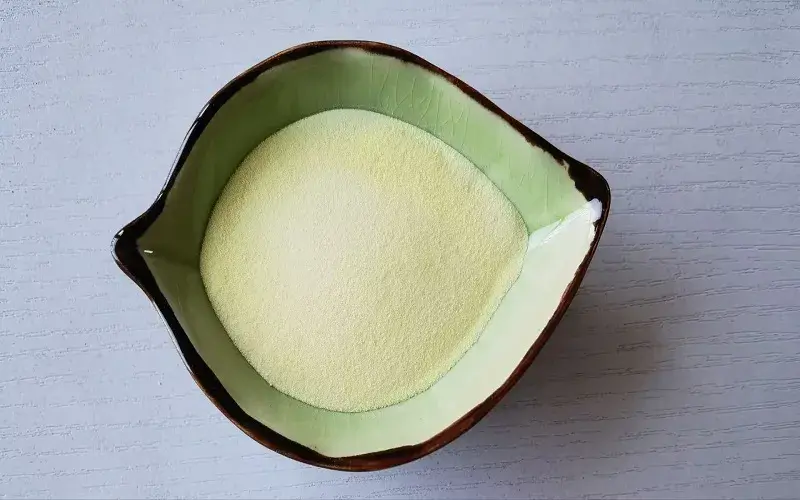
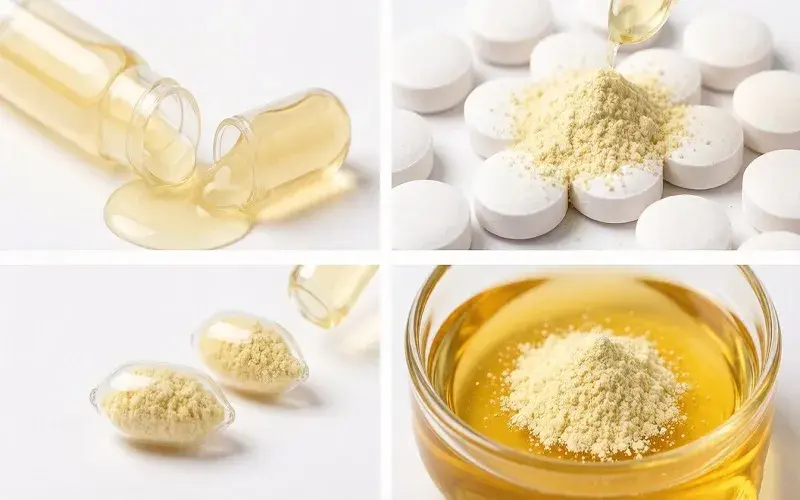
When sourcing retinyl palmitate for industrial applications, procurement managers face a fundamental choice between powder and oil formats. Vitamin A Palmitate Powder represents an advanced microencapsulated delivery system offering superior stability, while the oil form provides direct lipid solubility. The powder variant—engineered through spray-drying or beadlet technology—protects the active ingredient within a protective matrix of gelatin, gum arabic, or modified starch. This encapsulation addresses oxidation vulnerabilities inherent to raw vitamin A, delivering consistent potency exceeding 325,000 IU/G. The oil form, conversely, remains ideal for liquid formulations requiring immediate solubility in lipid-based carriers. Understanding these distinctions empowers B2B buyers to align procurement decisions with specific manufacturing requirements, regulatory standards, and cost-efficiency goals.
Key Differences Between Vitamin A Palmitate Powder and Oil: Dimensional Analysis Approach
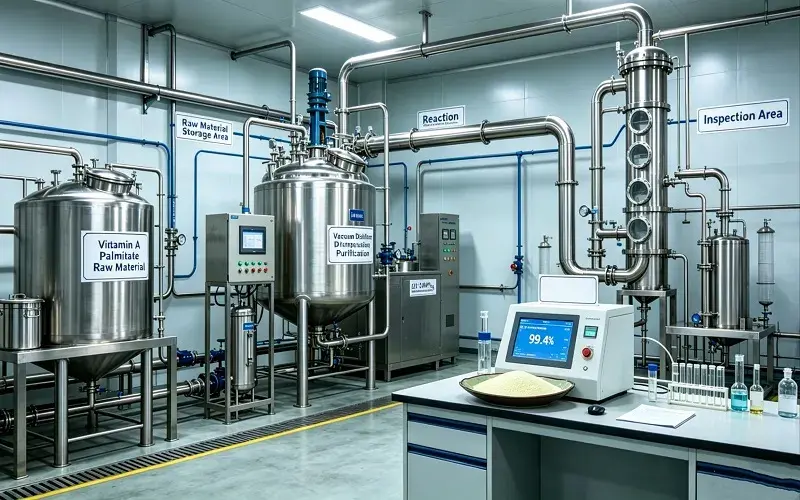
When procurement teams look at these formats, they need to look at more than just cost-per-kilogram. The following differences have a direct effect on how efficiently products are made, how well they meet regulations, and how well they are made.
Physical Handling and Storage Infrastructure
Powder mixtures move steadily through automated dosing equipment, which allows for precise weight control that is necessary to meet label claims. Our 25 kg fiber drum package, which has two polyethylene liners, keeps the goods safe during shipping across continents without the need for cold chain services. Warehouse workers like that they take up less space than oil drums and that they can safely stack up to five units high.
Handling oil requires special pumping devices that can handle changes in viscosity that happen at different temperatures. When moving Vitamin A Palmitate premix from one tank to another, transfer losses can reach 2 to 3 percent, which is a lot of waste in high-volume operations. It gets harder to clean stainless steel surfaces because oil residues stick to them, so harsh detergent protocols are needed between production runs.
Purity Standards and Quality Control Protocols
Both forms have to meet strict purity standards, but the ways they are tested are very different. Our powder goes thru HPLC analysis to separate the more biologically active all-trans-retinol isomers from the less biologically active cis-configurations. Surface oil content readings show that the encapsulation is intact; numbers below 1% mean that the matrix is forming properly. Heavy metal screening shows that the amount of lead is less than 2ppm and the amount of arsenic is less than 1ppm. This meets the California Prop 65 standards needed to get into the US market.
As a stable sign, the peroxide value of oil batches needs to be checked, and acid value testing is needed to find hydrolytic degradation. The amount of moisture is very important because even very small amounts of water speed up breakdown. When buying things for FDA-regulated facilities, procurement managers should make sure that suppliers keep batch-specific Certificates of Analysis with chromatographic data, not just summary specification sheets.
Regulatory Documentation Requirements
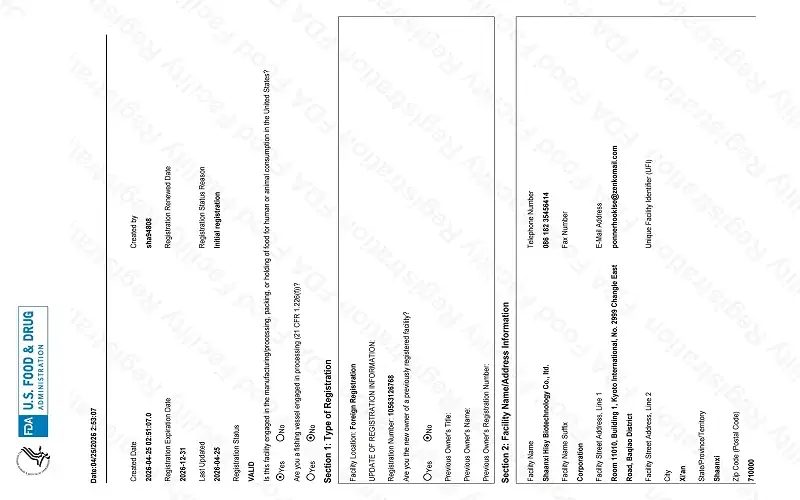
When healthy products are traded internationally, they need to come with a lot of paperwork. Our production follows HACCP and ISO standards, which allows us to fully track everything from where the raw materials come from to how they are packaged at the end. There are COAs, MSDSs, Technical Data Sheets, and allergen labels in every package. For users in North America, we give them FDA registration numbers and follow the rules in 21 CFR Part 111 about Current Good Manufacturing Practice.
For markets in the European Union, extra proof is needed to show that the food is non-GMO and follows the rules set by Regulation (EC) No 1925/2006 about how much vitamin supplementation is allowed. Our quality system keeps records of C14 isotope tests that prove our raw materials come from natural sources, which allays buyers' worries about fake alternatives. A lot of the time, oil suppliers don't have this much paperwork, which slows down customs clearance and leaves them open to audits.
Procurement Considerations for Vitamin A Palmitate Powder vs. Oil Form
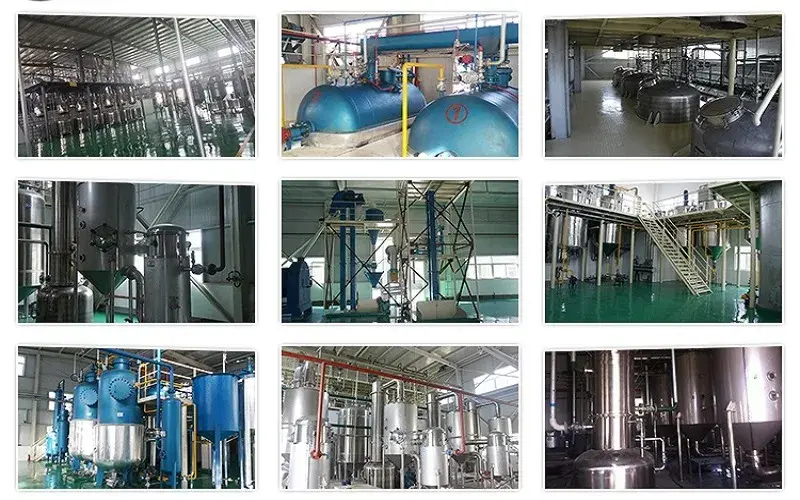
Strategic buying is more than just comparing specification sheets. It also looks at the skills of suppliers, the dependability of the supply chain, and the total cost of ownership.
Supplier Qualification and Certification Verification
Reputable manufacturers show production histories that go back several years and include customer references that can be checked. Hisy has been in business for 18 years and has a track record in more than 30 countries. We have specialized production lines that keep the yearly capacity over 200 metric tons. Facility checks and looking at environmental controls in production zones should be part of procurement audits to make sure that GMP rules are being followed. Positive pressure HVAC systems keep our 150-square-meter production area clean of particles.
Verification of certification validity is done thru the websites of the granting bodies. In commodity markets, throughake certificates are common, so it's important to have independent verification. Ask for recent audit reports from a third party that include microbiological controls, paying special attention to E. coli and Salmonella.
Pricing Dynamics and Total Cost Analysis
Even tho oil may have lower unit prices, full cost modeling shows that there are hidden costs. Because powder doesn't change much at room temperature, it doesn't need to be stored in cold places, which saves about $8 to $12 per box per month. Precision dosing cuts down on waste, which boosts return efficiency. This is especially helpful in high-throughput tablet operations that process many SKUs every day.
Strategies for buying in bulk are different for each medium. With 25 kg drum configurations, powder buyers can get the best container loads, and with 500 kg minimum orders, they can save money. When it comes to oil, bigger commitments—often full ISO tank containers—tie up working cash and warehouse room. Because our minimum order quantities are flexible, we can accommodate programs that start at 1 kg and go up to 25 kg pilot runs before committing to bulk orders.
Packaging Integrity and Logistics Best Practices
The main risk of decline during transportation is moisture getting in. Our dual-liner drum system with desiccant packs keeps the relative humidity inside below 30%, which is very important for keeping the stability of the beads. Fiber drums can handle the weight of ocean freight and arrive in one piece after 6–8-week trips from Xi'an to ports on the US West Coast.
Shipments of oil need steel drums with nitrogen air and locks that can't be broken. Changes in temperature at tropical transshipment points speed up oxidation, which is why air freight is better, even tho it costs more. In purchase agreements, procurement managers should spell out the highest temperatures at which goods can be stored. This way, suppliers will be held responsible for any potency losses that are higher than 5% upon arrival.
How to Choose Between Vitamin A Palmitate Powder and Oil For Your B2B Needs
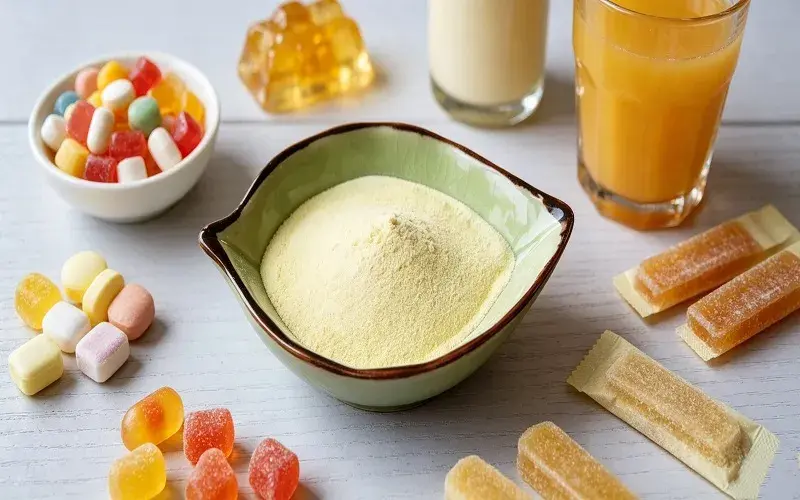
To choose the best format, you have to make sure that the physical qualities match the needs of the manufacturing process and the final output.
Application-Specific Selection Framework
Dietary supplement production: Vitamin A Palmitate premix powder formulations are mostly helpful for companies that make tablets and capsules. The ability to flow freely makes sure that the content stays the same during mixing, and the fact that it is compatible with common excipients like microcrystalline cellulose, dicalcium phosphate, and magnesium stearate gets rid of formulation problems. Our water-soluble beadlet technology lets you crush directly without first granulating, which cuts down on the time and tools needed for processing.
Making infant formula: This is a very controlled area that needs powders that meet strict particle size requirements for stable suspension. The 80-mesh grading keeps the reconstituted formula from settling, which keeps the nutrients evenly distributed. Beadlet coating materials must show that they can be digested by digestive systems that aren't fully developed yet. Our gelatin-based matrix meets this requirement after going thru a lot of safety tests.
Formulation for cosmetics and skin care products: Traditionally, oil was used, but current powder versions have strong benefits. Custom particle sizes up to 100 mesh give serums and lotions smooth surfaces. The layer that dissolves in water lets watery phase components be added, which speeds up the manufacturing process. Only pure, waterless mixtures, like facial oils or balm concentrates, should be used.
Functional Beverage Development: In this category, success is defined by how well it mixes with cold water. Our special process on the powder's surface lets it dissolve in normal liquids without sticking together, so it stays clear in clear drinks. Sports drinks and juices with added vitamins and minerals often have acidic pH levels that can make some beadlet systems unstable. This is why recipe studies are so important. We offer free samples so that you can try their stability in real production settings before you buy in bulk.
Evaluating Long-Term Supplier Partnerships
Procurement that works well involves more than just making purchases; it also involves working together to create new products. Suppliers who offer technical formulation support are very helpful, especially when standard ingredients need to be changed to fit new uses. Our research and development team helps with methods for stability testing, optimizing dosage, and coming up with a legal plan for new market entries.
Dependable delivery is what sets good suppliers apart from great partners. Our 4–8-day lead time from order confirmation to shipment departure lets us quickly restock, which means you don't need as much safety stock. Since we are in Xi'an and have easy access to the highways that lead to the ports of Shanghai and Qingdao, we can keep our transit times constant to support just-in-time production schedules.
Communication responsiveness is very important when dealing with quality issues or getting pressing tasks done quickly. Our customer service works in many time zones so they can give you professional help and support after the sale during the hours that work for your business. When making custom concentrations or looking into new encapsulation technologies, NDA execution protects proprietary formulations.
Advantages and Challenges of Vitamin A Palmitate Powder vs. Oil Form (Value Layering Approach)
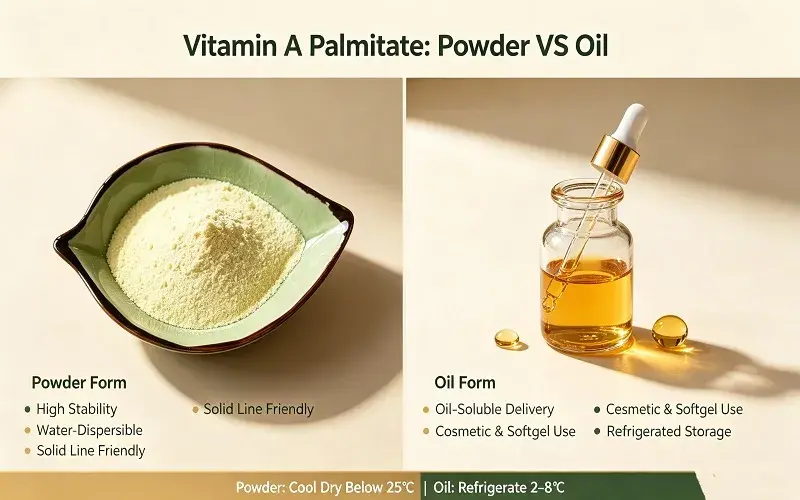
For a full evaluation to be complete, the pros and cons of each format must be taken into account. This allows for smart risk management.
Powder Format Advantages
Stability: Microencapsulated oils last longer than unprotected ones. The protective matrix shields retinyl palmitate from oxygen, light, and water, which break down nutrients. Antioxidants in beadlets include tocopherols and ascorbyl palmitate. These protect further. Accelerated ageing studies demonstrate that over 95% of strength remains after two years at room temperature.
Manufacturing Efficiency: Solid dose manufacturing lines may readily add free-flowing powder without changing equipment. For blend uniformity, relative standard deviations are always less than 5%, meeting pharmacopoeia regulations. Dust management devices catch particles during transportation, saving valuable resources. No sticky residues make cleaning and testing between batches simpler, reducing downtime.
Formulation Flexibility: Water-soluble vitamins may be employed in more ways than fat-soluble ones. Fortifying liquids without emulsification or clouding is now achievable. Gummy vitamin manufacturers enjoy that the powder works with pectin and gelatin systems, avoiding oil concerns.
Oil Format Advantages
Bioavailability in Lipid Systems: When making products that are eaten with dietary fats, like omega-3 supplements or vitamin mixes that dissolve in fat, oil naturally works well with them. The lipid vehicle makes it easier for micelles to form in the small intestine, which could make absorption more effective. This benefit isn't as strong in current beadlet technology, where fast matrix breakdown shows micronized crystals with the best surface-to-volume ratios.
Topical Application Simplicity: It's easier to use oil-based retinyl palmitate in cosmetics that aren't water-based, like face oils, lip creams, and moisture serums, than powder. The smooth texture blends in during production without any problems, with no particles being seen. Formulators who are used to working with oil-phase ingredients may prefer to use the same processing methods instead of learning how to handle powders.
Addressing Common Challenges
Both types oxidise, although in distinct ways. Powder deterioration is indicated by yellowing and weakening. HPLC stability monitoring shows retention rates, and action is performed when 95% of the label claim is reached. Keep food cold, dry, and below 25°C and 60% relative humidity for its whole shelf life to maintain quality.
Peroxide levels and strong aromas indicate rancidity in oil. Nitrogen blankets and refrigeration between 2°C and 8°C are essential. Purchase contracts should state the maximum peroxide allowed upon delivery, generally less than 5 meq/kg. Sellers must replace products if this amount is surpassed.
Format-specific handling sensitivity varies greatly. Transfer procedures generate powder dust; thus, workers must wear dust masks, safety glasses, and gloves to protect their skin. Oil spills may cause slips and filthy equipment; therefore, they must be cleaned up immediately using absorbent products and degreasers.
Conclusion
Choosing between Vitamin A Palmitate Powder and oil types has a big effect on how well the product is made, how stable it is, and how well it meets market requirements. Powder formulas are more stable, easier to handle, and allow for more formulation options. They are especially useful for solid dosage supplements, baby feeding, and functional drinks. The water-soluble beadlet technology solves the usual bioavailability problems and gets rid of the need to store things in the fridge. Oil still has some advantages in pure lipid systems and traditional topical formulations, but it is very hard to work with. For procurement to go well, suppliers need to be looked at thru a number of different views, including the reliability of their deliveries, the accuracy of their certifications, and their expert support. The total cost analysis needs to look at more than just unit prices. It needs to look at things like storage infrastructure, waste factors, and regulatory compliance resources.
FAQ
1. Which form provides better stability during long-term storage?
In normal settings, powder formulations stay more potent for 24 months, keeping more than 95% of their original strength. The microencapsulation matrix keeps air, light, and wetness from breaking down the active ingredient. Even when kept in the fridge, oil usually breaks down within a year, with peroxide levels rising and cellular activity decreasing.
2. Can Vitamin A Palmitate Powder dissolve in cold water for beverage applications?
Yes, there are special types that can dissolve in cold water without heating them up. These types have surface treatments that let them dissolve in liquids at room temperature. When the Vitamin A Palmitate Powder coating comes into contact with water, it breaks down quickly, releasing tiny crystals that stay in suspension. To make acidic drinks stable, they need to be tested on their specific formulations. We help with this by offering free sampling programs.
3. What certifications should procurement managers verify when sourcing for US markets?
Base standards include FDA registration, HACCP certification, and ISO quality control systems. For West Coast delivery, California Prop 65 compliance paperwork showing heavy metal limits is needed. Not summary specification sheets, but full COAs with HPLC chromatograms should be asked for. Third-party test results from separate labs give verification more weight, especially when evaluating a provider for the first time.
Trusted Vitamin A Palmitate Powder Manufacturer: Hisy Delivers Quality at Scale
Hisy is ready to help you get vitamin A palmitate. For 18 years, they have been making high-quality products. Our water-soluble powder is guaranteed to have a minimum potency of 325,000 IU/G. It is made on four dedicated lines that can produce 200 metric tons of powder every year. Each batch comes with full paperwork, like a COA, MSDS, TDS, and allergen statements. This paperwork is backed by FDA, HACCP, and ISO certifications. We know how important it is to get things quickly, so we keep our delivery promises of 4–8 days and offer a range of order sizes, from 1 kg samples to full containers of 25 kg fiber drums. You can talk to our expert team about your recipe needs and get free samples by emailing sales@hisybio.com. Work with a Vitamin A Palmitate Powder supplier you can trust to provide consistent quality, quick service, and low prices that will help your bottom line.
References
1. Ball, G.F.M. (2006). Vitamins in Foods: Analysis, Bioavailability, and Stability. CRC Press, Boca Raton, Florida.
2. Combs, G.through McClung, J.P. (2017). The Vitamins: Fundamental Aspects in Nutrition and Health, Fifth Edition. Academic Press, London.
3. Ottaway, P.B. (2008). Food Fortification and Supplementation: Technological, Safety and Regulatory Aspects. Woodhead Publishing, Cambridge.
4. Chawla, R. & Sahoo, J. (2011). Microencapsulation in the Food Industry: A Practical Implementation Guide. Academic Press, San Diego.
5. Greenstein, R.J. & Liversidge, G.G. (2015). Formulation and Processing of Vitamin A in Pharmaceutical and Nutraceutical Applications. Journal of Pharmaceutical Sciences, 104(9), 2745-2764.
6. Bender, D.A. (2003). Nutritional Biochemistry of the Vitamins, Second Edition. Cambridge University Press, Cambridge.