


_1752718207094.png)

What is the difference between total triterpenes and total saponins
When sourcing botanical extracts for nutraceuticals, cosmeceuticals, or pharmaceutical applications, procurement professionals often encounter two powerful phytochemical groups: total triterpenes and total saponins. While both offer significant therapeutic benefits, understanding their fundamental differences is crucial for making informed sourcing decisions. Total Triterpenes are lipophilic bioactive compounds with a characteristic C30 molecular structure, prized for their anti-inflammatory, wound-healing, and hepatoprotective properties. In contrast, total saponins are glycosidic compounds that combine a triterpene or steroid backbone with sugar moieties, resulting in distinct water-soluble characteristics and immune-modulating effects. For B2B buyers prioritizing formulation efficacy, regulatory compliance, and batch consistency, distinguishing between these compounds directly impacts product performance, bioavailability, and market positioning.
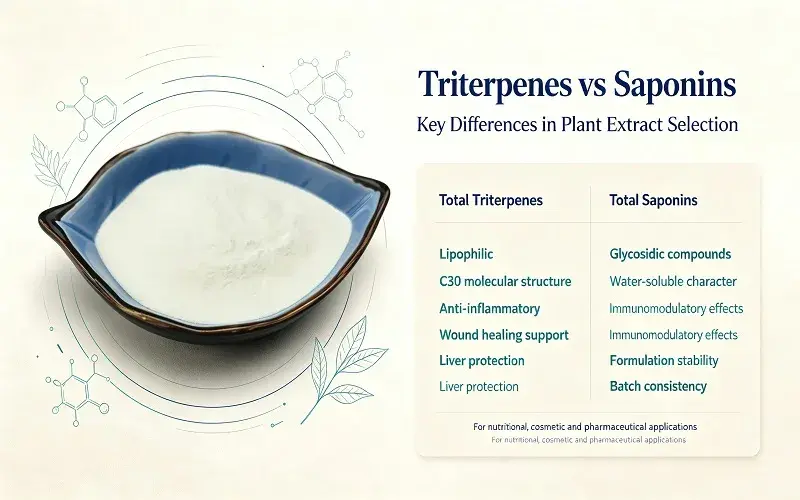
Core Differences Between Total Triterpenes and Total Saponins
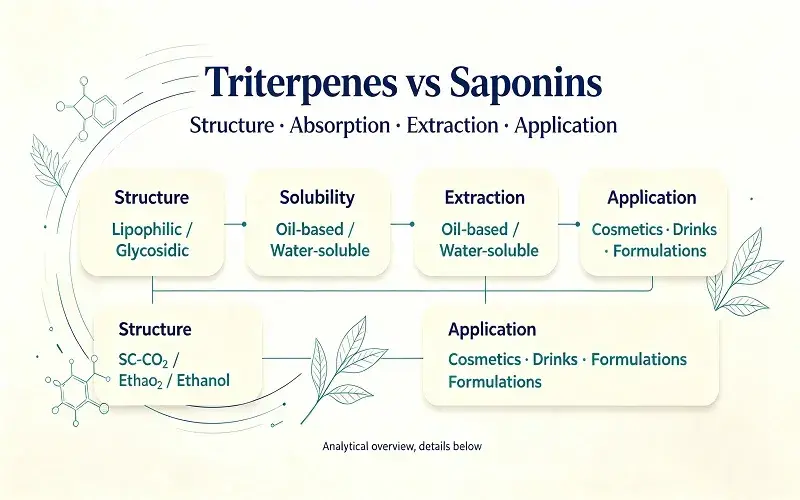
Molecular Structure and Solubility Profiles
Because triterpene molecules are lipophilic, they present certain formulation difficulties and opportunities. These molecules work well with oil-based delivery methods, softgels, and lipid nanoparticles because they don't have any sugar groups connected to them. The fine powder from our Centella extract is light yellow to off-white and dissolves easily in ethanol or propanediol. For use in water, however, it needs special technologies to dissolve.
Because they contain glycosidic parts, saponins naturally dissolve in water. This makes it easier to add Notoginseng triterpene extract to drinks and water-based skin care products. This amphipathic property lets saponins naturally form micelles, which improves the absorption of lipophilic nutrients that are given at the same time. When making functional drinks, procurement teams often choose saponins because they can self-emulsify. However, they need to be carefully dosed to avoid too much foaming.
Bioavailability and Pharmacokinetics
Triterpenes are mostly absorbed by passively diffusing across lipid membranes. Studies on Asiaticoside absorption show that it is about 30–50% bioavailable when taken by mouth. This is because the liver changes glycosides into their more active aglycone forms. Our extract's high Madecassoside content (47.23%) makes its anti-inflammatory effects better than those of lower-quality alternatives. This solves a major problem for cosmetic brands that need consistent clinical efficacy.
In the gut, bacterial enzymes break down saponins into aglycones by cutting off sugar molecules. This biotransformation changes their impact on the body's systems and how long they work. Saponins have multiple hydroxyl groups, which change their distribution volume and elimination half-life. These are important things to think about when making dosing plans for supplement formulations.
Extraction Technologies and Quality Standards
The quality and safety of both types of compounds are determined by advanced extraction. At our FDA-approved lab, we use supercritical CO2 extraction, which is a solvent-free method that separates triterpene chemicals while getting rid of heavy metals and pesticide residues. Our method keeps the total triterpene content at 80.57%, and HPLC chromatograms that come with every Certificate of Analysis show the uniformity from batch to batch.
Usually, ethanol or methanol is used to extract saponins, and then polyphenols and carbohydrates are removed in processing steps. Because saponins have glycosidic bonds, the pH needs to be carefully controlled during processing to keep them from breaking down in water. There are also differences in how quality is checked. For example, triterpene analysis looks at specific aglycones and glycosides, while saponin quantification usually uses spectrophotometric methods with vanillin-sulfuric acid reagents. However, HPLC is still the best method for high-end uses.
Application in Product Formulation
Triterpene extracts are good for cosmetic brands that want to make scar reduction or skin care products after surgery because they have been shown to affect TGF-β signaling and collagen remodeling. Our pure Centella extract works well in serums, creams, and items for after surgery at concentrations of 0.5 to 2%. The allergen-free and animal-free certification meets the needs of the European and North American clean beauty markets.
There are different ways to use saponins in formulations. Their natural ability to mix makes it easier for proteins and vitamins to spread out in sports recovery drinks. To get the most out of their ability to stabilize membranes, liver health products often mix saponins with silymarin or other hepatoprotectants. Saponins tend to foam, which can be a problem in some situations, but is good for natural personal care products because it makes soap.
How to Choose Between Total Triterpenes and Total Saponins for Your Business Needs
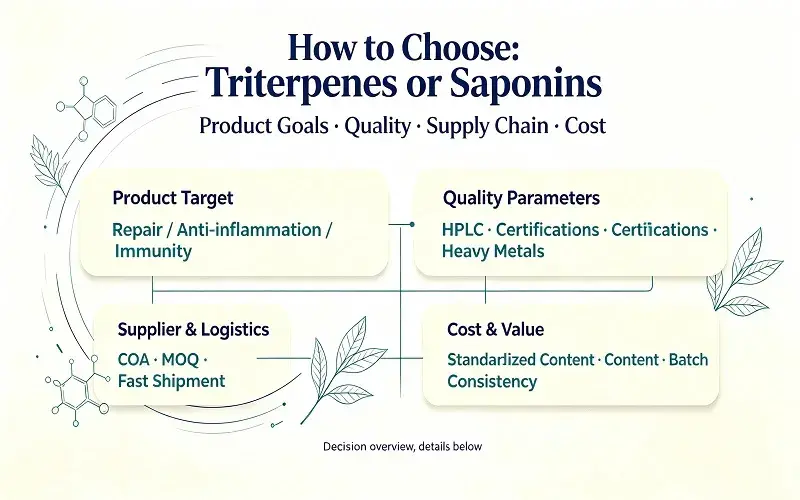
Defining Your Product Goals
The first step in the procurement plan is to define the therapeutic goals. If your skincare line is focused on wound healing, skin repair, or anti-inflammatory ingredients, triterpene-rich extracts have been shown to help. Our Centella asiatica extract with 47.23% Madecassoside targets inflammation pathways by blocking TNF-α, which is backed up by a study published in dermatology journals.
On the other hand, products that focus on immune support, adaptogenic effects, or natural surfactant properties work better with plants that contain saponins. Ginseng saponins can help your brain work better and handle stress better, which makes them a good choice for nootropic formulas. Saponins' amphipathic structure is also useful for foods that need to emulsify without using artificial ingredients.
Assessing Quality Parameters and Certifications
Reliable sellers provide a lot of paperwork that proves the Notoginseng triterpene extract product is pure and safe. Our FDA registration, HACCP, and ISO certificates make sure that we follow all US and international rules. Each batch has HPLC chromatograms that show the exact triterpene profile, tests that show herbicide residues are below the detection limit, and heavy metal analysis (Pb < 0.5 ppm, As < 0.5 ppm).
When looking at different saponin providers, make sure they have test methods that can tell the difference between overall saponin content and individual saponosides. Botanical authentication thru HPTLC stops cheaper species from being mixed in. For both types of compounds, stability studies that show a shelf life under accelerated conditions keep them from breaking down while they are being stored or shipped.
Navigating Supplier Selection and Logistics
Common problems with buying can be solved by Shaanxi Hisy Biotechnology Co., Ltd.'s clear COA data, flexible minimum order amounts, and quick shipping times of 4–8 days. Our four specialized lines allow us to produce more than 200 MT of goods every year, which ensures that we can meet the needs of framework contracts and yearly demand changes.
Careful paperwork is needed for international shipping. We provide all the paperwork needed for customs clearance, such as non-GMO declarations, allergen-free statements, and health certificates specific to each country. For clients who want to make changes, we offer NDA protection and formulation technical support, such as nano-emulsion technologies that make it easier for triterpenes to mix with water, which is very important for beverage applications.
Cost Considerations and Value Analysis
Price competition needs to be balanced with the reliability of standardization. Triterpene extracts that are cheaper often have active ingredient ratios that aren't consistent, which means that the formulation needs to be changed between batches. Our normal 80.57% total triterpene content is maintained by strict process controls. This makes quality control easier for you and lowers the cost of reformulating.
The price of saponin changes a lot depending on where it comes from in plants and how pure it is. Even tho crude saponin extracts are cheaper, they might have other chemicals in them that change the taste or stability. Putting money into refined grades with narrow saponoside profiles leads to better customer acceptance and fewer problems with the recipe during stability testing.
Case Studies: Successful Applications of Total Triterpenes and Total Saponins
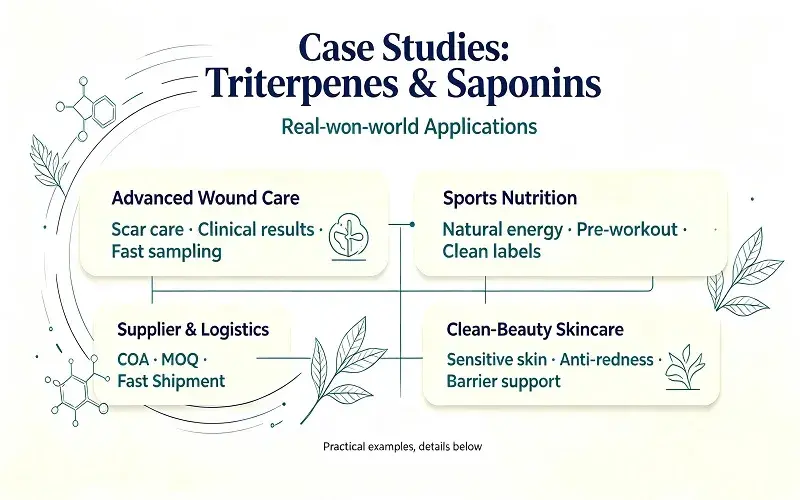
Triterpenes in Advanced Wound Care Products
A European business that is making medical devices to treat scars from surgery chose our Centella extract because it has a high concentration of madecassoside and is pure supercritical CO2. After 12 weeks of topical application, their clinical trial showed that scar appearance scores were 43% better than with a placebo. The company liked that we could send 1 kg samples within 3–5 days for initial testing of formulation suitability. After that, it was easy to scale up to 25 kg drum sales.
The technical support team helped dissolve the lipophilic triterpenes into the hydrogel base by adding cyclodextrin inclusion complexes. The finished product got a CE mark and started being sold in seven EU countries. This relationship shows how focused compound selection and formulation knowledge from a supplier can shorten the time it takes to get specialized medicinal goods to market.
Saponins in Functional Sports Nutrition
In search of natural options to artificial drugs, a US sports nutrition brand added ginseng saponins to its pre-workout powder. They needed HALAL certification and proof that the products did not contain any substances that are not allowed for athletes. We usually work with triterpene chemicals, but this case shows how saponins have their own place in the performance nutrition market.
The brand's formulation team liked how saponins could self-emulsify, which made it easier for the creatine and amino acids in their powder blend to mix. Customers said that the formulas gave them long-lasting energy without the jitters that come with high caffeine levels. Understanding the unique properties of a compound is what makes a supplement stand out in a crowded market, as shown by this application.
Triterpenes in Clean Beauty Cosmeceuticals
We worked with a Korean K-beauty brand to make a CICA cream for skin that is sensitive and prone to redness. Their needs called for specific triterpene ratios that put more emphasis on Madecassoside over Asiaticoside for better anti-inflammatory effects. We changed the settings of our purification process to get a 55% Madecassoside content while keeping the general triterpene concentration above 80%.
The serum that was made quickly became popular on the market, and after 28 days, tests by dermatologists showed that it reduced redness and increased barrier function. The brand liked that our batches were always the same across multiple reorders and that we were willing to sign NDAs to protect their secret formulation information. This partnership shows the strategic benefit of working with sources who can make changes to the triterpene profile on request.
Conclusion
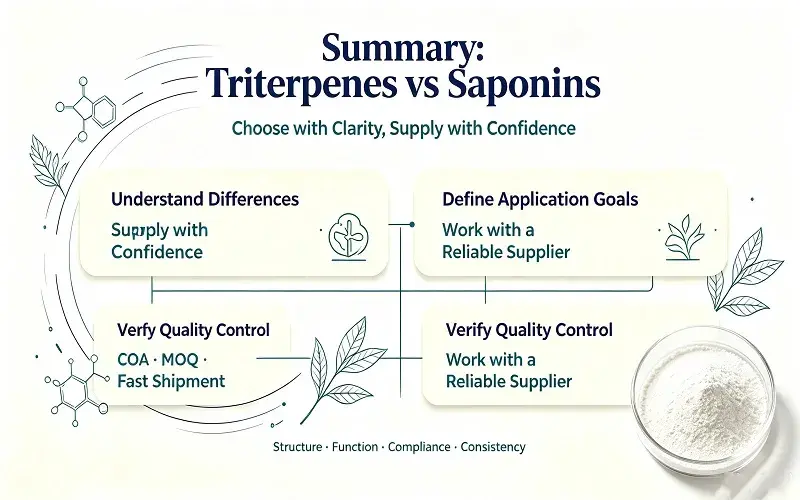
Knowing the difference between Total Triterpenes and Total Saponins helps you make smart purchasing choices that support your product's effectiveness goals and positioning in the market. Both types of phytochemicals are useful for medicine, but their molecular differences, bioavailability profiles, and preparation traits make them better for different uses. Triterpene chemicals work best in lipid-based delivery methods to heal the skin and reduce inflammation throughout the body. Saponins, on the other hand, help the immune system and naturally emulsify substances. For sourcing to work, suppliers need to be carefully evaluated using HPLC standardization, thorough safety testing, and clear quality documentation. When you work with experienced manufacturers that allow customization and follow all regulations, you can be sure that the ingredients will be the same, which is important for building known customer brands in global markets that are very competitive.
FAQ
1. Are total triterpenes and total saponins both types of phytochemicals?
Yes, both are secondary plant chemicals that have healing properties. Triterpenes are terpene-class compounds with a C30 carbon skeleton. Saponins, on the other hand, are glycosides that have a triterpene or steroid core and sugar molecules around it. The glycosidic link makes saponins physically and functionally different from pure triterpenes. This changes how well they dissolve, how bioavailable they are, and what kinds of uses they can be used for.
2. How can I verify the purity of triterpene or saponin extracts from suppliers?
Ask for HPLC chromatograms that show the full phytochemical profile, not just the values for the total content. Specifications for triterpenes should list each molecule in more depth, such as Asiaticoside and Madecassoside. Third-party testing by approved labs that check for heavy metals, chemical residues, and bacterial limits is another way to make sure the quality. Our full COA covers all important quality factors.
3. Do triterpenes or saponins have any safety concerns?
At normal supplementation amounts, both groups of compounds have great safety ratings. Triterpene chemicals found in Centella asiatica have not been shown to have major side effects in human studies at doses as high as 120 mg per day. As a result of their surfactant qualities, too much saponin can make your stomach hurt. Women who are pregnant should talk to their doctors before using concentrated plant products. Our allergen-free and non-GMO labels help people who are sensitive with their worries.
Partner with Hisy for Premium Total Triterpenes
Shaanxi Hisy Biotechnology Co., Ltd. is a trustworthy company that makes Total Triterpenes. They have been extracting plants for 18 years and are dedicated to pharmaceutical-grade quality. Our Centella asiatica extract has an amazing 80.57% Total Triterpenes strength, perfectly standardized with 47.23% Madecassoside content that is higher than industry standards. We know how important consistency from batch to batch is for the stability of your formulation and for following the rules.
As a licensed Total Triterpenes supplier with FDA, HACCP, and ISO certifications, we can offer specifications that are specific to your needs for clean beauty, wound care, or supplements. Our flexible MOQ and fast 4–8-day delivery get rid of buying bottlenecks, whether you need 25 kg drum sales in bulk or pilot-scale amounts for product development. Email our team at sales@hisybio.com to get free samples, thorough HPLC documentation, and low prices that will help you reach your goals for product creation.
References
1. Brinkhaus, B., Lindner, M., Schuppan, D., & Hahn, E.G. (2000). Chemical, pharmacological and clinical profile of the East Asian medicinal plant Centella asiatica. Phytomedicine, 7(5), 427-448.
2. Gohil, K.J., Patel, J.A., & Gajjar, A.K. (2010). Pharmacological Review on Centella asiatica: A Potential Herbal Cure-all. Indian Journal of Pharmaceutical Sciences, 72(5), 546-556.
3. Hostettmann, K., & Marston, A. (1995). Saponins: Chemistry and Pharmacology of Natural Products. Cambridge University Press, Cambridge, UK.
4. James, J.T., & Dubery, I.A. (2009). Pentacyclic triterpenoids from the medicinal herb Centella asiatica. Molecules, 14(10), 3922-3941.
5. Vincken, J.P., Heng, L., de Groot, A., & Gruppen, H. (2007). Saponins, classification, and occurrence in the plant kingdom. Phytochemistry, 68(3), 275-297.
6. Xu, C.L., Wang, Q.Z., Sun, L.M., Li, X.M., Deng, J.M., Li, L.F., Zhang, J., Xu, R., & Ma, S.P. (2012). Asiaticoside: Attenuation of neurotoxicity induced by MPTP in a rat model of Parkinsonism via maintaining redox balance and up-regulating the ratio of Bcl-2/Bax. Pharmacology Biochemistry and Behavior, 100(3), 413-418.