



Which omega 3 powder Certifications Should Buyers Require?
When sourcing omega 3 powder for dietary supplements, functional foods, or nutraceutical formulations, certifications are not optional — they are the foundation of responsible procurement. The right certifications confirm that your omega 3 powder meets purity standards, oxidative stability benchmarks, and regulatory requirements across major markets including the United States. At Shaanxi Hisy Biotechnology, our omega 3 powder carries FDA registration, HACCP, and ISO certification, giving buyers the documented assurance they need before placing a bulk order.
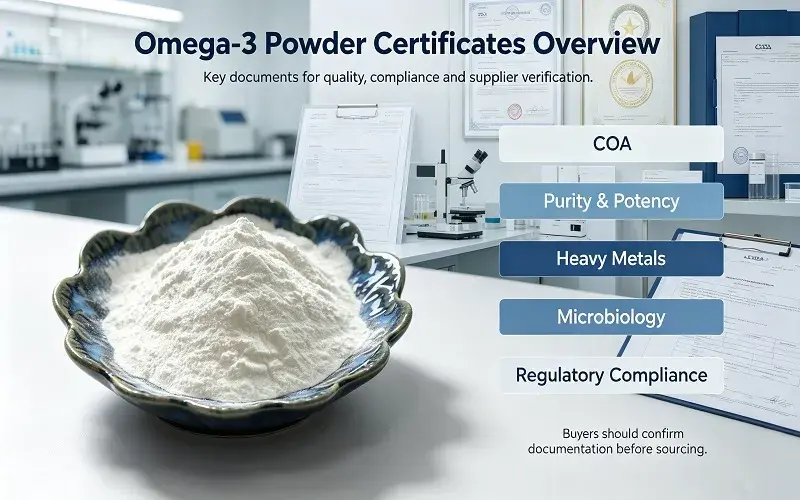
Understanding the Role of Certifications in Omega 3 Powder Quality Assurance
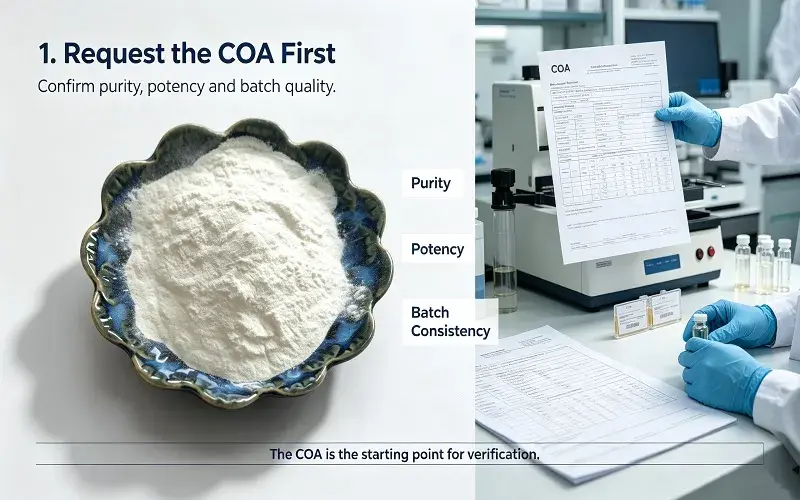
Certifications turn technical claims into facts that have been checked by a third party. This is more important for people who buy omega-3 powder than for people who buy other types of ingredients because fish-derived lipids break down quickly and can become contaminated if production controls aren't strong.
Why Independent Verification Matters
Third-party licensing groups check out factories, look over batch records, and test the finished goods. This extra level of responsibility from outside the company finds problems that the internal quality teams might miss, especially when it comes to oxidation markers like TOTOX values and peroxide values (PV), which have a direct effect on how long omega 3 powder will last and how safe it is.
Regulatory Frameworks Buyers Must Recognize
Under 21 CFR Part 111 (GMP for dietary supplements), the FDA rules on companies that make nutritional ingredients in the United States. GOED (Global Organization for EPA and DHA Omega-3) and the European Food Safety Authority (EFSA) both put out voluntary monographs that set quality standards for EPA/DHA content and oxidation limits. You can choose the right certifications from the start if you know which platforms your target market uses.
Certification as a Risk Management Tool
Mislabeled DHA levels, heavy metal contamination, and products going bad before they reach customers are all known risks in the omega-3 supply chain. The Journal of Nutritional Science published a study in 2021 that found that almost 30% of market omega-3 products tested were higher than the levels of oxidation that are recommended. One of the most direct ways to lower that risk is to only use certified Omega-3 powder raw material bulk supply.
Key Certifications Buyers Should Require for Omega 3 Powder
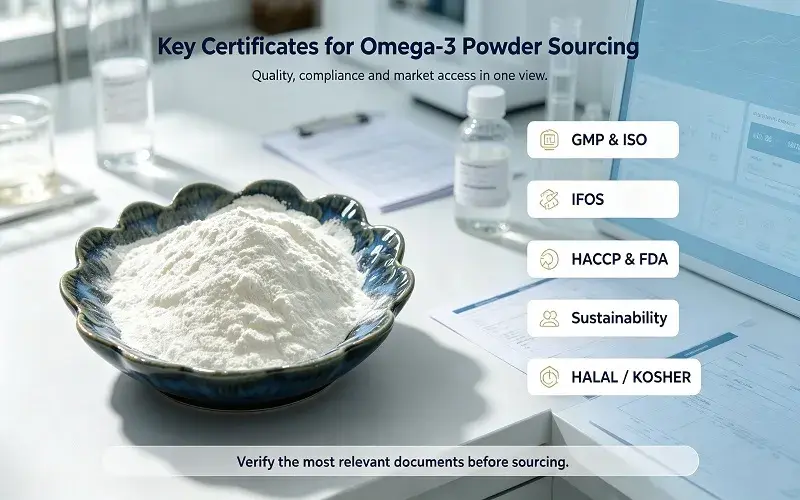
It's not true that all qualifications are similar. In order to make it easier to buy omega-3 powder, here is a list of the most important qualifications.
GMP and ISO Certification
Good Manufacturing Practice (GMP) compliance and ISO 9001 or ISO 22000 certification show that a company uses written production methods that can be checked. For omega-3 powder, this includes limits on the stability of the capsule wall material, the amount of moisture (ideally less than 4%), and microbiological growth. Before a real B2B supplier review can begin, these certifications must be present.
IFOS (International Fish Oil Standards) Certification
The most well-known third-party omega-3 testing tool is IFOS. It checks the strength of the EPA and DHA, looks for environmental pollutants like PCBs and dioxins, and makes sure that the TOTOX levels stay within safe limits. When you buy an omega-3 powder that is IFOS-certified, you know for sure that what's on the label is what's in the bag.
HACCP and FDA Registration
A HACCP (Hazard Analysis and Critical Control Points) certification shows that the company has found and managed physical, chemical, and biological risks during production. The plant has been publicly registered under federal law by getting FDA registration, which is needed for facilities that want to ship food or dietary ingredients to the United States. Both must be met for omega-3 powder to enter the US market.
Sustainability and Specialty Certifications
Buyers of Omega-3 powder raw material bulk supply for high-end markets are increasingly looking for sustainability credentials in addition to safety credentials. The Marine Stewardship Council (MSC) and Friend of the Sea certifications show that fishing is done in a responsible way. Standard goods can't get into areas where people have to follow certain dietary rules, but HALAL and KOSHER approvals let them in. The Non-GMO Project's proof meets the growing demand from consumers for clear information about ingredients.
All of these certifications are used for both legal and business reasons. Here are the main types of certificates that you should include on your list of suppliers:
*GMP/ISO**: confirms rules over the production process and batch consistency
- GMP / ISO — confirms manufacturing process controls and batch consistency
- IFOS — verifies EPA/DHA potency, oxidation levels, and contaminant screening
- HACCP / FDA Registration — required for US market entry and hazard control documentation
- MSC / Friend of the Sea — confirms sustainable marine sourcing
- HALAL / KOSHER — required for specific regional and religious market segments
- Non-GMO Project — addresses label transparency demands in premium retail channels
Each of these certificates gives you extra peace of mind about your omega-3 powder source. They cover all of the things that buyers worry about: the safety of the product, the quality of the ingredients, following the rules, and meeting the needs of the market.
How to Evaluate Omega 3 Powder Certifications During Procurement
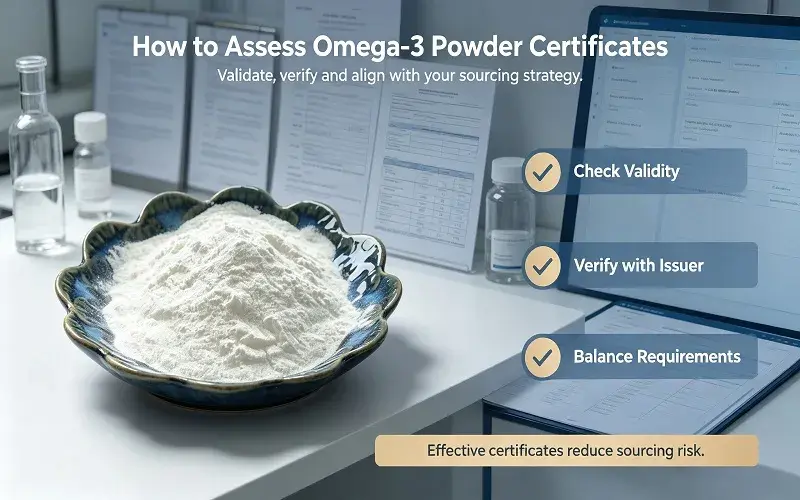
It's not enough to just know which licenses to ask for. Most procurement mistakes happen when suppliers are not properly evaluated during the screening process.
Check Certificate Validity and Scope
A certification is only good for the time it is given. Always ask for the newest certificate that has clear dates on when it was issued and when it expires. Check to make sure that the certificate covers the omega-3 pill product you want to buy and not just the location in general. When buyers accept generic quality documents, scope mismatches happen a lot.
Cross-Reference with Issuing Bodies
For important certifications like IFOS, check the supplier's status directly with the public registry of the organization that issued the certification. In markets for raw materials, fake papers do get around. A few minutes of checking will keep you from being held responsible for big problems later on.
Balance Requirements Against Supply Chain Practicality
Some qualifications cost a lot of money. For example, omega-3 powder from algae that has been approved organic costs more and might not be right for all product levels. You can compare suppliers fairly if your buying policy has different levels of certification requirements. For example, required certifications like GMP, HACCP, and FDA registration should be included, while preferred certifications like IFOS, MSC, and HALAL should also be included.
Emerging Trends in Omega 3 Powder Certification and Industry Standards
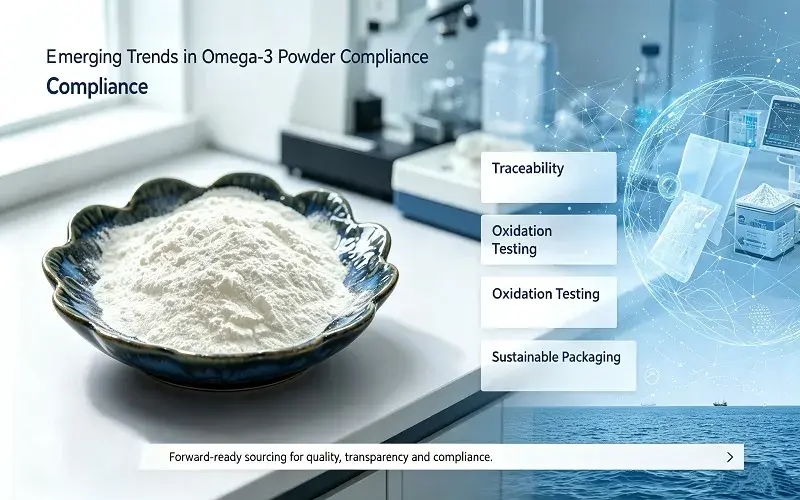
Because of changes in technology and rules, the approval market for omega-3 powder is also changing.
Blockchain-Based Traceability
A number of major ingredient suppliers now offer batch records that are linked to blockchain. This lets buyers track omega-3 powder from where it came from (raw fish) to where it is now (finished powder). This technology directly responds to the clean-label trend in the EU and meets the needs of US brands for farm-to-shelf proof without using paper-based COA lines.
Stricter Oxidation Testing Standards
Over 150 businesses around the world have signed on to the GOED optional monograph, which is pushing for tighter TOTOX limits. Buyers who ask for GOED-compliant omega 3 powder now are getting their products ready for what will likely be normal regulatory language in major countries in the next few years.
Eco-Label and Packaging Compliance
In the EU and US markets, environmental approvals are being given to more than just the product itself. They are also being given to the packaging materials. When buying omega-3 powder for consumer goods, buyers should ask suppliers about biodegradable or recyclable packaging options. This is because retailers are starting to base their listing decisions on eco-label requirements.
How Hisy Biotechnology Ensures Certified Quality in Every Batch
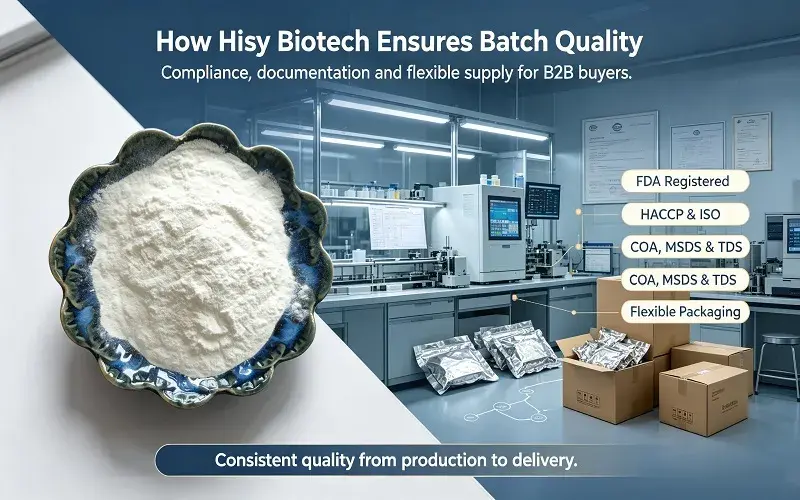
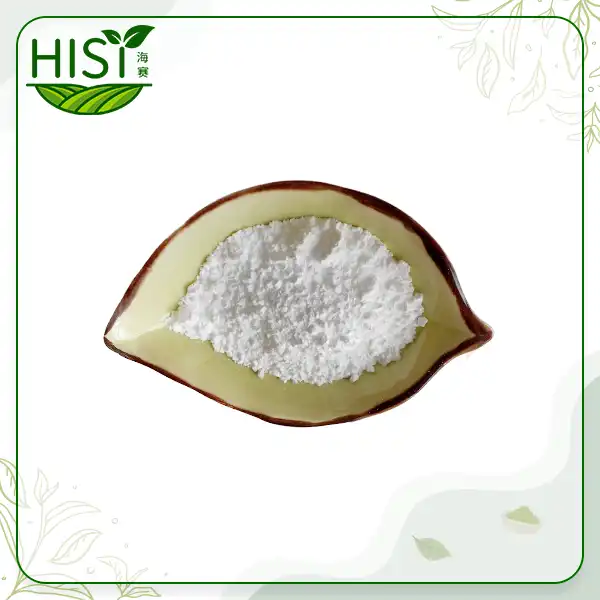
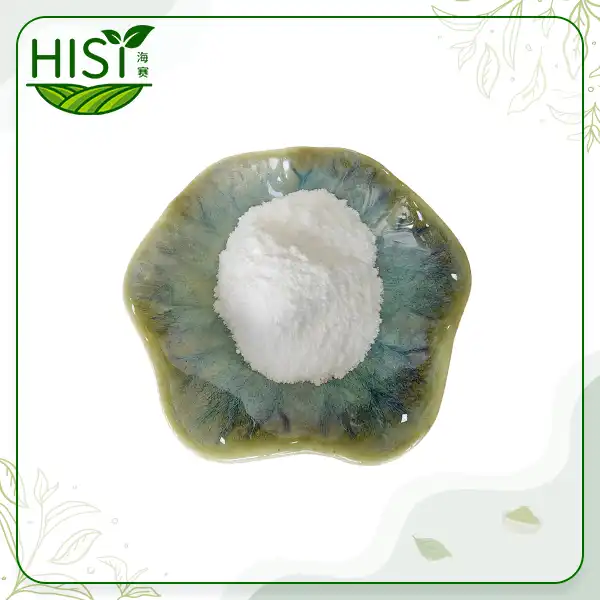
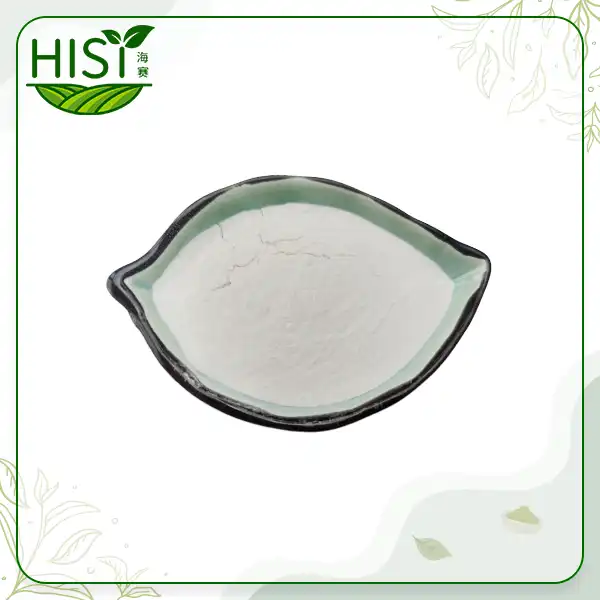
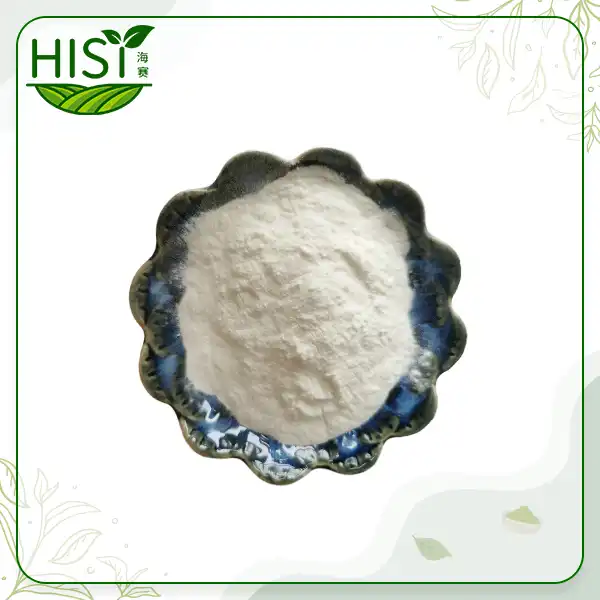
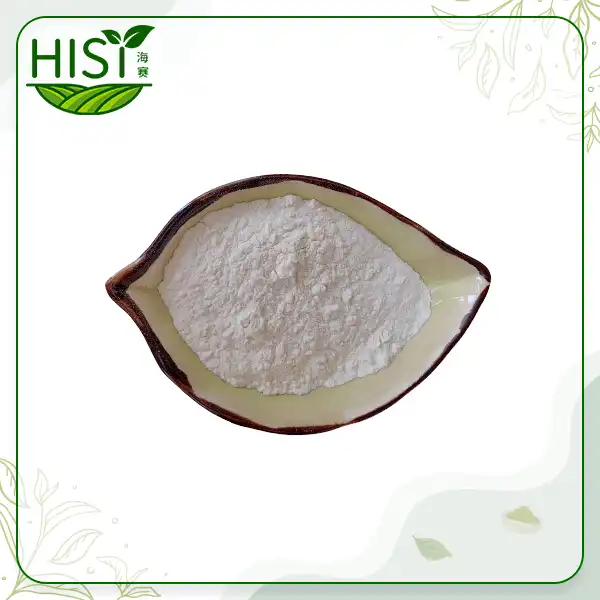
For 18 years, Shaanxi Hisy Biotechnology has been building a production system that makes sure that every choice is based on approval. Our omega-3 powder is a white, crystalline powder with DHA levels of at least 10% (CAS 110-33-8). It is made using cutting-edge microencapsulation technology on four separate production lines that can make more than 200 MT of powder every year.
Our Certification Infrastructure
We are registered with the FDA, have HACCP certification, and ISO certification. Every batch of our omega-3 powder goes through quality control in-house, which makes sure that the TOTOX value is well below 26, the moisture content is below 4%, and the oil loading capacity is between 30 and 50%. It's important for business buyers that the product is stable against oxidation so that it can be stored at room temperature for 12 to 24 months.
Documentation and Traceability for B2B Buyers
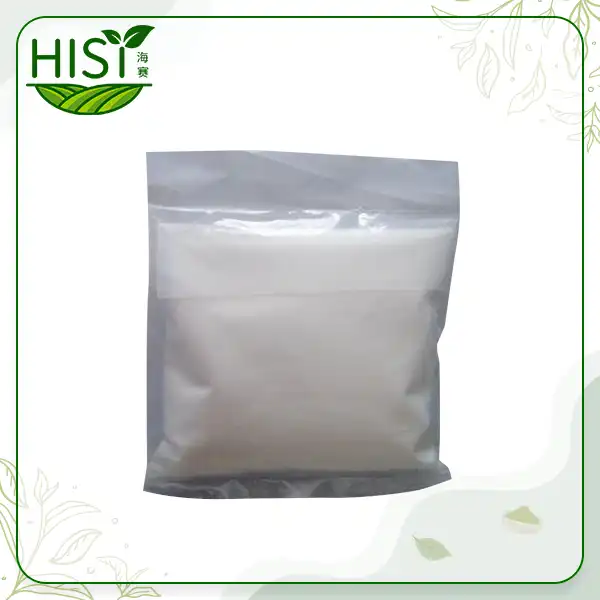
With every sale, we include full COA, MSDS, and TDS paperwork. We offer microbiological analysis and pesticide residue screening results to buying teams that need them. Our 1 kg foil bag, 5 kg foil bag, and 20 kg box all come in different sizes to meet the needs of both small-scale tests and large-scale production. The delivery time is between 4 and 8 days, and qualifying buyers can get free trials.
Flexible Supply for Diverse Market Needs
Our omega 3 powder supplier team works with you from evaluating samples to supplying your business with the powder. This is true whether you are a US supplement brand adding a new SKU or a functional food company expanding an existing line. To make buying easy, we accept online transactions and a number of different payment methods.
Conclusion
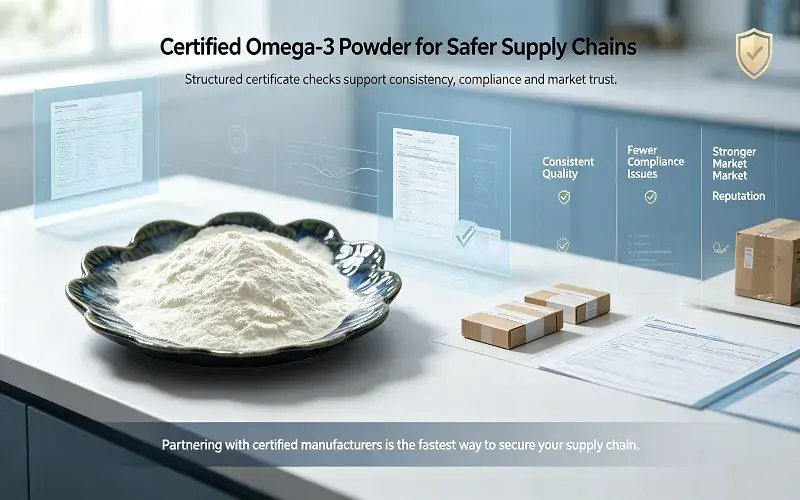
Certifications are the best way for a company to show that their omega 3 powder is safe and of good quality. Every certification, such as GMP, HACCP, IFOS, and MSC, is meant to protect against a certain risk in the supply chain. When buyers include a structured certification checklist in the way they buy things, they always end up with more uniform products, fewer compliance problems, and better market standing. Working with a certified maker is not only the best thing to do, but also the fastest way to make sure that your supply chain is safe. This is because testing standards and tracking rules are getting stricter all the time.
FAQ
What is the most important certification for verifying omega 3 powder purity?
IFOS (International Fish Oil Standards) is widely regarded as the most rigorous third-party program specifically designed for omega-3 ingredients. It tests EPA/DHA potency, oxidation markers including TOTOX and peroxide value, and screens for heavy metals and environmental contaminants. For buyers who need independent purity verification beyond a supplier's own COA, IFOS certification provides that assurance.
Is FDA registration required for omega 3 powder sold in the United States?
Yes. Under 21 CFR Part 111, manufacturers of dietary supplement ingredients — including omega 3 powder — must comply with GMP standards. Facilities exporting to the US must also be registered with the FDA under the Bioterrorism Act. Buyers should always confirm both GMP compliance and current FDA registration status.
Can omega 3 powder maintain high DHA levels while also being HALAL-certified?
Yes. HALAL certification governs the sourcing and processing methods, not the nutritional content. Omega 3 powder derived from HALAL-certified fish sources, processed without prohibited substances, can carry both HALAL certification and high DHA concentrations simultaneously.
How does HACCP certification differ from ISO certification for omega 3 powder?
HACCP specifically addresses food safety hazard identification and control throughout production. ISO 9001 or ISO 22000 covers broader quality management systems including documentation, process control, and continuous improvement. For omega 3 powder procurement, both certifications together provide stronger assurance than either alone.
What documents should I request before placing a bulk order?
Request a current COA (Certificate of Analysis), MSDS (Material Safety Data Sheet), TDS (Technical Data Sheet), pesticide residue screening report, microbiological analysis, and copies of all active certifications with visible expiry dates.
Request Certified Omega 3 Powder Samples from Hisy Biotechnology
Get in touch with our Shaanxi Hisy Biotechnology team to get a free sample of our omega-3 powder product that is made by a manufacturer. We can help you with your buying process from the review stage all the way through full supply. We have FDA, HACCP, and ISO certifications, shipping times of 4–8 days, and flexible packaging from 1 kg to 20 kg. To start your question right away, email us at sales@hisybio.com or go to hisybio.com.
References
1. GOED Global Organization for EPA and DHA Omega-3. GOED Voluntary Monograph for EPA and DHA. 2022.
2. Jackowski, S. A., et al. "Oxidation Levels in North American Over-the-Counter n-3 (Omega-3) Supplements." Journal of Nutritional Science, 2015.
3. International Fish Oil Standards (IFOS). IFOS Program Standards and Testing Methodology. 2023.
4. U.S. Food and Drug Administration. Current Good Manufacturing Practice in Manufacturing, Packaging, Labeling, or Holding Operations for Dietary Supplements (21 CFR Part 111). 2007.
5. Marine Stewardship Council. MSC Fisheries Standard Version 3.0. 2023.
6. European Food Safety Authority (EFSA). Scientific Opinion on Dietary Reference Values for Fats Including Saturated Fatty Acids, Polyunsaturated Fatty Acids, Monounsaturated Fatty Acids, Trans Fatty Acids, and Cholesterol. EFSA Journal, 2010.